


There’s something quietly radical about Olivia Colman’s honesty. No manifesto. No grand announcement. Just a truth said plainly, almost casually, the way real self-knowledge often arrives.
In a recent interview with them around her new film Jimpa, Colman shared that she has long described herself to her husband as “a gay man” and has always felt “sort of nonbinary.” Not as a declaration meant to provoke—but as a reflection of how she’s moved through the world her entire life.
For LGBTQ audiences, especially those who have spent years negotiating language that never quite fit, Colman’s words land with a familiar thud of recognition. That feeling of being slightly sideways to the roles you’re expected to play. That quiet relief when someone else says it out loud.
RELATED: Heartstopper’s Joe Locke Joins Forces With Andrew Scott in Gay History Biopic
Colman Reflects on Her Feelings of Femininity
“I’ve never felt massively feminine in my being female,” Colman says, reflecting on her long-standing discomfort with rigid gender expectations. Rather than positioning herself as searching for a label, Colman frames the feeling as something deeply familiar—an internal understanding that has existed long before today’s conversations around gender identity entered the mainstream.
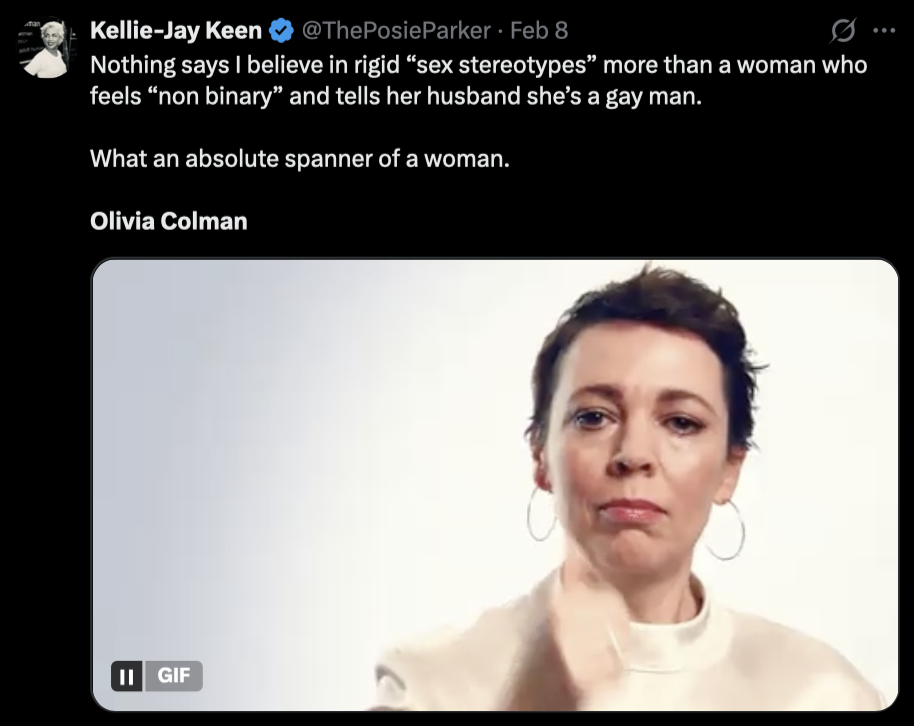
“I’m not alone in saying, ‘I don’t feel like it’s binary.’”
For many queer people—particularly those who grew up before terms like “non-binary” were widely understood—her words feel instantly recognizable. Colman isn’t presenting herself as confused or conflicted. Instead, she speaks from a place of clarity and ease, explaining that conversations with younger queer communities helped her realize she wasn’t alone, just earlier than the language that now exists.
Marriage Without the Script
One of the most quietly subversive elements of Colman’s story is how it plays out within her marriage. She and her husband, writer and producer Ed Sinclair, have spoken about sharing emotional labor in a way that rejects traditional gender roles. Strength, vulnerability, caretaking—these aren’t assigned based on gender in their relationship. They rotate. They flow.
For LGBTQ readers, this matters. Colman isn’t just talking about identity in the abstract; she’s modeling what it looks like to live outside gendered expectations in everyday intimacy. It’s queerness not as performance, but as practice. A reminder that dismantling the binary doesn’t always look loud—it can look like mutual gentleness on an ordinary day.
Why Colman Keeps Choosing Queer Stories
Colman’s career choices tell the same story her words do. From Beautiful People to The Favourite to Heartstopper and now Jimpa, she has consistently gravitated toward narratives shaped by queer lives, queer families, and queer emotional truths. She has said that queer communities tell some of the most loving, complex, and humane stories—and that she feels honored to be welcomed into those spaces.
That sense of welcome is key. Colman doesn’t position herself as an outsider looking in, nor as someone claiming an identity that isn’t hers. Instead, she speaks as someone who has always lived near the edges of prescribed norms and finally feels those edges soften.
Jimpa and Intergenerational Queerness
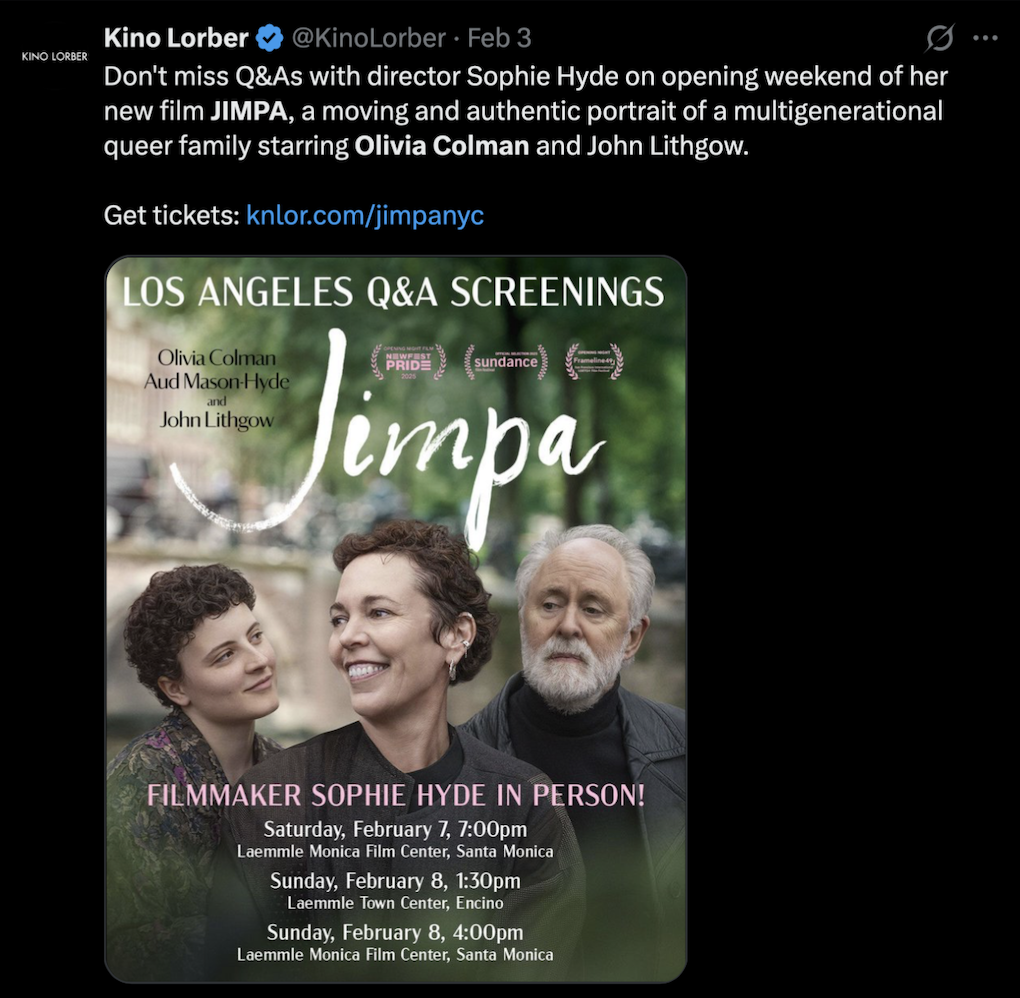
In Jimpa, Colman plays a mother navigating her relationship with her nonbinary child and her gay father—an intergenerational triangle shaped by love, misunderstanding, and history. The film explores how queerness changes across time: how one generation survived the AIDS crisis through activism and community, while another grows up with new language, new freedoms, and new friction.
There’s nothing like the relationship between fathers and daughters. Olivia Colman and John Lithgow’s performances in Jimpa can’t be missed.
Opens in theaters Friday: https://t.co/AAFQUKfQiZ pic.twitter.com/i8Qfksmcdc
— Kino Lorber (@KinoLorber) February 4, 2026
Colman’s own reflections on gender make her casting feel especially poignant. She understands what it means to exist between definitions, to be shaped by eras that didn’t yet know how to name you.
Not a Label—A Lifeline
What makes Colman’s comments so powerful for LGBTQ audiences is that they resist spectacle. She isn’t announcing an identity so much as affirming a truth many queer people already know: that gender isn’t always a destination. Sometimes it’s a feeling. A tilt. A sense of being at home in contradiction.
In a culture obsessed with categorization, Olivia Colman offers something gentler and far more radical—the permission to exist without explaining yourself. To say, simply, “This is how I’ve always felt.” And to discover, maybe a little late but right on time, that you were never alone.
A sensational actor who tackles every role with zest & dignity!
If she’s in it, I’ll watch it!
The 2 Gary’s (together 42 years)
As if I couldn’t love Olivia Colman more. She speaks from the heart.