


Betty Boop is officially making her way back to the big screen, and somehow it feels both wildly overdue and perfectly timed.
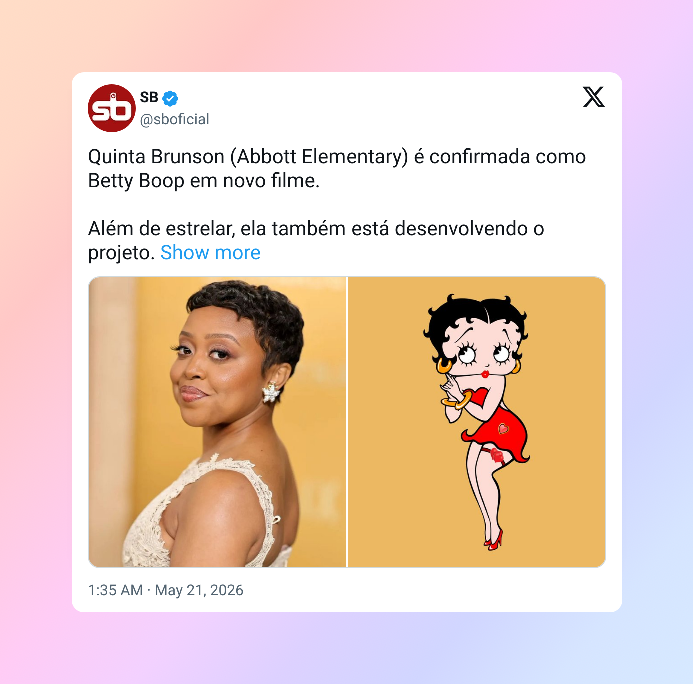
According to Variety, Quinta Brunson is developing a new Betty Boop film alongside Mark Fleischer and Fleischer Studios. If that last name sounds familiar, it should. Mark is the grandson of Max Fleischer, the legendary animator behind Betty Boop and Popeye.
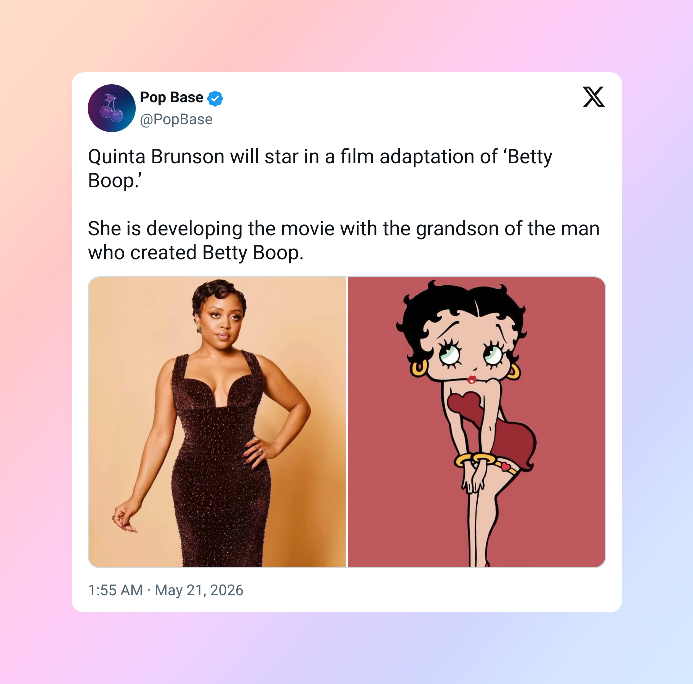
Mark Fleischer described Brunson by saying,
“Quinta so embodies Betty’s love of life, intelligence, humor, sassiness and compassion that the relationship between her as Betty and Max burst into life at its mere mention.”
According to Variety, the film will explore the origin and evolution of Betty through the perspective of Max Fleischer himself, while examining the growing relationship between creator and character as Betty slowly becomes bigger than anyone could have imagined. The project also marks Betty Boop’s first starring theatrical feature appearance since the 1930s.
Which is honestly kind of shocking considering how deeply embedded she still is in pop culture.
RELATED: The Early 2000s Gay Role That Quietly Introduced Us to Rami Malek
Betty Boop Wasn’t Born Human
One of the funniest things about Betty Boop history is that she technically did not even start out fully human.
When the character first appeared in the 1930 Talkartoon short Dizzy Dishes, Betty was actually designed as a French poodle with floppy dog ears. Over time, those ears transformed into hoop earrings, her face became more human, and suddenly one of animation’s most recognizable women was born. And what a woman she became.
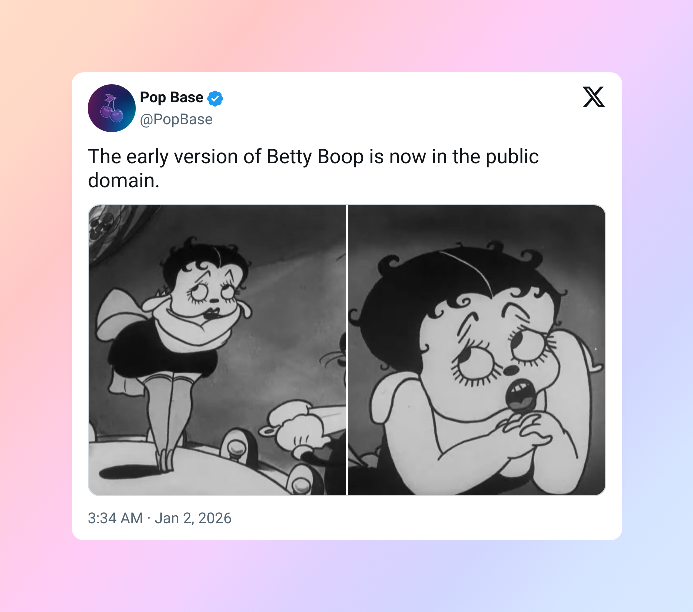
Unlike many female cartoon characters of the era who largely existed as softer copies of their male counterparts, Betty Boop immediately stood out. She was flirtatious, funny, stylish, independent, and completely impossible to ignore. While characters like Minnie Mouse and Daisy Duck were often extensions of existing male cartoon worlds, Betty felt like her own phenomenon entirely.
She was tiny, glamorous, chaotic, jazz-filled, and very clearly aware of her own appeal.
The Women Behind Betty Boop
Part of what makes Betty Boop fascinating is that she was never inspired by just one woman.
Over the years, debates swirled around who exactly inspired the iconic animated bombshell. Historians generally agree that Betty drew influence from several famous women of the era, particularly singers and performers whose larger-than-life personalities dominated early entertainment culture.
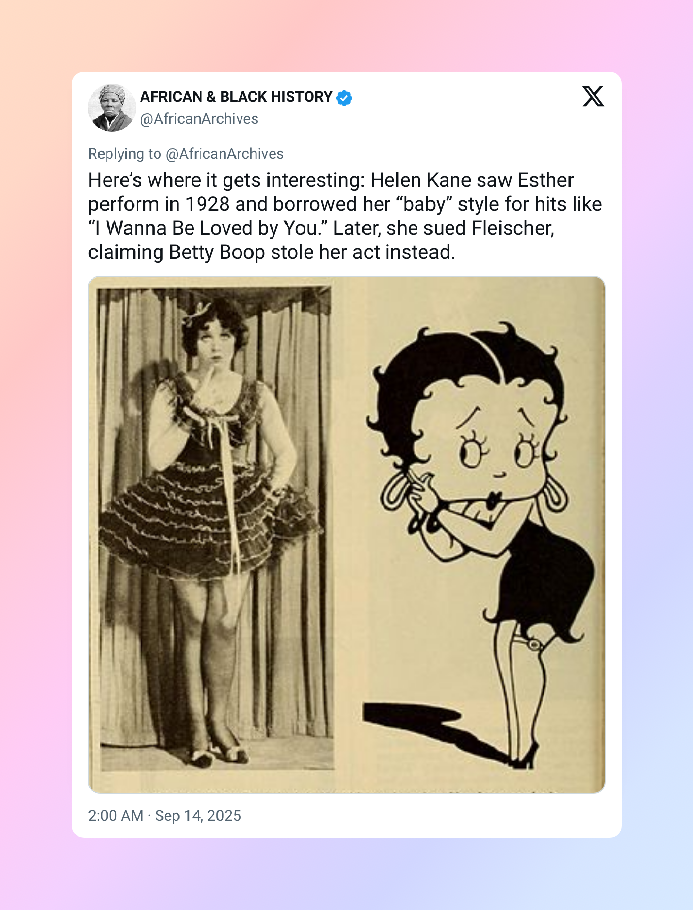
Clara Bow, the legendary silent film “It Girl,” is frequently mentioned as one influence. Singer Helen Kane also became strongly associated with Betty because of the character’s famous “Boop Oop a Doop” catchphrase and baby-voiced singing style.
In fact, Kane even sued Fleischer Studios over the similarities.
But during the court case, the studio argued that Kane herself had borrowed elements from Black child performer Esther Jones, also known as Baby Esther, whose vocal style and scat-like phrases reportedly predated Kane’s fame.
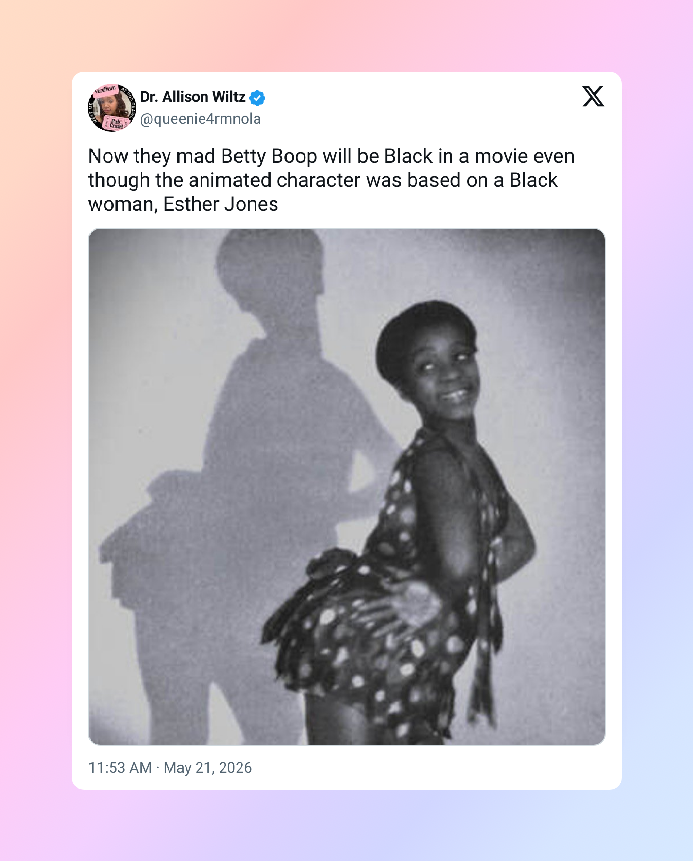
The court ultimately sided with Fleischer Studios.
What emerged from all these influences was Betty Boop herself, a character who somehow absorbed pieces of multiple women while becoming larger than any single inspiration.
Betty Boop and Queer Camp Culture
There is a reason Betty Boop continues to resonate so strongly with queer audiences nearly a century later. She is camp.
Everything about her oversized eyes, exaggerated femininity, tiny dresses, dramatic expressions, and playful confidence practically screams theatricality. Betty exists in that delicious space between innocence and sensuality that queer audiences have historically loved to reinterpret and celebrate.
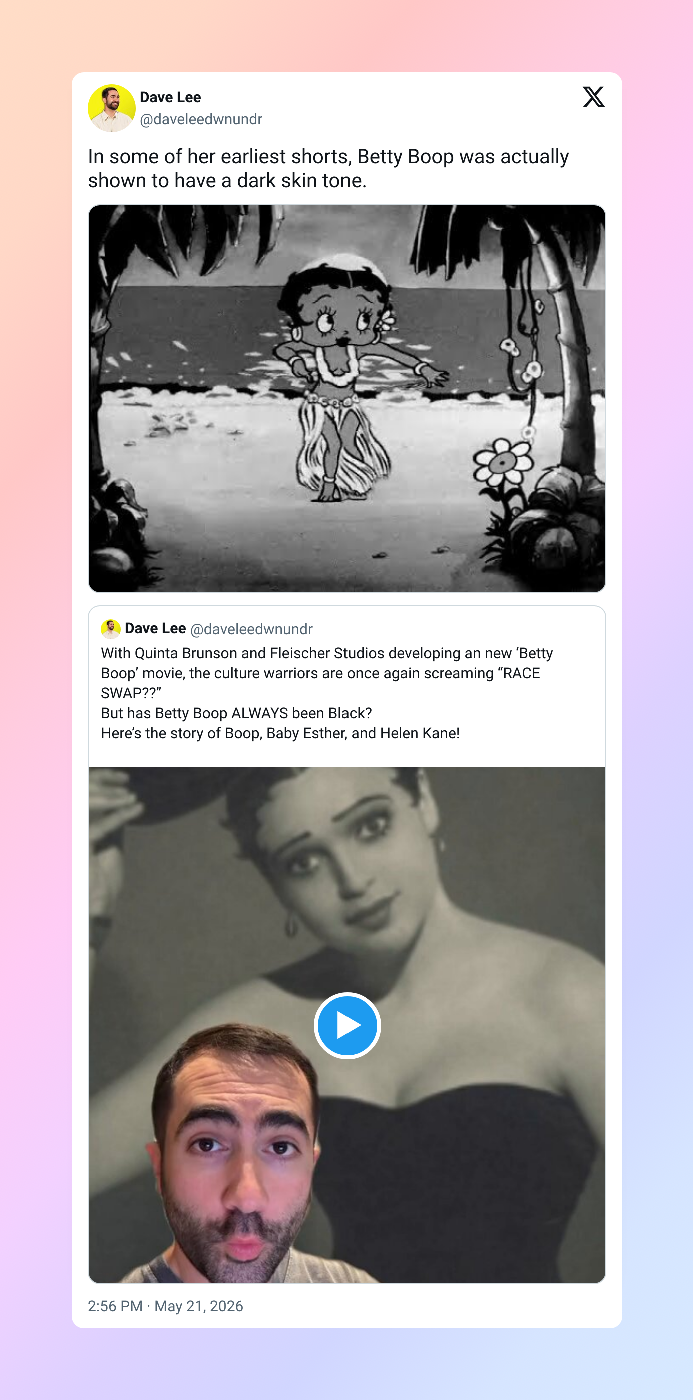
Long before modern pop divas perfected hyper-feminine performance, Betty Boop was already doing it in black-and-white animation.
Her influence can still be felt everywhere from drag makeup to burlesque aesthetics to vintage-inspired queer fashion editorials. She embodies a kind of old Hollywood glamour that feels playful instead of untouchable.
And then there is the censorship.
By the mid-1930s, Betty’s flirtier image became a target of the National Legion of Decency and the Production Code of 1934. Her dresses became longer. Her personality softened. The once-bold animated sex symbol was reshaped into a more conservative and “acceptable” version of herself. If that arc sounds familiar to queer audiences, it probably should.
Betty Boop’s story has always involved performance, reinvention, censorship, resilience, and eventually reclaiming identity. Which honestly makes her feel even more queer-coded in hindsight.
@itsaprilshowers You WON’T Believe What Happened During This Drag Reveal ♥️ #watch #popular #dragqueen #bettyboop #movie
RELATED: How ‘Two Black Boys in Paradise’ Reimagines Young Gay Love
Why This Comeback Feels So Exciting
There is something genuinely comforting about Betty Boop returning right now.
In a world full of ultra-polished franchises and hyper-serious cinematic universes, Betty represents something delightfully theatrical and weird. She comes from an era where cartoons were jazzy, surreal, expressive, and unapologetically stylish.
And with Quinta Brunson involved, there is real potential for this project to balance nostalgia with fresh energy.
Because Betty Boop is not just a cartoon character. She is a cultural survivor.
Nearly 100 years later, she is still being referenced, impersonated, printed on clothing, recreated in drag, and celebrated as one of animation’s first true female icons.
Not bad for a former cartoon poodle.