


Long before Hollywood embraced the rainbow, and decades before queer stories found their way to the mainstream, there was Harvey Fierstein—loud, proud, and fiercely, gloriously himself.
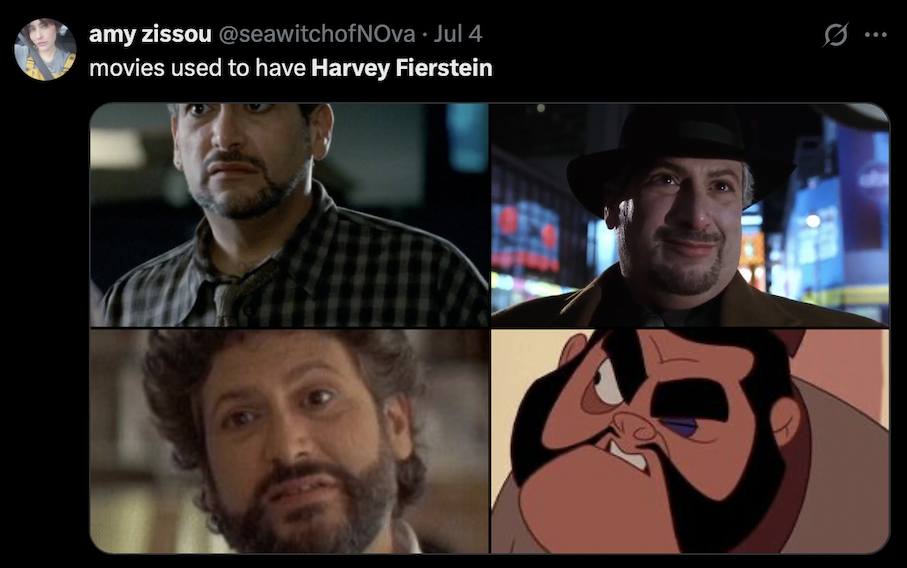
Harvey Fierstein isn’t just a Tony-winning actor, a best-selling author, a playwright, or a screenwriter. He’s a living legend. A trailblazer. And perhaps most significantly, one of the very first openly gay celebrities in the United States—at a time when being “out” could end a career before it began.
RELATED: Harvey Fierstein’s Lifetime Tony Is the Standing Ovation He’s Always Deserved
His journey wasn’t easy, but Harvey never let fear dull his sparkle. In fact, it’s that very spark that helped ignite a shift in how queer lives were seen, heard, and portrayed on stage and screen.
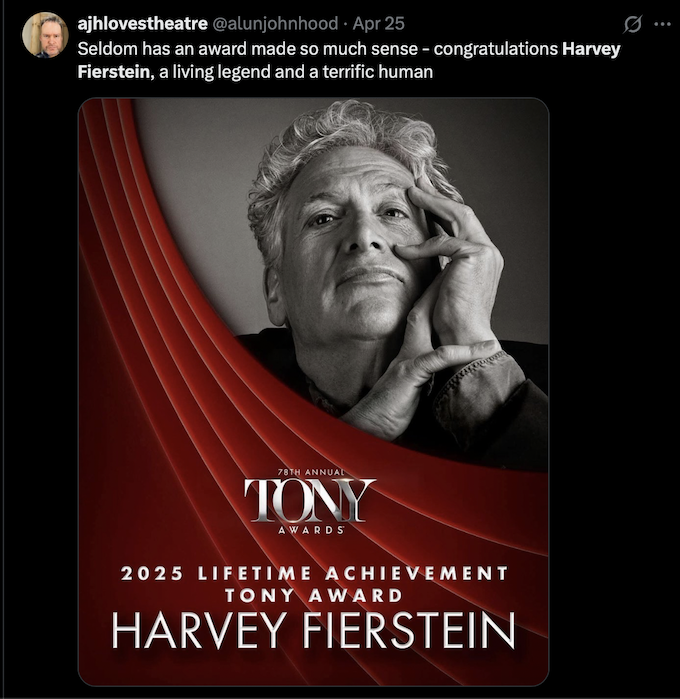
In 1983, Harvey Fierstein made Broadway history by becoming the first openly gay actor to win a Tony Award for Best Actor in a Play for his groundbreaking work Torch Song Trilogy, which he also wrote. The play wasn’t just a personal triumph—it was a revelation. Here was a gay man, telling a gay story, with honesty, humor, heartbreak, and above all, dignity. It was a love letter to queer life at a time when that felt radical.
Harvey Fierstein – through tears – just gave an all-timer kind of acceptance speech while accepting his Lifetime Tony Award
“There is nothing quite like bathing in the applause of a curtain call, but when I bow, I bow to the audience…with gratitude, knowing that without them I… pic.twitter.com/5ukGXStyKe
— Spencer Althouse (@SpencerAlthouse) June 8, 2025
But Harvey didn’t stop there. In 1994, he became the first openly gay actor to portray a principal gay character in a U.S. television series, starring as the flamboyant fashion designer Dennis Sinclair in Daddy’s Girls. Sure, the show was short-lived, but the message it sent was loud and clear: gay characters, played by gay actors, belonged on screen.
And then there was that unforgettable moment on 20/20 with Barbara Walters in the thick of the AIDS epidemic—an era when misinformation and stigma were rampant. Walters, known for her probing questions, asked Harvey point-blank: “What’s it like being a homosexual?”
In love with this 1983 clip of young Harvey Fierstein gently but firmly calling Barbara Walters out pic.twitter.com/G57tvvsqve
— Adam Feldman (@FeldmanAdam) January 6, 2023
With a shy smile and a wickedly smart glint in his eye, Harvey responded, “You do ask the easy ones, don’t you?” Then, with the grace and wit that has defined his career, he flipped the script. “What’s it like being a heterosexual?”
Harvey didn’t just answer questions—he challenged assumptions. Gently, firmly, and with no small amount of humor, he dismantled outdated ideas and defended his identity, even when it wasn’t popular or safe to do so. When Barbara suggested homosexuality stemmed from “overdominating mothers and weak fathers,” Harvey didn’t blink. “That’s got to be garbage,” he replied. “I grew up in the same household as my brother,” who’s straight.
He didn’t back down. He didn’t apologize. And he stood up for a community that was under fire, misunderstood, and too often invisible.
Fast-forward to 2022, when Harvey released his candid and captivating memoir I Was Better Last Night. In it, he reflects with raw honesty on a life lived outside the lines. In a People interview promoting the book, he admitted:
“I’m still confused as to whether I’m a man or a woman.” He shared that as a child, he often wondered if he’d been born in the wrong body. “Then I found out about gay. So that was enough for me for then.”
Harvey avoids labels, not out of fear, but from a deep place of self-acceptance. “I don’t think I’ve missed anything by not making up my mind,” he said. On the LGBTQ&A podcast, he added, “I’m comfortable being me.”
That, right there, is Harvey’s magic. His courage isn’t just about being out, or outspoken. It’s about being real, in a world that has often asked queer people to shrink themselves.
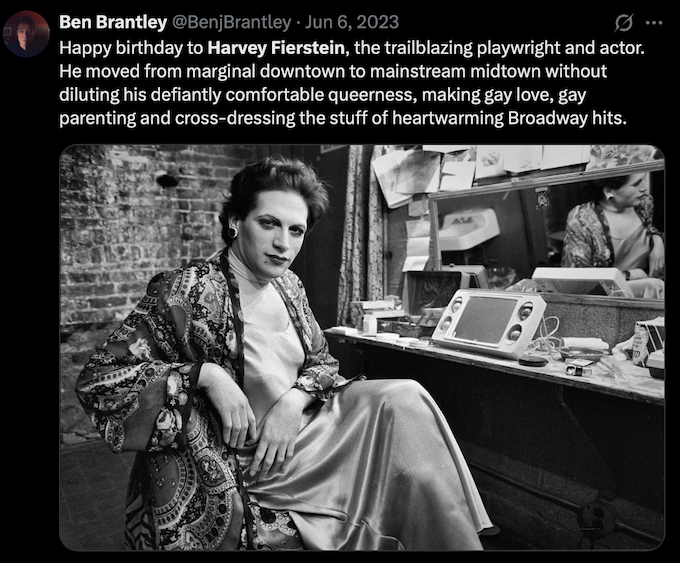
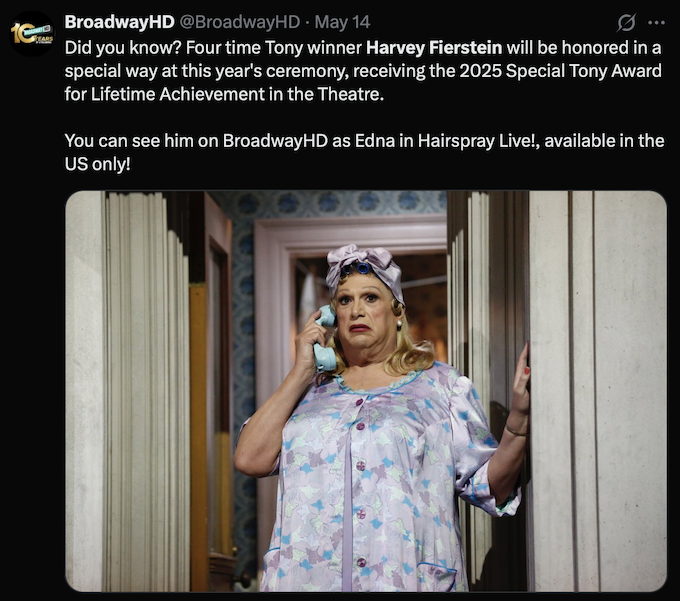
From playing Tevye in Fiddler on the Roof to bringing the house down (literally) as Edna Turnblad in Hairspray, Harvey Fierstein has always embraced roles that defy convention—just like him.
So here’s to Harvey: for every stage he’s lit up, every stereotype he’s shattered, and every kid who saw him and thought, “Hey, maybe I can be myself too.”
Thanks, Harvey, for speaking up—for speaking out—and for always, always keeping it fierce.