


When Adelita Grijalva finally stepped onto the House floor to deliver her inaugural address, it wasn’t simply a routine welcome-to-Washington moment. It was the culmination of a 50-day blockade, a district left without a voice, and a political battle that put LGBTQ+ rights, democratic accountability, and raw moral urgency at the forefront of her message. In the very first minutes of her tenure, Grijalva made one thing unmistakably clear: her role in Congress will not be quiet, cautious, or compromised.
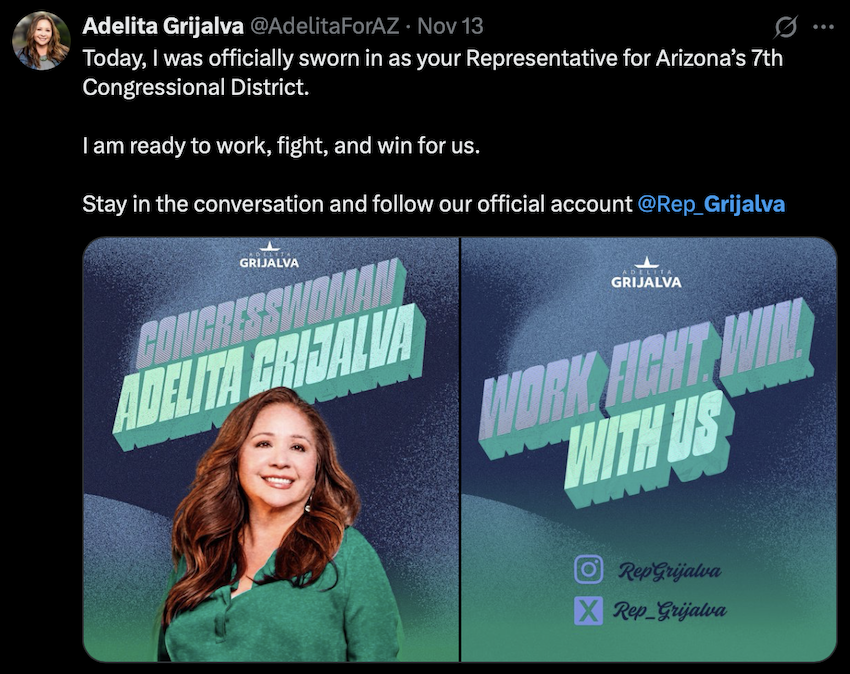
Grijalva’s Long-Delayed Swearing-In Sparks National Attention
Grijalva’s path to Washington should have been straightforward. After winning a special election in September to succeed her late father, longtime Arizona Representative Raúl Grijalva, the transition was expected to be swift. Instead, House Speaker Mike Johnson refused to schedule her swearing-in ceremony for nearly two months—effectively putting more than 800,000 Arizonans on political pause.
Constituent services froze. District needs were shelved. And for many, the delay became a glaring symbol of political gamesmanship.
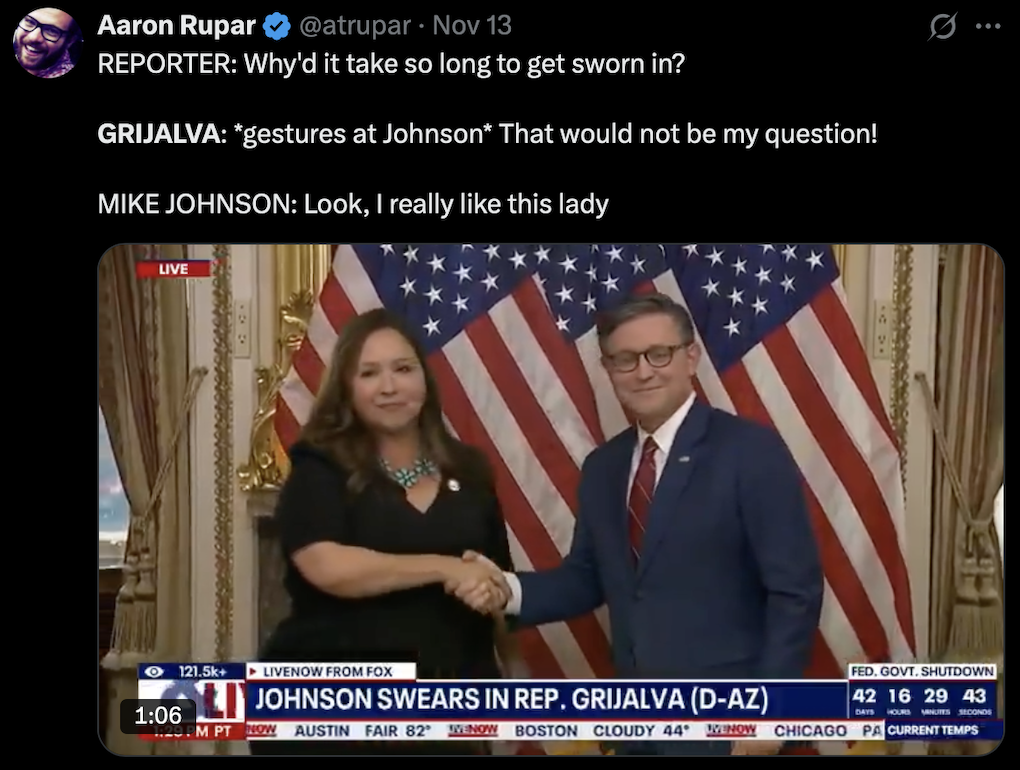
Grijalva didn’t mince words:
“This is an abuse of power.”
And for her, the message goes far beyond personal inconvenience. She warned that no chamber—and no Speaker—should have the authority to silence a duly elected representative for political reasons.
“Our democracy only works when everyone has a voice,” she reminded the House.
@donlemon Grijalva: “This is an abuse of power. One individual should not be able to unilaterally obstruct the swearing in of a duly elected member of congress…”
A First Speech Fueled by Grief, History, and a Fight for LGBTQ+ Rights
Grijalva is the first Latina and first Chicana to represent Arizona in Congress. Her debut speech blended the personal loss of her father with a broader indictment of congressional inertia. While intensifying extremism has grown loud outside the chamber, Grijalva argued that the real threat comes from those inside the House who refuse to act.
“Our American promise is under serious threat,” she said, laying out issues she believes Congress has failed to protect—immigrant families, accessible health care, tribal sovereignty, veterans’ rights, public education, and, critically, LGBTQ+ equality.
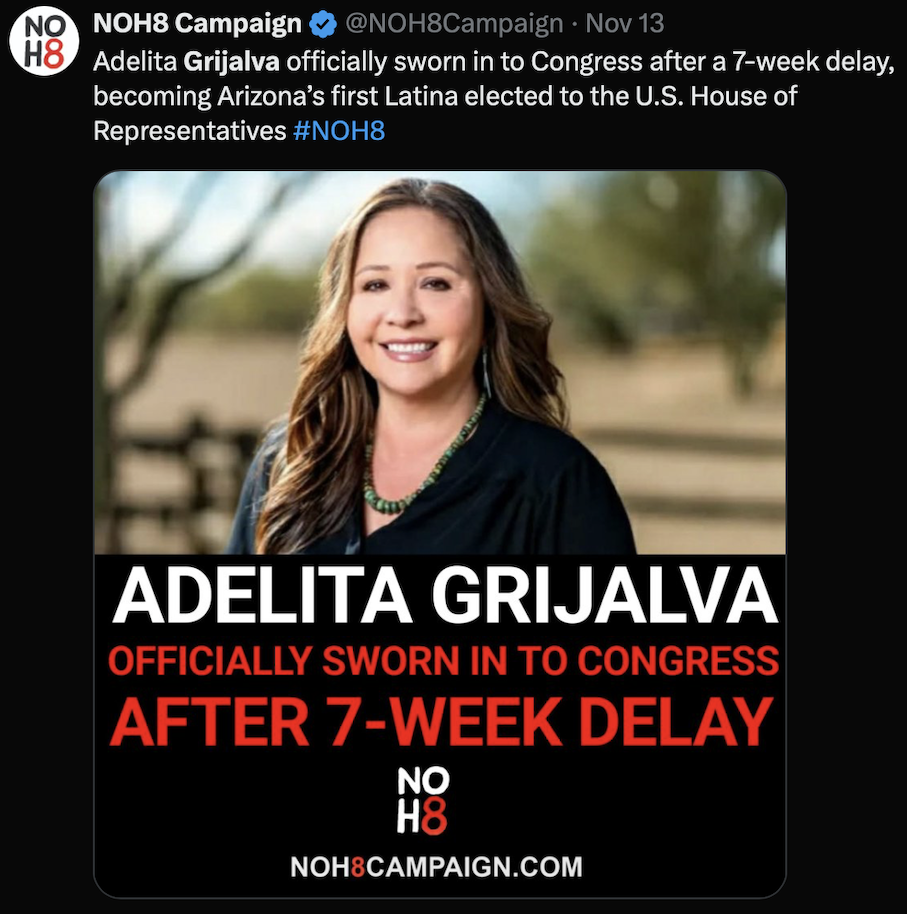
She emphasized that fighting for LGBTQ+ Americans is not merely symbolic but central to the job voters expect their representatives to do:
“…standing up for LGBTQ+ rights because that’s what the American people expect us to do — fight for them.”
By placing LGBTQ+ protections alongside economic and civil-rights pillars, Grijalva signaled that queer rights are not a side conversation—they’re foundational to the agenda she’s bringing to Washington.
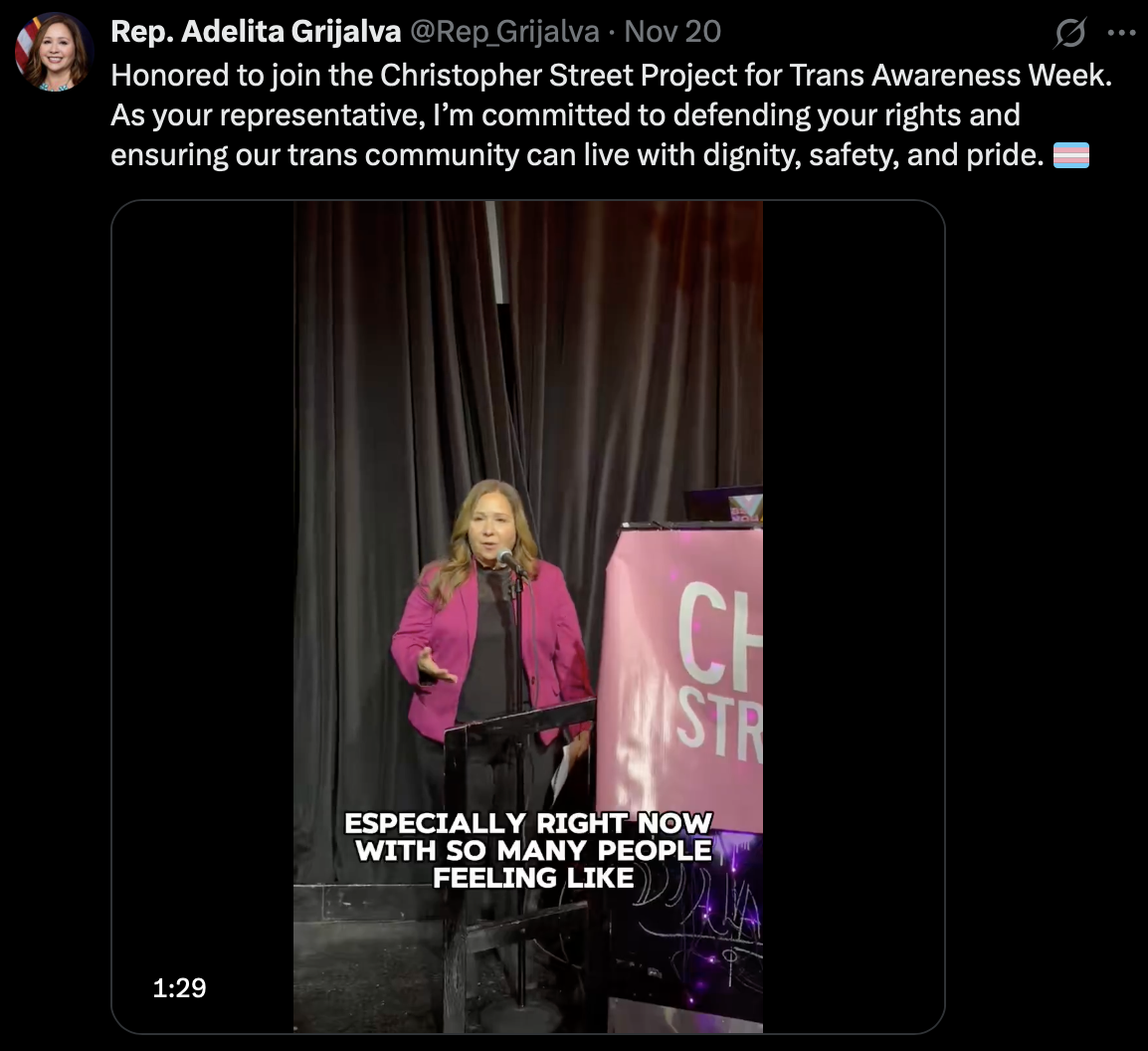
The Epstein Files: Grijalva Steps Into a Brewing Political Storm
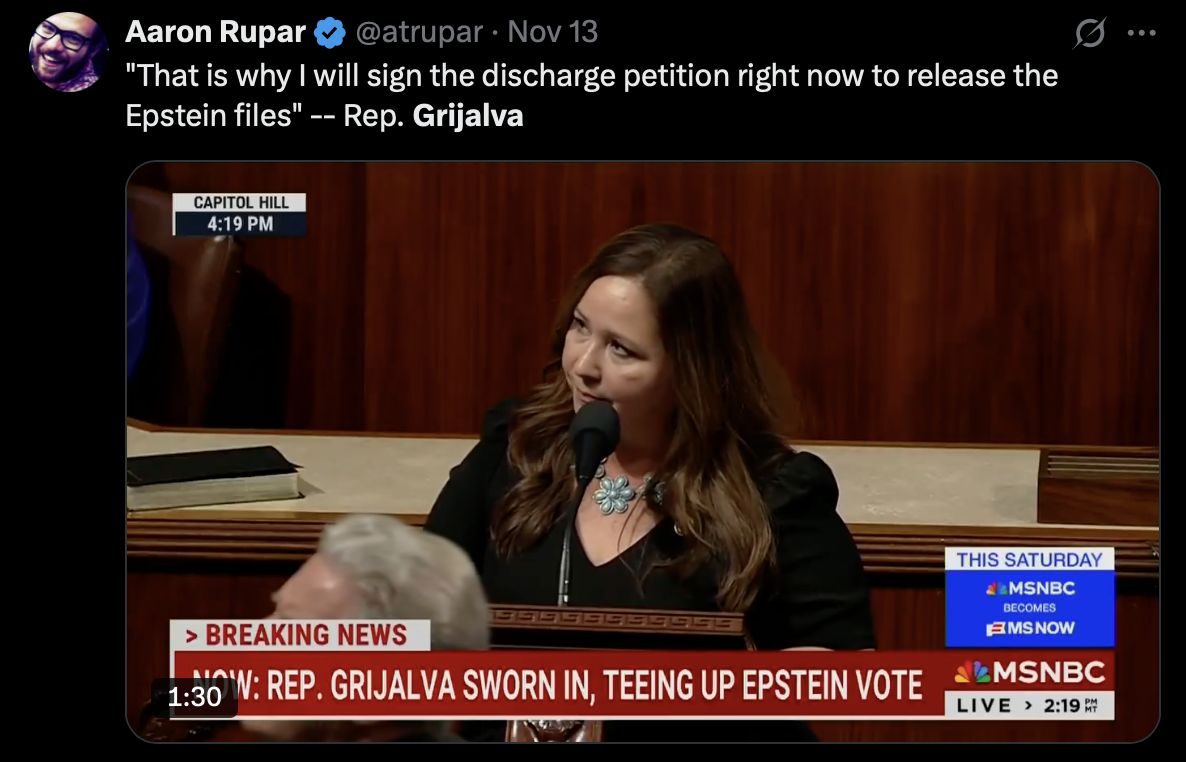
Grijalva’s arrival also collided with another explosive development: newly released emails suggesting that former President Donald Trump may have had deeper knowledge of Jeffrey Epstein’s crimes than previously disclosed. Two Epstein survivors—Elizabeth Stein and Jess Michaels—watched from the gallery as Grijalva made an unexpected announcement: she would immediately sign a discharge petition demanding the release of the complete Epstein files.
The Trump administration reportedly attempted to stop this release, even summoning Rep. Lauren Boebert to the Situation Room to pressure her into withdrawing support. It didn’t work. And with Grijalva’s signature, the petition crossed the threshold that forced Speaker Johnson to act.
RELATED: Were We Surprised That Trump was in The Epstein Emails?
Her response was succinct and unwavering:
“It’s time to fight for we, the American People.” Adding, “Justice cannot wait another day.”
What Grijalva’s First Week Really Means
Grijalva’s first week wasn’t just historic because of who she is—it was historic because of what she did. She transformed an obstruction-laden delay into a national conversation about democratic integrity. She placed LGBTQ+ protections at the heart of her mission. And she stepped directly into a politically sensitive fight for transparency on the Epstein files.
Her tone was unmistakably forward-looking: courageous, unflinching, and deeply rooted in the belief that elected officials owe their power to the people—not the party in charge.
If her first speech is any indication, Grijalva’s tenure in Congress won’t be marked by silence or soft edges. It’s shaping up to be a loud, unapologetic defense of the communities she represents—and the rights she refuses to see rolled back.
REFERENCE: The Advocate