


AIDS has shaped queer history in ways both visible and painfully hidden, and Cashing Out — now officially shortlisted for the 2026 Oscars — is bringing one of those lesser-known stories into the spotlight at exactly the right moment.
The documentary, executive produced by RuPaul’s Drag Race All Stars 9 winner Angeria Paris VanMicheals alongside Fellow Travelers star Matt Bomer, has landed on the Academy’s shortlist for Best Documentary Short. It’s a huge milestone — not just for the film, but for the kind of queer storytelling that refuses to look away from complicated truths.

RELATED: Why You Should Watch This AIDS Documentary with Matt Bomer as Exec Producer
A Queer Film With Oscar Energy — and Purpose
For Angeria, the recognition feels surreal in the best way. Talking to Pink News, she said:
“Growing up, you think about things like going to the Oscars and the possibility of that happening.” Adding, “The fact that it’s becoming a reality just feels amazing. It feels incredible.”
But Cashing Out isn’t chasing awards for the sake of prestige. Directed by Matt Nadel and produced in collaboration with The New Yorker, the film digs into a morally complex chapter of the AIDS crisis that many people — even within the LGBTQ+ community — rarely talk about: viatical settlements.
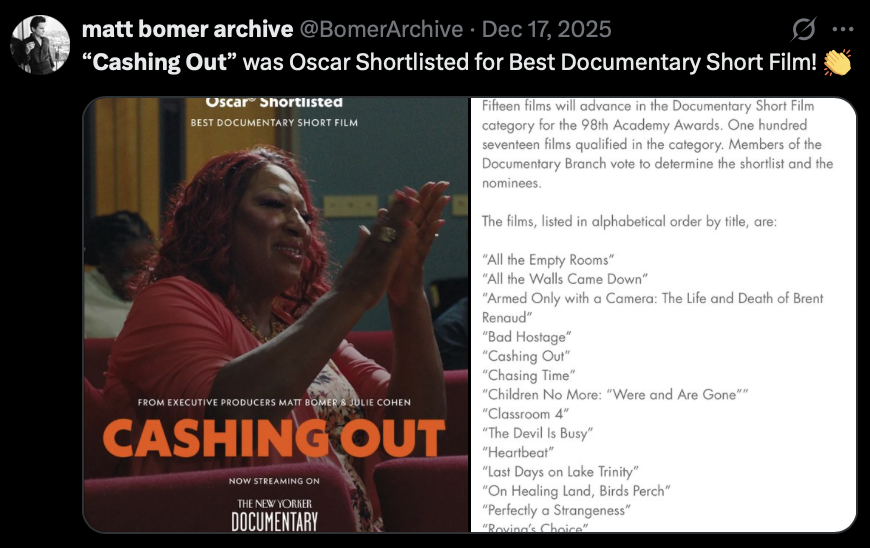
These settlements allowed people living with HIV/AIDS in the late ’80s and early ’90s to sell their life insurance policies for immediate cash. For some, it meant dignity, autonomy, and relief during unimaginable circumstances. For others, it exposed how deeply capitalism could exploit a community already facing stigma, fear, and loss.
Why This Story Hits Differently Now
We’ve seen countless documentaries about AIDS activism, protests, and medical breakthroughs — and those stories matter deeply. But Cashing Out focuses on something quieter and more intimate: survival decisions made behind closed doors.
At a time when treatments were limited and death often felt inevitable, people were forced to make impossible choices. Rent still had to be paid. Medical bills still piled up. Some wanted one last trip, one last moment of joy, one last sense of control.
The film reframes the AIDS crisis not just as a public health emergency, but as an economic and emotional reckoning — showing how survival itself became transactional in ways that still make us uncomfortable.
And that discomfort is the point.
Angeria’s Full-Circle Moment
Angeria’s connection to the project runs deeper than a producer credit. Long before drag superstardom, HIV awareness was already part of her life and work.
She grew up in a small town in Georgia, where conversations around AIDS were rare — and often avoided altogether. It wasn’t until she came out, moved to Atlanta, and began performing drag that she truly understood the scope of the crisis and its impact on real people.
Her very first drag show? An HIV benefit.

From that moment on, advocacy became woven into her career. That’s why when Cashing Out came her way, the answer was immediate. Supporting stories about HIV, AIDS, and sexual health isn’t a side project for her — it’s foundational.
Reclaiming Queer History With Honesty
What makes Cashing Out especially powerful is that it doesn’t sanitize the past. It doesn’t offer easy heroes or villains. Instead, it asks viewers to sit with the reality that systems meant to help sometimes caused harm, even while providing relief.
It also challenges how we remember the AIDS crisis. Beyond marches and slogans, there were deeply personal negotiations happening — men deciding how to live their final months with dignity in a world that had already written them off.
By telling these stories now, the film creates space for empathy, understanding, and reflection — especially for younger queer audiences who didn’t live through that era but are still shaped by its legacy.

Why Cashing Out Matters Beyond Awards Season
An Oscar shortlist is impressive, sure. But the real win is visibility.
Cashing Out reminds us that queer history isn’t just about pride and progress — it’s also about grief, resilience, and the complicated ways communities survive when institutions fail them. It’s about honoring the lives that were lost, the choices that were made, and the truths that deserve to be remembered.
Here’s a link to the documentary Cashing Out of you want to watch on YouTube https://t.co/jIkKQ5jesP
— Matt Bomer (@MattBomer) September 10, 2025
In bringing AIDS-era realities back into the conversation with care and honesty, Cashing Out doesn’t just revisit history — it asks us to learn from it.
And that might be its most powerful achievement of all.