


Eminem has spent decades shaping pop culture, provoking conversation, and redefining what mainstream rap can sound like. For LGBTQ+ audiences, however, his legacy has always carried a complicated footnote. The artist’s history with queer communities is neither a clean redemption arc nor a simple cancellation story—it’s a timeline marked by harm, reflection, public growth, and moments that forced fans to sit with discomfort.
To understand where the rapper stands today, it helps to look at how he got here.
Shock Value, Slurs, and the Early Years
When the Detroit-born artist emerged in the late 1990s and early 2000s, shock rap was central to his identity. His lyrics relied heavily on provocation—violent imagery, taboo language, and repeated use of homophobic slurs that were often framed as part of a battle-rap persona.
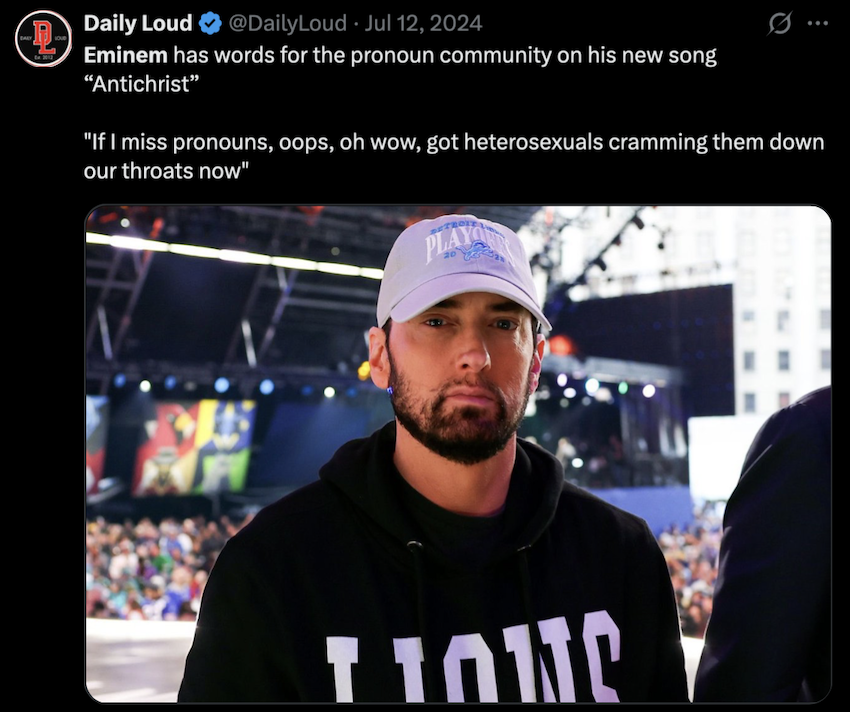
At the time, hip-hop culture largely normalized this language, but normalization didn’t soften its impact. LGBTQ+ advocacy groups repeatedly criticized the artist for reinforcing stigma through repetition, even when the slurs were aimed at fictional rivals or exaggerated alter egos. For many queer listeners, the message landed the same: hostile language, broadcast on a global stage.
This era defined the fracture between the rapper and the LGBTQ+ community—and it lingered far longer than some fans expected.
A Shift in Public Values
In 2010, Eminem surprised many when he publicly voiced support for same-sex marriage. At a time when marriage equality was still a divisive political issue, his stance stood out—especially given his lyrical history.
The statement didn’t erase years of harm, but it did complicate the narrative. Suddenly, the same artist known for inflammatory lyrics was aligning himself with a core LGBTQ+ civil rights issue. For some, it felt contradictory. For others, it was the first sign that his personal views might not align neatly with his artistic provocations.
@throwbacksongsforyou Eminem “Not Afraid” 2010 #rap #recovery #marshallmathers #hiphop #goat #icon #2010smusic #throwbacksongsforyou #radio #playlist #slimshady #foryoupage
Defensiveness and Intent vs. Impact
As criticism persisted into the 2010s, the rapper addressed backlash by emphasizing intent. In interviews, he explained that slurs in battle rap had lost their literal meaning to him and that he held no personal animosity toward gay or transgender people.
eminem defending himself against accusations of homophobia in an old interview. #eminem pic.twitter.com/z76cJMsmUV
— eminem videos ♡ (@marshallclips) September 19, 2021
For LGBTQ+ audiences, this explanation rang familiar—and frustrating. Intent didn’t undo impact, and language didn’t exist in a vacuum. The gap between what the artist claimed to believe and what his lyrics continued to normalize remained unresolved.
Still, these statements marked a moment of engagement rather than silence, signaling that the conversation had reached him—even if accountability hadn’t fully landed yet.
Elton John, Friendship, and Eminem’s Complicated Allyship
One of the most cited defenses of the rapper came not from himself, but from Sir Elton John. The openly gay icon repeatedly described him as respectful, generous, and supportive in private, dismissing claims that he was personally homophobic.
“For me, Eminem was never homophobic. I listened to the whole of The Marshall Mathers LP… I was floored by it, and I thought, how could anyone think this is… He’s just writing about the way things ARE, not how he thinks.”
Their friendship—and their shared Grammy performance—became cultural reference points, often used to argue that the artist’s lyrics didn’t reflect his real-life values.
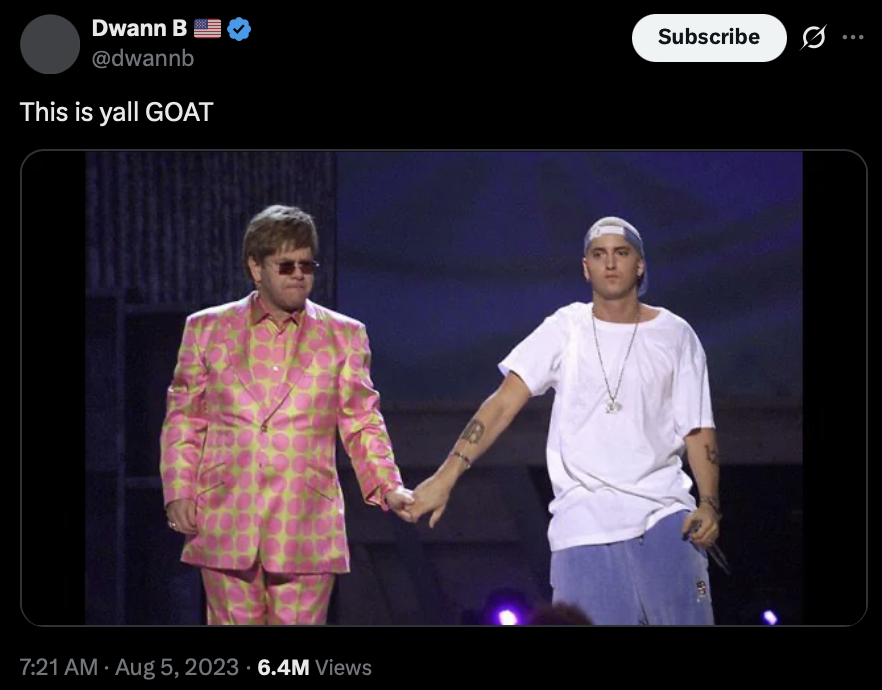
For many queer critics, both things could be true at once. A person can be kind in private and still cause harm publicly. The distinction mattered, but so did the context.
“𝘍𝘰𝘳 𝘮𝘦, #𝘌𝘮𝘪𝘯𝘦𝘮 𝘸𝘢𝘴 𝘯𝘦𝘷𝘦𝘳 𝘩𝘰𝘮𝘰𝘱𝘩𝘰𝘣𝘪𝘤. 𝘐 𝘭𝘪𝘴𝘵𝘦𝘯𝘦𝘥 𝘵𝘰 𝘵𝘩𝘦 𝘸𝘩𝘰𝘭𝘦 𝘰𝘧 𝘵𝘩𝘦 𝘔𝘔𝘓𝘗… 𝘐 𝘸𝘢𝘴 𝘧𝘭𝘰𝘰𝘳𝘦𝘥 𝘣𝘺 𝘪𝘵, 𝘢𝘯𝘥 𝘐 𝘵𝘩𝘰𝘶𝘨𝘩𝘵, 𝘩𝘰𝘸 𝘤𝘰𝘶𝘭𝘥 𝘢𝘯𝘺𝘰𝘯𝘦 𝘵𝘩𝘪𝘯𝘬 𝘵𝘩𝘪𝘴 𝘪𝘴… 𝘏𝘦’𝘴 𝘫𝘶𝘴𝘵… pic.twitter.com/uxMzjETSEl
— Eme Latina (@EmeLatina) March 25, 2024
2018: A Moment of Accountability
A meaningful shift came with the release of Kamikaze. After renewed backlash over a slur used in one track, Eminem publicly acknowledged that he may have crossed a line. This time, the response wasn’t framed as misunderstanding or metaphor—it was framed as excess.
The admission followed criticism from LGBTQ+ artists, including Troye Sivan, who emphasized that growth means knowing when language no longer belongs in the conversation.
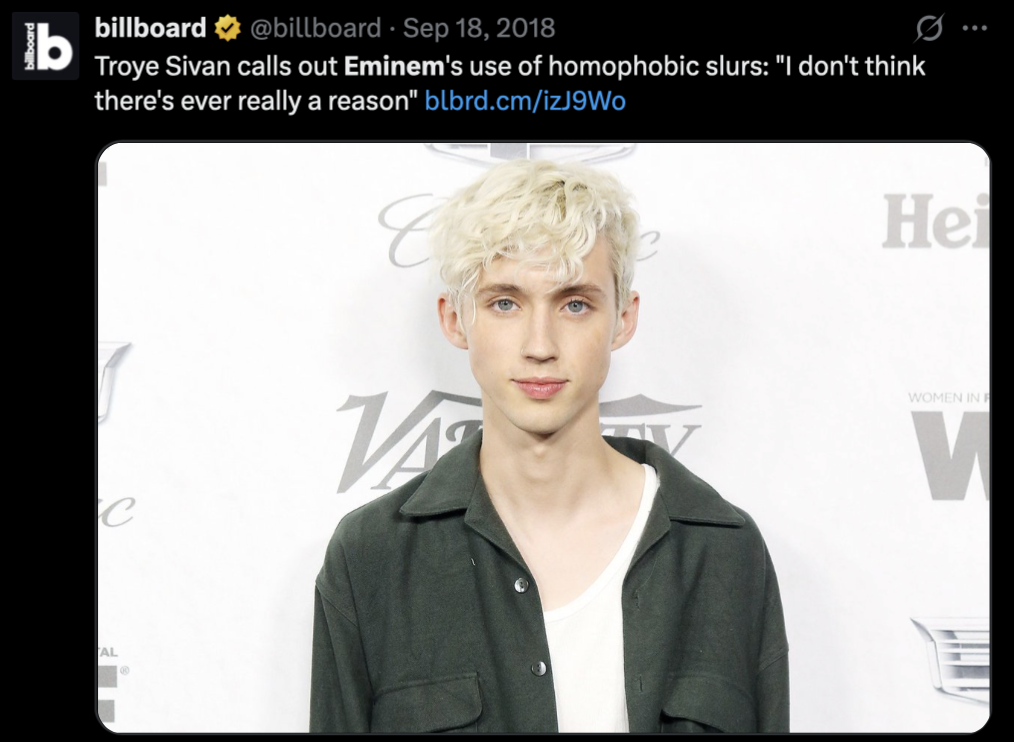
For queer audiences, this moment stood out. It wasn’t perfect accountability, but it was acknowledgment—and acknowledgment matters.
RELATED: Eminem Apologizes For Using “F*gg*t” On New Album
Where Does That Leave Him Now?
So, is Eminem an LGBTQ+ ally?
The answer depends on how allyship is defined. His career includes language that caused real harm, and that history deserves to be remembered honestly. At the same time, he has publicly supported marriage equality, maintained close relationships with queer artists, and—critically—shown a willingness to reflect and admit fault later in his career.
“I think if two people love each other, then what the hell?” Adding, “I think that everyone should have the chance to be equally miserable, if they want,” he told The New York Times.
For LGBTQ+ audiences, his story mirrors something deeply familiar: growth that isn’t linear, accountability that arrives late, and progress that doesn’t erase the past.
Eminem’s relationship with the queer community remains imperfect—but it has evolved. And in a culture that too often demands either total condemnation or blind forgiveness, that evolution is worth examining with nuance.
REFERENCES: The Guardian, Gay Times, Digital Spy, The New York Times