


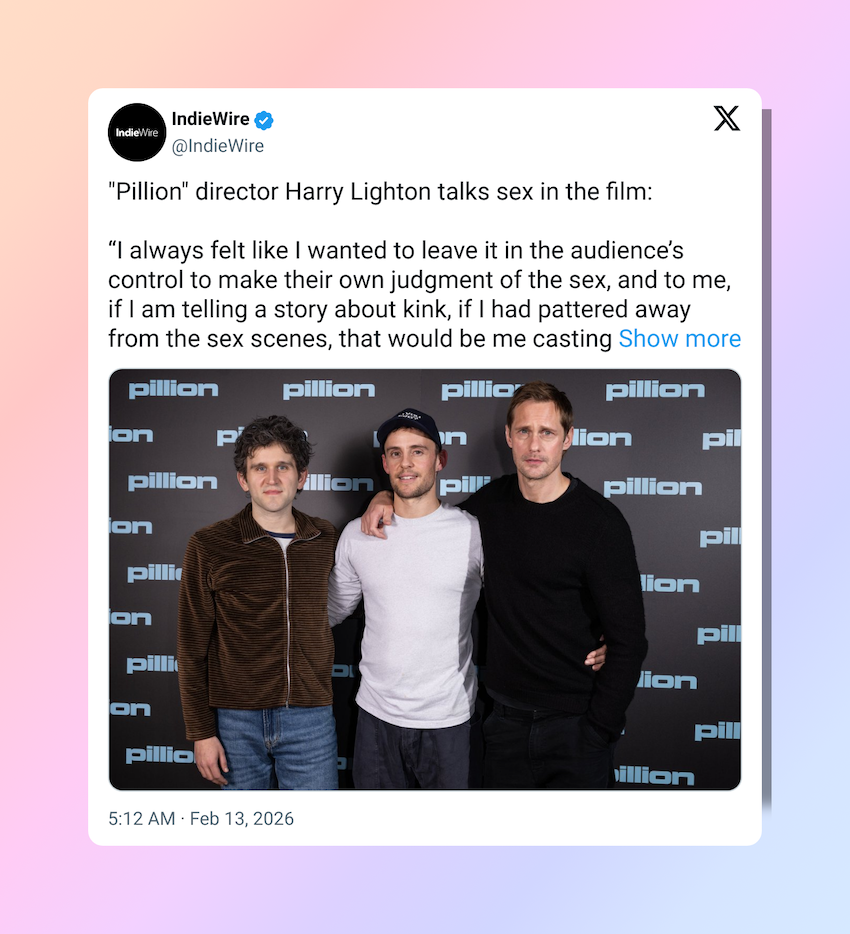
If you’ve watched Pillion and thought, “This feels gay in a very specific, cultured, slightly unhinged way,” you’re absolutely correct. Writer-director Harry Lighton has a queer influence list that swings wildly—from animated beefcakes to French AIDS activism—and honestly? We wouldn’t want it any other way. Consider this your fun, judgment-free tour of the pop culture moments that helped shape Pillion.
RELATED: Remember That Alexander Skarsgård Gay Sex Scene From True Blood in 2014?
1. Groundskeeper Willie (Yes. That Episode.)
Every queer person has an unexpected awakening, and for Lighton, it arrived via The Simpsons. Specifically: Groundskeeper Willie, ripping his shirt apart, chest fully out, chasing a dog through an air vent in nothing but his underwear.
“Something about his accent, his ginger beard, and his body made me sit up and go ‘Oh, I like the look of that,’” Lighton said—an experience many of us recognize as the moment the puzzle pieces clicked.
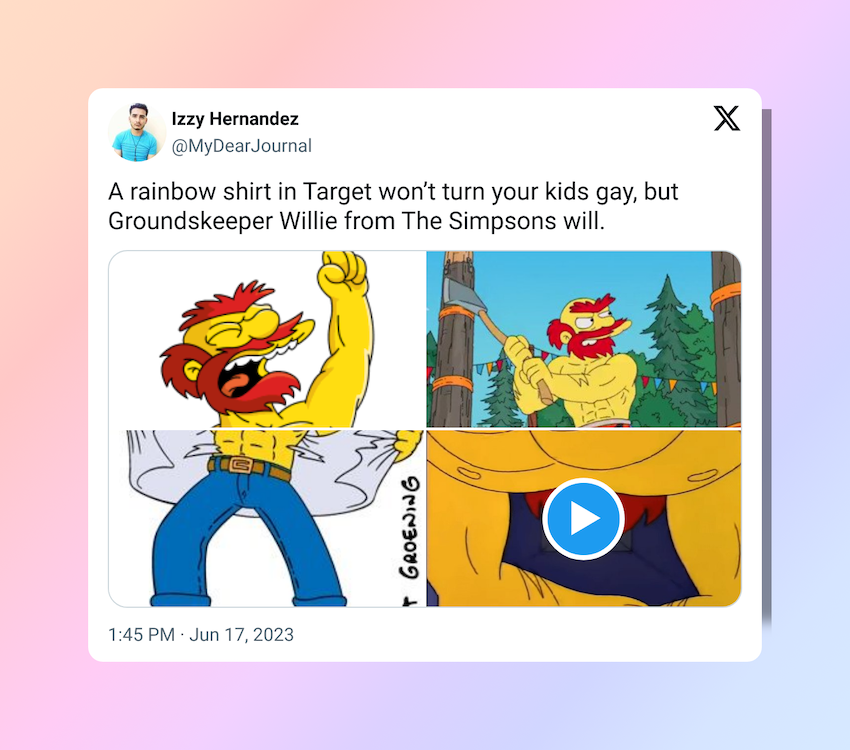
But he didn’t stop at thirst. Lighton even pitched a live-action Willie biopic (because of course he did), with Michael Fassbender as his dream casting. Frankly? That’s cinema.
2. The Triplets of Belleville, But Make It Gay Leather
Lighton credits The Triplets of Belleville as one of Pillion’s biggest inspirations—and if that sounds random, wait until you hear his logic. He’s described the connection as basically swapping lycra for leather, girl bands for barbershops, and bicycles for motorbikes. Suddenly, it makes sense.
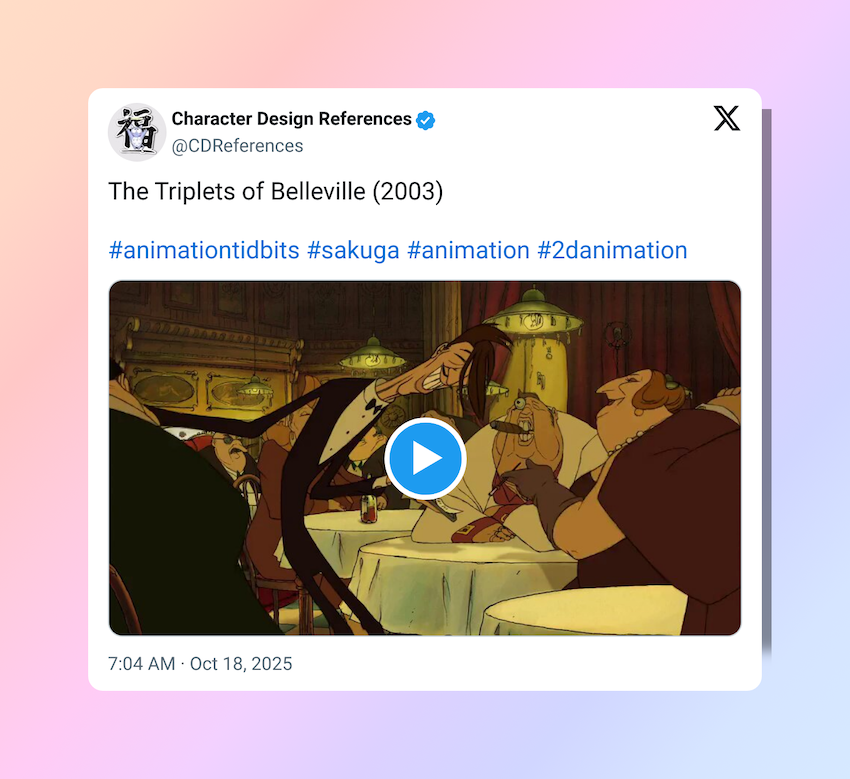
The exaggerated bodies, obsessive routines, and slightly grimy charm all translate beautifully into Lighton’s queer world, proving that animation doesn’t have to be childish—it can be sweaty, stylized, and deeply gay.
3. The Traitors, a.k.a. Queer Television
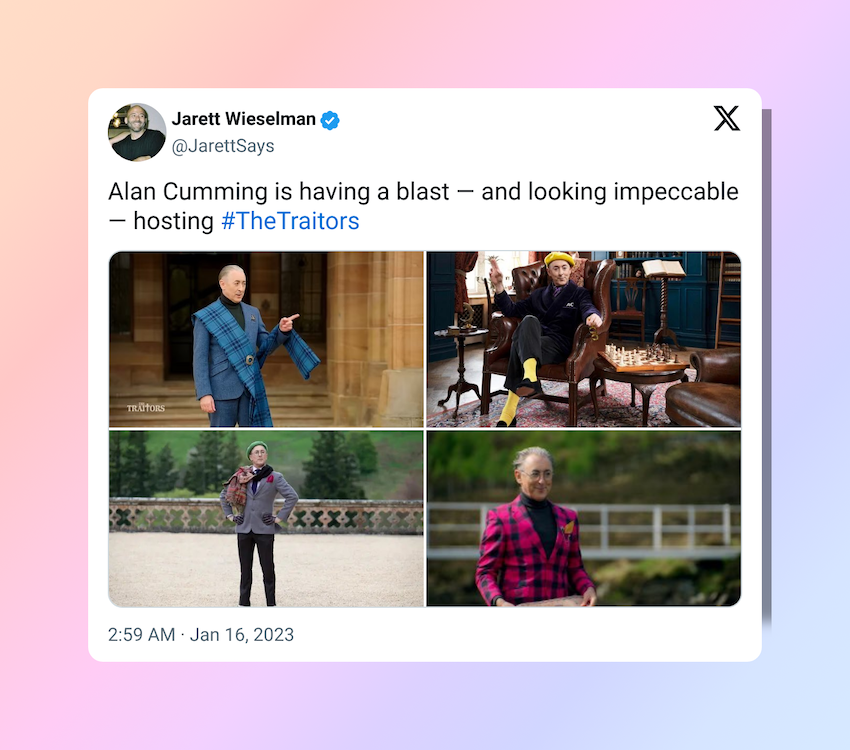
Yes, The Traitors made the list—and honestly, it tracks. Alliances, secrecy, coded behavior, power shifts, and emotional manipulation? That’s not just reality TV; that’s queer subtext with a Scottish accent.
Lighton’s appreciation lies in the tension: who knows what, who’s lying, and who’s performing. If Pillion feels charged with quiet danger and emotional chess, you can thank prestige paranoia TV for that.
4. Céline Sciamma and the Art of Rewriting the Rules
Few filmmakers loom as large in Lighton’s creative orbit as Céline Sciamma. Films like Water Lilies, Tomboy, Girlhood, and Pauline resonate with him for how they reshape familiar moments.
Lighton has said he loves how Sciamma builds a new emotional language, something queer people often have to do themselves. It’s subtle, observant, and quietly radical—qualities that show up all over Pillion.
5. Show Me Love: The Closet Door Cracks Open
The 1998 Swedish classic Show Me Love (aka Fucking Åmål) played a real role in Lighton’s own coming-out journey. The film’s tender, awkward story of two teenage girls navigating desire in a small town helped him inch toward honesty.
Not every queer awakening is loud. Sometimes it’s soft, messy, and deeply emotional—and that intimacy matters.
6. 120 BPM, the Film He Won’t Stop Recommending
Finally, there’s 120 BPM, which Lighton has called the movie he recommends most often. The film chronicles the AIDS activism of ACT UP Paris in the 1990s, blending politics, grief, rage, sex, and community into something unforgettable.
It’s a reminder that queer stories aren’t just about desire—they’re about resistance, urgency, and staying alive.
From cartoon muscle crushes to radical queer cinema, Harry Lighton’s influences are eclectic, horny, thoughtful, and unapologetically gay. And honestly? That explains Pillion perfectly.