


A case involving an Indiana Teacher who refused to use transgender students’ chosen names has ended in a $650,000 settlement — but not without years of legal battles, federal court rulings, and renewed debate over religion, student rights, and what happens inside America’s classrooms.
The dispute began at Brownsburg High School in Indiana, part of the Brownsburg Community School Corporation. The district requires teachers to address students by the names listed in the school’s official student database. For transgender students, that includes their affirmed first names.
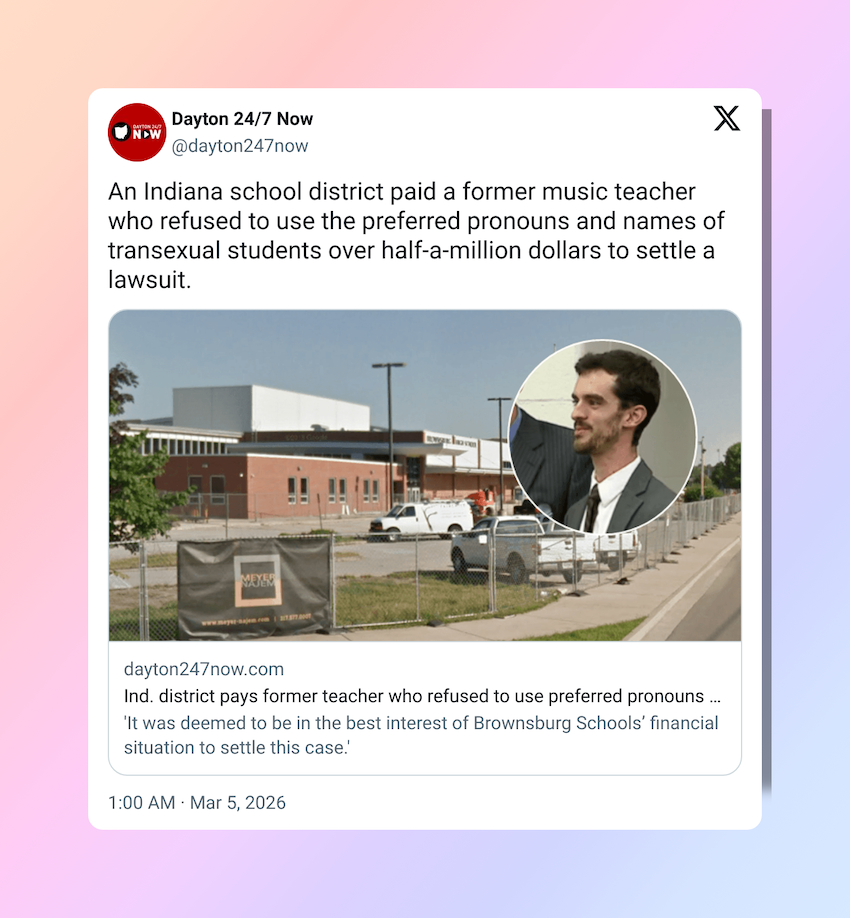
In 2017, music teacher John Kluge objected. He argued that using certain students’ chosen names conflicted with his religious beliefs, particularly when those names did not align with the sex recorded at birth.
Initially, the school attempted a compromise: Kluge would call all students by their last names only, avoiding first names entirely. But according to court records, the district later withdrew that accommodation. School officials concluded the arrangement was negatively affecting transgender students, other students in Kluge’s classes, and the broader learning environment.
RELATED: When Parents of Trans Kids Become the Target of Political Extremism
The Legal Battle: Title VII and “Undue Hardship”
After resigning, but allegedly let go according to Kluge, the teacher filed a lawsuit under Title VII of the Civil Rights Act of 1964, claiming religious discrimination and retaliation. Title VII prohibits employers from discriminating against employees based on religion and requires reasonable accommodations unless doing so causes “undue hardship” to the employer.
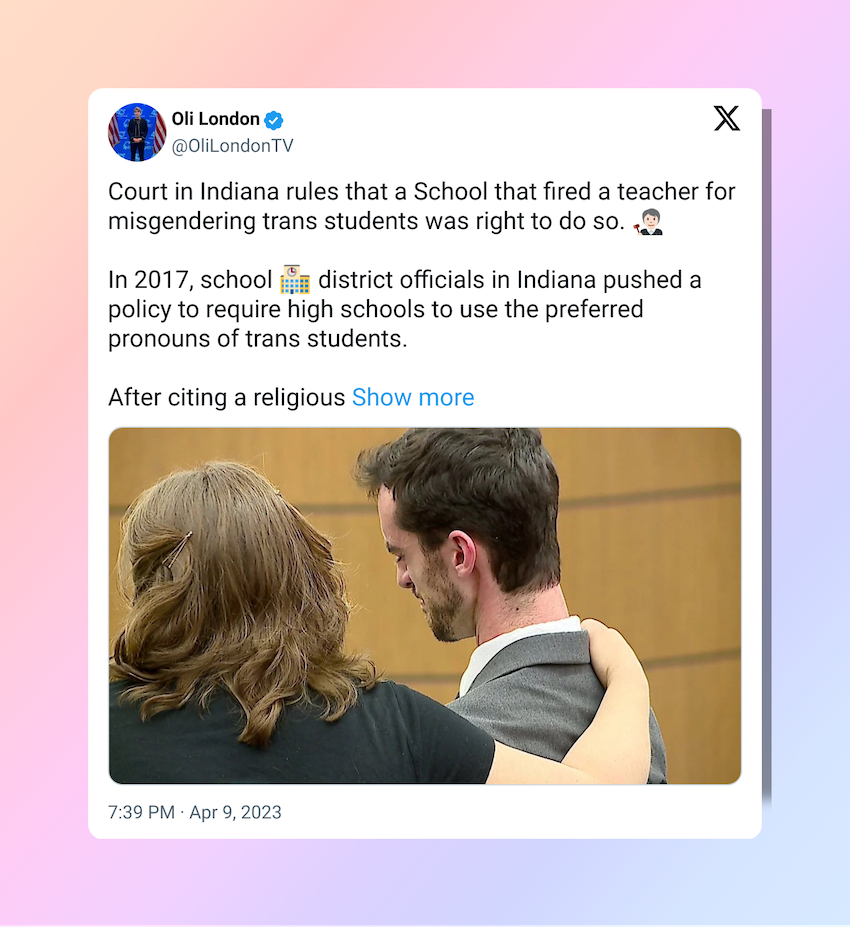
The case moved through federal court, where the district court granted summary judgment in favor of the school corporation. The court found that accommodating the Teacher’s request imposed an undue hardship because evidence showed it harmed students and disrupted the learning environment.
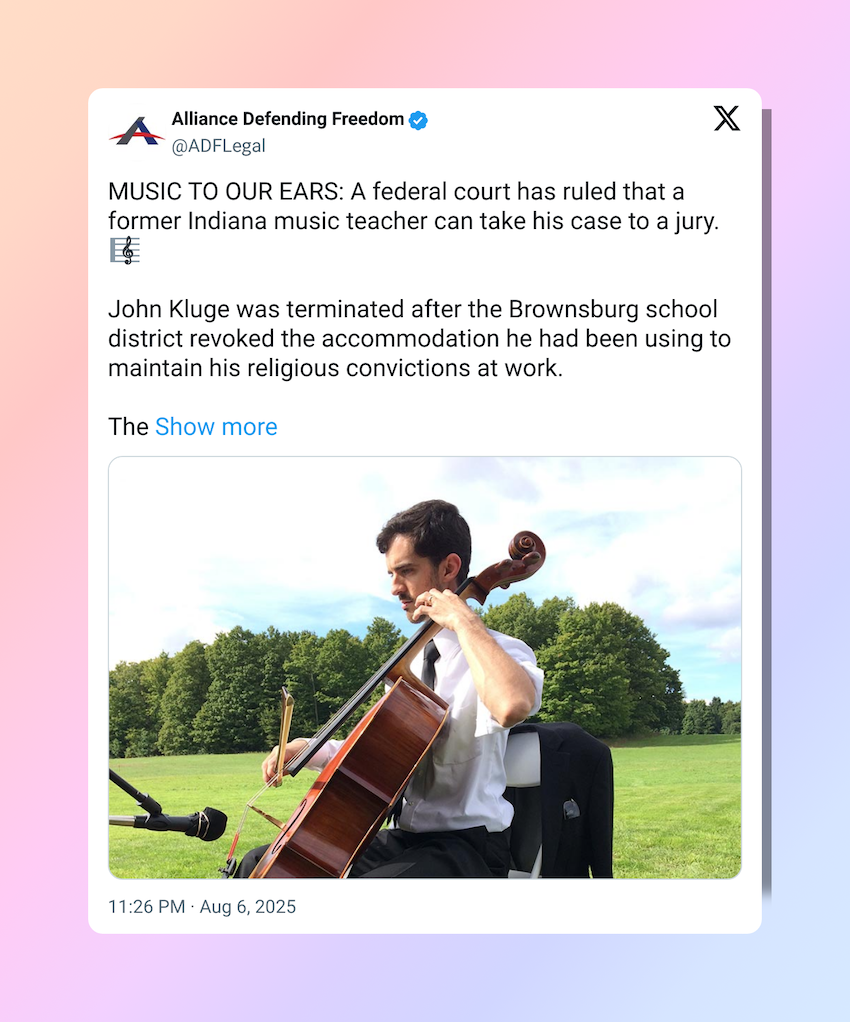
The Seventh Circuit Court of Appeals later affirmed that ruling. The appellate court emphasized that the undisputed evidence demonstrated harm to students and classroom disruption — and that such harm could not reasonably be considered minor or “de minimis.”
In other words, the courts agreed that protecting students’ well-being and maintaining an inclusive learning environment outweighed the requested religious accommodation.
A Supreme Court Shift Changes the Landscape
The case might have ended there — but in 2023, the U.S. Supreme Court revisited how courts should interpret “undue hardship” under Title VII. That decision clarified that employers must show substantial increased costs or burdens to deny religious accommodations.
Following that change in legal standards, Kluge’s remaining Title VII claim survived and was set to head toward trial.
Rather than proceed with further litigation, Brownsburg Community School Corporation agreed to settle.
According to Indiana Public Media, the district will pay $650,000 to resolve the lawsuit. As part of the settlement, the school corporation must also provide training to staff regarding Title VII protections.
Statements From Both Sides
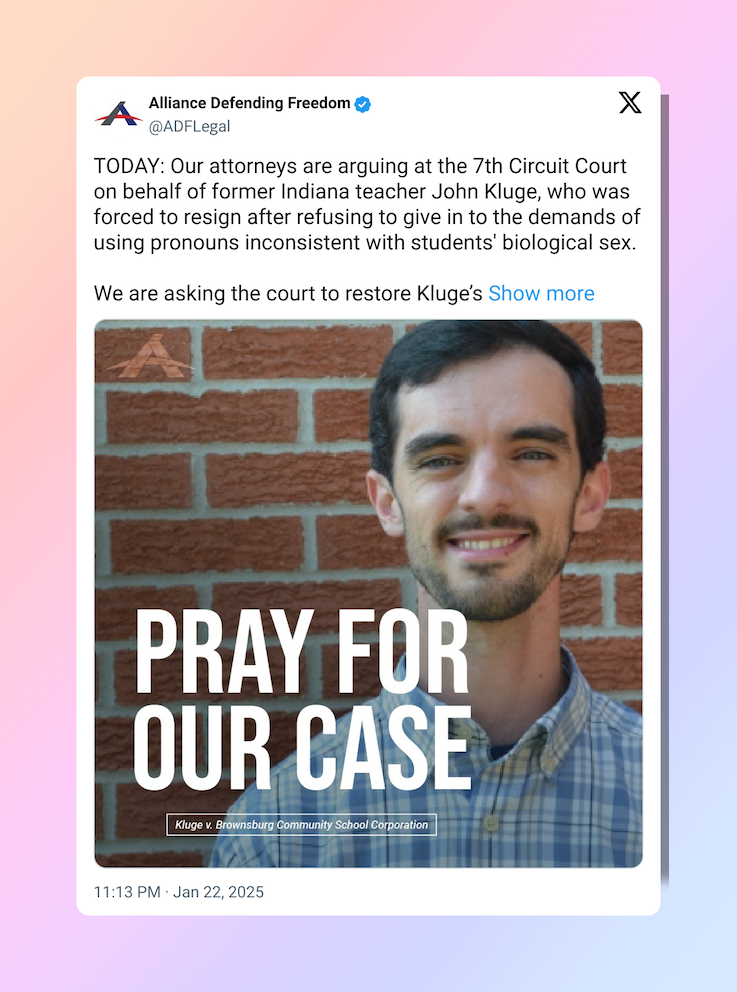
The Alliance Defending Freedom (ADF), which represented Kluge, framed the settlement as a win for religious liberty.
ADF Senior Counsel David Cortman stated that the outcome demonstrates teachers do not have to “bow the knee to ideological mandates” that violate their religious beliefs. The organization describes itself as the world’s largest legal group dedicated to protecting religious freedom, free speech, marriage and family, and parental rights.
Meanwhile, Brownsburg school officials emphasized that they had prevailed on most of the Teacher’s claims over seven years of litigation. In a public statement, the district said it continued to believe Kluge’s constitutional rights had not been violated. However, after extended deliberation, leaders determined settling the case was in the best financial interest of the district.
What This Means for LGBTQ+ Students
For LGBTQ+ advocates, the case underscores the ongoing tension between religious accommodation claims and protections for transgender students in schools.
Federal courts previously found that the Teacher’s naming practice caused measurable harm to students and negatively impacted the learning environment. Those findings were central to the rulings that sided with the school district before the legal standard shifted.
The settlement does not overturn those earlier findings. Instead, it reflects a strategic decision in light of evolving federal guidance on religious accommodation under Title VII.
At its core, the case raises a fundamental question: when a Teacher’s religious beliefs conflict with a transgender student’s affirmed identity, how should schools balance those rights?
While the Brownsburg case has concluded financially, the broader legal and cultural debate is far from over. Similar disputes continue to emerge across the country, often placing LGBTQ+ students and educators at the center of national conversations about identity, inclusion, and religious liberty.
The Bigger Picture
For LGBTQ+ communities, the issue isn’t abstract. A name is not just a preference — it is deeply tied to identity, dignity, and safety. Courts previously recognized that policies or practices that single out transgender students can carry real consequences for their well-being.
At the same time, federal law protects employees from religious discrimination, creating complex legal terrain for public institutions.
The Brownsburg case shows how quickly that terrain can shift. What was once considered settled under one interpretation of Title VII may look different after a Supreme Court clarification.
One lawsuit. One Teacher. A settlement of $650,000. And a reminder that classrooms remain one of the front lines in America’s evolving conversation about equality, faith, and whose rights prevail when they collide.
REFERENCE: JUSTICIA U.S. Law
I am so mad that the courts are giving preferential treatment to religious beliefs. They are just that – your own religious beliefs – not to be imposed on others. By allowing religious objections to have more weight then society they SCOTUS has changed the meaning and the intention of the first amendment. THIS MUST BE REVERSED. If someone does not like something due to their religion then too bad for them – make a change in beliefs or actions. Don’t force others to change for you!
So comforting to know you can receive a settlement of more than half a million dollars for using your convenient religious beliefs to blatantly disrespect a minor’s basic rights and identity. Disgusting and nauseating!