


France’s political scene is no stranger to drama—but the latest headlines surrounding Gabriel Attal prove that sometimes, the most personal revelations can ignite the loudest debates.
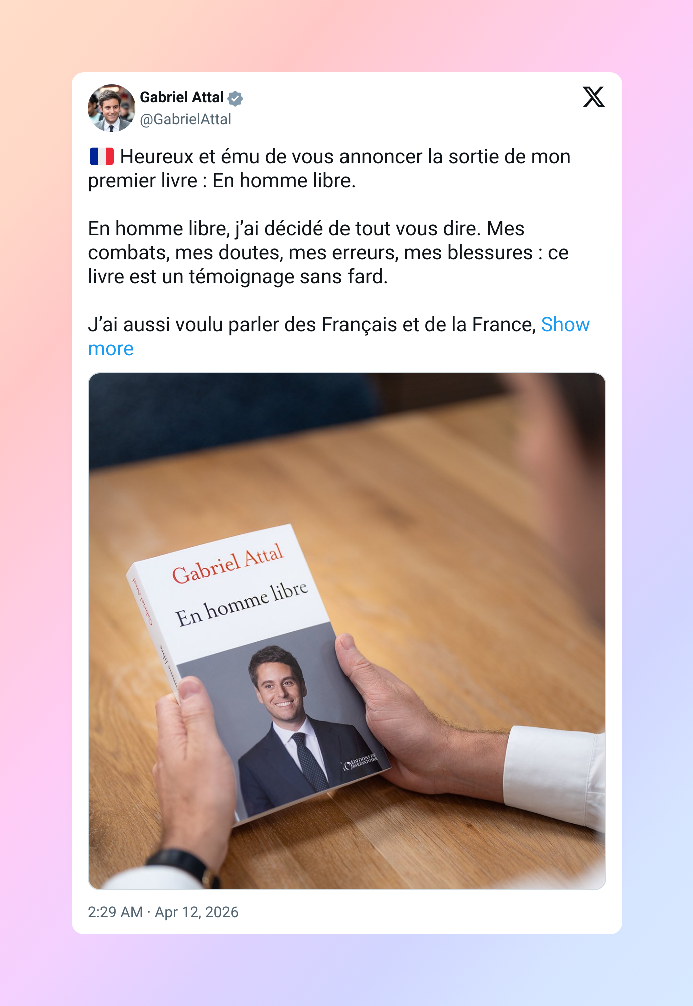
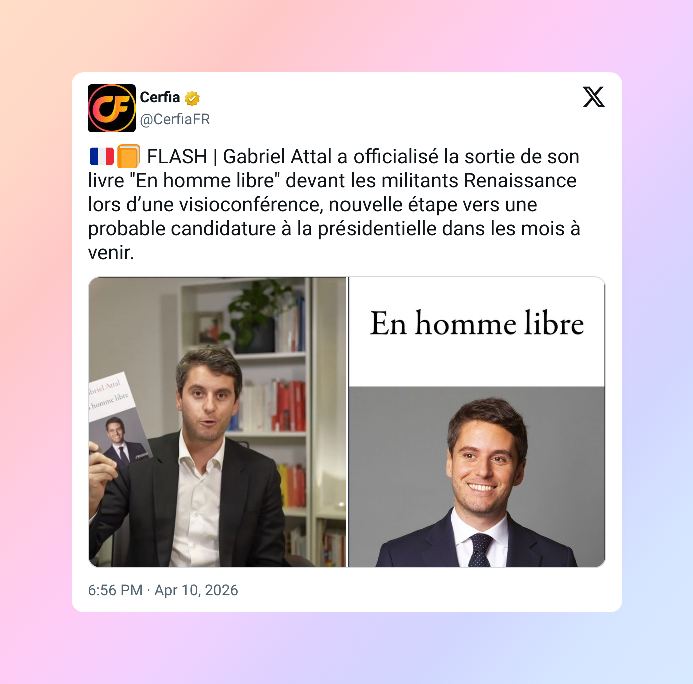
The former French prime minister officially released his memoir, En Homme Libre (As a Free Man), on April 23, offering readers an intimate look into both his political journey and his private life. While the book tackles major themes such as his split from President Emmanuel Macron and the turbulence within French politics, it’s one particular chapter that has captured—and divided—public attention.
RELATED: Two Versions of June: Pride and Tennessee’s “Nuclear Family Month” Collide
A Chapter Titled “Gay”
At the heart of the controversy is a chapter simply titled “Gay,” where Attal candidly reflects on his relationship with Stéphane Séjourné, a European commissioner and a significant figure in his personal life.
The two entered a civil union in 2017, separated in 2022, and reconciled in 2024—a timeline that Attal lays out with striking openness. During promotional appearances, he didn’t shy away from expressing the depth of that connection, describing his partner as the “love” of his life.
Attal also shared that the couple hopes to have a child, though they have faced challenges adopting as a gay couple. Alongside these revelations, he acknowledged the darker side of public life, noting that he experiences homophobia “almost every day.”
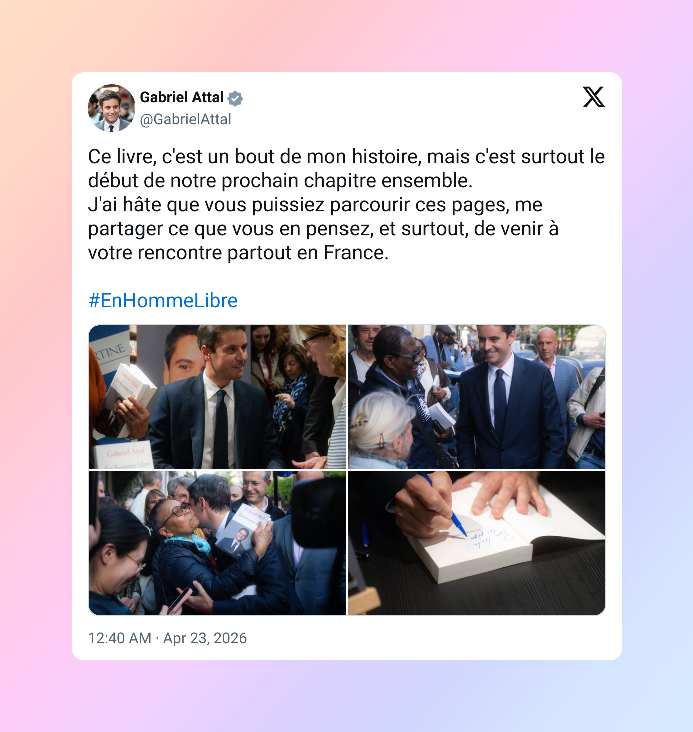
In Attal’s social media, he writes:
“En homme libre, I’ve decided to tell you everything. My struggles, my doubts, my mistakes, my wounds: this book is an unvarnished testimony.”
Media Backlash: “From Transparency to Exhibitionism”
Not everyone has welcomed Attal’s openness. Segments of the French right-wing media have sharply criticized what they see as an overemphasis on his private life.
Speaking on Europe 1, political commentator Gérard Carreyrou argued:
“We need a form of transparency. But here we are slipping from transparency to exhibitionism.”
Presenter Marc Menant echoed similar concerns, saying:
“What bothers me is that suddenly [the private life] becomes the essential element about a man. It amounts to sullying the principle of politics a little bit.”
The criticism reflects a broader tension in modern politics: how much of a public figure’s private identity should be part of their public narrative? And vice versa, how much of these public commentators opinions matter?
Owning the Narrative
Attal, however, has been clear about his reasoning. In an interview with Le Point, he defended his decision to speak openly:
“When you don’t talk about [your private life] yourself, others do it for you. I am neither trying to highlight my relationship nor hide who I am,”
For Attal, the memoir is less about spectacle and more about control—choosing to define his own story rather than allowing speculation to do it for him.
A Political Future in Focus
Beyond the personal revelations, En Homme Libre arrives at a pivotal moment in Attal’s career. The 37-year-old politician, who briefly served as prime minister in 2024, is widely seen as a potential contender in France’s next presidential election.
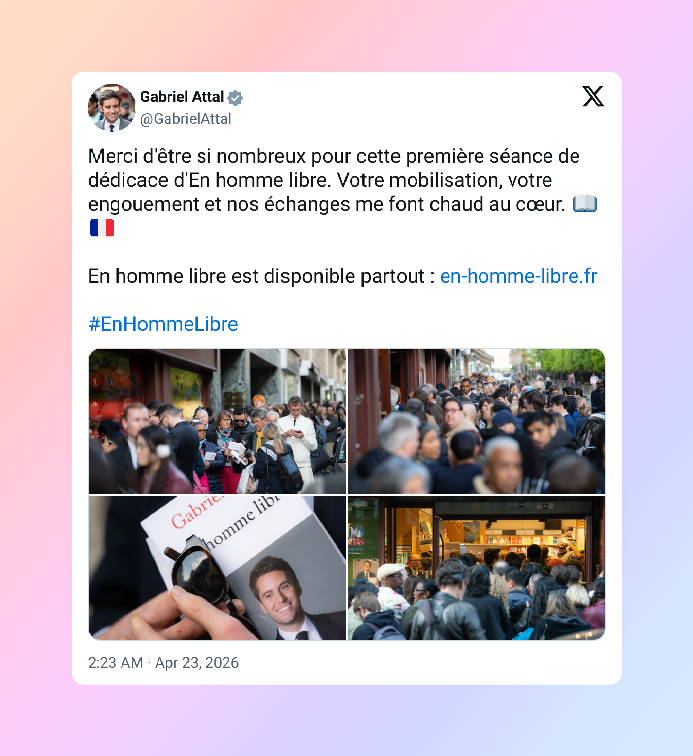
Currently leading Macron’s party, Renaissance, Attal has not hidden his ambitions. As he told Le Point:
“I believe that I know how France should be presided over,”
His rise comes amid a shifting political landscape. The race to lead France’s center-right is increasingly shaping up as a contest between former Macron allies—many of whom are now distancing themselves from the president as his popularity wanes.
The Personal Is Political
Attal’s memoir ultimately sits at the intersection of identity and ambition. In choosing to write openly about his life as a gay man in French politics, he has reignited long-standing debates about visibility, authenticity, and the boundaries of public life.
Whether seen as courageous transparency or, as critics claim, unnecessary exposure, one thing is clear: Attal has succeeded in commanding attention—not just as a politician, but as a person determined to tell his story on his own terms.
And in today’s media landscape, that may be the most political act of all.