


Instead of recognizing Pride Month, Tennessee lawmakers have moved to designate June 2026 as “Nuclear Family Month,” and for many LGBTQ+ advocates, the message behind that shift feels anything but subtle.
Every June, rainbow flags rise, parades take over city streets, and communities around the world celebrate Pride—a time rooted in resistance, remembrance, and joy. But in Tennessee, this year’s June is shaping up to look very different.
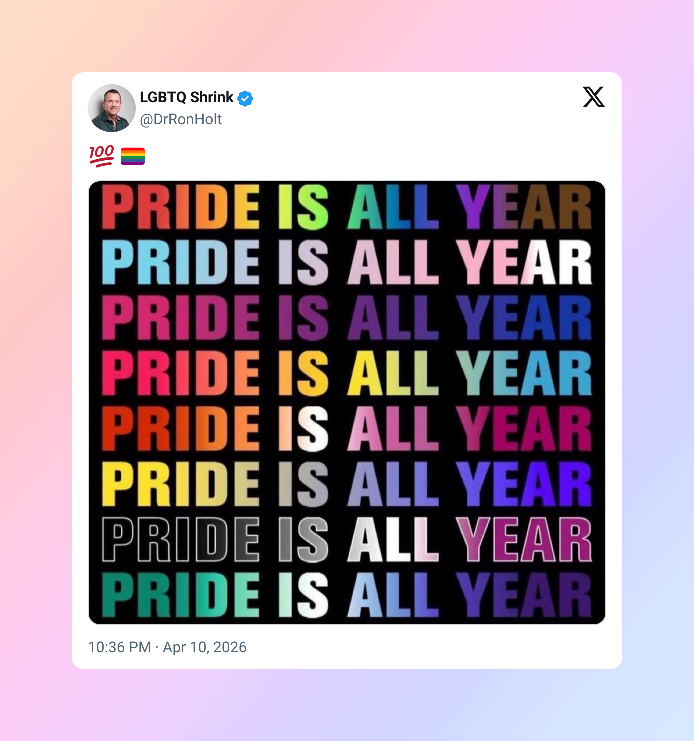
A Quick History of Pride
To understand why this matters, it’s important to remember where Pride comes from.
Pride Month traces its origins back to the Stonewall Uprising in June 1969—a series of protests led by LGBTQ+ individuals resisting police raids at a New York City bar. One year later, in June 1970, activists held the first anniversary march, then known as Christopher Street Liberation Day.
What began as a protest quickly evolved into an annual celebration. Decades later, in 1999, Bill Clinton officially recognized June as Pride Month in the United States, cementing its place in the cultural and political landscape.
At its core, Pride has always been about visibility, inclusion, and the right to exist openly.
Tennessee’s “Nuclear Family Month”
That’s what makes the recent move in Tennessee so controversial.

Governor Bill Lee signed House Joint Resolution 182 on April 9, officially designating June 2026 as “Nuclear Family Month.” The resolution defines a family as “one husband, one wife, and any biological, adopted, or fostered children,” framing this structure as both foundational and ideal.
Sponsored by Republican state representative Bud Hulsey and supported by multiple GOP lawmakers, the measure describes this model as “God’s design for familial structure” and “God’s perfect design for humanity.”
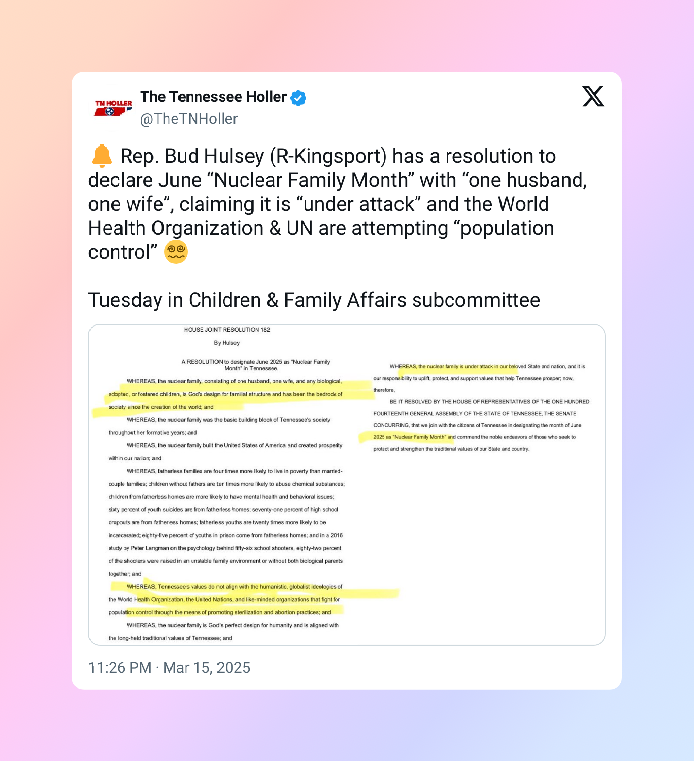
Critics argue that this language doesn’t just promote one type of family—it excludes others. LGBTQ+ families, single-parent households, and nontraditional family structures are notably absent from the definition.
And coming during June, a month globally associated with Pride, the timing feels intentional.
The Message Behind the Move
For many, this isn’t just about terminology—it’s about visibility.
Replacing Pride Month with “Nuclear Family Month” in Tennessee sends a clear signal about which families are being uplifted and which are being sidelined. LGBTQ+ advocates say it reinforces outdated ideas about what constitutes a “real” family, despite the growing diversity of households across the country.
The concern isn’t just symbolic. Language like this can shape policy, influence public perception, and impact how communities feel about their place in society.
Escalating Rhetoric
Adding to the rhetoric are comments made in February from Monty Fritts, a Republican candidate in Tennessee’s 2026 gubernatorial race.
During a guest appearance on a Christian nationalist podcast, Fritts made headlines after advocating for extreme measures against those involved in providing gender-affirming care to trans and non-binary minors—including parents, guardians, and medical professionals.
The remarks, which circulated widely online, have drawn strong criticism and heightened concerns about the broader political climate surrounding LGBTQ+ rights in the state.
Tennessee state Rep. Monty Fritts, who is running for governor, calls for a law that would allow for capital punishment for “anyone who would try to disfigure a child and change their sex through hormones or surgery”: “I think it aligns with scripture.” pic.twitter.com/gPbQqnFXpz
— Right Wing Watch (@RightWingWatch) January 29, 2026
RELATED: When Parents of Trans Kids Become the Target of Political Extremism
Pride Has Always Been Resistance
Moments like this are a reminder that Pride has never been just a party—it’s a protest.
From the streets of New York in 1969 to today’s ongoing battles over recognition and rights, Pride exists because visibility has always been contested. The push and pull between progress and resistance is, in many ways, part of its DNA.
And while policies and proclamations may shift, the meaning of Pride remains rooted in community and resilience.
The Bigger Picture
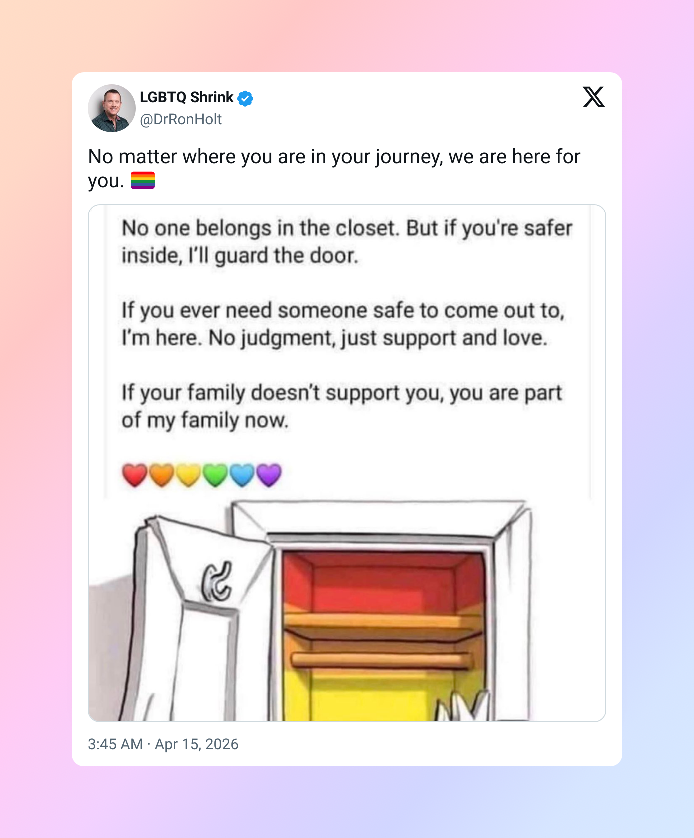
The debate unfolding in Tennessee reflects a larger national conversation about identity, inclusion, and who gets to define “family.”
Because the reality is simple: families don’t all look the same. They never have.
They include same-sex couples raising children, chosen families built through friendship and support, and individuals who carve out their own definitions of belonging. Pride Month exists to celebrate that diversity—not erase it.
Final Word
Calling June “Nuclear Family Month” doesn’t erase Pride—it just underscores why it’s still needed.
Because Pride isn’t defined by a proclamation. It’s defined by people.
And no matter what it’s called, June will always belong to those who continue to show up, speak out, and celebrate who they are—loudly, proudly, and without apology.
The “family” of human kind comes in all sorts and shapes. It was like this in the past, is in the present and will be in the future. No need for any apartheid what so ever.
Tennessee is just too RED!
While im sure country music has many supporters of this law, the absolute silence from Nashville speaks volumes. Its not just this law, its the dozens of laws over the last few years.