


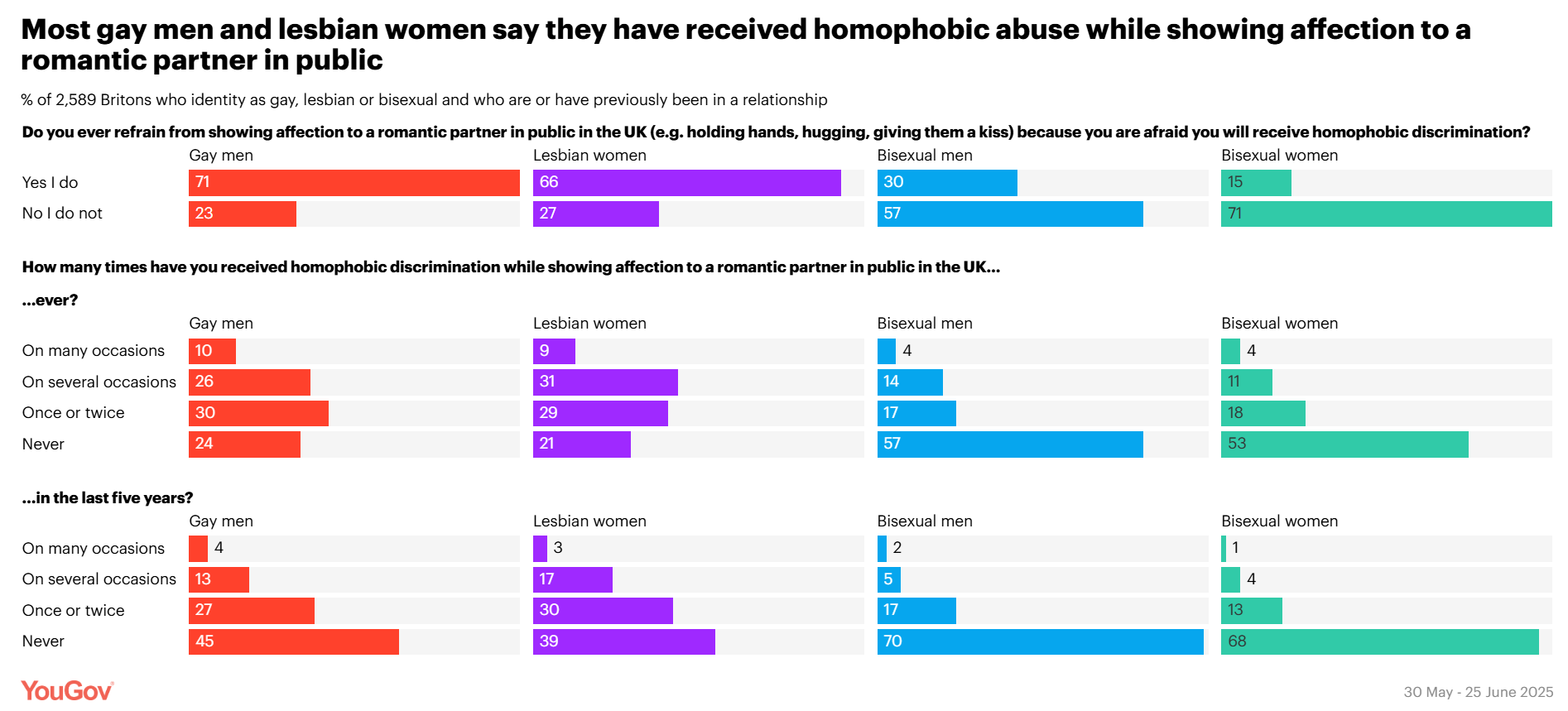
Public Displays of Affection (PDA) have long been a touchy subject—no pun intended. For straight couples, a hand-holding stroll through a city square or a kiss in the park is pretty much a non-event. But for many LGBTQ+ people, these simple acts of love are laced with fear, hesitation, and a gnawing sense of vulnerability. A recent YouGov poll brings these uncomfortable truths into sharp focus, showing that 71% of gay men in the U.K. are less than thrilled at the idea of public displays of affection. But this isn’t just about awkwardness; it’s about something much deeper and darker: fear.
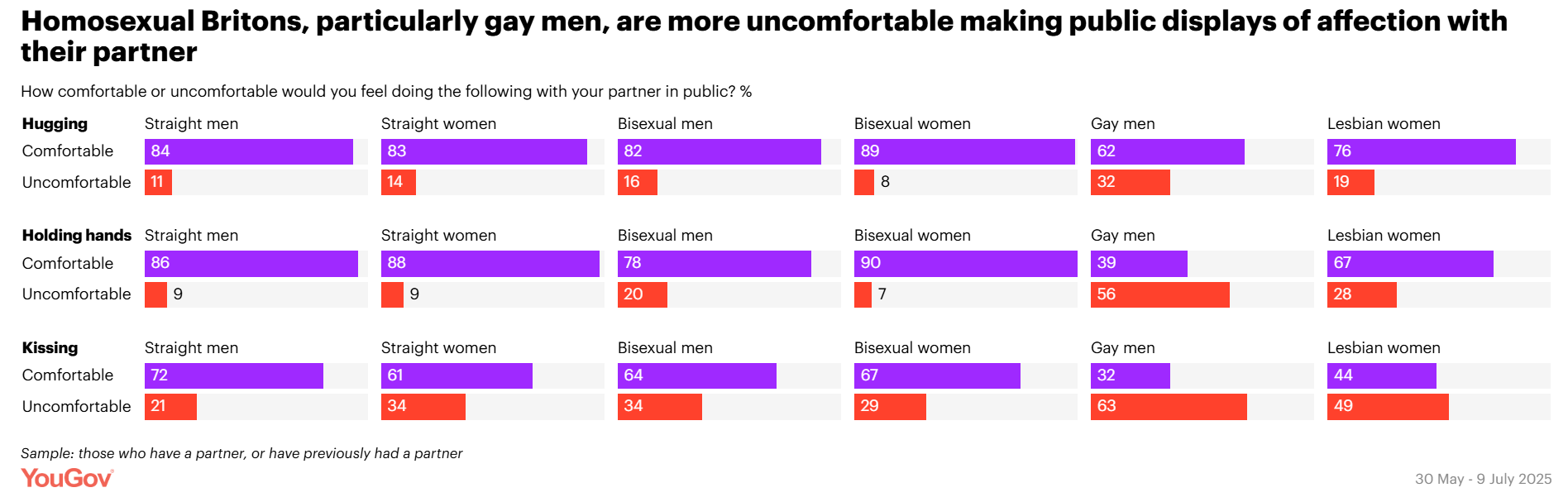
The study, which surveyed 2,959 U.K. residents, found that queer people—especially gay men—are far more likely to avoid showing affection in public spaces, not due to discomfort but because of the potential for harassment or violence. As one might expect, gay men lead the pack when it comes to PDA anxiety, with 63% of them saying they’d feel uncomfortable kissing their partners in public. A slightly less startling but still significant 56% said they would avoid holding hands.
And let’s be clear—these fears are not hypothetical. They are rooted in real-life experiences. Two-thirds of gay men and lesbian women (66-69%) reported experiencing homophobic discrimination while showing affection in public. Alarmingly, about 44-50% of them have faced this kind of discrimination in just the past five years. The numbers are sobering, but they shouldn’t be surprising. In the year leading up to March 2024, the U.K. reported 22,839 hate crimes related to sexual orientation, and another 4,870 transphobic hate crimes.
This rise in hate crimes isn’t happening in a vacuum. The broader socio-political climate in the U.K. has become more hostile toward LGBTQ+ individuals, particularly transgender people. With policies restricting access to healthcare for trans youth and the U.K. Supreme Court ruling that legal definitions of “man” and “woman” are based on “biological sex” rather than gender identity, the safety net for queer individuals is shrinking. This ongoing erosion of rights has made it clear that not all lives are equally protected, and as a result, LGBTQ+ people find themselves more and more in a position where they must weigh the potential consequences of simply holding hands in public.
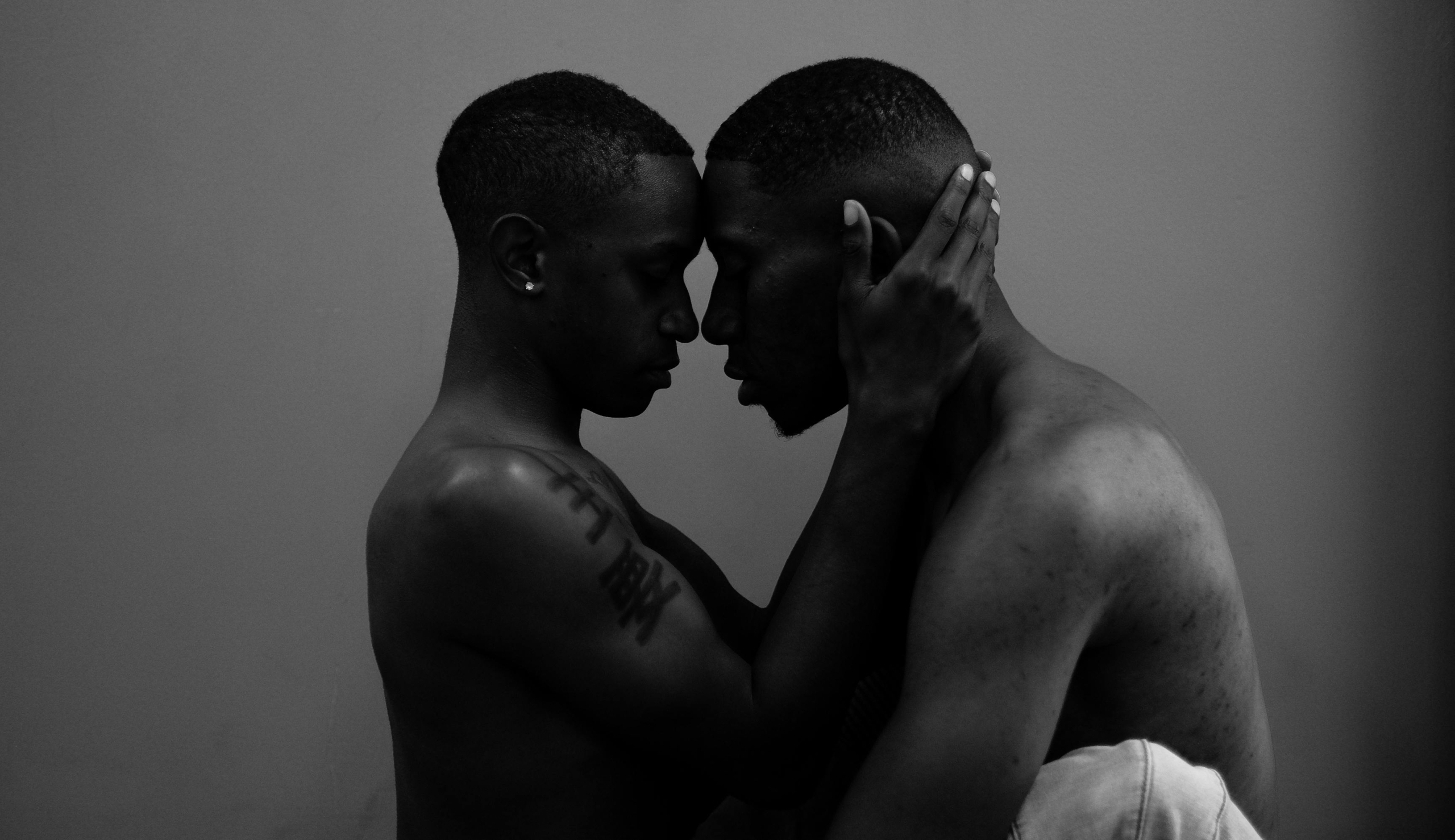
The underlying fear is palpable. When it comes to kissing or even showing affection in public, many gay and queer people are asking: Is it worth it? Should we risk being harassed, belittled, or even attacked just to express our love? Sadly, the answer for many seems to be no.
It’s not just about PDA; it’s about feeling seen—or, more precisely, feeling unsafe being seen. Every time a queer couple steps outside their front door, they have to decide: will we risk exposure, or will we keep our love behind closed doors, hidden from view, in a society that may not approve? For too many, the choice is clear.
So, next time you’re holding hands with your partner on a sunny afternoon, think about the queers who can’t do the same without second-guessing their safety. Their discomfort is not born from a reluctance to show affection, but from an all-too-real fear of what might happen if they do.
Source: YouGov