


Andrew Pledger remembers it like it was yesterday—the walk that led him to the worst experience of his life. A concrete dorm hall, chipped white paint on the walls, and a lingering smell of sweat thick in the air. His steps echoed as he climbed the creaky stairs, each step a reminder of his mental weight. At the top was a door, a gateway to what was supposed to “fix” him.
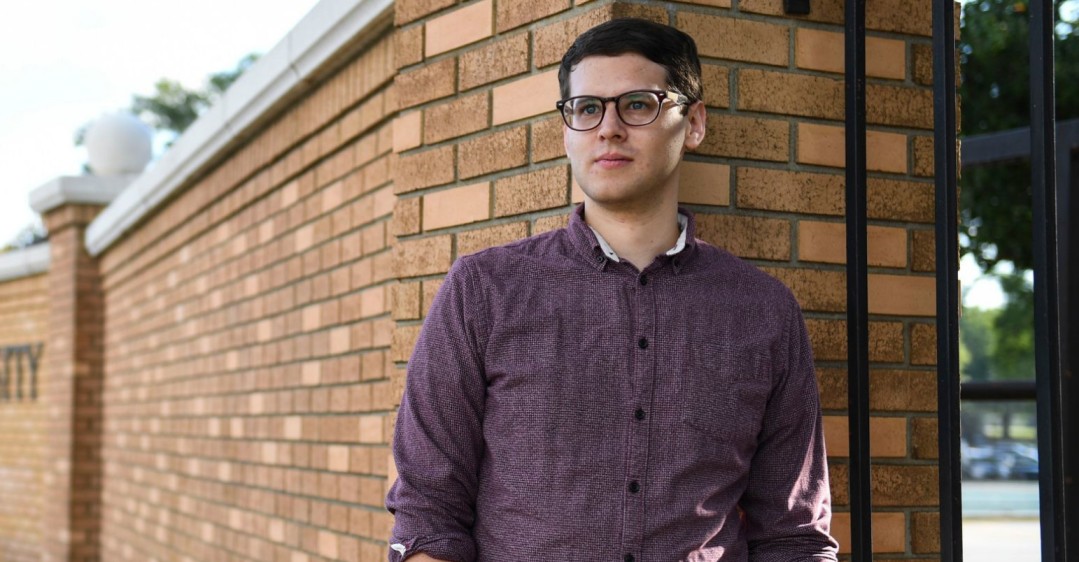
“I almost couldn’t hear him anymore … time just completely slowed down,” Pledger says, recalling the fateful meeting where everything around him faded. His body felt disconnected, as if time itself had paused, leaving him floating somewhere between fear and disbelief.
What happened in that room? Well, that’s where it gets tricky. Pledger can’t remember much of the session that was supposed to “change” him. All he can recall is the profound pain in his chest as he stumbled out, an hour having passed in what felt like moments. In the haze of confusion, one thought was loud and clear: This is wrong. And that was his mind’s defense mechanism kicking in—dissociation, a common reaction for many survivors of conversion therapy.
RELATED: Matthew Scott Montgomery on Going Through “Conversion Therapy”
For Pledger, this was just the beginning of a deep and painful journey. He had just been subjected to conversion therapy, the discredited and harmful practice that claims to help people “change” their sexual orientation. But let’s be real: it doesn’t work. It never has. Virtually every major medical association denounces it, and research has repeatedly shown that it harms those who endure it, increasing their risk for depression, self-harm, and even suicide.
RELATED: Trump Administration to End LGBTQ+ Youth Suicide Hotline
Yet, conversion therapy is still very much alive in the shadows, practicing in nearly every state across the country, and resurging in more subtle, secretive forms.
The Weight of “Difference”
Pledger’s journey began long before that session. Growing up in Winston-Salem, North Carolina, in an Independent Fundamentalist Baptist church, he always knew he was different. And that difference was something to be ashamed of. He couldn’t dance, he couldn’t listen to secular music, and friends from outside the church were off-limits. But there was one word that haunted him the most: sodomite. As a teenager, Pledger started to experience something that terrified him: a crush.

“I would just pray and pray to God—‘just take this away from me, change me, change me,’” he recalls, his voice trembling at the memory. He thought that if he didn’t change, God would kill him. That’s a hell of a thing for any teenager to carry around. The self-loathing, the fear, the isolation—it all built up until the inevitable happened. He ended up on that dusty couch, being “treated” for something that wasn’t a disease.
But it wasn’t just conversion therapy that pushed him there. He had been relentlessly bullied. He had harmed himself. He had even considered ending it all one night. The pain he felt was so deep that anything—even a deeply flawed, pseudoscientific practice—seemed like a way out.
“I wanted relief,” Pledger admits. But relief is a dangerous thing when it’s packaged in harmful lies. The session he endured at Bob Jones University—a private evangelical school known for its conservative teachings—wasn’t just a cure. It was a betrayal of his very self.
The Subtle Torture of “Love the Sinner, Hate the Sin”
Bob Jones University wasn’t a place of acceptance. “I wanted to be as small as possible and unnoticed,” Pledger says, describing his time there. A campus where interracial dating was only allowed after 2000, and where homosexuality was explicitly labeled as “a sexual perversion.” But even his attempt to blend into the background failed. He was bullied—students following him around, making kissing noises, yelling slurs down the hall.
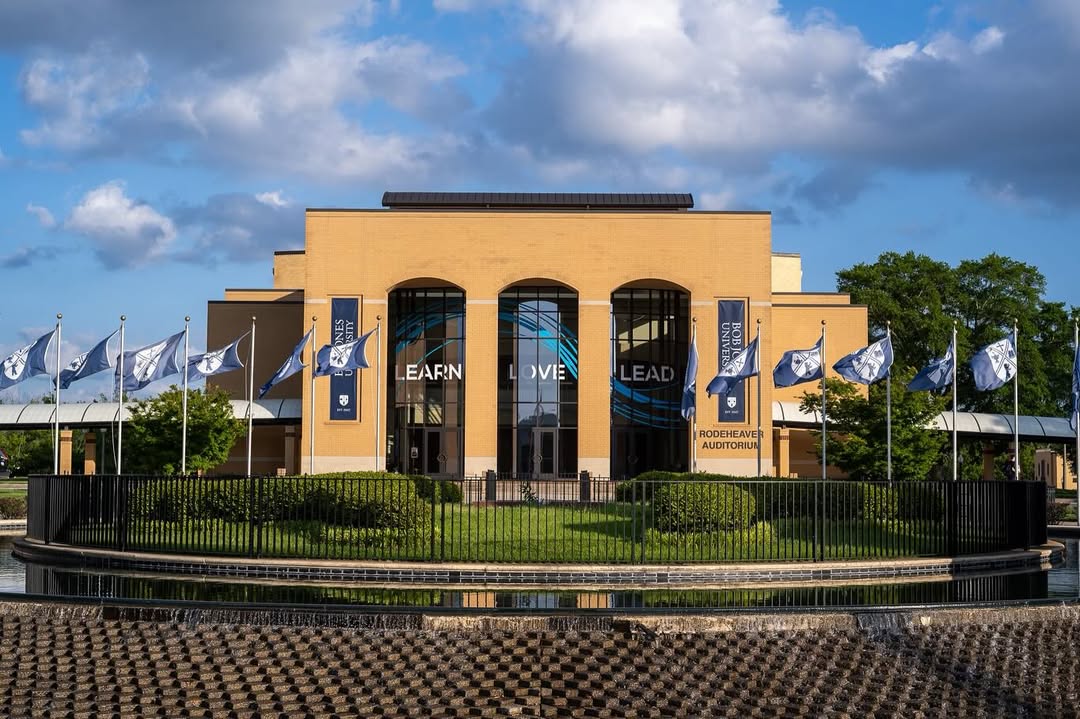
And when Pledger sought help, the response wasn’t compassion. It was more shame. He was told that he was “paying for his sin.” The message was clear: Change who you are, or you’re unworthy.
The Scarring “Therapy” That Lingers
Conversion therapy isn’t just about a single meeting or a single book like the one Pledger was handed—a relic of the ex-gay movement, promising that same-sex desires could “diminish in both their frequency and their intensity.” No, conversion therapy is about making people feel less than. It’s about convincing them that their natural state is evil, and their only hope is to repress who they are.
The session itself left Pledger numb, but the words still echo in his mind. The BJU staffer who “treated” him read from Joe Dallas’ book, Desires in Conflict, emphasizing the idea that “without Christ, this isn’t getting solved.” Pledger says he never went back for another session, and we don’t blame him. The session wasn’t a therapeutic process—it was an assault on his identity.
As for the university, Bob Jones hasn’t responded to requests for comment, but it’s worth noting that South Carolina, where the school is located, doesn’t have a state law banning conversion therapy. In fact, the state is one of the many places where this dangerous practice still thrives.
The Bigger Picture: A Practice That Refuses to Die
Conversion therapy isn’t some relic of the past; it’s alive, albeit evolving. The Christian far-right, with its growing influence, has ensured that this pseudoscience has been given a fresh coat of paint. “Proponents of conversion therapy understand that this is not a popular practice,” says Casey Pick of the Trevor Project. They’ve learned to rebrand and use new, less obvious terms for it. Still, the outcome remains the same: harm.
The consequences of conversion therapy are not just psychological; they can be deadly. UCLA’s Williams Institute found that those subjected to the practice are nearly twice as likely to attempt suicide. For some, like the men who once led the ex-gay movement, the remorse is unbearable. John Smid, who once ran one of the largest ex-gay ministries, now looks at a list of 475 people whose sexualities he tried to change—and he wishes he could undo the damage.
“We hurt people,” says Bill Prickett, another former ex-gay leader. “We didn’t do it intentionally. But I know we did.”
Yet, despite the mounting evidence against conversion therapy, states like Kentucky have overturned bans on the practice, and many are pushing for it to be legalized once again. This ongoing battle is a fight for the rights of parents to “choose” treatment for their children—but at what cost? Is the freedom to harm worth it?
Finding a Path to Healing
Not everyone walks away from conversion therapy broken beyond repair. People like Andrew Pledger, though scarred, have found a way out. They’ve transformed their pain into advocacy, becoming therapists, support group leaders, and activists.
Andrew Pledger’s escape was hard-won. After leaving Bob Jones University, he went on to earn a degree in psychology, determined to help others navigate the same trauma he endured. And even though the scars of his past linger, Pledger has made peace with his sexuality.
“I am at peace with who I am,” he says, “and my sexuality. There’s no desire to change that.”
And that’s the message we all need to hear: conversion therapy may leave scars, but it can’t change who you are. Your truth is unbreakable.
If you or someone you know is struggling, please remember that you don’t have to go through it alone. The 988 Suicide Crisis Lifeline is available 24/7, ready to offer support when you need it most. Reach out—it’s okay to ask for help. You matter.
Source: CNN