


John Partridge has been part of the British public’s consciousness for decades, from his iconic role as Christian Clarke on EastEnders to his recent performances on stage and screen. Yet, despite his fame, he can’t escape the casual homophobia that still lurks just beneath the surface of everyday life.
Just last month, he encountered one of his strangest homophobic moments yet. While in Greenwich Park, a woman told him to “suck a rainbow.” Partridge, ever the one to turn a phrase with flair, couldn’t help but laugh. “I pissed myself,” he beams. “I know this is meant to be some horrendous slur at me right now, but you know what? If I could find one, I would f***ing suck the life out of it. Show me that rainbow!” He may have brushed it off with humor, but the fact remains: homophobia in everyday life is a reminder that, while progress has been made, it’s still an ongoing battle.
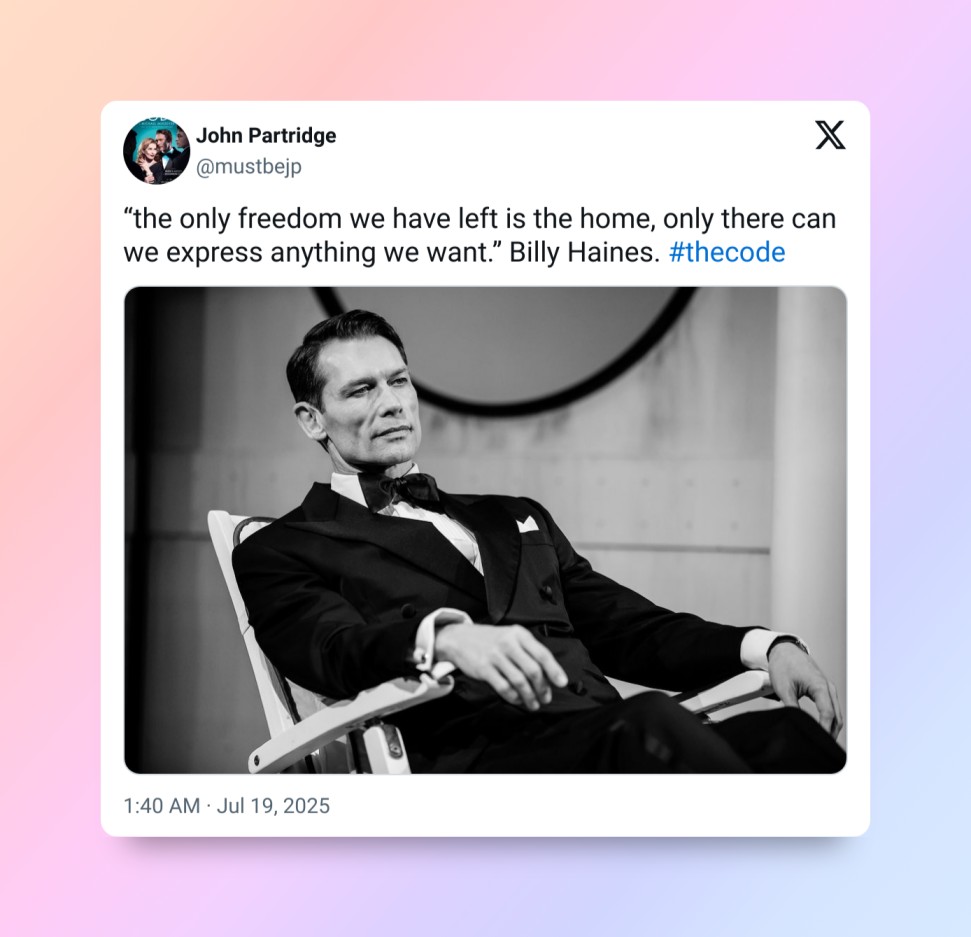
This tension between progress and lingering prejudice is precisely what drew Partridge to his current role in The Code, a play by Michael McKeever. In it, Partridge plays William ‘Billy’ Haines, a 1930s movie star who was famously one of the first out gay actors in Hollywood. As he explains, Haines was MGM’s golden boy in the mid-1920s, poised to be one of the biggest stars of Hollywood’s Golden Age. But in 1933, MGM gave him an ultimatum: enter into a lavender marriage to protect his image, or risk losing his career. Haines chose the latter. “He is really an unsung LGBT hero… I knew nothing about him,” Partridge admits. “I was a little bit ashamed.”
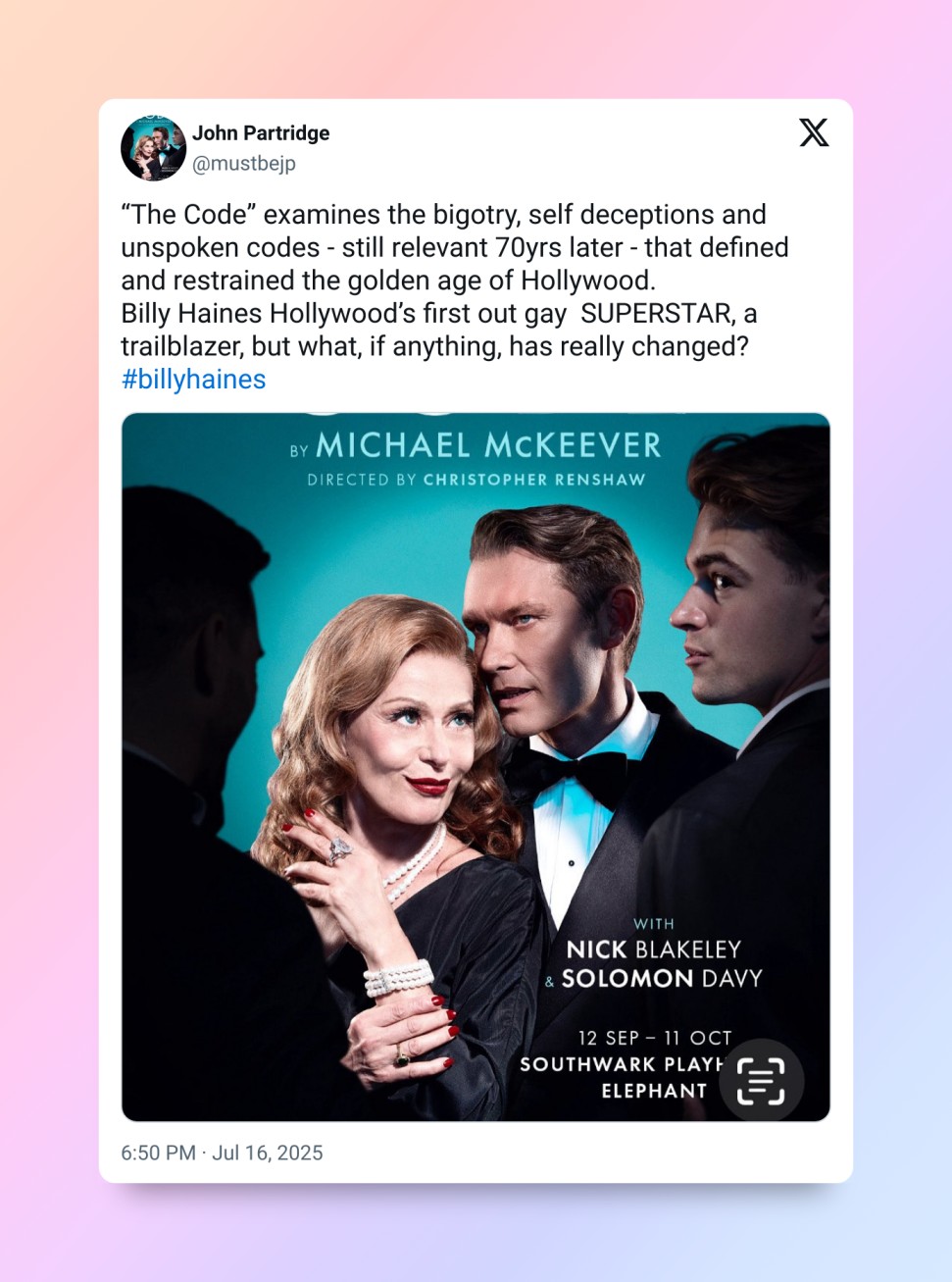
Partridge’s portrayal of Haines in The Code is more than just a performance—it’s a personal discovery, an exploration of the hidden histories of queer icons who had to make unimaginable sacrifices to protect their identities in an industry that thrives on image and public perception. As he steps into the shoes of the brave, boundary-pushing Haines, Partridge reflects on the ongoing lack of representation for gay actors in leading roles today. “You name me one. A-list. Out. Hollywood. Star,” he challenges. “And by that, I mean somebody who actually leads a motion picture. There aren’t any.”
His frustration is palpable. While there are certainly more openly gay actors on screen now than in decades past, when it comes to leading roles in major films, the industry still has a long way to go. Partridge isn’t wrong in pointing out that someone like Jonathan Bailey—who’s undoubtedly on the rise—still isn’t leading Hollywood blockbusters. “Jonathan Bailey’s not the lead actor in Wicked! He’s number two or number three!” Partridge exclaims, laughing at the suggestion that Bailey could land the iconic role of James Bond.
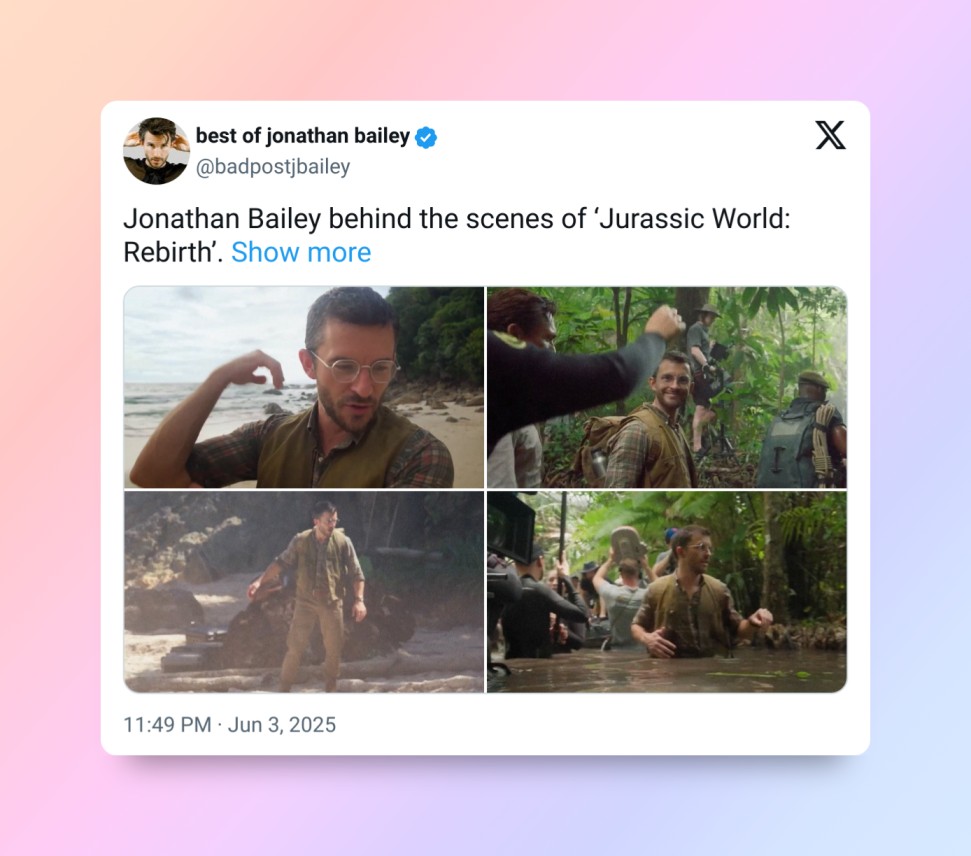
That being said, one of the most inspiring examples of a gay actor making strides in Hollywood right now is Jonathan Bailey. While many of his peers have been relegated to supporting roles, Bailey is proving the naysayers wrong. He’s been making waves as the lead in Jurassic World: Rebirth, a role that has not only showcased his talent but also made his iconic glasses a symbol of queer visibility. Beyond acting, Bailey has also become a prominent advocate for the LGBTQ community, channeling his newfound fame into charity work and breaking boundaries in the process. His rise isn’t just about playing the “best friend”—he’s out here leading films, and that’s something worth celebrating.
It’s a stark reminder of the limits still placed on LGBTQ+ talent. The last gay actor to win the Oscar for Best Actor was Kevin Spacey in 1999, before his own controversial coming out. Partridge calls it what it is: “It’s absolute homophobia. There’s no other word for it.”
In fact, many of the biggest stars of the 20th century—Cary Grant, Ramon Novarro, Anthony Perkins—remained in the closet for fear that their careers would end if their sexuality was discovered. “There are hundreds of actors that still do it now,” Partridge says. “They will still be penalized for it.”
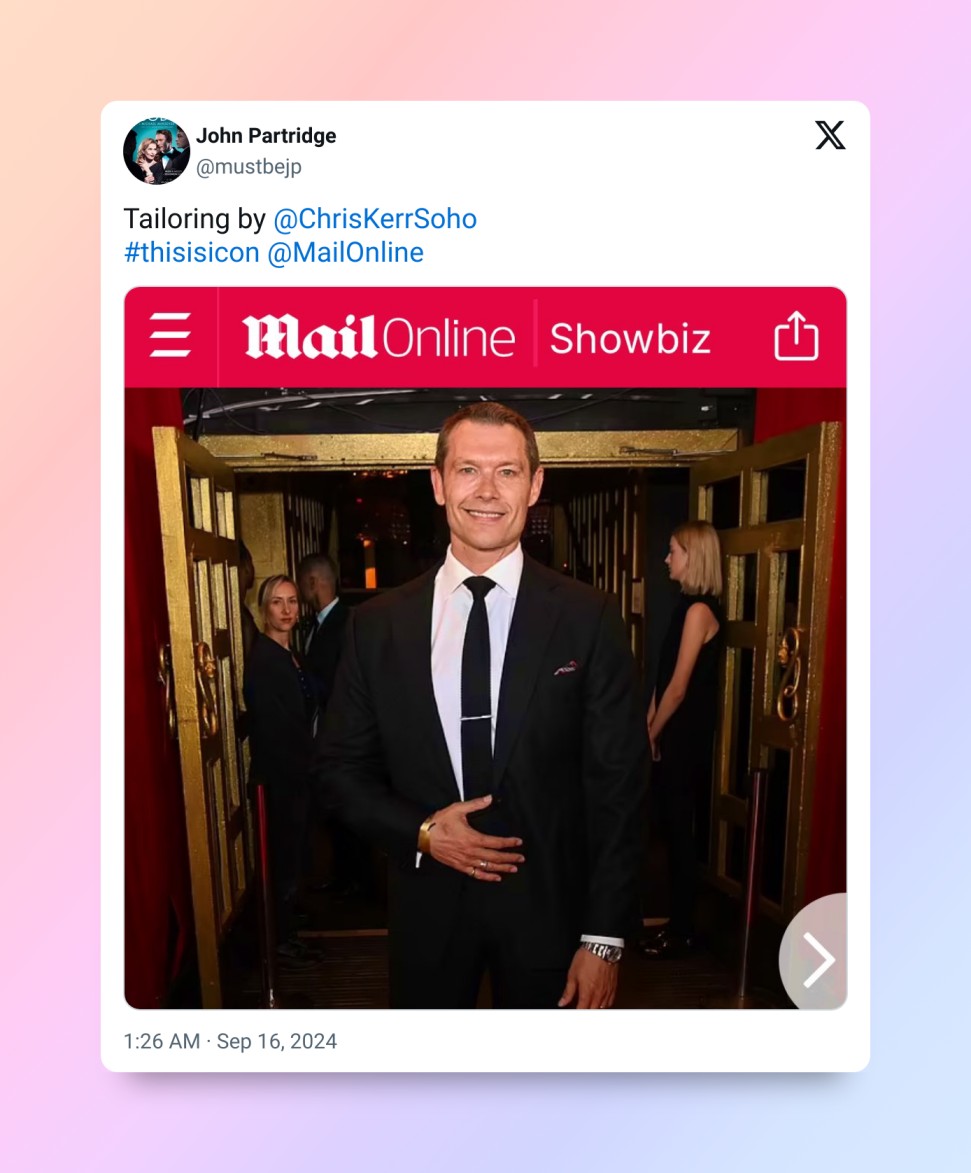
While Partridge himself has been out for much of his career, his time on EastEnders wasn’t without its own challenges. As a household name in the UK, Partridge found that his sexuality was often the first thing tabloid writers latched onto. While he doesn’t mind it personally, it does reinforce the stigmas that still linger. “If [actors] speak about their sexuality, they will be penalised for it,” he says matter-of-factly.
Even with this awareness, Partridge’s career has continued to thrive. He’s worked extensively in musical theatre, starred in West End hits like Grease, Miss Saigon, and Rent, and remains one of the most beloved figures in British theatre. His personal life, too, has been a source of stability—he’s been in a relationship with actor Jon Tsouras since the early 2000s.
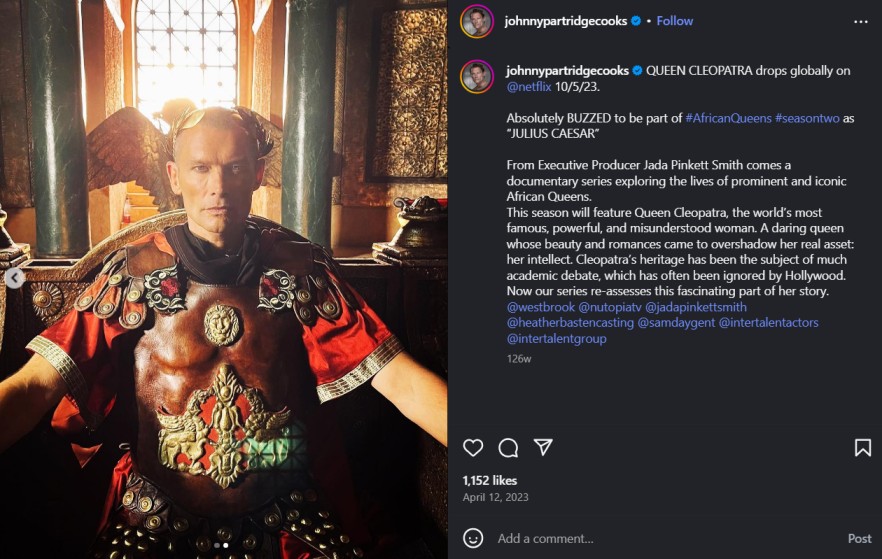
Yet even now, Partridge faces challenges that remind him how far the industry still has to go. His experience with Netflix’s Queen Cleopatra, where he starred as Julius Caesar, left him with a bitter aftertaste. On the first day of filming, the director confided that he was the only one who wanted Partridge in the role. “Nobody wanted you but me,” she told him. The sentiment, though meant as encouragement, underscored what Partridge already knew: in an industry that often prizes conventional masculinity, a gay actor like him wouldn’t be top of the list for traditionally masculine roles. “It wouldn’t matter if I wanted to do [a masculine role] because I wouldn’t be seen for it anyway,” he says with a rueful chuckle.
Despite the challenges, Partridge remains resilient. He’s well aware that while much of the world has progressed in terms of LGBTQ+ rights, the struggle for true equality is far from over. “I was a gay person in the ‘80s, through [Section] 28, all of that. I never had any consequence as a young gay person,” he says, reflecting on how far society has come since his youth. But he also sees the pushback that’s been happening lately, particularly with the rise of anti-LGBTQ+ rhetoric. “We’re doing a real good job of alienating ourselves from each other,” he laments, especially when he sees members of the LGBTQ+ community turn against the trans community.
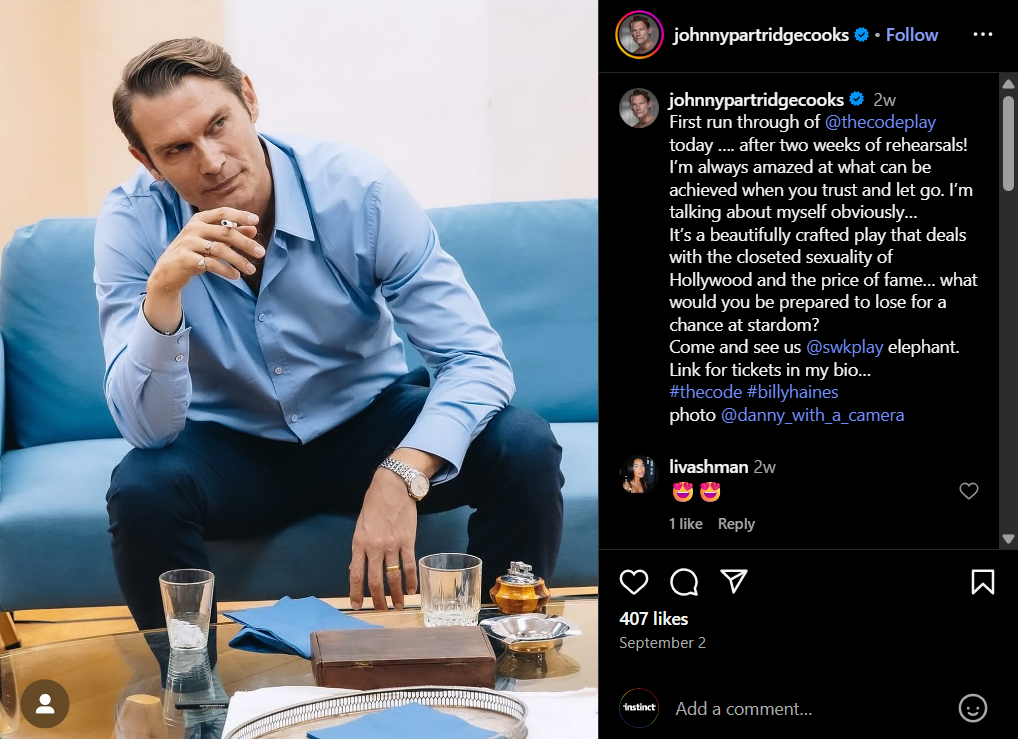
Partridge draws a parallel between these internal divisions and his character’s situation in The Code. In the play, the character of Henry Wilson represents the toxic gatekeeping within Hollywood, pressuring actors to hide their true selves for the sake of career success. It’s a reminder that the queer community can sometimes turn inward, consuming its own. “What difference does it make what toilet somebody uses? What difference does it make what pronouns people have?” Partridge muses. “Once you’re gone, it’s going to be was and were.”
While the state of the world may make him “feel unsafe” at times, Partridge’s hope remains intact. He still believes in the power of voice, and that as a community, we all have the chance to stand up against injustice. “We all have a voice. We all have a vote. We all have an opportunity to stand up to injustice where we see it,” he urges. His role in The Code is a small part of that fight, highlighting the struggles of those who came before and urging future generations to keep pushing for more.
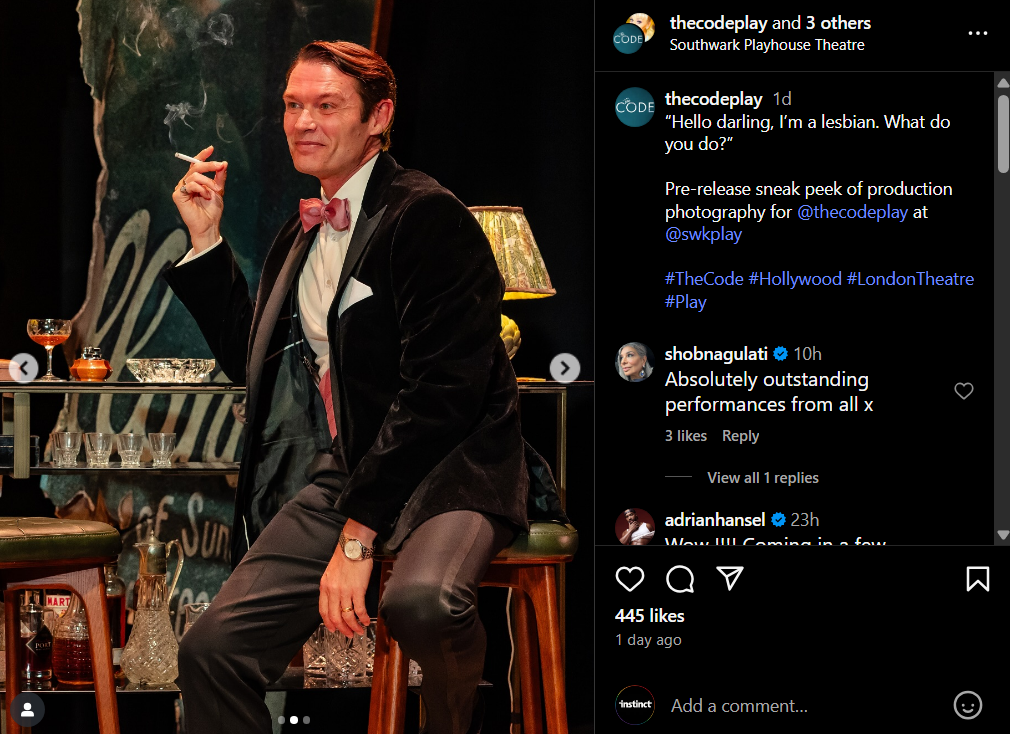
As Partridge heads back to rehearsals, one can’t help but think that his advocacy for equality, love, and the ongoing fight for LGBTQ+ visibility in Hollywood is far from over. The Code may close on October 11, but Partridge’s own journey—both as an actor and as an advocate for queer visibility—feels like it’s just getting started.
Source: ThePinkNews