


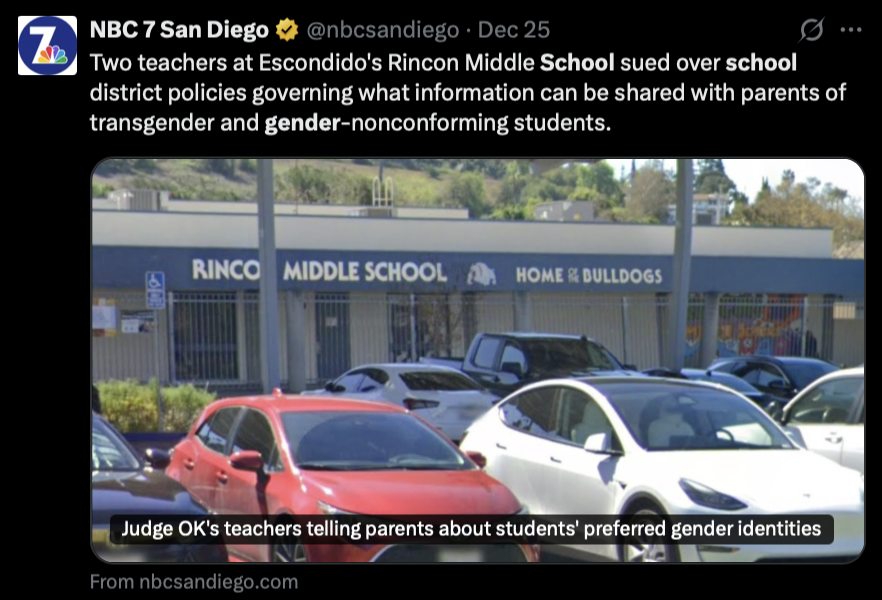
A recent federal court decision involving a California school district has raised serious concerns within the LGBTQ+ community, especially for transgender and gender-nonconforming students. Issued in late December, the ruling states that public schools cannot withhold information from parents if a student changes their gender presentation at school. Supporters say the decision strengthens parental rights, while LGBTQ+ advocates warn it could put students in unsafe situations.
At the center of the ruling is the question of whether a school can protect a student’s privacy when that student is not ready or able to come out at home. For many LGBTQ+ youth, school is the first place where they feel safe being themselves, making this decision especially impactful.
RELATED: What Happens When Schools Protect Jocks Over Gay Kids
How the Case Started
The case began in April 2023, when two former teachers from the Escondido Union School District filed a class-action lawsuit against the district. The teachers challenged a policy that prevented school employees from telling parents about a student’s transgender status without the student’s consent. They argued that the policy conflicted with their religious beliefs and violated their First Amendment rights.
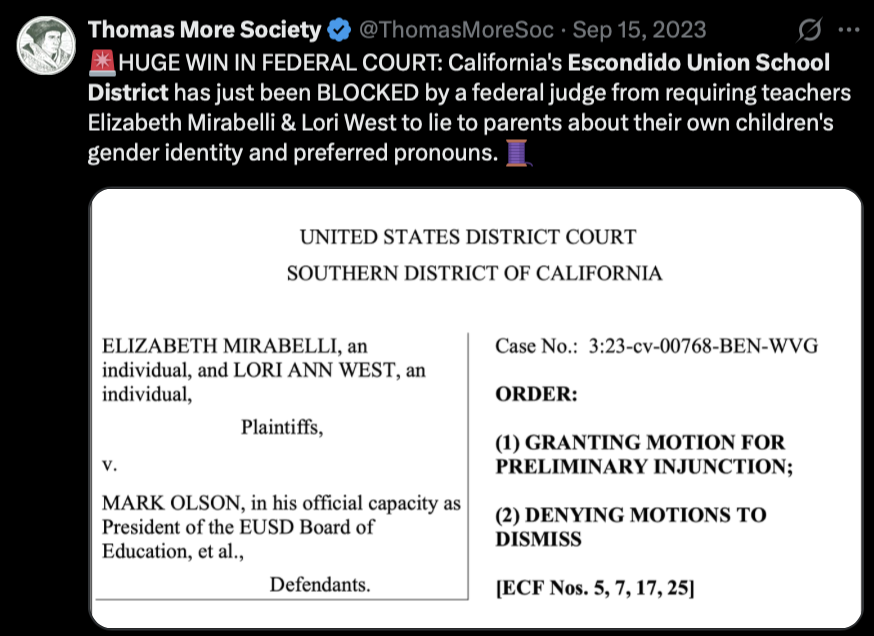
The teachers claimed they were being forced to keep information from parents that parents had a constitutional right to know. A federal judge ultimately agreed with that argument, setting the stage for the ruling that now affects school policies across California.
What the Judge Decided
In a 52-page decision, the judge ruled that parents have a constitutional right to be informed if their child changes gender presentation at school. According to the ruling, public schools cannot stop teachers or staff from telling parents about a student’s transgender status. The decision also states that school employees cannot mislead parents by using different names or pronouns at school than those used at home.

The ruling further limits what schools can do by stating that teachers and staff may not use names or pronouns that differ from a student’s legal name unless parents give permission. For students who rely on school as a space for self-expression, this represents a significant change.
Why LGBTQ+ Advocates Are Worried
LGBTQ+ advocacy groups argue that this ruling overlooks the real-life experiences of transgender youth. Not every student lives in a supportive home environment, and forced disclosure can lead to family rejection, emotional harm, or even physical danger. Privacy policies in schools were often created to protect students until they felt safe coming out on their own terms.
Equality California, a leading LGBTQ+ advocacy organization, described the ruling as dangerous and warned that it weakens protections designed to keep students safe. Advocates emphasize that transgender and gender-nonconforming youth are already facing increased hostility nationwide, making school-based protections more important than ever.
The Bigger Legal Picture
The judge’s decision referenced a recent U.S. Supreme Court ruling that sided with parents who objected to LGBTQ+-inclusive curriculum in elementary schools on religious grounds. That case prioritized parental rights over a school district’s authority, reflecting a broader legal trend that increasingly favors parental control when LGBTQ+ issues arise in school settings.
Together, these decisions suggest a shift in how courts view the balance between student protections and parental rights, with potential long-term consequences for LGBTQ+ students across the country.
What Happens Next
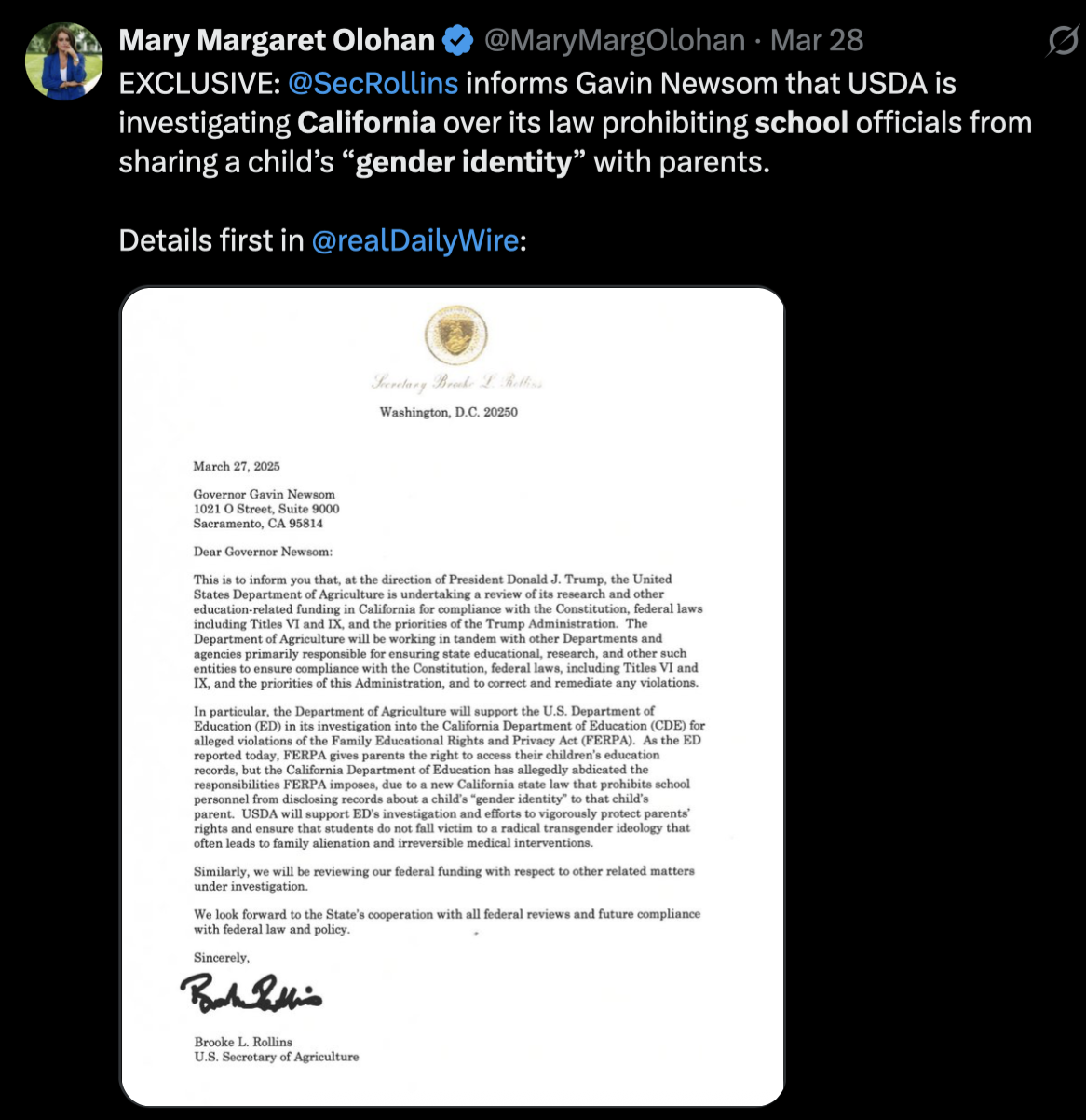
The state of California has already appealed the ruling, arguing that it causes serious and irreparable harm to students. State officials say the decision prevents enforcement of existing protections meant specifically for the school environment and removes a school’s ability to respond to safety concerns.
Until the appeal is resolved, schools are left navigating uncertainty. Educators must now balance legal obligations with their responsibility to support students, while LGBTQ+ families wait to see how the courts ultimately rule.
Why This Matters to the LGBTQ+ Community
For many LGBTQ+ people, school is where identity is first explored and affirmed. This ruling challenges whether schools can continue to serve as safe spaces for students who are not ready to come out at home. It also raises questions about autonomy, consent, and safety for transgender youth.
As the legal process continues, advocates stress the importance of keeping LGBTQ+ students at the center of the conversation. While the case focuses on constitutional rights, its real-world impact will be felt by young people navigating their identities in school hallways every day.
The outcome of this case will likely influence how schools across the country handle LGBTQ+ student privacy, making it a moment the community is watching closely.
REFERENCE: San Diego Union Tribune