


A federal judge in Texas recently argued that drag performances are not protected by the First Amendment, and in doing so compared drag to blackface. Yes, you read that right. If you thought the culture wars were slowing down, buckle up.
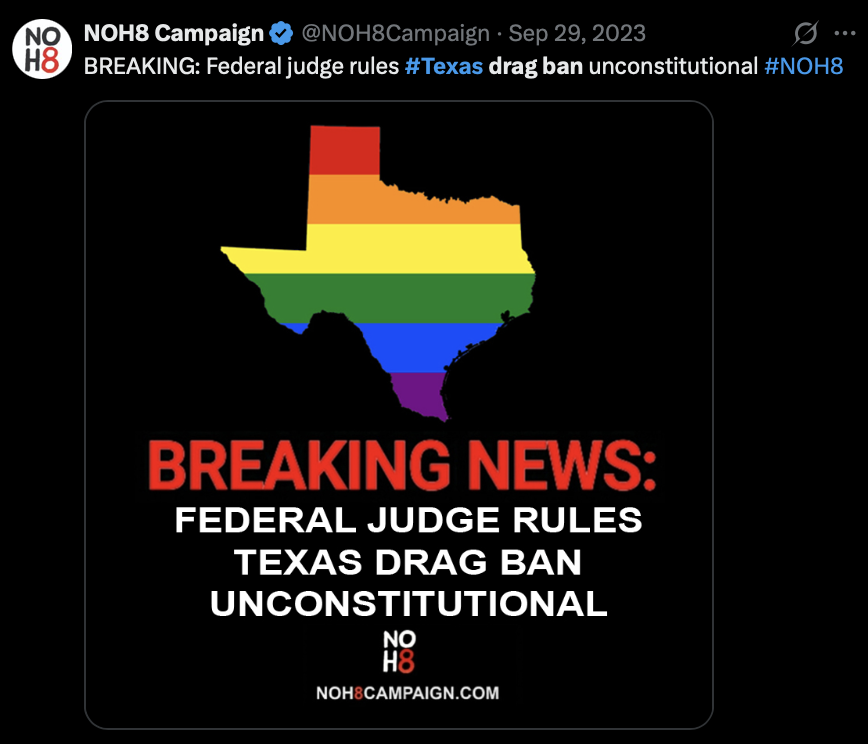
Judge Matthew Kacsmaryk, known for his conservative record and anti-LGBTQ+ decisions, sided with West Texas A&M University President Walter Wendler, who banned drag shows on campus. The decision came after a long-running legal battle sparked by a canceled student drag event, and the judge’s opinion has become a major flashpoint for LGBTQ+ activists and allies.
What Happened? A Drag Show Canceled, Then a Lawsuit
In March 2023, the student LGBTQ+ group Spectrum WT planned a drag event to raise money for The Trevor Project, the suicide prevention organization for LGBTQ+ youth. The performance was scheduled for March 31 and had strict safety rules: no profanity, no lewd content, and attendance restricted to people 18 and older.
Even with those safeguards in place, university president Walter Wendler still canceled the event and sent a letter to students and staff. In it, he described drag as “derisive, divisive and demoralizing misogyny, no matter the stated intent” and compared the performance style to blackface.
“As a university president, I would not support “blackface” performances on our campus, even if told the performance is a form of free speech or intended as humor. It is wrong. I do not support any show, performance or artistic expression which denigrates others—in this case, women—for any reason.”
Wendler also made it clear that he was unwilling to “condone” what he considered a harmful performance:
“not appear to condone the diminishment of any group at the expense of impertinent gestures toward another group for any reason, even when the law of the land appears to require it.”
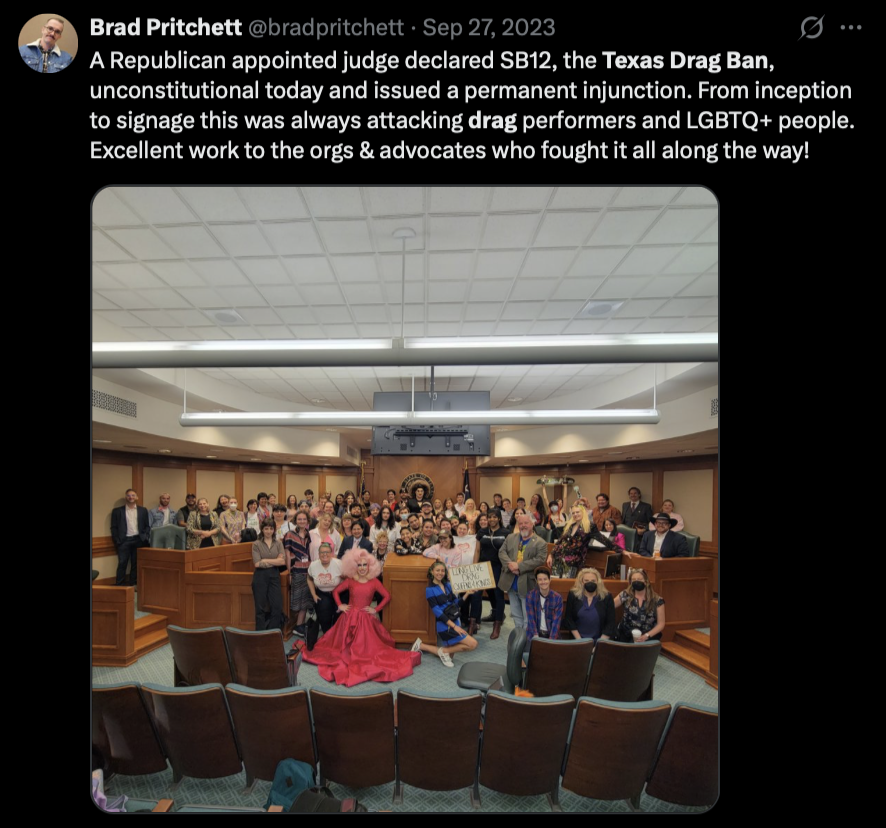
That cancellation didn’t just stop the show, it sparked a student-led lawsuit arguing the university violated First Amendment protections and a Texas state law that bans universities from restricting student organizations based on ideological viewpoints.
The Judge’s Argument: Drag Has “No Message”
In his opinion, Judge Matthew Kacsmaryk argued that drag is not protected speech because it supposedly has “no message.” He agreed with Wendler’s framing and took it even further, comparing drag to blackface by arguing both “mock vulnerable groups by caricaturing aspects of their identity.”
He wrote:
“The only difference is that one performance is ‘abhorred by cultural elites’ while the other is in vogue–at least for now.”
Then he argued that even if these kinds of show intended to make a statement, the court couldn’t prove audiences would understand that message:
“Even if a student group intends to convey a message of bending gender norms, this Court cannot find that there is a great likelihood ‘that the message would be understood by those who viewed it.’”
So, in his view, drag isn’t a protected form of expression — it’s just… performance.
RELATED: Drag Theater Wins Restraining Order On Tennessee Thanks To Trump Judge
Why LGBTQ People Are Outraged
If you’ve ever been to a drag show, you know the emotional truth of the art form: it’s about identity, survival, community, and rebellion. Drag has historically been a lifeline for queer people, especially those forced to hide their true selves. So for a judge to compare it to blackface is not only wrong, it’s insulting and historically ignorant.
Trans journalist Erin Reed responded to the judge’s argument with sharp clarity, calling it “particularly egregious.” She explained:
“Blackface was created by white performers to dehumanize a marginalized group and reinforce racial subjugation.”
And she stressed that drag is not remotely similar:
“Drag, by contrast, emerged from marginalized communities themselves as a form of self-expression, community building, and survival.”
Reed also pushed back on the judge’s claim that drag has “no message,” calling it a willful misunderstanding:
“In its modern form, drag conveys meaning about gender identity and expression, deliberately subverting gendered expectations around clothing and performance—placing it squarely within the realm of activity protected by the First Amendment.”
She accused Kacsmaryk of imagining “a world in which audiences attend drag shows without recognizing their commentary on gender norms.”
This Is Not an Isolated Case
Kacsmaryk isn’t new to this fight. He has a history of decisions against LGBTQ rights, including rulings involving Title IX protections, workplace discrimination under Title VII, and federal healthcare protections for LGBTQ people. He even wrote a 2015 article about the weaponization of same-sex marriage.
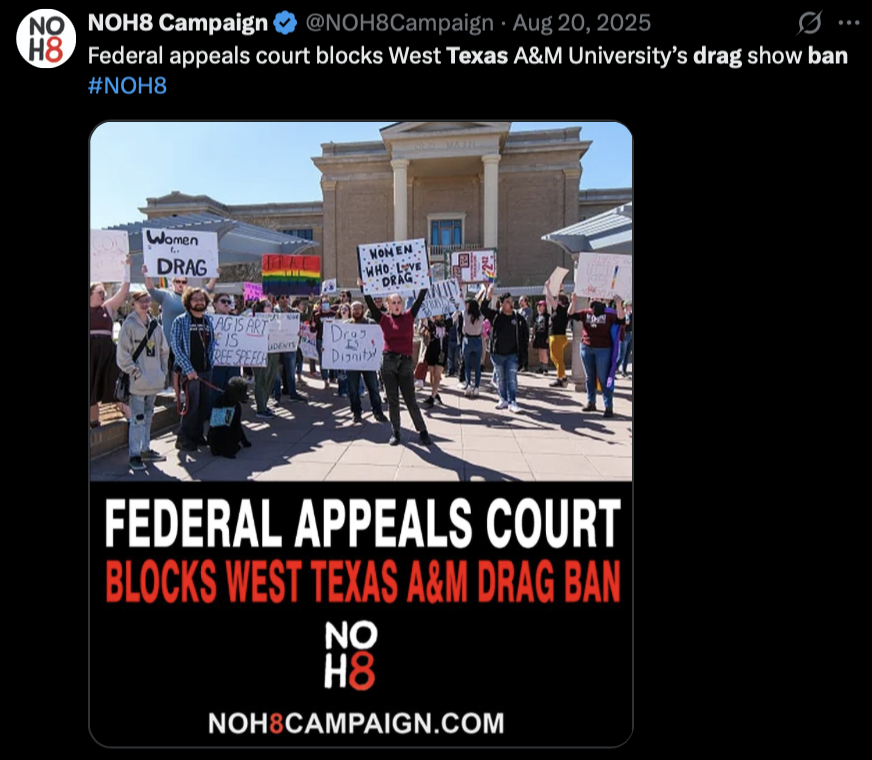
This case is just the latest chapter in a larger push to control what can be discussed, shown, or celebrated—especially on college campuses.
Why This Matters
A drag show isn’t just entertainment. It’s queer culture. It’s visibility. It’s defiance. And in a state like Texas, where LGBTQ people already face constant political pressure, this case feels like a warning sign.
Because if a court can argue that drag is “not speech,” then what else can be erased?
The debate isn’t just about one campus or one performance. It’s about whether LGBTQ people can publicly exist, celebrate, and express themselves without being treated like a problem to be censored.
And if this argument becomes precedent, it may not just silence this form of expression, it may silence the queer community’s most resilient and beautiful form of self-expression.
REFERENCE: Law & Crime, My High Plains, The Public Discourse
Let the white supremist party talk about drag or blackface after it purges itself of its nazi and hate ideology. Seriously. These “men” wouldn’t know what a woman wanted if their lives depended on it, which is why they are focused on gay men.