


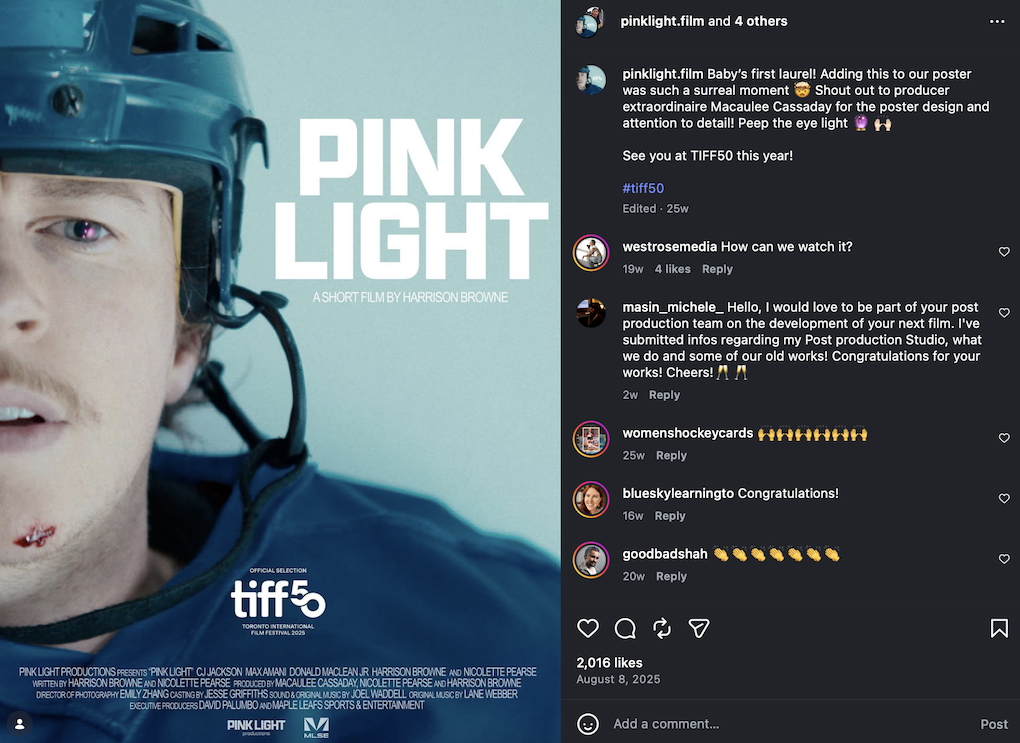
Imagine skating down the ice, stick in hand, only to collide with your past self. That’s the concept behind Pink Light, the 2025 short film directed by Harrison Browne, the first publicly transgender pro hockey player. Premiering at the Toronto Film Festival, the film tells the story of Scott, a trans man and former professional hockey player, who finds himself revisiting his pre-transition past.
Through time travel, Scott meets Scotty, his 18-year-old self, who is just starting to dream of life beyond women’s hockey. But the twist is emotional: the person Scott longs to become is already the person he has become. It’s a poignant, sometimes heart-wrenching meditation on identity, courage, and belonging—told with ice rinks, brooding locker rooms, and a little magic.
RELATED: Watching Heated Rivalry and Finally Believing Boys Can Love Boys Openly
From Ice Rinks to the Director’s Chair
Browne knows this story firsthand. After making history on the ice, he’s now taking on Hollywood, directing and starring in Pink Light. He explained to The Hollywood Reporter:
“It’s really important to show trans athletes as people, because that’s the best way to humanize this community and create those pathways for empathy.”
The film blends the familiar sports drama beats—injuries, personal growth, and overcoming obstacles—with an inventive twist: time travel. A seemingly minor hit during a beer league game sparks Scott’s journey back to his younger self, confronting the tension between staying in a comfortable space and embracing his authentic identity.
Meet the Cast: Breaking New Ground
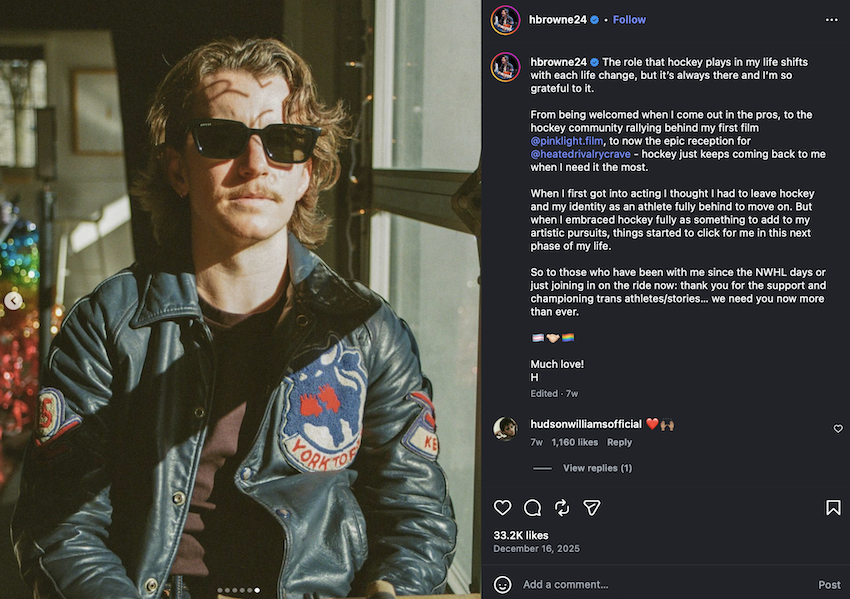
Browne plays Scott, and CJ Jackson, the first non-binary professional hockey player to come out, plays young Scotty. The ensemble includes Donald MacLean Jr., Nicolette Pearse, Max Amani, and Shaun Benson, giving the short film both athletic credibility and emotional depth. Browne also teased plans for a feature-length version, set in a college athletic world that will explore locker rooms, coach-player dynamics, and the dating lives of trans athletes.
Hockey, Visibility, and a Hard-Hitting Reality
While Pink Light celebrates identity and resilience, Browne’s film couldn’t be more timely. Just days before the festival, Browne shared a video on Instagram calling out USA Hockey’s updated policy, effective April 1, 2026. The new rules bar trans athletes from competing in all leagues, including recreational beer leagues, even if they undergo hormone therapy.
“It’s no surprise that men’s hockey is not a safe environment for gender non-conforming individuals and the women’s side is often the only place for most queer people to play. Barring trans individuals from these spaces essentially bars us from hockey. Horrible,” Browne captioned.
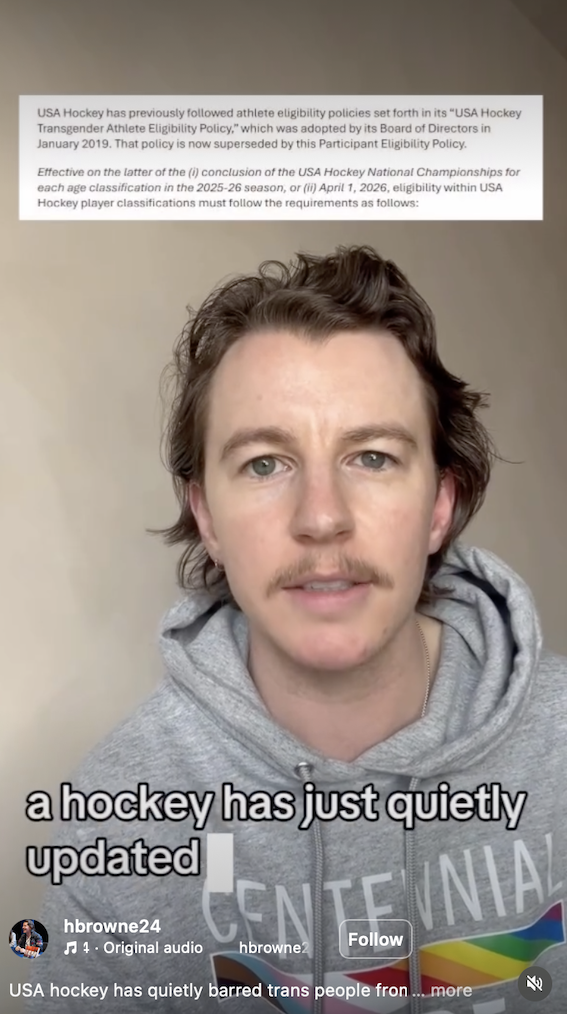
Browne emphasized that these regulations do not reflect the reality: trans athletes are vanishingly few compared to the total population, yet the community is often portrayed as a “moral panic” in sports debates. Pink Light humanizes this experience, showing that trans athletes are not just statistics—they are people, dreams, and histories in motion.
Why Pink Light Matters
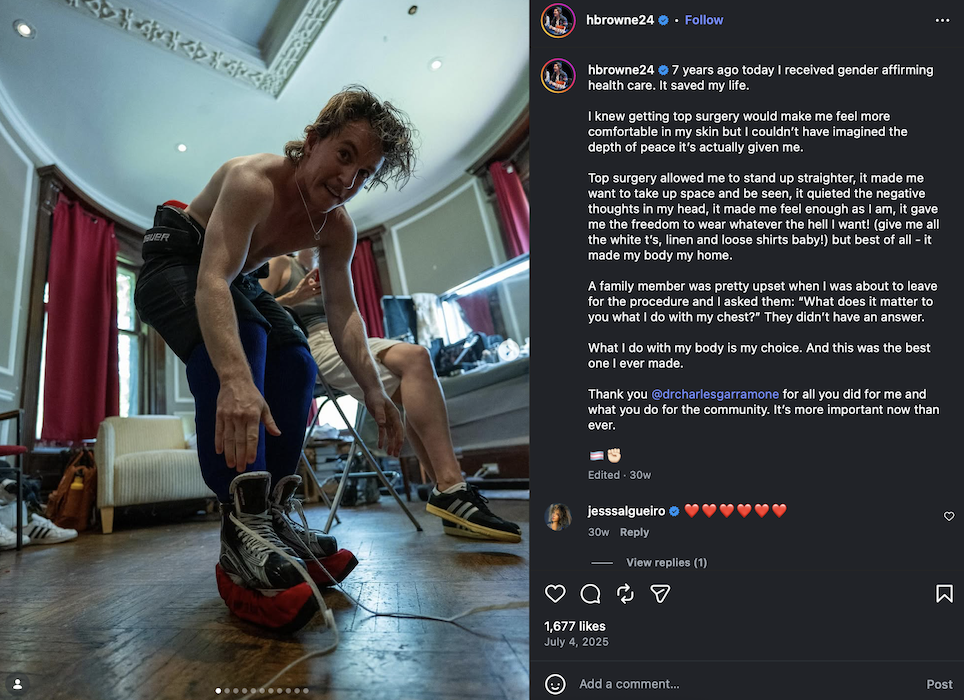
At its core, Pink Light is a love letter. Browne calls it his “goodbye to hockey” and a personal closure he didn’t expect when making the film. But it’s also a cultural statement: visibility matters, representation matters, and empathy matters. Through Scott and Scotty, audiences experience the push and pull of identity—the exhilaration of becoming oneself and the struggle to navigate spaces that weren’t built for them.
As Browne told The Hollywood Reporter:
“Society is villainizing the community. And it’s really easy to use that community as a scapegoat when you don’t know anybody, when you don’t have a face for that term.”
Pink Light gives that face. And it’s radiant, unapologetic, and ready to skate into your hearts.
What’s Next for Fans?
For those eager to experience it firsthand, Pink Light is making its world premiere at the Toronto Film Festival this weekend. Keep an eye out for Browne’s feature-length adaptation, which promises to deepen Scotty’s story and expand the conversation around trans athletes in sports, love, and life.
Pink Light isn’t just a short film—it’s a statement, a journey, and a call to see trans athletes as more than headlines. Browne’s creation reminds us that sometimes, to understand the present, you have to meet your past… and realize you were already enough.
If you’ve seen Pink Light or are excited about trans stories in sports, share your thoughts! What resonated with you most about Scott and Scotty’s journey? The conversation is just beginning.