


Justice Anthony Kennedy, once a quiet swing vote on a sharply divided Supreme Court, ultimately became the author of the decisions that reshaped gay rights in America—and defined a generation of constitutional change.
Kennedy was never marketed as a civil rights hero. Appointed by President Ronald Reagan in 1988, he arrived on the Court with conservative credentials and a devout Catholic upbringing. Yet history would remember him not as a partisan warrior, but as the swing vote—the justice willing to listen, to evolve, and ultimately to articulate a constitutional vision that centered dignity, liberty, and equality for LGBTQ+ people.
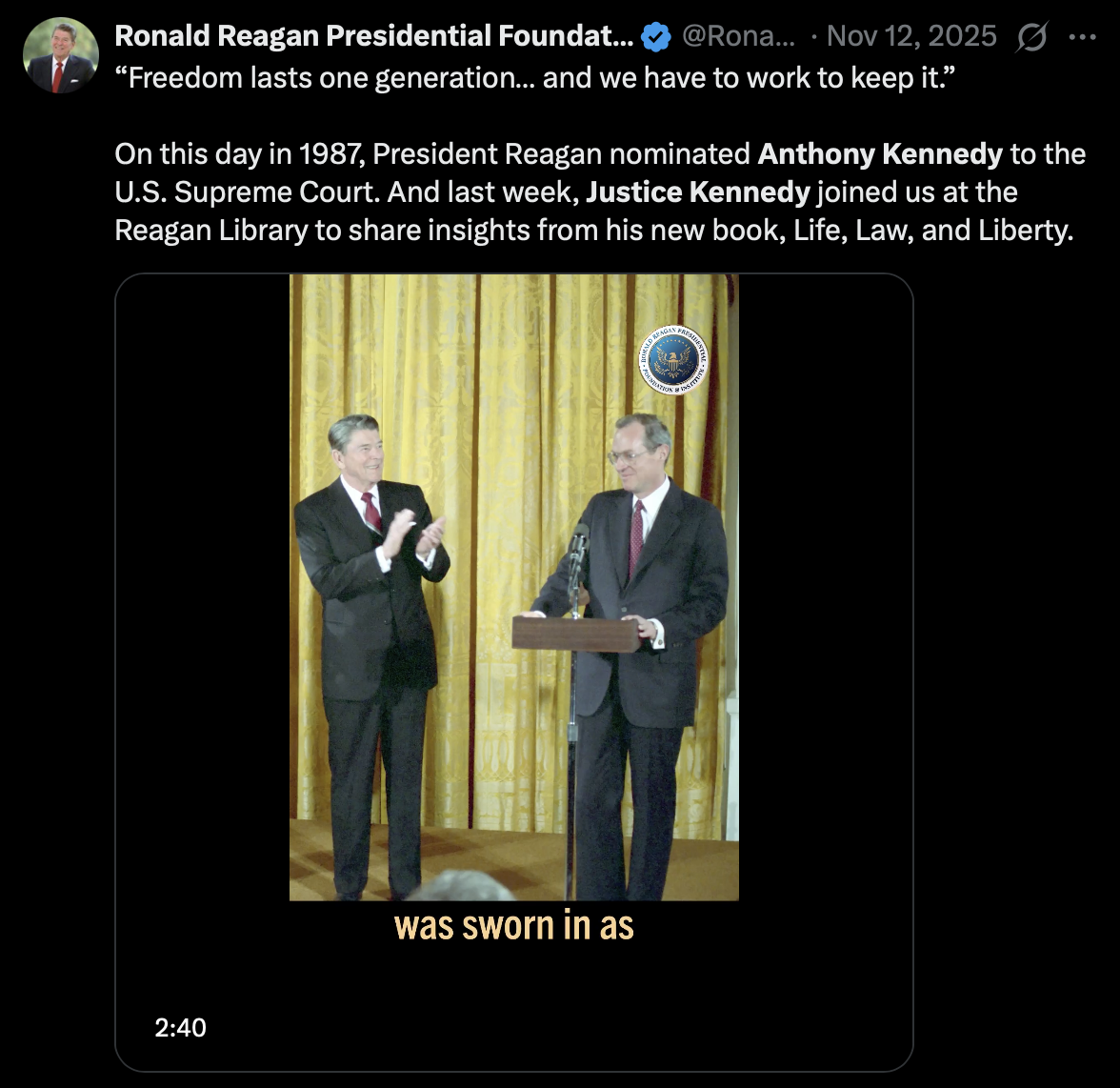
Kennedy as the Court’s Moral Middle
For much of his tenure, Kennedy occupied the ideological center of a deeply divided Court. That position gave him unusual power, especially in cases where a single vote could tip the balance. But Kennedy’s influence on gay rights went beyond numbers. Again and again, he wrote the majority opinions—not merely joining progress, but shaping the language that would define it.
Across four landmark cases, Kennedy established a constitutional throughline: back then, the government had no legitimate interest in humiliating, criminalizing, or excluding people simply for who they love. How times have truly changed, and not always for the better.
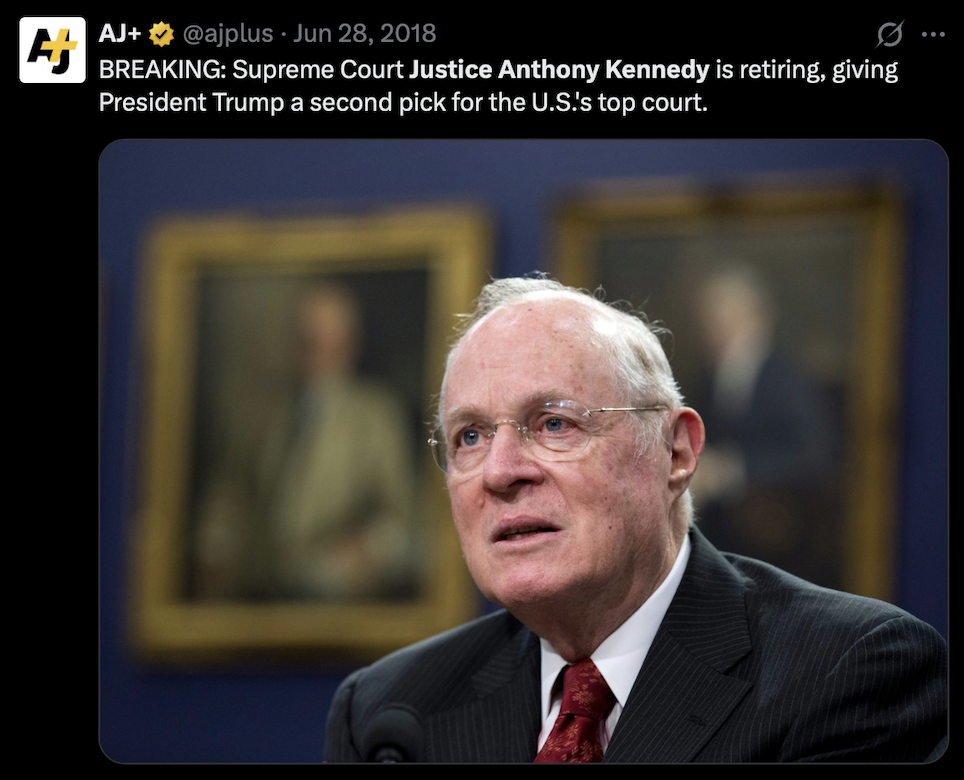
KENNEDY TO RETIRE — WHAT’S NEXT? Justice Anthony Kennedy, a crucial swing vote, said he will officially retire on July 31. The co-hosts discuss the fate of policy such as abortion rights and gun laws under a more conservative Supreme Court. https://t.co/f8u2wc159S pic.twitter.com/UAzIhvmW4u
— The View (@TheView) June 28, 2018
Romer v. Evans (1996): Ending Government-Sanctioned Exclusion
Kennedy’s first major LGBTQ+ ruling came in Romer v. Evans, a case challenging a Colorado constitutional amendment that stripped gay people of all legal protections against discrimination.
Writing for the majority, Kennedy made a bold and unprecedented move. He framed the amendment not as neutral policy, but as an act of targeted harm—one that violated the Constitution’s promise of equal protection. Drawing from historic civil rights principles, he argued that the law singled out gay people as a class and denied them access to the political process itself.
This was a turning point. For the first time, the Supreme Court recognized that laws rooted in broad animosity toward gay people had no place in a constitutional democracy.
Lawrence v. Texas (2003): Privacy, Liberty, and the Right to Exist
Seven years later, Kennedy returned to the forefront in Lawrence v. Texas, the case that overturned laws criminalizing same-sex intimacy.
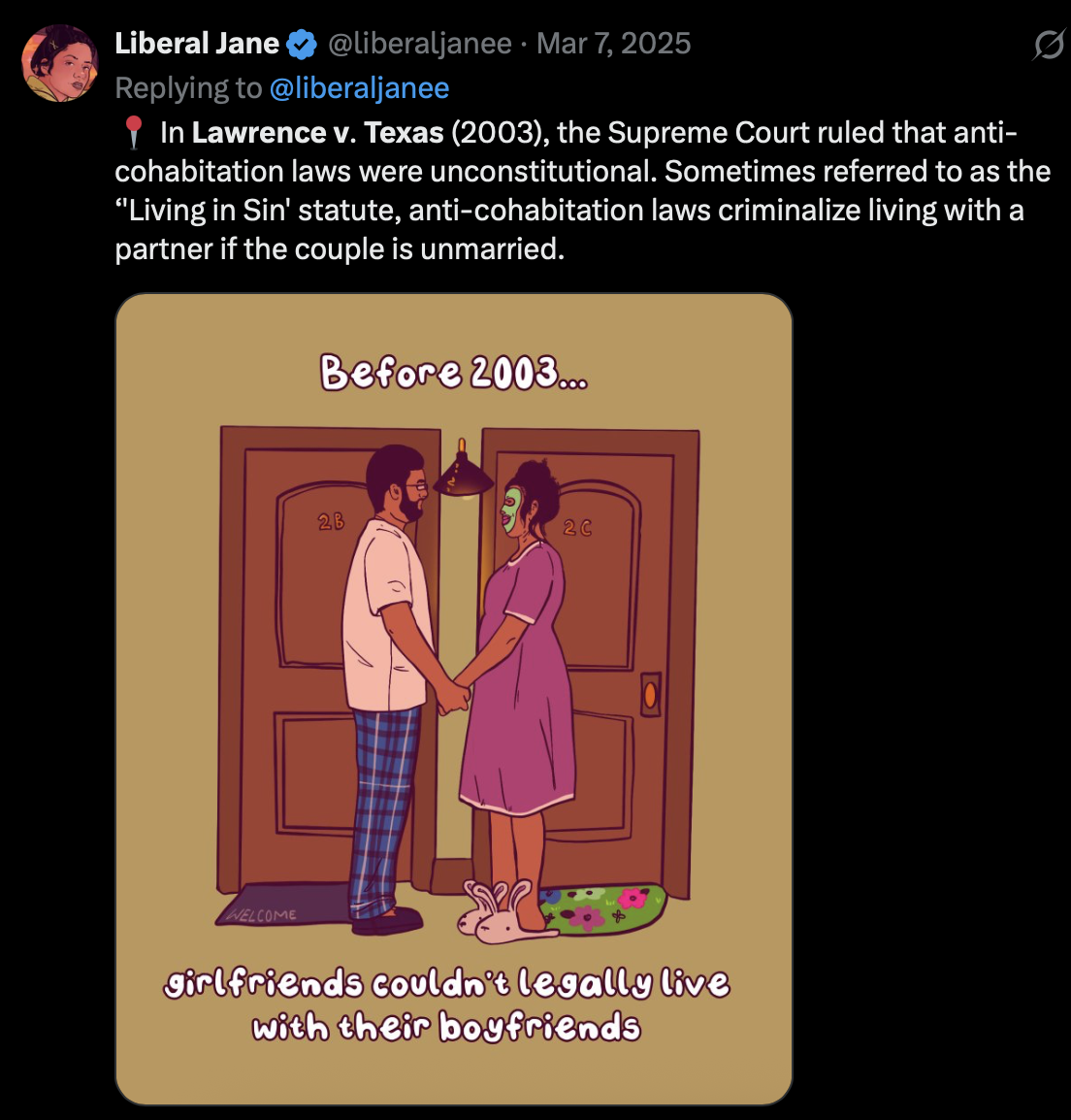
Here, Kennedy centered personal autonomy and privacy. He rejected the idea that the state could regulate consensual adult relationships based solely on moral disapproval. The ruling explicitly overturned Bowers v. Hardwick, a decision that had haunted gay Americans for nearly two decades.
Lawrence did more than decriminalize intimacy—it affirmed that gay people are entitled to the same constitutional respect as everyone else. It laid the groundwork for every major marriage equality case that followed.
United States v. Windsor (2013): Federal Recognition and Respect
In United States v. Windsor, Kennedy confronted the federal government’s refusal to recognize same-sex marriages legally performed in the states. Writing the majority opinion, he struck down the Defense of Marriage Act (DOMA), describing it as a law designed to demean and destabilize same-sex couples.
Kennedy emphasized that DOMA created a cruel legal contradiction: couples married under state law were treated as strangers by the federal government. That instability, he wrote, undermined family life, financial security, and human dignity.
The decision forced federal recognition of same-sex marriages and marked a seismic shift toward full equality.
Obergefell v. Hodges (2015): Equal Dignity, Finally
Kennedy’s most famous—and most contested—opinion came in Obergefell v. Hodges, which established marriage equality nationwide.
Rather than framing marriage as tradition, the retired Supreme Court justice framed it as human connection. His opinion acknowledged love, commitment, loss, and the deep harm caused by exclusion. At its heart was a simple but radical idea: gay couples seek marriage not to diminish it, but to honor it.
For millions, Obergefell was not just a legal victory—it was recognition.
RELATED: Ten Years After Marriage Equality, Obergefell Faces Its First Direct Challenge
A Legacy Under Pressure
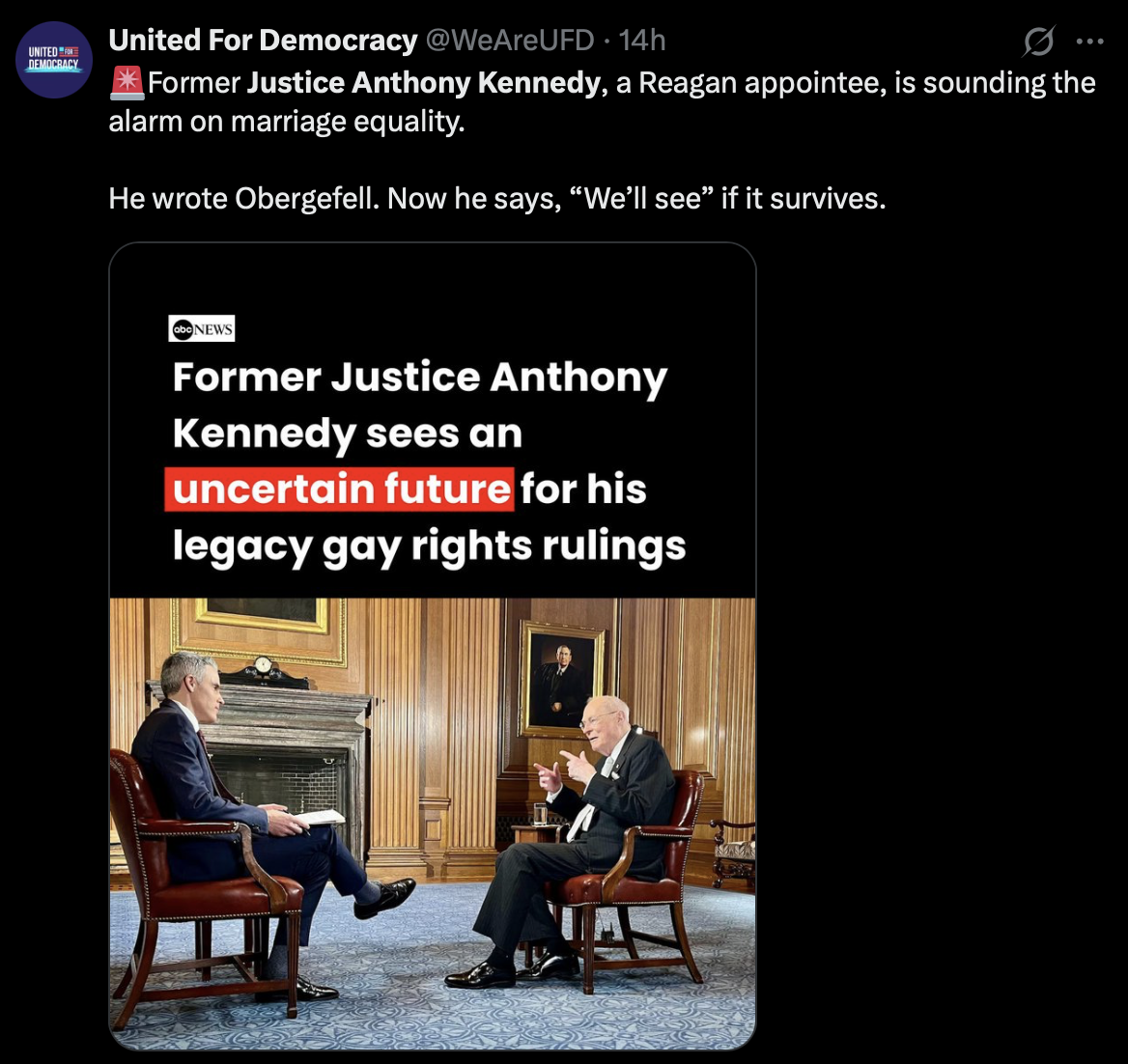
Now retired, Kennedy has expressed uncertainty about how long his gay rights rulings will endure. With calls to revisit Obergefell growing louder, he has warned that overturning marriage equality would destabilize families who built their lives in reliance on settled law.
With more than 800,000 married same-sex couples in the U.S.—many raising children—Kennedy’s concern is not abstract. It is rooted in lived reality.
One-on-one with retired Supreme Court Justice Anthony Kennedy. Incredible conversation on the Court in the Trump era and whether his legacy will endure. Tonight 7p/9p ET streaming @ABCNewsLive Prime on @hulu, @DisneyPlus & @ABC apps. #scotus pic.twitter.com/5lJf53igen
— Devin Dwyer (@devindwyer) February 2, 2026
Kennedy, His Memoir, and the Fragility of Progress
In his memoir, Life, Law & Liberty, the now-retired judge reflects on a Supreme Court career shaped by cases that changed everyday life for LGBTQ+ Americans. Rather than celebrating those decisions, Kennedy writes and speaks about them with caution, acknowledging that the gay rights rulings he authored—especially Obergefell v. Hodges—are now being openly questioned.
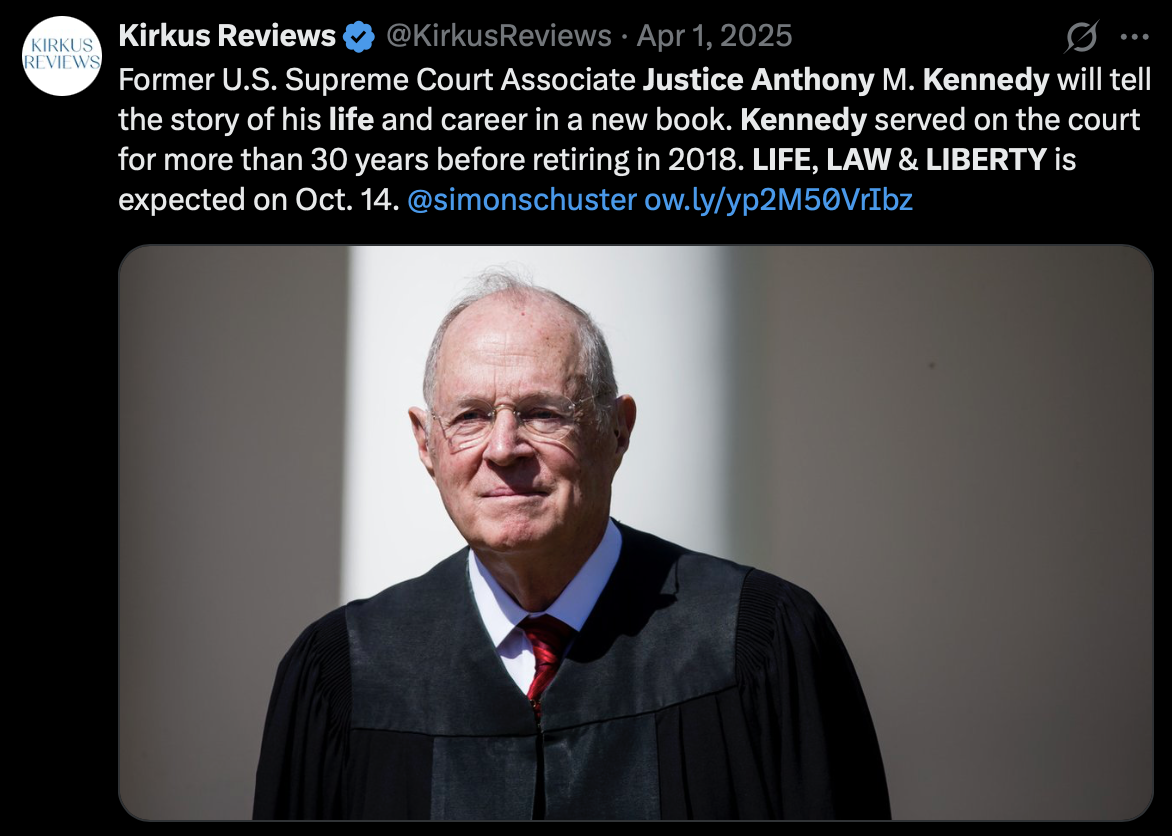
He has pointed to the real people affected by any reversal: same-sex couples who married, built families, and raised children believing the law recognized their relationships as equal. For Kennedy, the stakes are not abstract doctrine but lives structured around legal recognition.
The book also reveals how his views evolved over time, shaped by witnessing same-sex parents and the children who depended on the law for stability. At the center of his reflections is a principle that defined his jurisprudence—dignity—and a reminder that constitutional progress must be actively preserved, not assumed.
Why Kennedy Still Matters
Justice Anthony Kennedy never claimed to be a revolutionary. But through careful reasoning and a willingness to grow, he helped move the Constitution closer to its promise.
His legacy reminds us that progress can come from unlikely places—and that words, when chosen with care and courage, can change history.
In a time when LGBTQ+ rights feel newly fragile, Kennedy’s opinions remain a blueprint for equality grounded not in ideology, but in humanity.
REFERENCES: Constitution Center, ABC news