


Dylan O’Brien is straight, self-aware, and saying the quiet part out loud: when straight men play gay roles without leaning into queerness, it can start to feel inauthentic.
The conversation around who gets to play queer roles—and how—has never really gone away. It’s just gotten louder, more layered, and more urgent. Now, Dylan O’Brien is stepping into that discussion with a level of self-awareness that feels rare in Hollywood.
“It started to feel inauthentic,” he said.
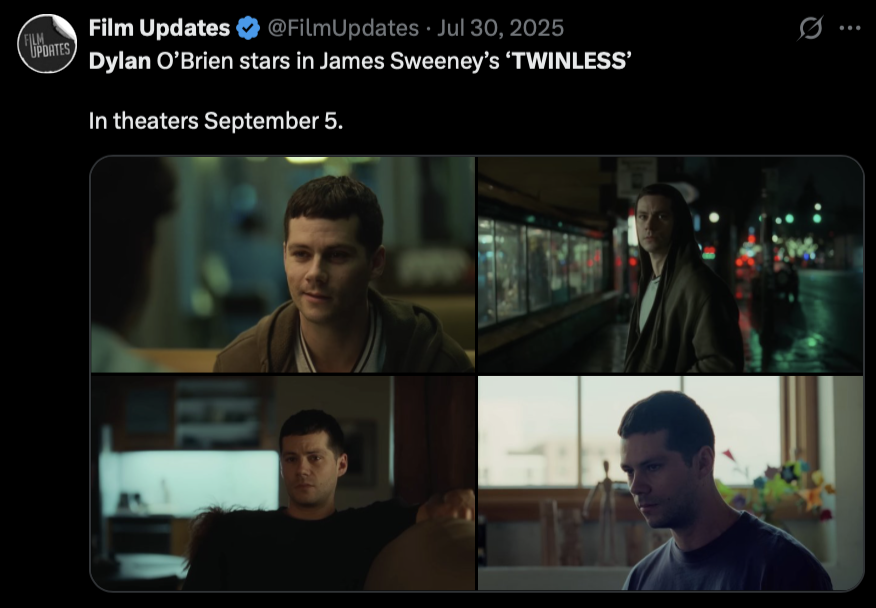
That comment didn’t come from a press junket soundbite or a defensive response to criticism. It came from a place of collaboration, trust, and lived creative experience—specifically from his work on Twinless.
RELATED: How Dylan O’Brien and James Sweeney Crafted Complex Characters in ‘Twinless
Twinless: Grief, Desire, and Something Much Messier
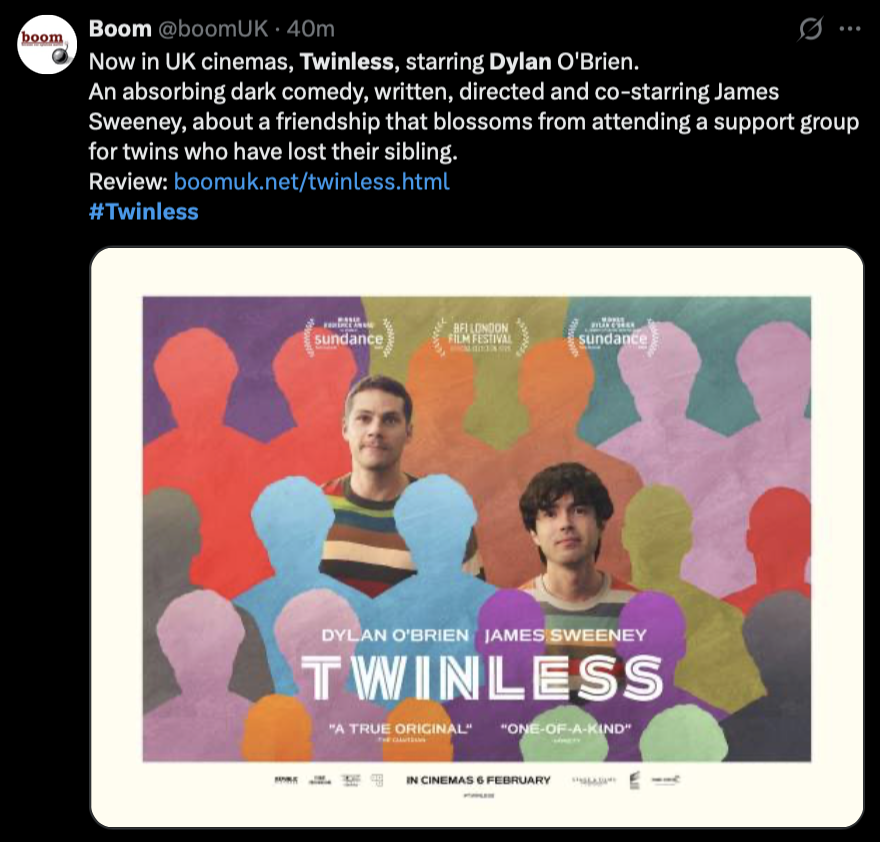
Released last year, Twinless is not a tidy film. Written, directed by, and co-starring James Sweeney, the movie follows Roman (O’Brien) and Dennis (Sweeney), two men who meet at a support group for people who’ve lost their twin.
Grief is the entry point—but it’s not the destination.
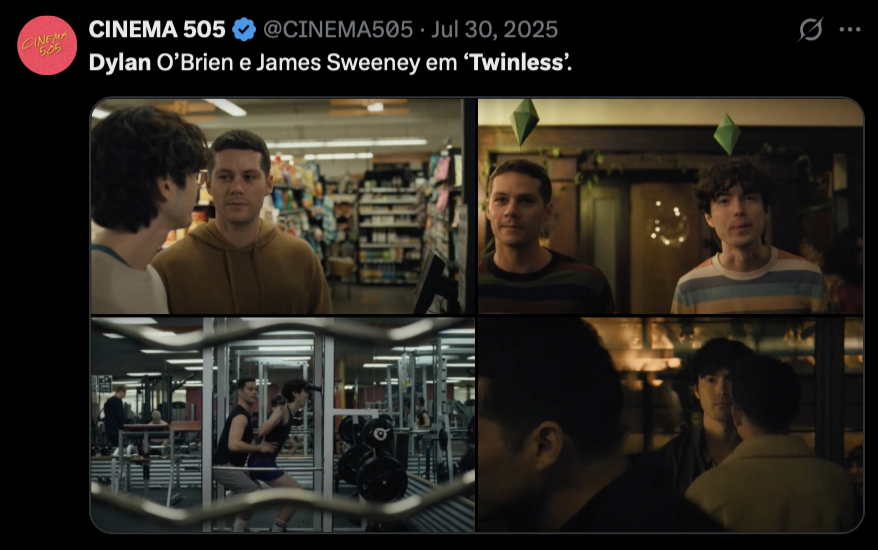
What unfolds is a strange, intimate, and often darkly funny exploration of identity, loneliness, attraction, and emotional dependency. The film is layered with tonal shifts and narrative turns that resist easy categorization, which is exactly why it resonated with queer audiences—and why it went viral for reasons both expected and unexpected.
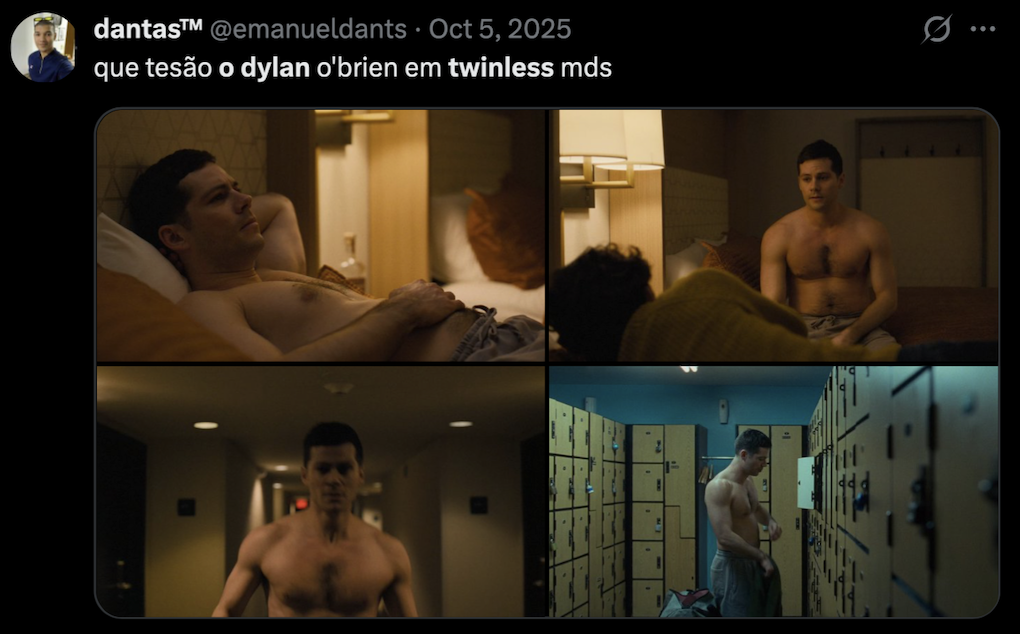
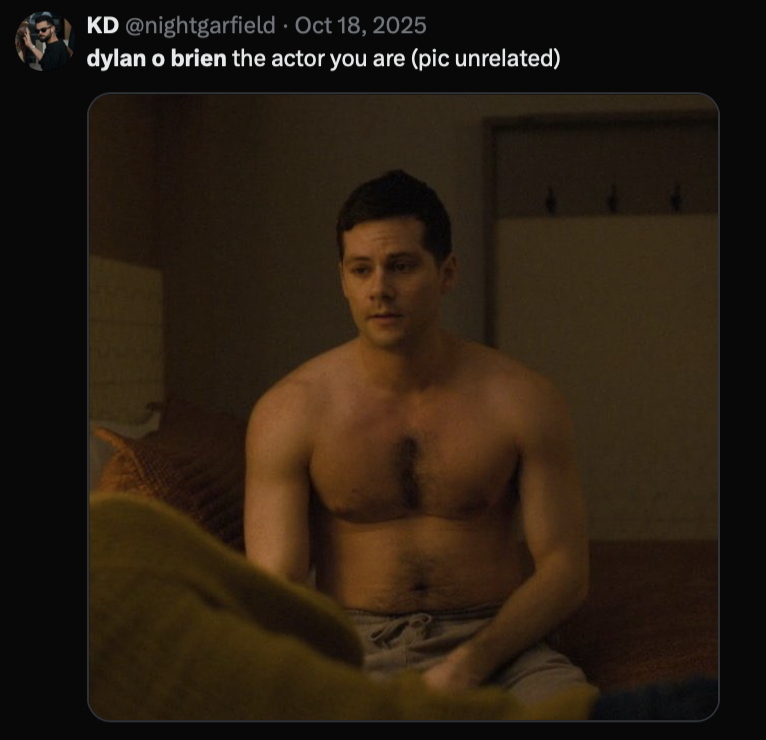
Yes, Twinless made waves online for its explicit sex scene between O’Brien and Sweeney. But reducing the film to that moment misses the point. The intimacy works because it’s complicated, uncomfortable, and deeply human. It’s not there to shock—it’s there to reveal.
Gay Dylan O’ Brien in Twinless i think about you everyday… https://t.co/W3EZmibKCx
— Michael (@Mikemccarthaaay) January 26, 2026
“Permission Goes a Long Way”
In an interview with Dazed, O’Brien and Sweeney spoke candidly about the responsibility of playing queer characters—especially when one actor is straight and the other is not.
Sweeney said,
“These are larger-than-life characters that feel so real because he brings so much pathos. In terms of him playing queer – I’ll take credit for giving him permission and pushing him in a direction to be fluid with the masculinity and femininity.”
Sweeney didn’t stop there.
“A lot of times when straight actors play gay, they don’t lean into that out of fear of being vilified by the public, and are like, ‘We’re all the same, so I’m just going to play myself.’ I don’t mean that as a denigration to other straight actors, but I felt for Rocky to be attracted to Dennis, he would need to be comfortable with both masculinity and femininity – in my experience of dating.”
That idea—permission—is key. And O’Brien agrees.
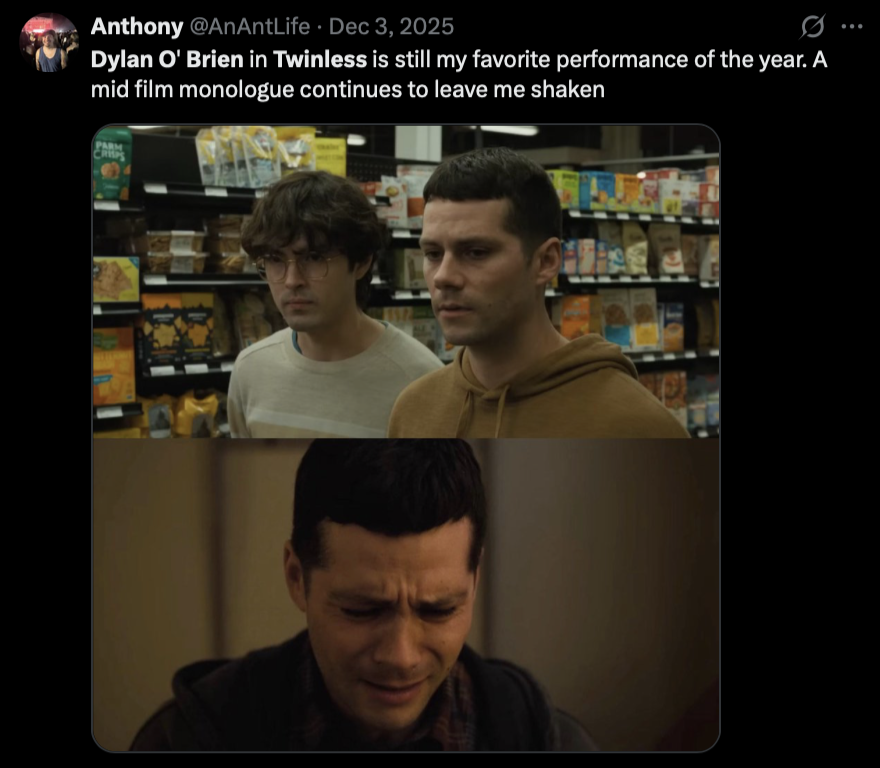
“Permission goes a long way,” O’Brien said. Adding,“James is a gay man, and coming from a place I could trust. We had a similar take on straight actors playing gay parts, especially in recent years: you started seeing straight actors playing a queer role completely straight. It started to feel inauthentic.”
For O’Brien, the solution wasn’t restraint. It was openness.
“It was nice to have his insight, support, and calibration,” he added. “He’d be like, ‘Go crazy on this one. We can dial it back if it doesn’t feel real.’”
Why This Conversation Still Divides the Community
Straight actors playing queer roles isn’t new. Sometimes it results in iconic performances. Sometimes it feels hollow. And even within the LGBTQ+ community, opinions remain divided.
What’s increasingly clear, though, is that audiences can feel the difference between a performance that’s careful and one that’s considered.
The issue isn’t identity alone—it’s approach.
Does the actor listen? Do they collaborate with queer creatives? Do they allow themselves to explore queerness without sanding it down to something “safe” or palatable?
O’Brien’s comments don’t position him as an authority. Instead, they place him as a participant—someone aware of the limitations of his own perspective and willing to learn from those who live it.
Authenticity Over Optics
At a time when studios often prioritize optics over substance, O’Brien’s reflections feel refreshingly grounded. He’s not arguing that straight actors should never play queer roles. He’s saying that playing them without intention, curiosity, or vulnerability does a disservice to the story—and to the community watching.
If there’s one takeaway from Twinless and the conversation around it, it’s this: authenticity isn’t about who you are on paper. It’s about how seriously you take the lives you’re stepping into.
And for queer audiences who’ve spent decades watching themselves flattened, erased, or sanitized on screen, that distinction matters more than ever.
REFERENCE: Dazed