


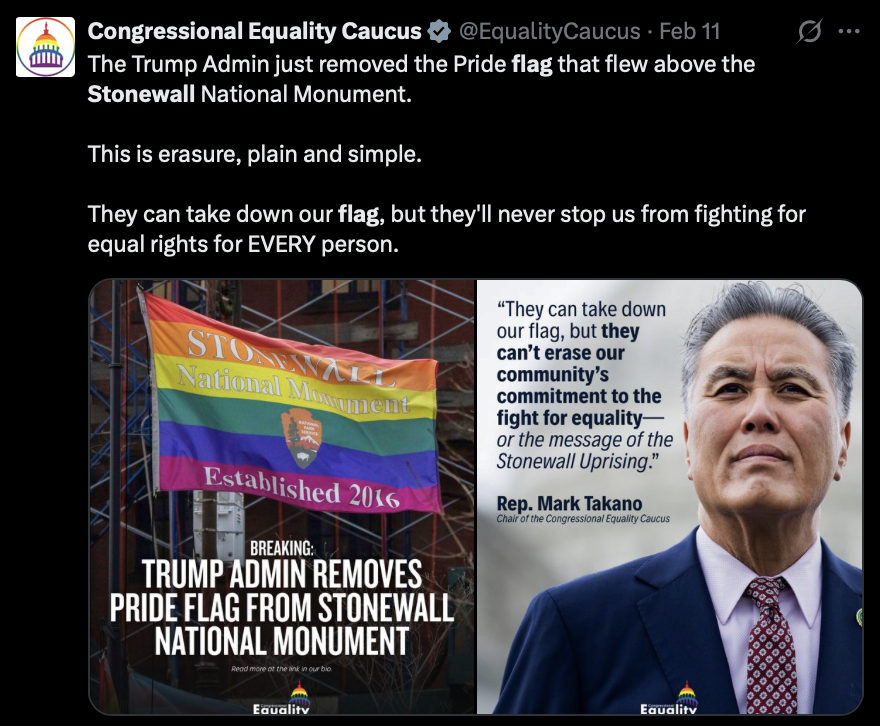
Stonewall became the center of national attention this week after the Pride flag was removed from the Stonewall National Monument, prompting a swift and emotional response from the LGBTQ+ community.
Earlier in the week, the Pride flag that had been flying at the monument in Greenwich Village was taken down following a directive from the Trump administration. According to the National Park Service, the removal was carried out to comply with existing federal flag policies that limit which flags may be displayed on national monuments.
While the explanation was procedural, the reaction was anything but quiet.
A large rainbow Pride flag was raised again over the Stonewall National Monument after Trump administration removed it. Supporters in Manhattan called the reinstallation a stand against erasure and a reminder of the movement’s origins at Stonewall https://t.co/ncNzzCQ4e4 pic.twitter.com/RXpQKjpKAm
— Reuters (@Reuters) February 13, 2026
RELATED: New York’s Bold Stand: Stonewall’s Pride Flag Won’t Be Erased
When Did This Happen?
The Pride flag was removed earlier in the week, just days before hundreds of people gathered at Stonewall on Thursday afternoon to respond. The timing mattered. For many LGBTQ+ New Yorkers and allies, even a brief absence of the flag at one of the most historically significant queer sites in the country felt deeply unsettling.
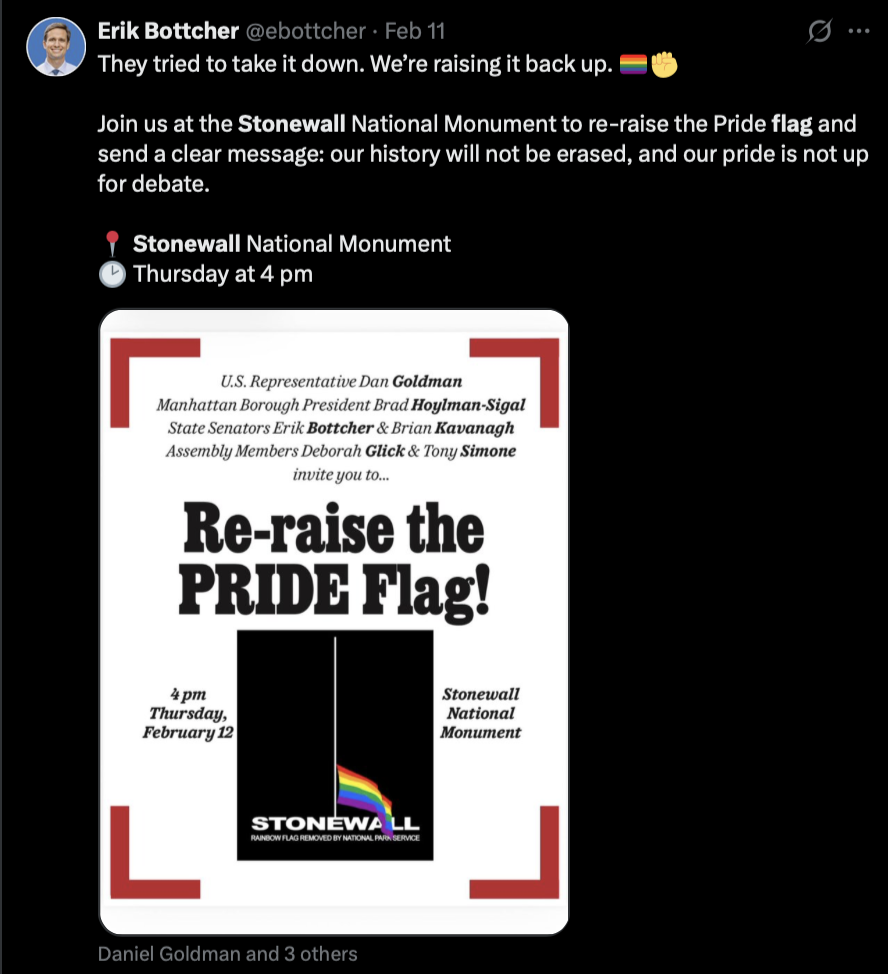
Within roughly 48 hours, the area around Christopher Park filled with community members carrying rainbow flags, transgender flags, and handmade signs. What began as concern quickly turned into a visible, collective response.
Why Stonewall Is Different
Stonewall is not just another national monument. It marks the site of the 1969 uprising against a police raid that helped ignite the modern LGBTQ+ rights movement. Designated a national monument in 2016, it has come to represent resistance, survival, and the ongoing fight for visibility.
That history shaped how the flag’s removal was understood.
As reported by The Advocate, many community members viewed the decision not simply as a policy issue, but as something that touched on broader concerns about LGBTQ+ visibility and recognition in public spaces.
Who Spoke Up?
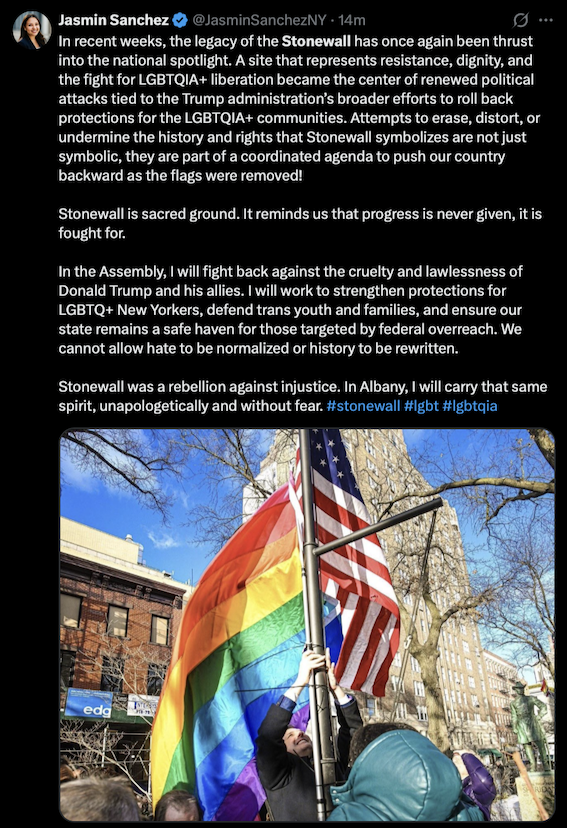
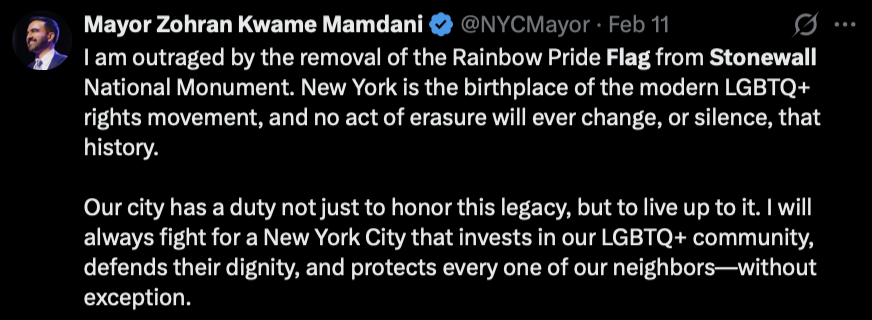
Local elected officials, national advocacy leaders, and longtime activists were present at the gathering. Among them were representatives from LGBTQ+ organizations who addressed the crowd and emphasized why Stonewall holds a unique place in queer history.
What Actually Happened at the Flagpole
As officials and advocacy leaders attempted to re-raise the Pride flag, tensions emerged within the crowd. Some attendees objected to the idea of the Pride flag sharing space with another flag, arguing that Stonewall’s symbolism should remain centered on LGBTQ+ history.
The Pride flag at the Stonewall Monument is re-raised!
New Yorkers won’t let Donald Trump erase LGBTQ+ history, or trample the rights of our LGBTQ+ neighbors. pic.twitter.com/IpkeEEjy6w
— Brad Lander (@bradlander) February 12, 2026
Chants calling for the Pride flag to be raised prominently echoed through the park. The moment became less about formal ceremony and more about collective expression.
Eventually, community members themselves helped ensure the Pride flag was visible again. Observers noted that the atmosphere felt less like a staged event and more like a spontaneous gathering shaped by emotion, memory, and urgency.
Why the Response Was So Immediate
For many in attendance, the concern was not just about one flag, but about what its removal represented to them.
Speakers and participants connected the incident to broader fears of LGBTQ+ erasure—whether through challenges to education, restrictions on gender-affirming care, or debates over whose histories are acknowledged in public institutions. These views were expressed as personal and communal reactions, not official findings.
As one organizer told The Advocate, the quick turnout reflected a belief that waiting, even briefly, felt risky when visibility itself seemed uncertain.
What This Moment Reveals
By the end of the afternoon, the Pride flag was flying again near Stonewall. But the significance of the day extended beyond where the fabric rested.
The gathering demonstrated how deeply Stonewall remains woven into LGBTQ+ identity—not as a relic of the past, but as a living site of meaning. It also showed how quickly the community mobilizes when symbols tied to that history feel threatened, even temporarily.
Stonewall’s legacy was born from resistance, not permission. This week’s events served as a reminder that its meaning continues to be shaped by those who show up to defend it.
REFERENCE: The Advocate
Excellent people! Jeff Gravelle CANADA
Good! Keep flying!!!