


In February 2026, the Kansas Legislature voted to override Democratic Governor Laura Kelly’s veto of Senate Bill 244 (SB 244), allowing the bill to take effect as state law. The bill introduces new restrictions on transgender residents’ access to public facilities and legal identification, and has prompted criticism from advocacy groups and legal challenges.
What the New State Law Means
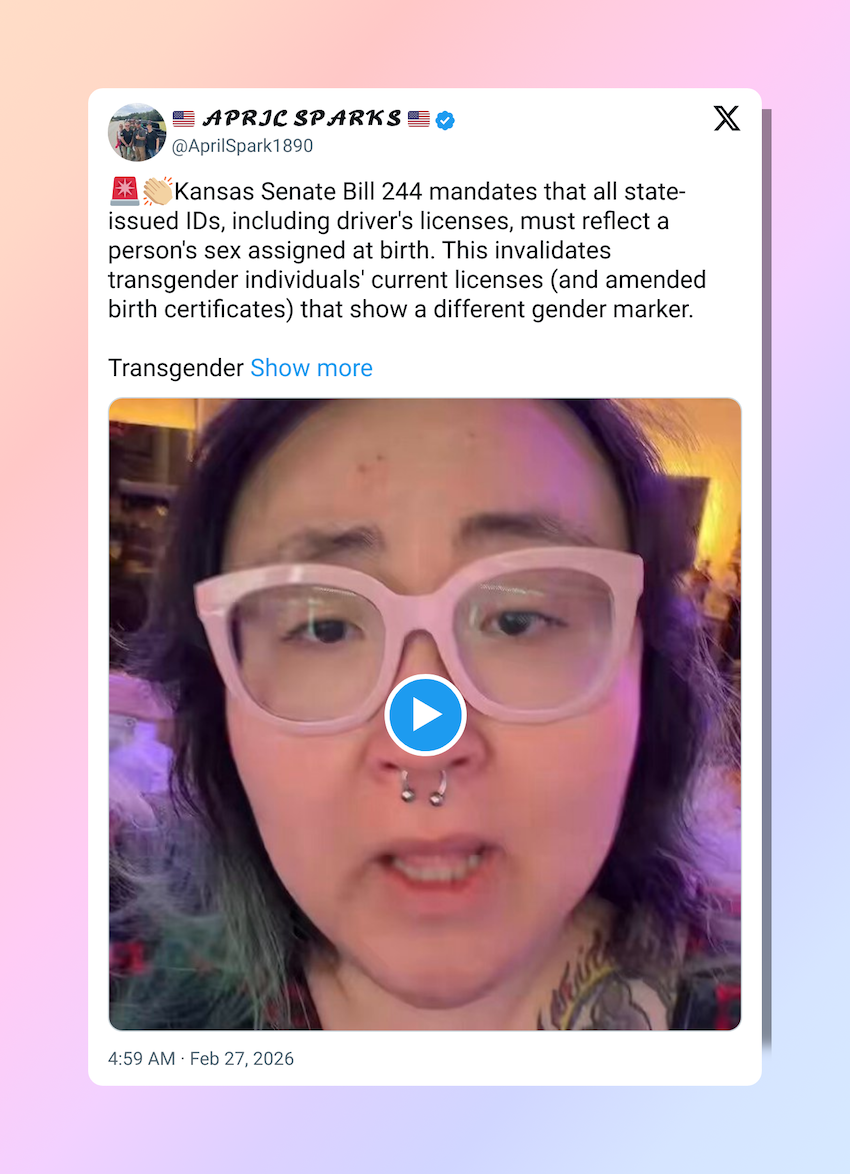
Under SB 244, the gender listed on a person’s driver’s license or birth certificate must match the sex assigned at birth. Transgender Kansans who had previously updated their IDs to reflect their gender identity must surrender those documents and obtain new ones that comply with the law. The Kansas Division of Vehicles has sent letters notifying residents that their current identification will become invalid once the law takes effect.
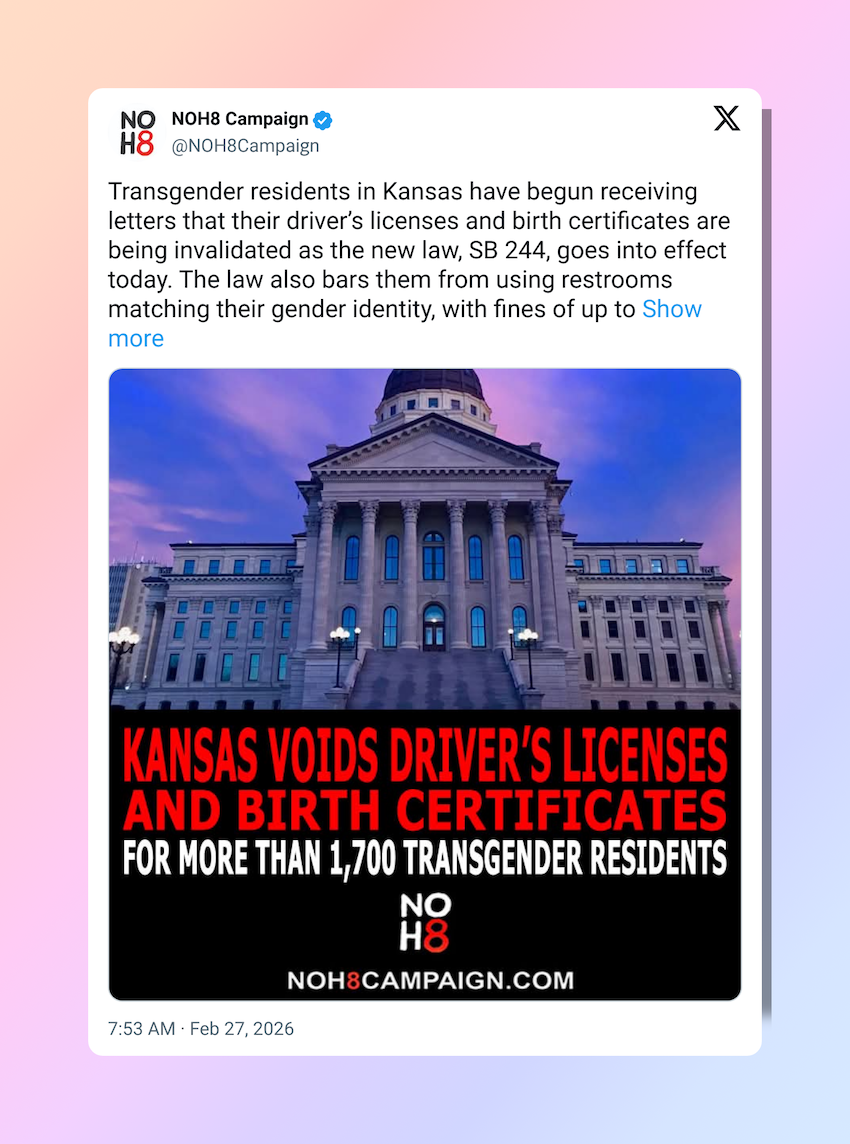
The law also limits access to bathrooms and locker rooms in public buildings, including schools, universities, airports, and government offices. Only people whose gender matches their sex assigned at birth may use multi-occupancy facilities. The law additionally allows private individuals to file lawsuits seeking at least $1,000 in damages if they believe someone has used a restroom inconsistent with their birth-assigned sex.
RELATED: Kansas Tells Trans Residents to Surrender Driver’s License Under New Law
Legislative Action
Governor Kelly had vetoed SB 244, highlighting concerns about its impact on transgender residents and questioning whether it addressed the state’s pressing challenges. Despite her veto, Republican lawmakers in both chambers voted to override it, enacting the bill into law. The override marked a significant change in policy for transgender residents of Kansas.
Response from Advocacy Groups
Civil rights organizations, including the Human Rights Campaign, criticized the override. Kelley Robinson, president of HRC, said lawmakers “prioritized cruelty” and pushed the bill through without allowing Kansas residents to testify or defend their rights. The organization also pointed out that many Kansas cities have already adopted inclusive workplace policies for LGBTQ+ employees, which SB 244 undermines.
Kansas Republicans have nothing better to do than bully trans people.
• SB 244: License revocation
• Bathroom bounty hunters
• Political grandstandingThis cruelty accomplishes nothing except driving talent out of KS. Trans rights are human rights. #NoHateInOurState pic.twitter.com/Jy6aDz0ORU
— Seattle Smith🇺🇸 (@smith_seattle1) February 27, 2026
Legal Challenges
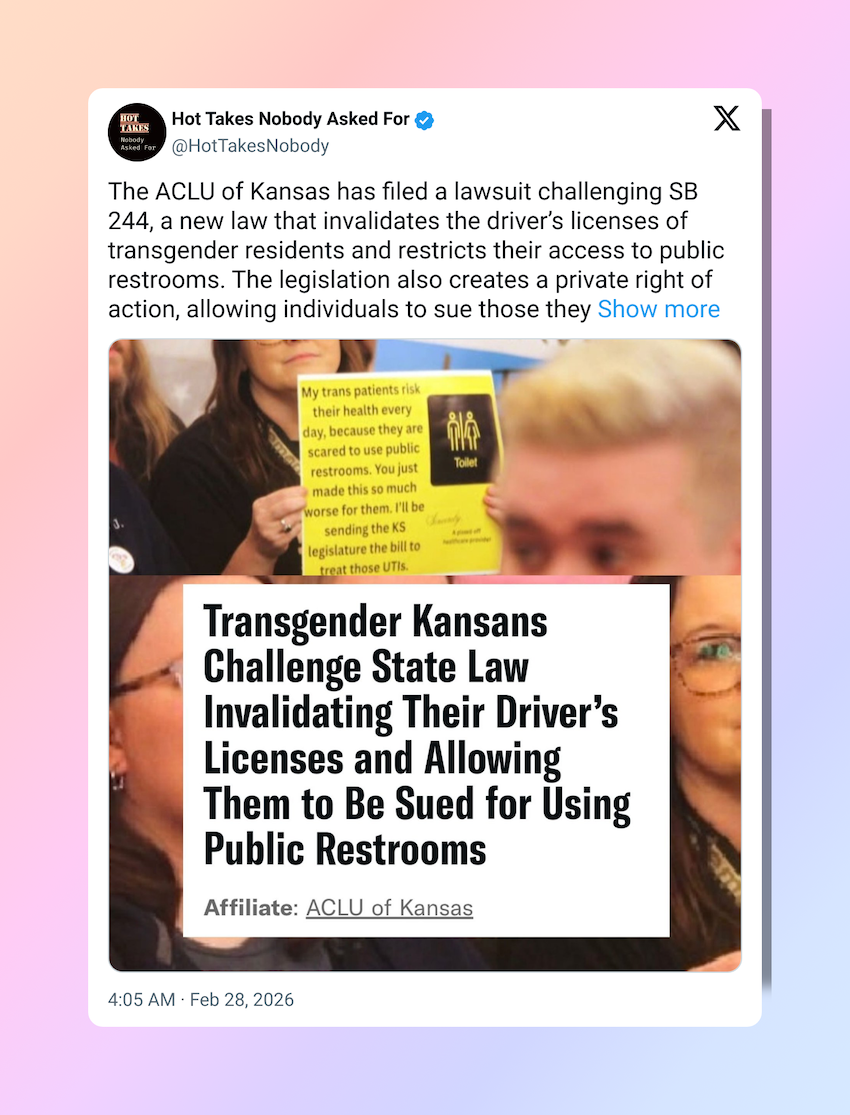
After the law’s enactment, two transgender residents of Kansas filed a lawsuit in Douglas County District Court challenging SB 244. The plaintiffs argue that the law violates protections under the Kansas Constitution, including rights to privacy, equal protection, and personal autonomy. They also contend that forcing people to replace identification documents and restricting bathroom access imposes unnecessary burdens on their daily lives.
Effects on Transgender Residents
The new law has immediate consequences for transgender Kansans. Those affected must ensure their IDs comply with the new rules to avoid legal problems, and they may encounter restrictions when using public facilities. Critics say the law could increase harassment and make it more difficult for transgender residents to participate fully in work, school, and public life.
What Happens Now?
With the passage of SB 244, Kansas has joined a number of states that have enacted laws restricting transgender rights in public spaces and requiring changes to official identification. While supporters of the law frame it as regulatory, opponents and legal advocates argue that it creates unnecessary barriers, legal confusion, and risks for transgender residents. Ongoing lawsuits will determine how the law is applied and whether courts will intervene to block or modify its provisions.
I say call their bluff. Transgender individuals should invade Kansas, en mass, using the bathrooms the law says they’re supposed to use. Big burly MEN, born as female, should invade every women’s bathroom in the capitol, with appropriate legal documentation, of course.