


For months, Manhattan’s District 3 special election became more than a local race. It turned into a conversation about identity, legacy, and whether one of New York City’s most symbolic LGBTQ political seats would remain in queer hands.
Now voters have delivered their answer.
Carl Wilson has won the special election for Manhattan’s Third District, preserving a 35-year streak of LGBTQ representation in one of the city’s most historic council seats.
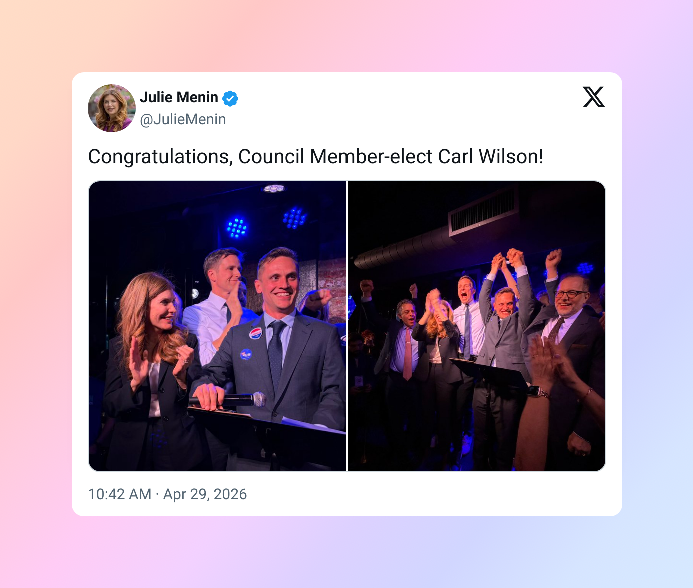
The district includes the Stonewall Inn—widely recognized as the birthplace of the modern LGBTQ rights movement—along with Chelsea, parts of Greenwich Village, Hell’s Kitchen, Hudson Square, the Garment District, Flatiron, and the West Village.
For many New Yorkers, this was never just another city council contest.
RELATED: As U.S. Support Shrinks, Can Canada Champion LGBTQ Rights?
Why This Race Mattered
Since 1991, Manhattan’s District 3 has consistently elected openly gay representatives, making it one of the clearest examples of queer political power in municipal government.
That history gave this election unusual weight.
The race was triggered after former council member Erik Bottcher stepped down in February to serve in the New York State Senate, opening the seat and prompting a special election.
Four candidates entered the contest:
- Carl Wilson
- Lindsey Boylan
- Layla Law-Gisiko
- Leslie Boghosian Murphy
As voting approached, however, the field largely narrowed to Wilson and Boylan, who emerged as the two most visible contenders with the strongest endorsements and momentum.
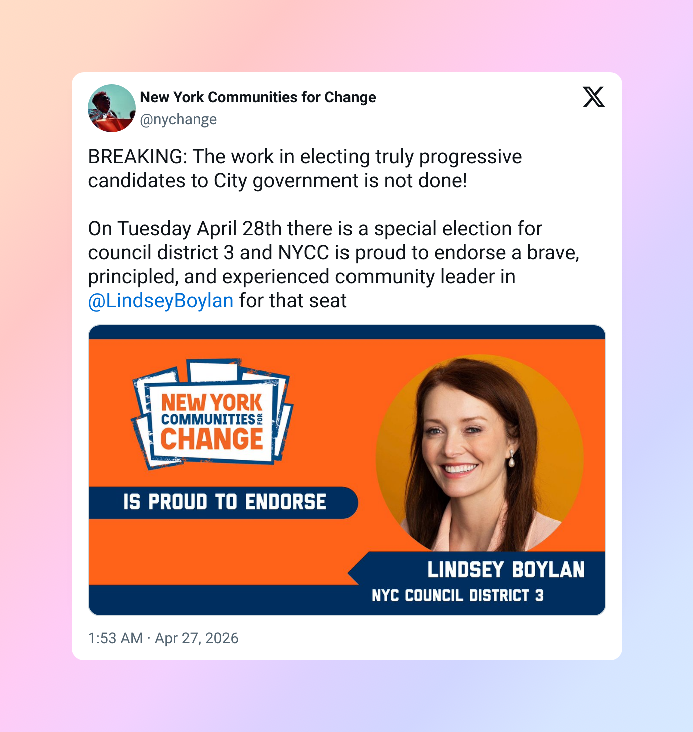
Wilson vs. Boylan
Wilson, the only openly gay candidate in the race, previously served as Bottcher’s chief of staff and is a founder of the Hell’s Kitchen Democrats. He was backed by Council Speaker Julie Menin and other moderate Democratic figures.
Carl Wilson’s answer to me on @NYCMayor Mamdani endorsing @LindseyBoylan: this race is about the West Side and keeping “an LGBTQ representative” for the district that includes Stonewall. On the Speaker Menin vs. Mamdani framing in the CD3 race, he said he’d work with both. pic.twitter.com/HpseAxfWaB
— Adam Daly (@AdamDalyNews) April 17, 2026
Boylan, a Democrat and former state official, became nationally known after publicly accusing former Governor Andrew Cuomo of sexual harassment. She entered the race with support from Mayor Zohran Mamdani and progressive allies.
That contrast helped shape the broader narrative of the campaign: experience and continuity versus insurgent progressive change, identity representation versus policy-first politics.
RELATED: Homophobic Hate Crime Subway Suspect Arrested 3 Months After Evading Authorities
The Question at the Center of It All
As the race intensified, many political observers asked whether Manhattan’s District 3 still needed identity-based representation in 2026. Some argued that a district so deeply tied to LGBTQ activism should continue electing queer leaders who understand that history through lived experience. Others countered that rising rents, affordability pressures, public safety concerns, and city governance mattered more than a candidate’s identity.
Wilson’s victory suggests many voters did not see those priorities as mutually exclusive.
Wilson’s Platform
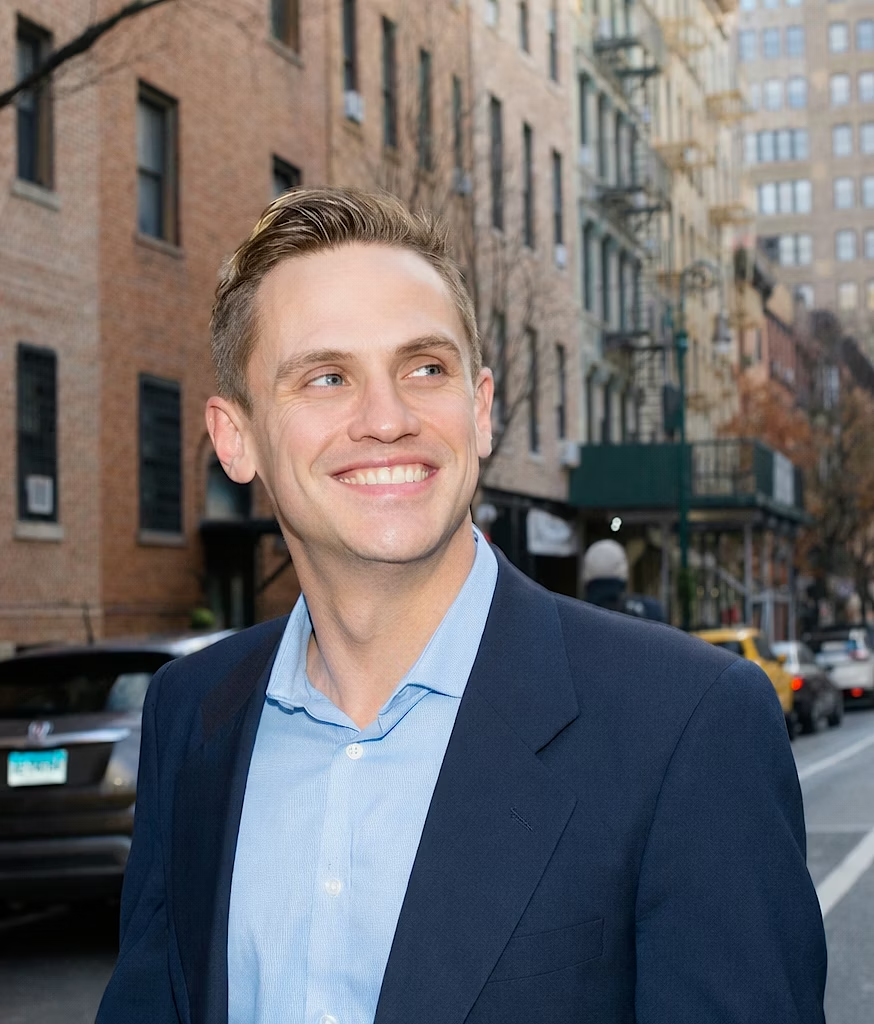
Throughout the campaign, Wilson emphasized both practical governance and LGBTQ advocacy.
His platform included:
- Expanded funding for HIV prevention and treatment
- Increased mental health services
- Housing support for LGBTQ youth and seniors
- Anti-bullying protections in schools
- Policies supporting transgender and gender non-conforming New Yorkers
- Preservation of the district’s historic queer neighborhoods and landmarks
He framed the campaign as protecting Manhattan’s District 3’s legacy while focusing on present-day needs.
That message appears to have connected.
The Results
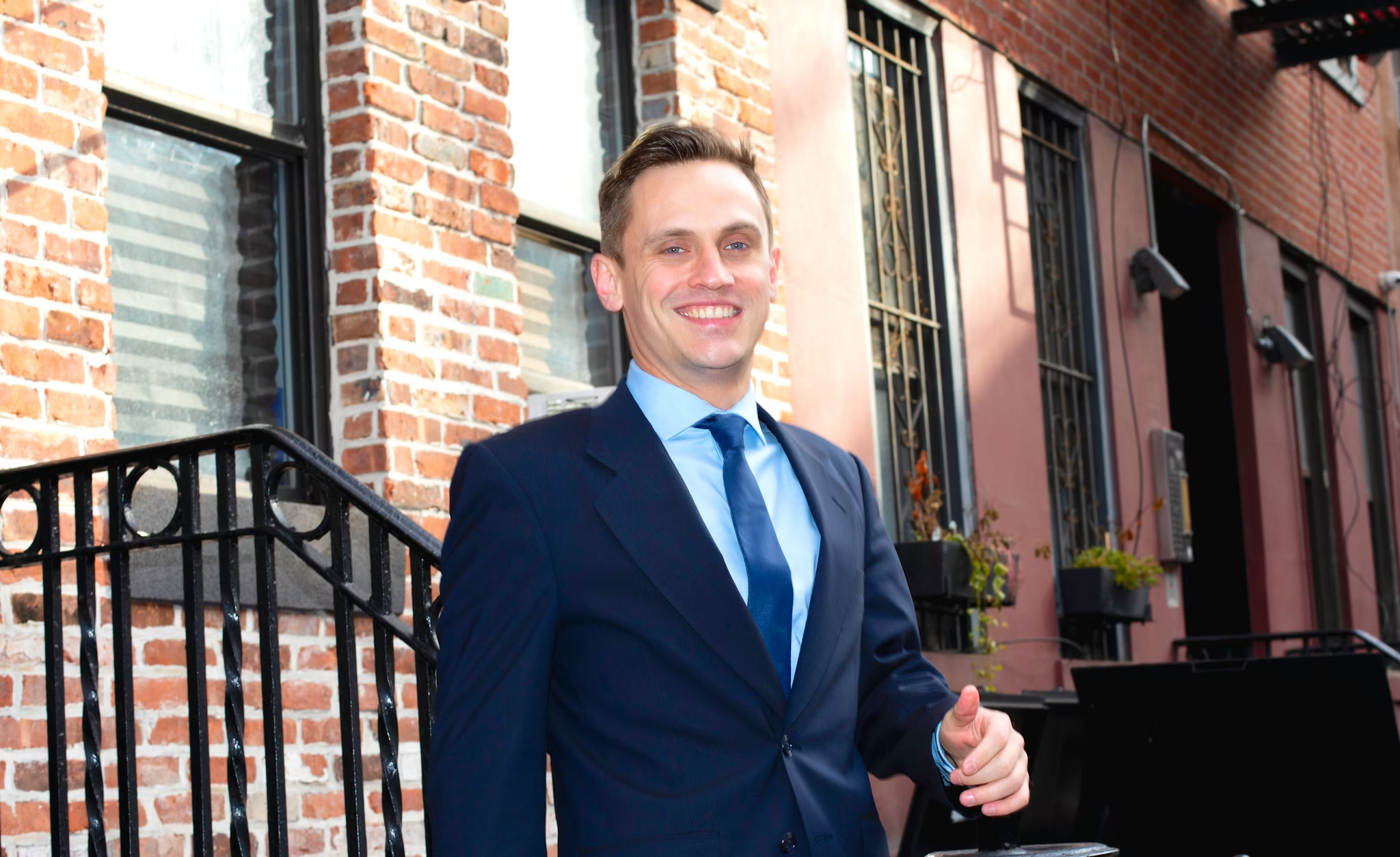
According to reporting by City & State New York on unofficial election-night tallies, Wilson led with roughly 43 percent of first-ranked ballots counted. Boylan followed with 26 percent, while Layla Law-Gisiko received 20 percent and Leslie Boghosian Murphy earned 11 percent.
Boylan and Mayor Mamdani both reportedly acknowledged Wilson’s win Tuesday night.
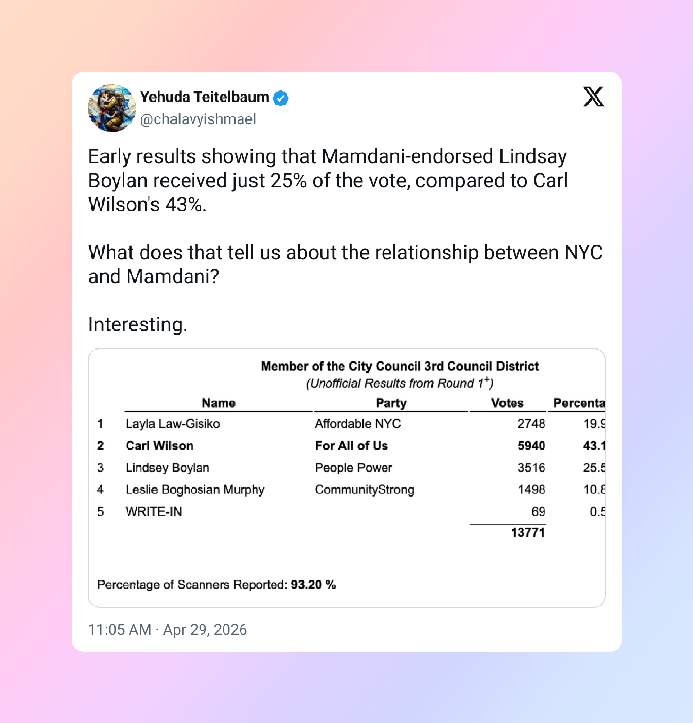
Because New York City uses ranked-choice voting, final certified results won’t be out until May 5., but Wilson’s lead was strong enough for the race to be effectively decided on election night.
Why It Resonates Beyond Manhattan
District 3 is one of the rare political seats in America where LGBTQ representation has long carried both symbolic and practical meaning. It contains neighborhoods that helped shape queer culture, activism, nightlife, and organizing for generations.
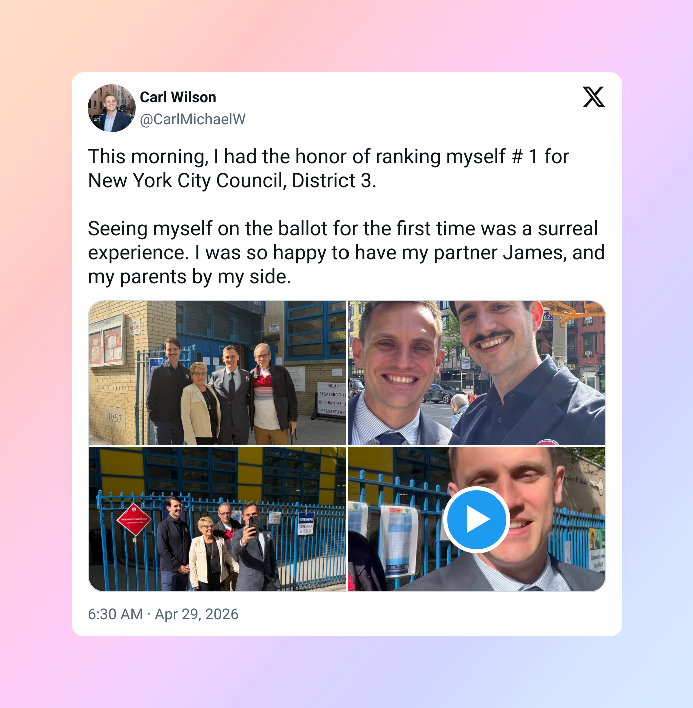
At a time when LGBTQ rights are being debated and challenged across the country, the result may be read by many as a reminder that representation still matters to voters—especially in communities built through decades of activism.
But Wilson’s Manhattan win also suggests something else: symbolic politics alone is not enough. Voters still expect answers on housing, healthcare, affordability, and everyday quality of life.
What Happens Next
Wilson will now serve the remainder of Bottcher’s term through December.
A separate Democratic primary is still scheduled later this year, followed by a general election for a full four-year term. That means the political fight for District 3 is not over—it is only entering its next phase.
For weeks, Manhattan’s special election was framed as a test of whether a historic LGBTQ seat had entered a post-identity era. Instead, voters chose continuity and change at the same time. With Carl Wilson’s victory, Manhattan preserved a queer political legacy while handing it to a new generation.
“Progressive” is just a polite way to say “pre-conservative.”
Letting straight people represent us has never worked, no matter how progressive they ostensibly are.