


AFL sends a strong message after the recent homophobia slur case involving football player Lance Collard.
The football world in Australia has been rocked by a controversy that quickly escalated from a player suspension into a league-wide reckoning.
At the center of the storm is Lance Collard, the young Australian rules footballer from St Kilda Football Club, whose punishment for using a homophobic slur during a VFL match was dramatically reduced on appeal—only for the AFL to respond with a move that stunned fans and commentators alike.
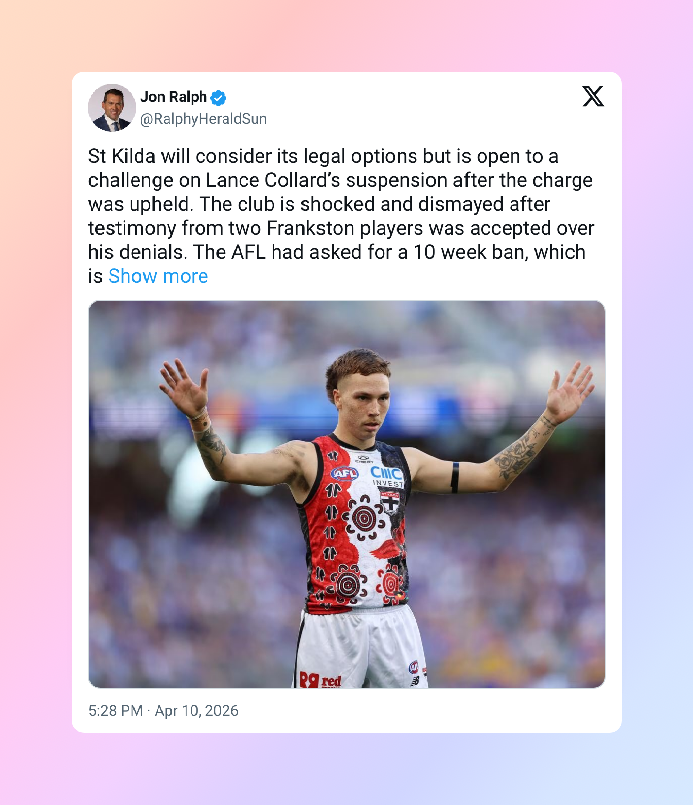
What began as a disciplinary case has now turned into one of the sport’s biggest off-field talking points of the season.
What Happened?
Collard was found guilty of directing a homophobic slur at an opponent during a VFL game last month, reportedly using the phrase “fu**ing fgot” on the field.
Because it was his second offence in three seasons, the matter was treated seriously.
Collard had previously been suspended for six games in 2024 after admitting to using the same slur during another VFL match.
Initially, the AFL Tribunal handed Collard a nine-game suspension, later widely reported as a severe penalty meant to reflect the repeat nature of the incident and the seriousness of discriminatory language.
RELATED: FC St. Pauli Coach Christian Dobrick Kicks Down the Closet Door
Appeal Changes Everything
St Kilda challenged the punishment, arguing that the suspension was too harsh.
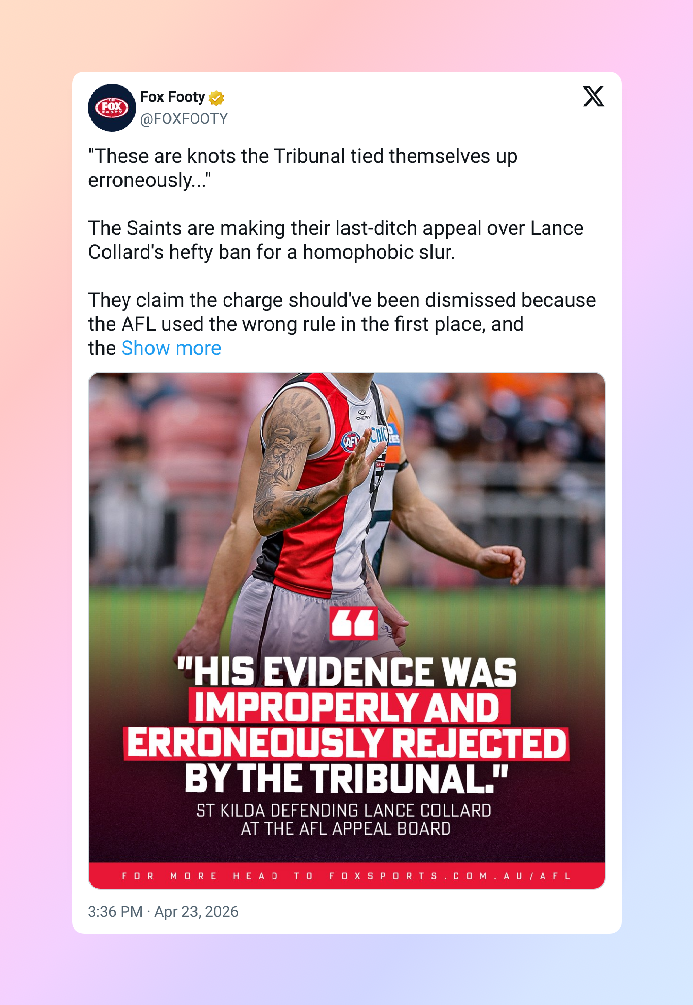
According to reports, the AFL Appeals Board upheld the finding that Collard had engaged in conduct unbecoming, meaning the guilty verdict remained in place.
However, the board agreed with arguments from St Kilda’s legal team that the original sanction was excessive.
The suspension was then reduced to four matches, with two games suspended until the end of 2027, effectively leaving Collard to serve a two-week active ban immediately.
In explaining the reduction, the board reportedly said the original length of suspension would have had a “crippling” impact on the 21-year-old player’s career.
That reasoning did not go over well.
RELATED: Why Josh Cavallo Still Stands Alone: Football’s Homophobia Problem in 2025
AFL Hits Back Hard
The AFL responded swiftly and publicly.
League CEO Andrew Dillon made it clear the organization believed a tougher sanction was justified. He said a stronger penalty “was not only warranted—it was necessary.” Dillon also forcefully rejected comments linked to the Appeals Board’s reasoning that suggested racist, sexist, or homophobic language can be commonplace during matches.
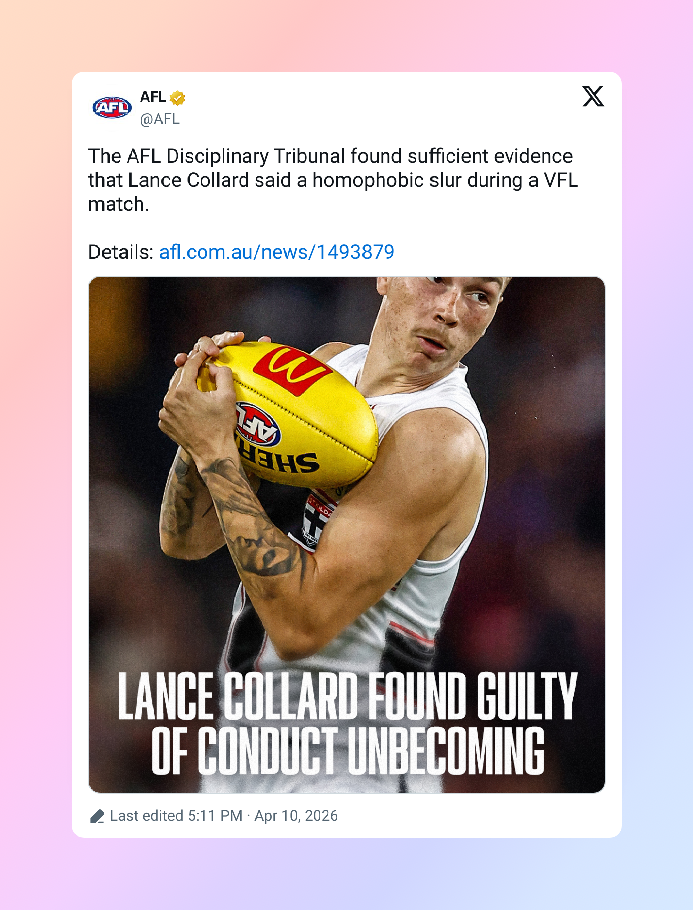
The AFL said it does not accept the idea that such conduct should ever be normalized.
The league’s message was blunt: there is no place for homophobia in the game.
Appeals Board Chair Removed
Then came the twist no one expected.
Shortly after the controversy, the AFL announced it had terminated the appointment of Will Houghton KC, the chair of the AFL Appeals Board, effective immediately. Houghton had served in the role for two years.
In its official statement, the league thanked him for his service, but the timing of the decision immediately drew attention given the public backlash surrounding the Collard appeal outcome.
That has only intensified debate around accountability, governance, and how seriously leagues should respond to discriminatory conduct.
Why This Case Matters
This story goes beyond one player or one suspension.
Sports leagues around the world have spent years trying to create safer and more inclusive environments for LGBTQ athletes, fans, staff, and communities. Cases involving anti-gay slurs are often viewed as tests of whether those commitments are real or merely symbolic.
For many observers, reducing a repeat offender’s ban risked sending the wrong message.
For others, questions about fairness and proportional punishment also matter.
That tension is exactly why this case has become so explosive.
Football’s Bigger Culture Question
Locker-room language, on-field trash talk, and old-school attitudes have long been part of sports culture. But many leagues are now making it clear that tradition is not an excuse for abuse.
The AFL’s sharp response suggests it wants to be seen on the side of progress—and to make clear that anti-LGBTQ language cannot be brushed off as “part of the game.”
The Bottom Line
What started as a disciplinary hearing has become a defining moment for Australian football.
Lance Collard’s reduced suspension sparked outrage. The AFL’s removal of the Appeals Board chair showed just how seriously the league viewed the fallout.
Now the bigger question remains: was this just damage control, or a genuine turning point in how football handles homophobia?
Either way, the message has been heard loud and clear.