

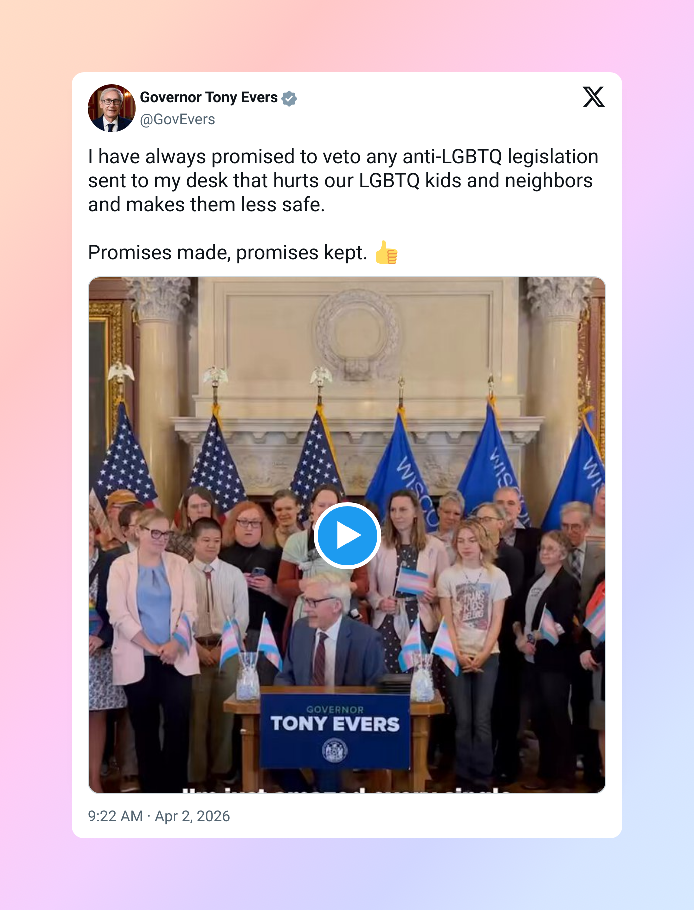
Wisconsin Governor Tony Evers marked Transgender Day of Visibility with a move that didn’t go unnoticed: rejecting five bills that would have directly impacted transgender people across the state.
According to Wisconsin Public Radio, Evers summed it up plainly, saying the appropriate response to the legislation was, “Not approved.”
It’s a stance he’s been consistent about—vetoing proposals that, in his view, make Wisconsin a less safe or welcoming place for LGBTQ residents.
What the Bills Proposed
The five bills touched on areas that are deeply personal for many transgender people—sports, school life, and access to healthcare.
Assembly Bills 100 and 102 aimed to bar transgender girls and women from participating in sports teams that align with their gender identity. A.B. 100 focused on K–12 schools, while A.B. 102 extended those restrictions to colleges and universities, as reported by Erin Reed.
Another proposal, A.B. 103, focused on how transgender and nonbinary students are recognized in school. It would have required teachers to use a student’s legal name and pronouns unless parents gave permission otherwise—and would have required schools to inform parents if a student identified as trans or nonbinary.
Reed pointed out that policies like this don’t exist in a vacuum. For some students, being outed at home isn’t just uncomfortable—it can put their safety and stability at risk.
RELATED: Congress Targets ‘Strippers’ in Schools—But it Wasn’t Happening Anyway
Healthcare at the Center of the Debate
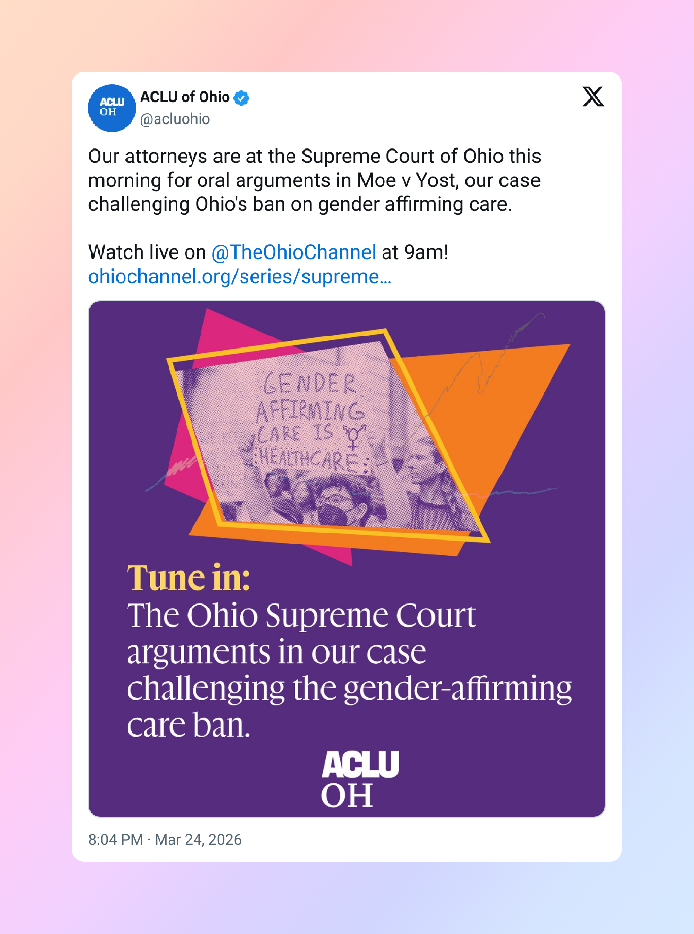
Two of the bills—A.B. 104 and Senate Bill 405—zeroed in on gender-affirming care.
A.B. 104 proposed banning doctors from providing that care to anyone under 18. S.B. 405 went a step further, opening the door for people to sue their doctors years later if they received care as minors.
In explaining his veto, Evers emphasized that this kind of care isn’t experimental or fringe—it’s widely supported within the medical community. Organizations like the American Medical Association and the American Academy of Pediatricsrecognize gender-affirming care as evidence-based and, in many cases, life-saving.
“LGBTQ Kids Deserve Our Support”
Evers didn’t shy away from the broader implications of the bills.
Today, I celebrated Trans Day of Visibility surrounded by LGBTQ Wisconsinites as I kept my promise to veto several Republican bills targeting our trans and gender nonconforming kids.
Here in Wisconsin, we celebrate our trans and LGBTQ neighbors. 🏳️⚧️🏳️🌈 pic.twitter.com/dvICRcTWKK
— Governor Tony Evers (@GovEvers) March 31, 2026
He said he opposed what he described as attempts to “codify discrimination into state statute,” particularly when those efforts target young people who are already navigating complex realities.
“LGBTQ kids, including transgender and gender nonconforming kids, deserve our love, respect, and support just like any other kid,” he wrote.
It’s a statement that, for many, goes beyond policy—it speaks to whether young people feel seen, protected, or pushed further to the margins.
Political Context and Reactions
Even with Republican majorities in the legislature, the bills are unlikely to move forward—there aren’t enough votes to override the vetoes.
Advocacy group Fair Wisconsin thanked Evers, saying the decision helps ensure transgender youth feel supported not just in theory, but in everyday spaces like schools and healthcare settings.
They also framed the bills as part of a larger pattern—one that seeks to limit where and how transgender people can exist openly.
A Broader National Conversation
Evers’ decision lands in the middle of a wider national moment where transgender rights continue to be debated, legislated, and, often, politicized.
As noted by Wisconsin Public Radio, even within political parties there are ongoing discussions about how strongly to advocate for these issues heading into future elections.
But beyond strategy, the impact is personal. For many LGBTQ people—especially trans youth—these policies shape daily life in very real ways.
What This Means Moving Forward
For now, the vetoes mean these particular restrictions won’t take effect in Wisconsin.
But the bigger picture remains ongoing. Across the country, similar proposals continue to surface, making state-level decisions like this one especially significant.
Evers’ latest move reinforces a clear position: that policies affecting transgender people—especially young people—aren’t abstract debates. They’re decisions that directly affect safety, access, and the ability to live openly.