

Comedians Bowen Yang and Matt Rogers, co‑hosts of the pop culture podcast Las Culturistas, are at the center of controversy after comments made about Democratic U.S. Rep. Jasmine Crockett and her bid for the Texas Senate stirred backlash online and in political circles.
The pair, who are both known for comedy rather than political commentary, found themselves criticized for discouraging support of Crockett’s campaign — a decision that sparked conversations about celebrity influence, political discourse, and representation.
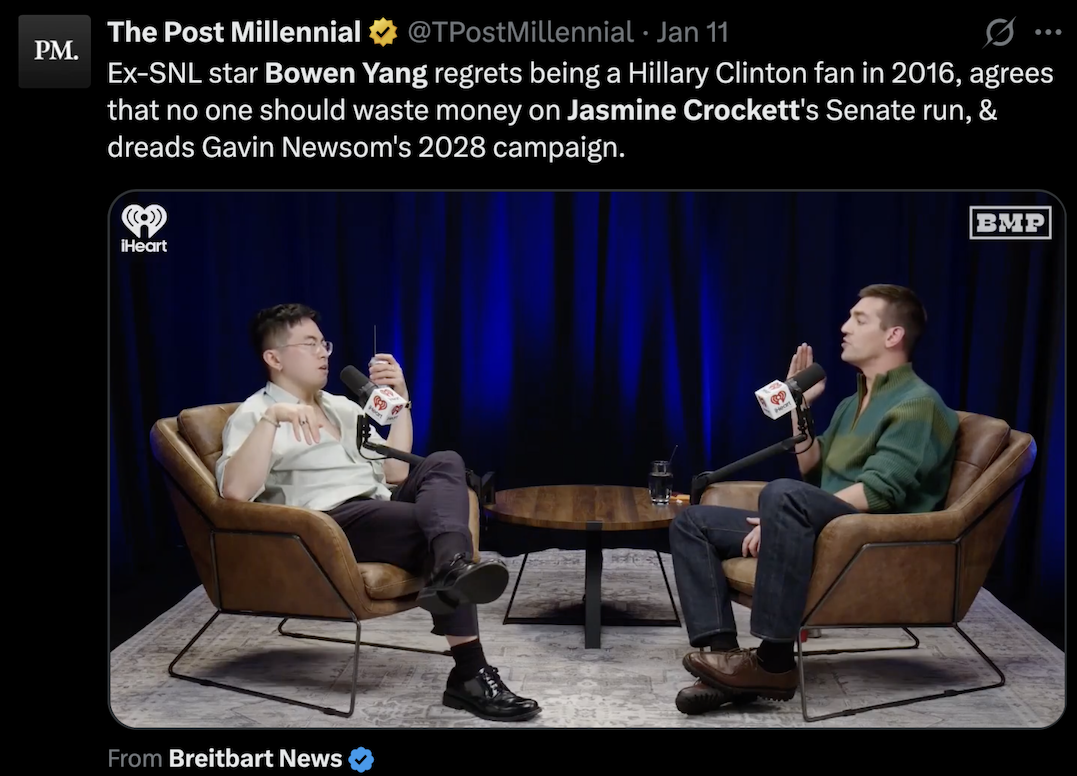
RELATED: The Real Reason Bowen Yang Left SNL Might Surprise You
What Was Said on the Podcast
In a recent episode of Las Culturistas, the topic of Crockett’s 2026 Senate campaign came up in the context of broader Democratic strategy and political engagement. During the episode, Matt Rogers advised listeners not to donate to Crockett, saying he believed she was unlikely to win a statewide Senate race in Texas — a comment based partly on comparisons to past races.
Matt Rogers: “Don’t waste your money sending to Jasmine Crockett.”
Bowen Yang: “I must agree.” pic.twitter.com/ljM5dVaoVJ
— Keith Edwards (@keithedwards) January 8, 2026
On the show, Rogers said that “don’t waste your money sending to Jasmine Crockett” and suggested that lesser‑known Democratic candidates like James Talarico might better appeal to moderate voters. Yang responded briefly during the episode by agreeing with Rogers at the time–“I must agree,” Yang said.
These statements grabbed attention quickly, in part because Crockett is a sitting congresswoman and one of several Black women seeking statewide office in Texas — and Yang and Rogers themselves are not Texans or political analysts.
Backlash on Social Media and Beyond
As clips and reactions spread on social platforms like X (formerly Twitter), criticism mounted from a wide range of voices. Many users argued that Yang and Rogers’ comments were inappropriate for their platform and could be perceived as undermining the campaign of a Black woman running for office.
Critics also pointed out that neither host is a political expert, raising questions about whether celebrity commentary about local politics — especially in another state — was warranted.
Social media users shared their perspectives, with some saying they would reconsider supporting the hosts’ future projects unless the issue was addressed publicly.
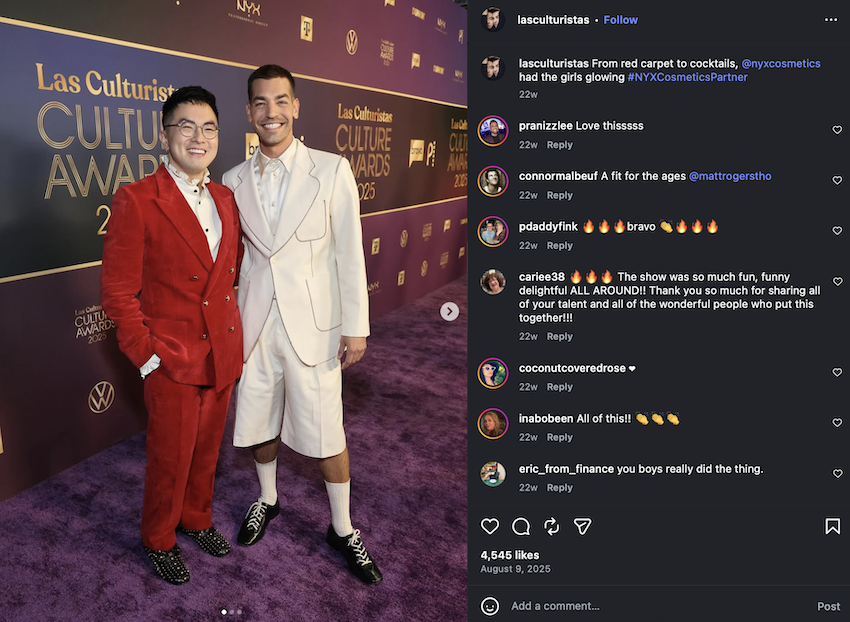
Public Response From Rogers and Yang
In the wake of the online backlash, Matt Rogers issued a statement via Instagram Stories acknowledging that his wording was poorly chosen. He wrote that his “phrasing was not right,” emphasized his commitment to progressive politics, and shared that he has “great respect and admiration for Rep. Crockett.” Rogers added that he regretted his initial wording and would strive to be more thoughtful in the future.
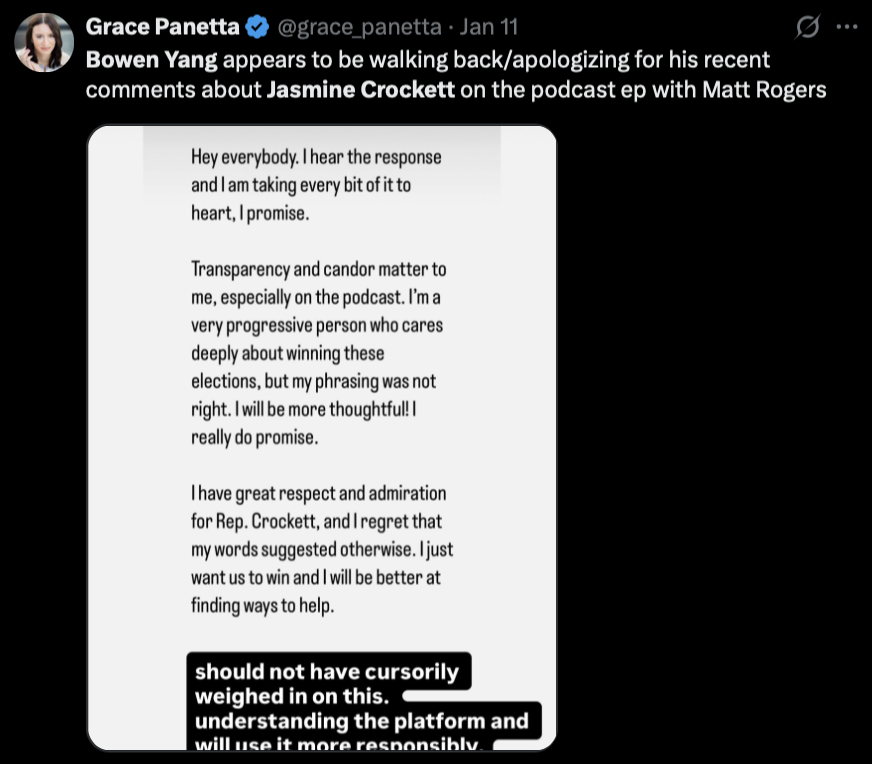
Yang reposted Rogers’ message and offered his own reflection, writing that he “should not have cursorily weighed in on this,” and that he understands the responsibility that comes with his platform. He pledged to use it more carefully going forward.
Both statements were framed as responses to the criticism rather than full apologies, with the hosts emphasizing that they care about democratic success and thoughtful engagement.
Broader Context: Celebrity Voices in Political Discussion
The incident highlights a growing tension in modern media between entertainment personalities and political discourse. When cultural figures with large platforms weigh in on campaigns, their words can be amplified rapidly, sometimes with unintended consequences.
Some observers note that public figures have always engaged in political commentary, while others argue that certain topics require careful framing and awareness of context — especially when intersecting with issues of race, representation, and local political dynamics.
In this case, the discussion around Crockett’s campaign connects to broader national conversations about strategy within the Democratic Party, Texas political dynamics, and the role of elected officials who are often vocal about progressive priorities.
What Comes Next
As of now, Crockett herself has not publicly responded to the remarks made by Yang and Rogers, and the Democratic primary race continues to garner attention in the lead‑up to the March 2026 primary. Early voting is scheduled to begin in February.
Though the hosts have offered public reflections, the reaction to this moment — both critical and supportive — underscores how closely fans and followers monitor celebrity commentary, especially when it overlaps with political discourse. Whether Yang and Rogers’ engagement will have any measurable impact on public opinion or voter behavior remains unclear, but the incident has already sparked widespread discussion in entertainment and media circles.
dicks
This is misogyny rearing its head as usual in the Democratic Party. When will we ever learn? Hillary, Kamala, and now Jasmine. So-called progressives relentlessly undermine powerful, qualified, talented women, damaging their chances before they’re even nominated, either by disparaging them during the electoral process (Hillary, a la 2008 and 2016 vs Obama and Sanders) or holding them to a higher standard than they would a man and not even voting (Kamala, a la Gaza). It’s no mistake that they automatically defaulted to the white guy as the better bet.