


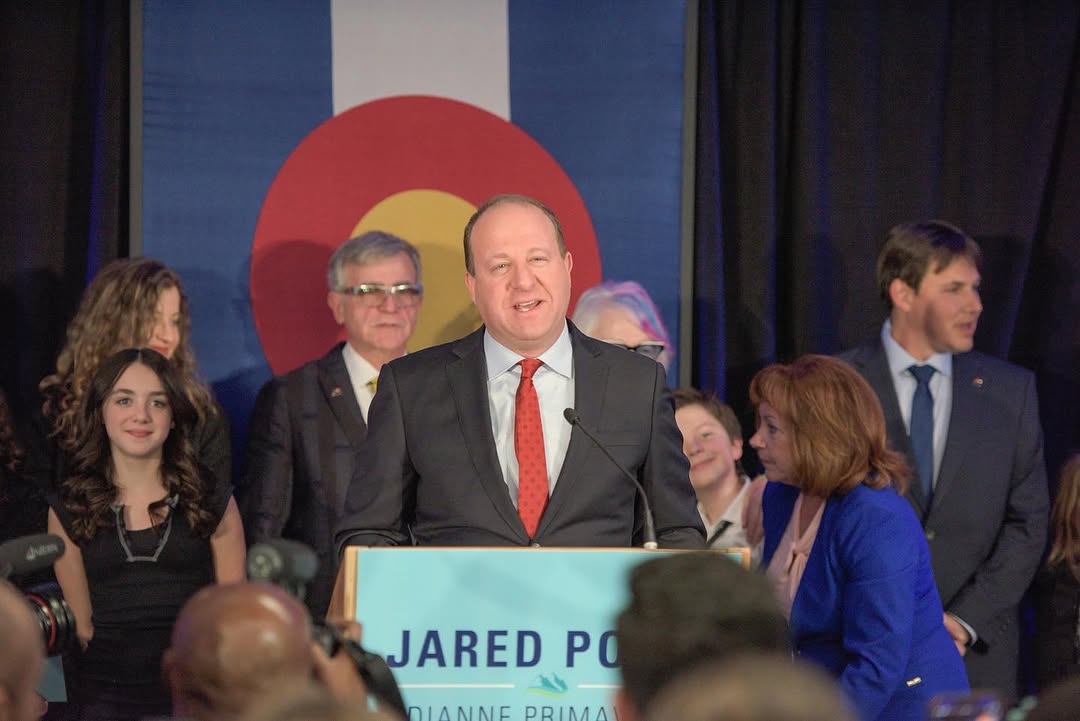
Out Democratic Governor Jared Polis is under fire from his own political party after reducing the prison sentence of election denier Tina Peters, a decision that sparked major backlash among Colorado Democrats.
Peters was convicted of nine felonies tied to election machine tampering connected to efforts to overturn Colorado’s 2020 election results, which the state certified in favor of Joe Biden. In 2024, she was sentenced to nine years in prison.
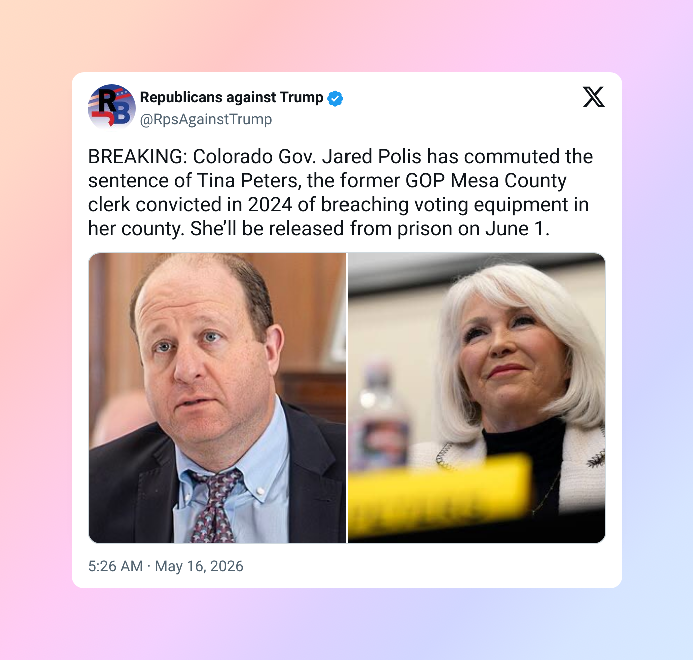
Last week, Polis announced he would commute Peters’ sentence, cutting it in half. According to CBS News, Peters is now eligible for parole on June 1.
Why Polis Reduced the Sentence
The Democratic governor defended his decision by arguing that the original punishment was too severe. He told The Colorado Sun:
“My goal is to make the right decision with the information I have and that’s exactly what I did in this case,” Polis said.
He also framed the move as part of a larger national need for healing after years of political division.
“I think this will be remembered fondly,” Polis added. “The nation needs to have a reconciliation and healing.”
The governor’s decision immediately drew criticism from both prosecutors and fellow Democrats who believed reducing the sentence weakened accountability for attacks on election systems.
Governor Polis’ first press conference since he granted clemency to Tina Peters focused on healthy foods.
POLIS: “While I chew on the carrot, any questions?”
(reporters asked about Peters/clemency)
POLIS: “I’m going to finish chewing my carrot.” pic.twitter.com/JINjhUxwLl
— Kyle Clark (@KyleClark) May 21, 2026
RELATED: Florida Attorney General’s Surrogacy Position Sparks Major Backlash
Colorado Democrats Vote to Censure Polis
According to CBS News, 89.8% of Colorado’s Democratic State Central Committee voted Wednesday to formally censure Polis.
The move bars the governor from appearing as an honored guest, featured speaker, or official representative at Colorado Democratic Party events, including high-profile functions such as the Obama Gala and DemFest.
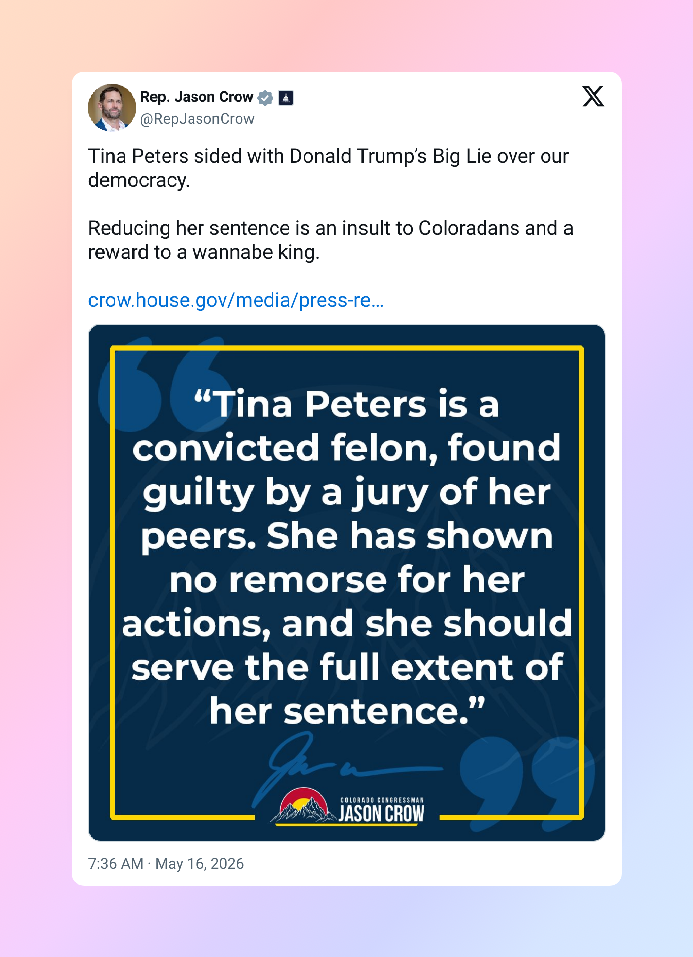
In a sharply worded statement, the Colorado Democratic Party argued that reducing Peters’ sentence damaged public trust in elections.
“Reducing her sentence now, under pressure from Donald Trump, is not justice,” the statement read. “It sends a message to future bad actors that election tampering has consequences, unless you’re friends with the president.”
The party also stressed that Peters had been convicted by “a jury of her peers” and that the judge in the case believed she would likely repeat the behavior if given the chance.
Prosecutors Push Back
Mesa County District Attorney Dan Rubenstein strongly criticized Polis’ actions, calling the commutation “arrogant.”
“This was not just a one act,” Rubenstein said. “This was a months-long pattern of deception to try to violate every security protocol we had as the person we entrusted specifically for that.”
Rubenstein also pointed out that Peters could have received a prison sentence of up to 20 years. He further noted that Polis’ own clemency board reportedly advised against reducing the sentence.
A Growing Political Divide
The Colorado Democratic Party said the commutation did not reflect its values or commitment to election integrity.
“The Colorado Democratic Party reaffirms its unwavering commitment to election workers, free and fair elections, and the rejection of election denialism and disinformation in all forms,” the statement continued.
The controversy now places Polis, one of the nation’s most prominent openly gay governors, in a politically difficult position as he faces rare public condemnation from within his own party.
The dispute has also reignited broader debates about accountability, clemency powers, and how seriously election-related crimes should be treated in a deeply divided political climate.
I was proud of Polis but he’s turned into just another bought and paid for politician….what a loser bitch you are Polis…. Hope the Dems can replace your ugly ass