

Somewhere between a bad-faith report and Meta’s moderation system, The Stud, San Francisco’s oldest gay bar, wound up being treated like it was involved in human trafficking. Because nothing says “organized crime” quite like a flyer for a dance party.
RELATED: Rainbow Table Sends Anti-Pride Councillor Into Public Meltdown
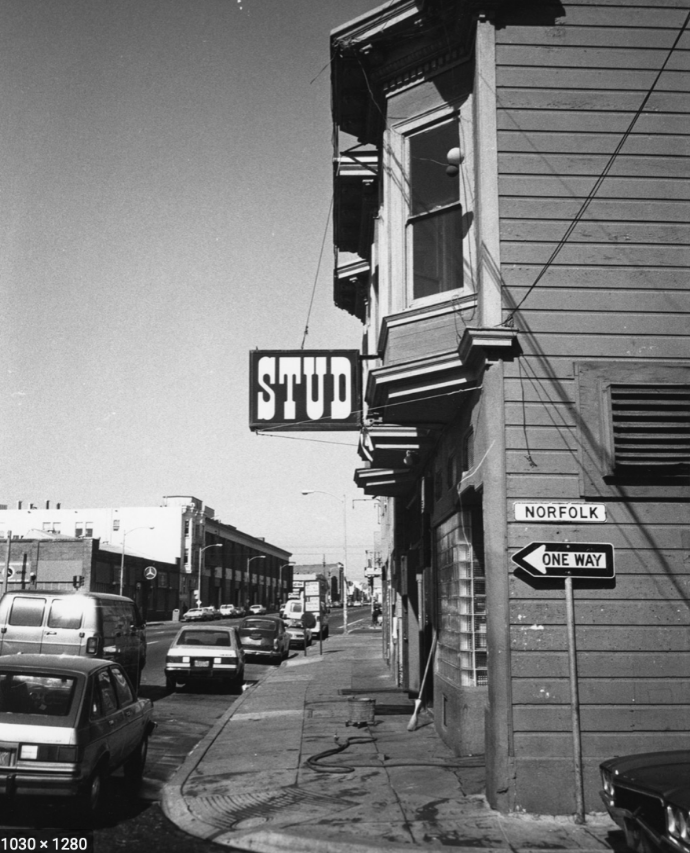
San Francisco’s oldest gay bar, the Stud, found itself temporarily locked out of its Instagram account last week after at least one user reported its posts for allegedly promoting “human trafficking.” The suspension couldn’t have come at a worse time, landing just before Dore Alley, one of the city’s biggest leather and kink weekends, when venues depend heavily on social media to pack their events.
For most businesses, losing Instagram for a weekend is frustrating. For queer nightlife, it’s potentially devastating.
RELATED: Maulik Pancholy Got Dropped From Anti-Bullying Event Because He’s Gay
The Stud’s Weekend Lockout Couldn’t Have Come at a Worse Time
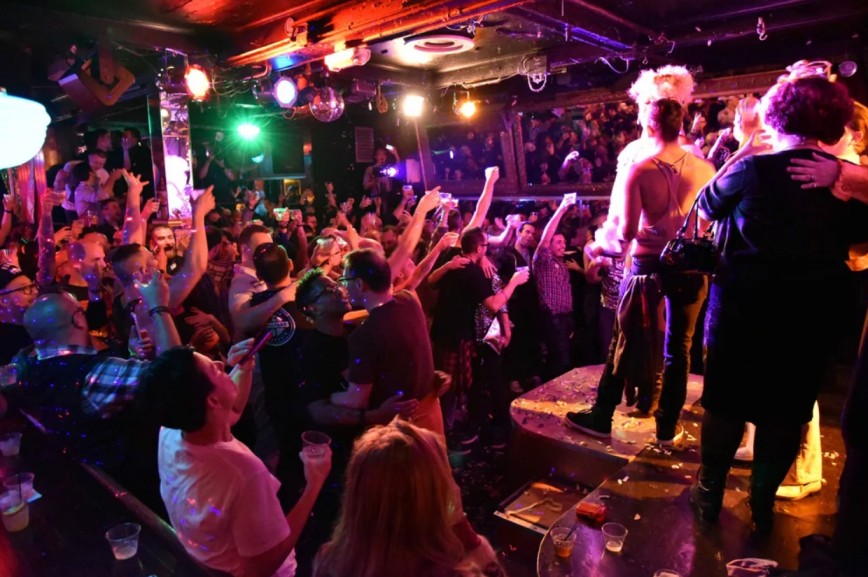
The Stud has been a fixture of LGBTQ+ culture for decades, using its Instagram account—followed by more than 30,000 people—to promote drag shows, dance parties, concerts, and community events. When the account disappeared, so did the marketing tool the owners say they rely on to promote nearly every event they host.
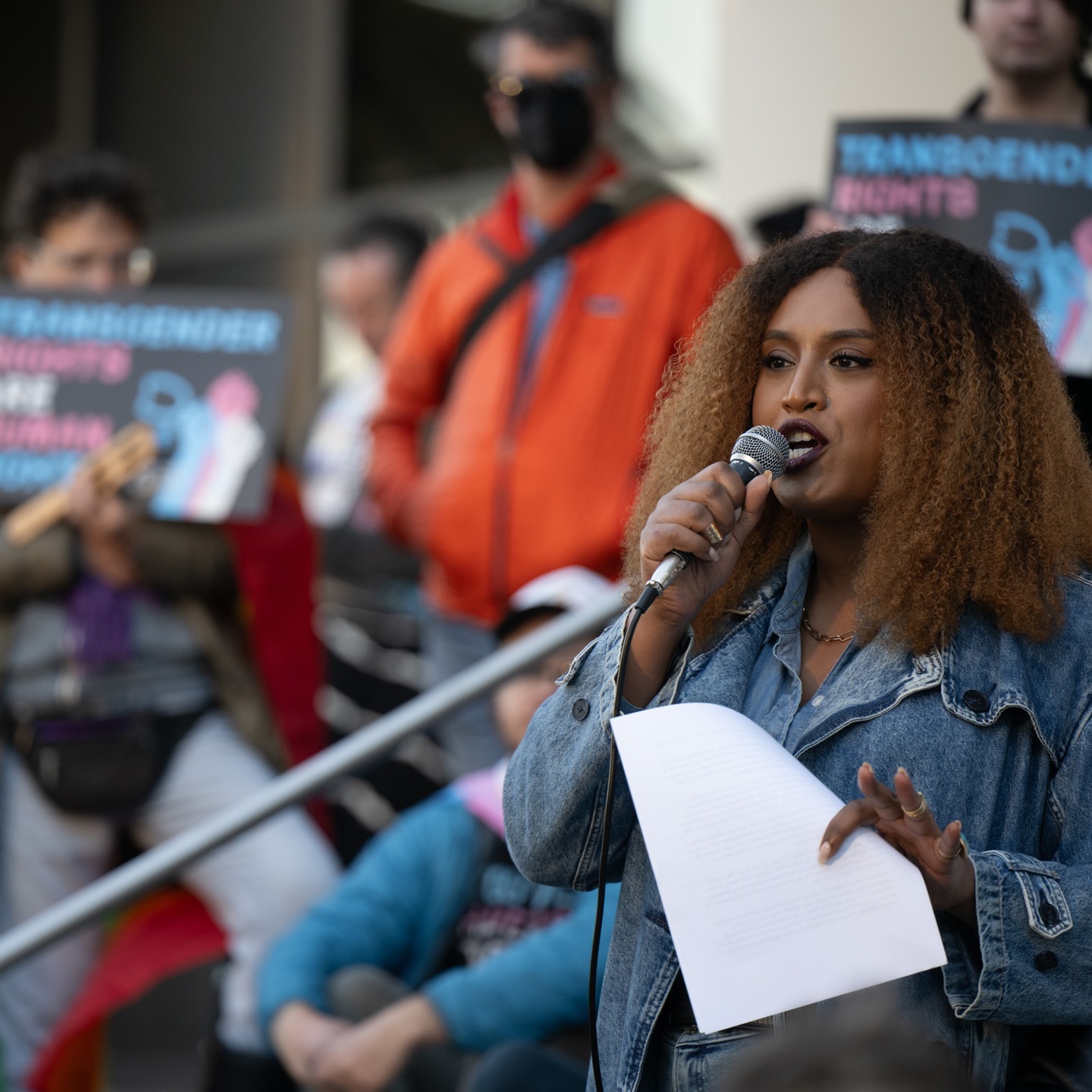
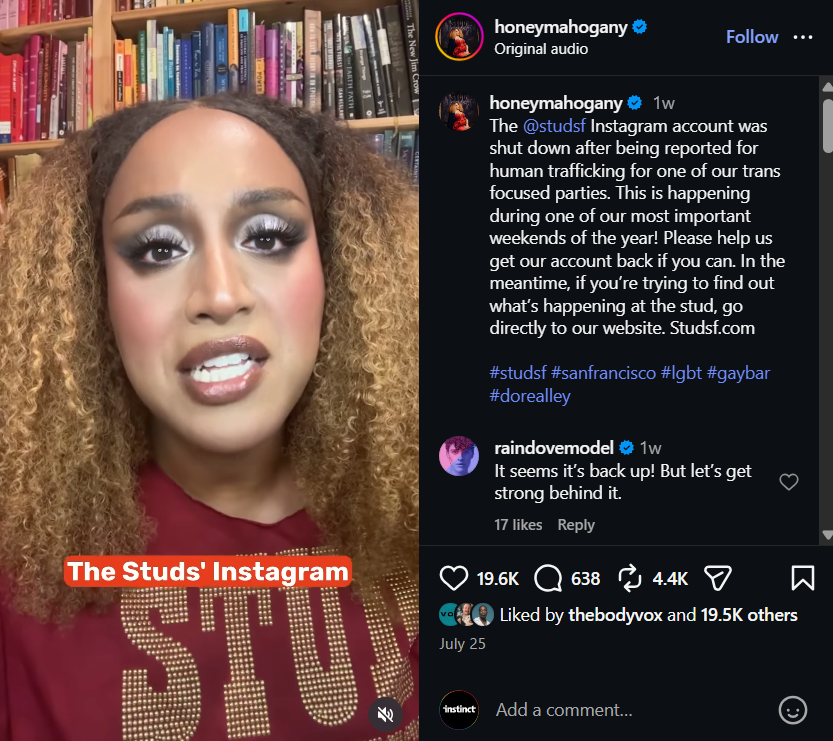
Honey Mahogany, activist, drag performer, and one of the bar’s co-owners, explained the situation in a video posted to her personal Instagram account.
“We are a promoter-driven club, and we rely on our Instagram to get the word out about our dance and drag nights,” Mahogany said. “But recently, we’ve been targeted by someone who is flagging our trans parties as engaging in human trafficking.”
The timing was especially painful. The suspension happened just before Dore Alley, the annual sex-positive street fair in San Francisco’s South of Market neighborhood that brings thousands of visitors to nearby businesses.
Mahogany warned that losing access to Instagram during one of the busiest weekends of the year wasn’t just an inconvenience—it threatened the venue’s financial stability.
“The Stud is a labor of love,” Mahogany said. “We are a collectively-owned venue where none of the owners have seen a profit. We keep the space open on a razor-thin margin, so having our only source of marketing shut down this weekend is going to be devastating to our club and puts us at risk.”
Bad-Faith Reports, Real-World Consequences
Fortunately, the account was restored Saturday evening, just ahead of the festivities. But the interruption had already highlighted a growing frustration shared by many LGBTQ+ organizations: it doesn’t take much for coordinated bad-faith reports to trigger automated moderation systems.
According to co-owner Albee, the post that allegedly triggered the suspension wasn’t even new. It had been published more than a year earlier and promoted a trans-centered Dore Alley celebration.
“Meta is from San Francisco — they know the Folsom Street Fair happens,” Albee said. “If Meta wants to protect kids from seeing sexualized images, great. … We’re supportive. But it’s time to come up with a system that is not on the backs of minority groups who people want to persecute.”
That frustration has become increasingly familiar across queer spaces online. Drag performers, trans creators, leather communities, and LGBTQ+ venues have long complained that they’re disproportionately caught in moderation systems—or worse, deliberately targeted by users weaponizing reporting tools. Albee believes that’s exactly what’s happening.
According to him, LGBTQ+ institutions, particularly those featuring drag performers, are regularly hit by coordinated harassment campaigns in which people repeatedly report legitimate posts until social media platforms or parent company Meta take disciplinary action.
When Trolls Learn the Rules
The Stud wasn’t alone. Instagram also temporarily suspended the account of San Francisco’s Leather and LGBTQ Cultural District before restoring it the same Saturday evening.
Executive director Bob Goldfarb told the San Francisco Chronicle that the flagged post promoted an event at the Stud and featured two shirtless people wearing puppy masks—hardly an unusual sight during leather weekend.
The image was reportedly removed after users falsely claimed it “may show sexual activity.”
“Anyone who was familiar with sexual activity would not think that was possible,” Goldfarb said. “It is completely annoying. They don’t really give you any information about what part of the post was violating their community standards, so we have no way to change things going forward.”
Appeals Aren’t Always Enough
Instagram allows users to report posts for human trafficking and other forms of exploitation under its community guidelines. While users can appeal account suspensions, the review process can take time, particularly when automated moderation is involved before a human review.
The Stud experienced exactly that. According to Albee, the venue’s initial appeal was denied before Meta ultimately restored the account.
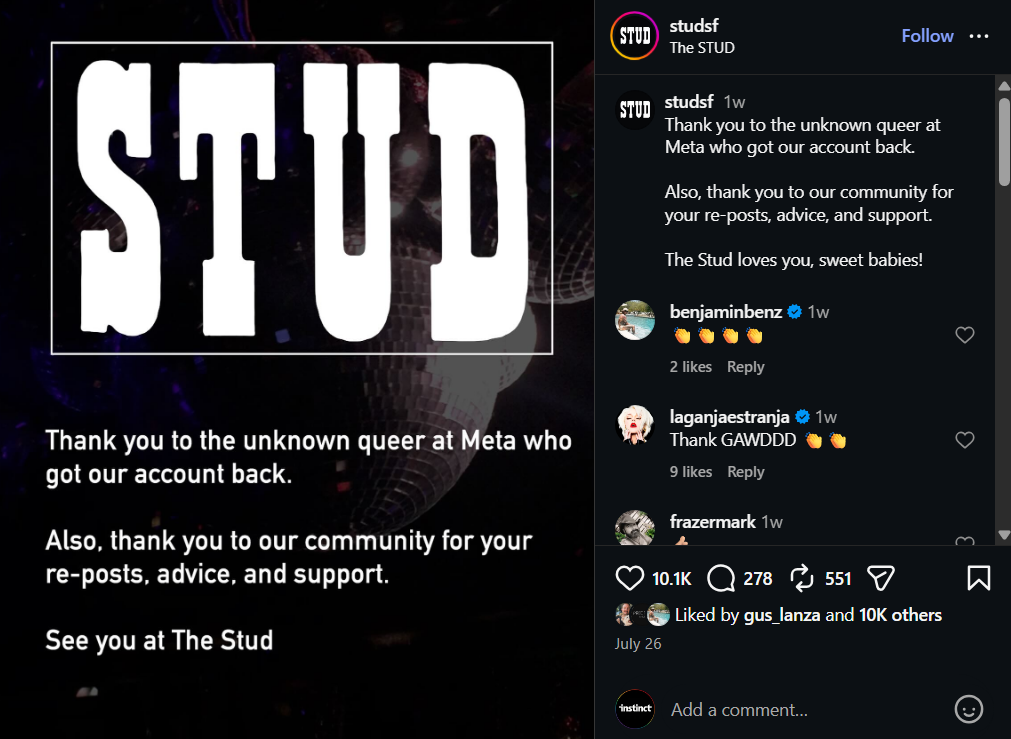
For a collectively owned queer institution operating on razor-thin margins, that’s more than an algorithmic hiccup. It’s lost visibility, lost ticket sales, and real anxiety about keeping the doors open.
As Albee put it:
“We’re world famous for drag,” Albee said of the challenges venues like the Stud face when targeted by malicious social media users. “We’re trying to stay open. So it’s a big deal for us to be just at the whims of an algorithm.”
A Bigger Threat Than One Suspended Account
For LGBTQ+ communities, that’s the bigger concern. When moderation systems can’t tell the difference between queer culture and criminal activity—and when trolls know exactly how to exploit those systems—the people paying the price are often the very spaces that have spent generations keeping queer communities alive. One bad-faith report shouldn’t be enough to temporarily silence a piece of LGBTQ+ history.
Source: SF Chronicle and Metro Weekly