

Body cam footage released from November 2024 has reignited national concern about fraternity hazing, after police responding to a routine call instead uncovered what appeared to be an ongoing initiation ritual inside a fraternity house at the University of Iowa. The video, recorded by campus police, offers a stark look at how hazing can unfold behind closed doors—and why universities continue to treat such incidents as serious threats to student safety.
RELATED: Five Teens Being Charged for Locker Room Rape with Broom
What Police Encountered That Night
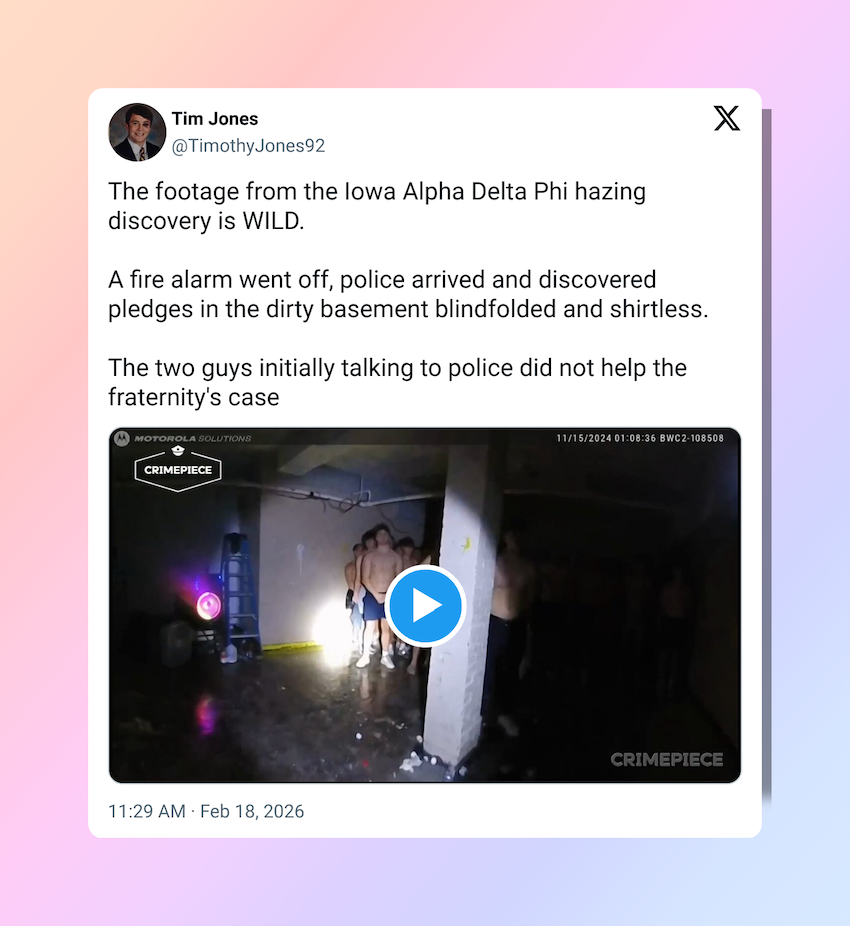
According to campus police, officers were dispatched to the Alpha Delta Phi fraternity house after a fire alarm went off in the early morning hours. What they found instead was far from routine.
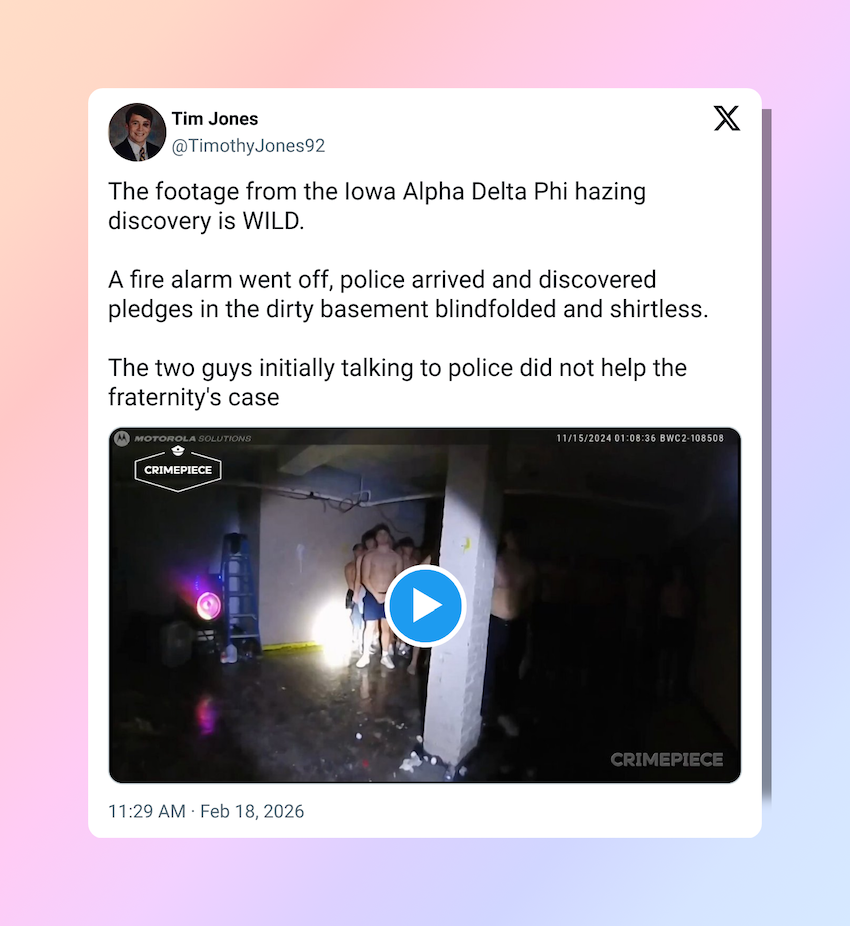
The footage shows officers entering what appears to be a basement room inside the Alpha Delta Phi house, where approximately 56 male students were gathered. Many were shirtless, some were blindfolded, and several appeared to be covered in condiments and alcohol—a scene police later described as consistent with alleged hazing.
At the start of the video, an officer can be heard firmly stating, “This stops here, guys. This is the police department. This stops here!” The tone is direct and urgent, underscoring how quickly the situation escalated once authorities realized what was happening.
@independent This is the moment police found over 50 half-naked, blindfolded fraternity pledges standing in a dirty basement during an alleged hazing ritual. University of Iowa police officers and emergency crews responded to a fire alarm going off at the Alpha Delta Phi fraternity on the night of November 15, 2024. Hazing is a criminal misdemeanor in Iowa, defined as any reckless or dangerous act that risks the health and safety of a student for initiation or admission into a university organization. It is illegal in 44 states. Click the link in bio for more 🔗
Arrest Made—Then Dropped
During the encounter, a 21-year-old fraternity member was arrested after allegedly attempting to block an officer’s view. The officer involved was wearing the body camera that captured the incident. The individual was charged with interference with official acts, though those charges were later dismissed.
University officials later clarified that the arrested individual was not a student and did not reside at the fraternity house. The dismissal of charges did not stop the university from moving forward with its own investigation.
University Investigation and Long-Term Suspension
Following the incident, the University of Iowa launched a formal investigation through its Office of Student Accountability (OSA). In February 2025, the university announced that Alpha Delta Phi had been suspended until at least July 2029, making the punishment one of the most severe fraternity sanctions in recent years.
In a statement released by the university in November 2024, officials emphasized the seriousness of the allegations and the institution’s response:
University of Iowa Police, Iowa City Police, and the Iowa City Fire Department all responded to the scene. The university placed the fraternity on interim suspension while the investigation was ongoing, citing the gravity of the situation. The fraternity’s national organization also suspended the chapter’s charter pending further review.
The university noted that its investigation was separate from the police inquiry and reiterated its commitment to student safety, stating that hazing, misconduct, and the use of alcohol or illegal drugs violate the Code of Student Life.
Support for Students and Preventive Measures
University officials confirmed that affected students were offered counseling and additional resources, and encouraged anyone with information to contact campus police or the Office of Student Accountability. The school also highlighted its existing prevention efforts, which require fraternities to undergo regular training on alcohol use, violence prevention, and leadership development.
Compliance with these requirements is tracked each semester by Fraternity and Sorority Life staff and made publicly available through a scorecard—though incidents like this raise ongoing questions about how effective such measures are in practice.
Hazing Remains a National Concern
While the Iowa incident is deeply troubling on its own, it is part of a broader pattern that continues to raise alarms nationwide. Just recently, a fraternity chapter at Northern Arizona University was shut down following a tragic alleged hazing death.
According to reporting from 12 News, the national leadership of Delta Tau Delta voted to permanently close its NAU chapter after a student died following a pledge event in late January. Court documents allege that the student was forced to consume a large amount of vodka as part of a so-called “pledge game.”
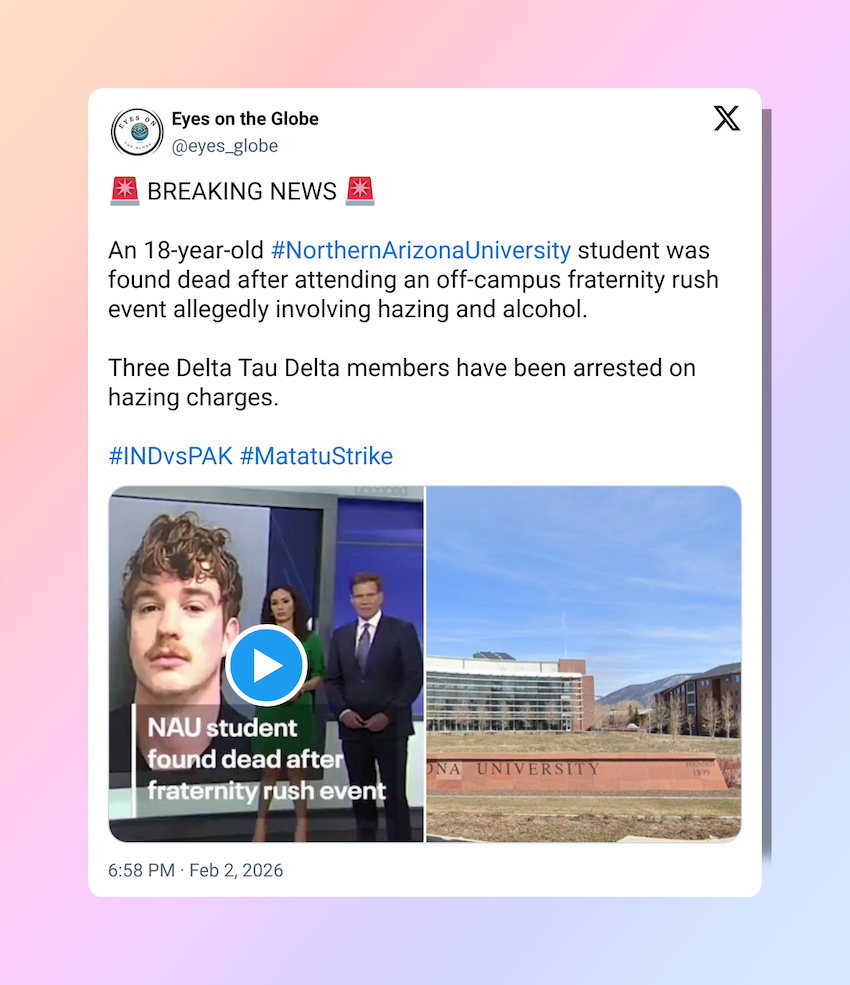
Three individuals—Carter Eslick, Ryan Creech, and Riley Cass—were arrested in connection with the incident and now face hazing-related charges. Delta Tau Delta leadership described hazing as a fundamental betrayal of fraternity values, calling it “an egregious violation of the trust necessary for real brotherhood.” The organization said it is cooperating fully with law enforcement and university officials.
Why These Stories Matter
Fraternity hazing has been a concern for decades, but body cam footage like the Iowa incident removes any ambiguity about what these situations can look like in real time. For students, parents, and LGBTQ readers who often experience heightened vulnerability in group initiation settings, these stories highlight why accountability and transparency matter.
Universities continue to stress that student organizations are privileges—not rights—and that safety must come before tradition. As investigations continue and suspensions take effect, the conversation around hazing remains urgent, unresolved, and deeply necessary.