

Mitch Brown has officially made history. The former West Coast Eagles defender, who played 94 games across his AFL career, came out as bisexual—becoming the first male player in Australian Football League history to do so. It’s a milestone that’s already being celebrated across the sporting world as a step forward for visibility, inclusion, and acceptance.
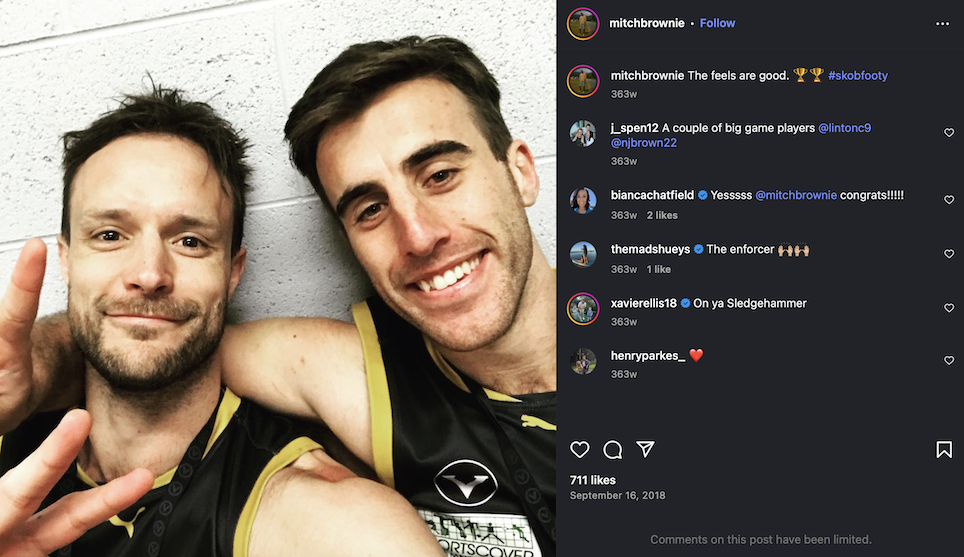
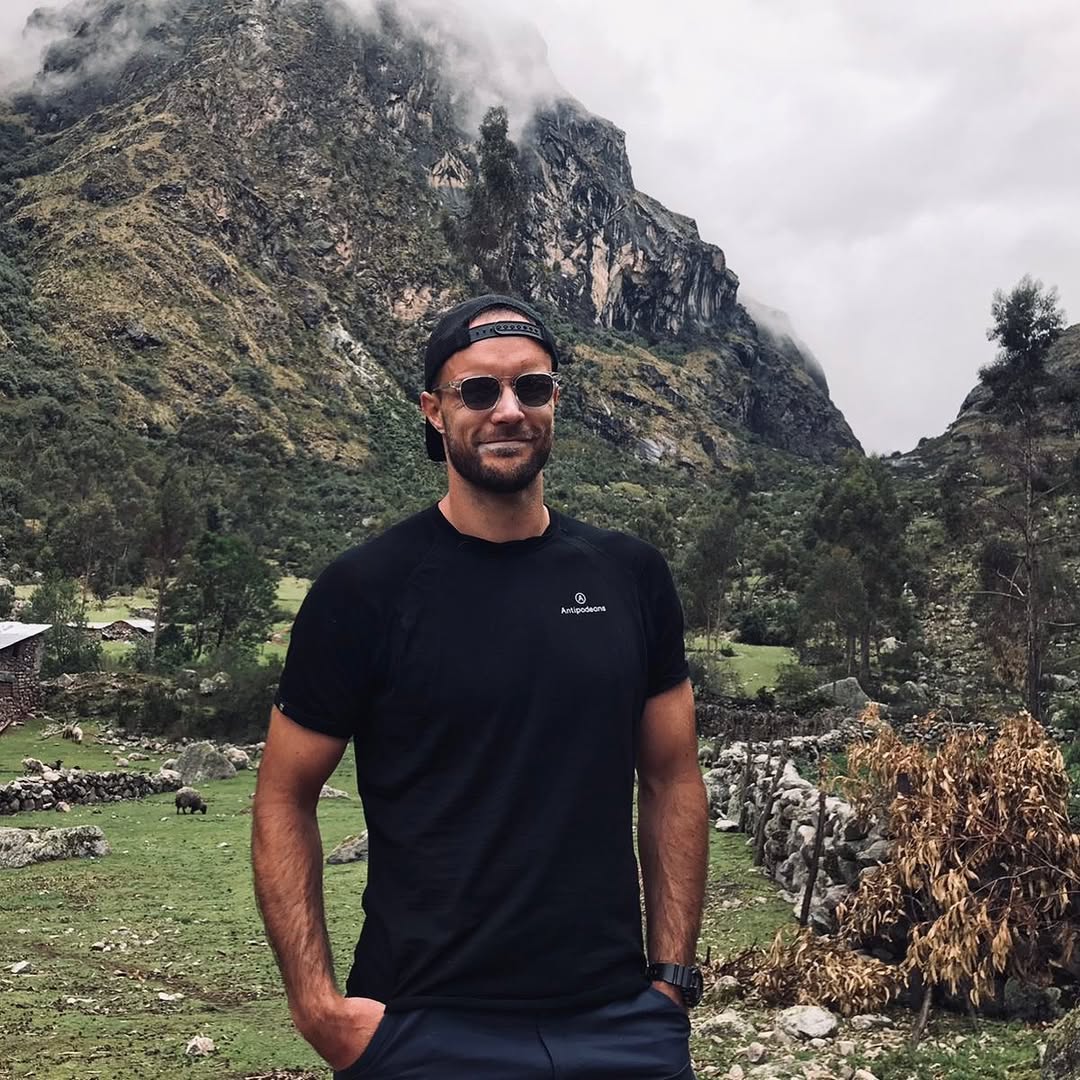 Source: @mitchbrownie
The announcement was met with immediate praise. AFL Players’ Association president Darcy Moore called Brown’s decision “tremendously courageous,” adding,
“It’s such an inspiring story for him to be so open and so brave like that. I think it’s important. There’s a lot to learn from Mitch’s story and for him to share that is a real opportunity for us going forward to shift culture and see some change in the industry.”
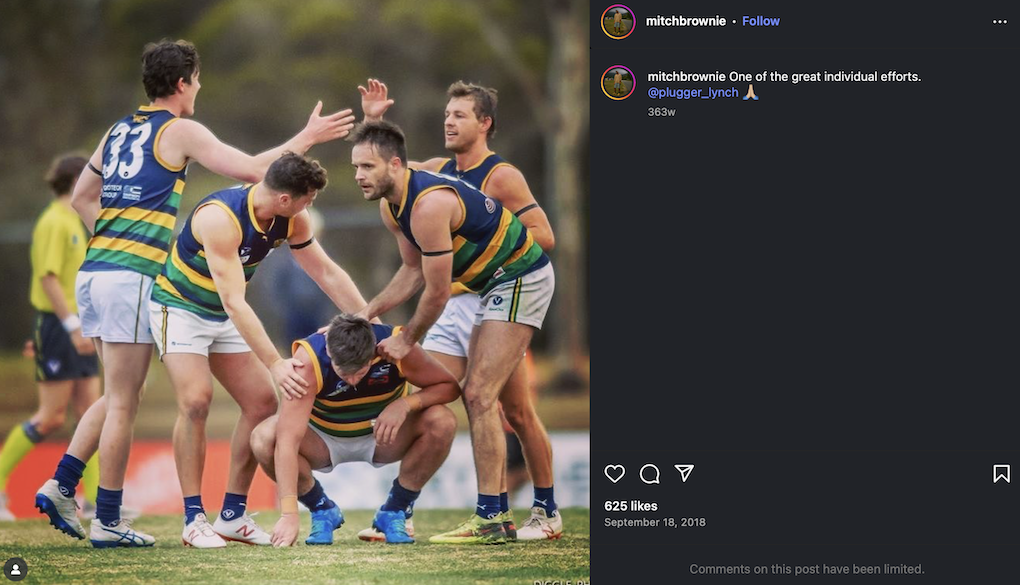
Brown himself opened up about the journey leading to his decision. Speaking to the Daily Aus, he reflected on the fear that many LGBTQ+ athletes feel behind closed doors.
“I remember those comments, and the conversation in the locker room just exacerbated that fear even more if you’re a gay man or a bisexual man sitting in that locker room,” he said.
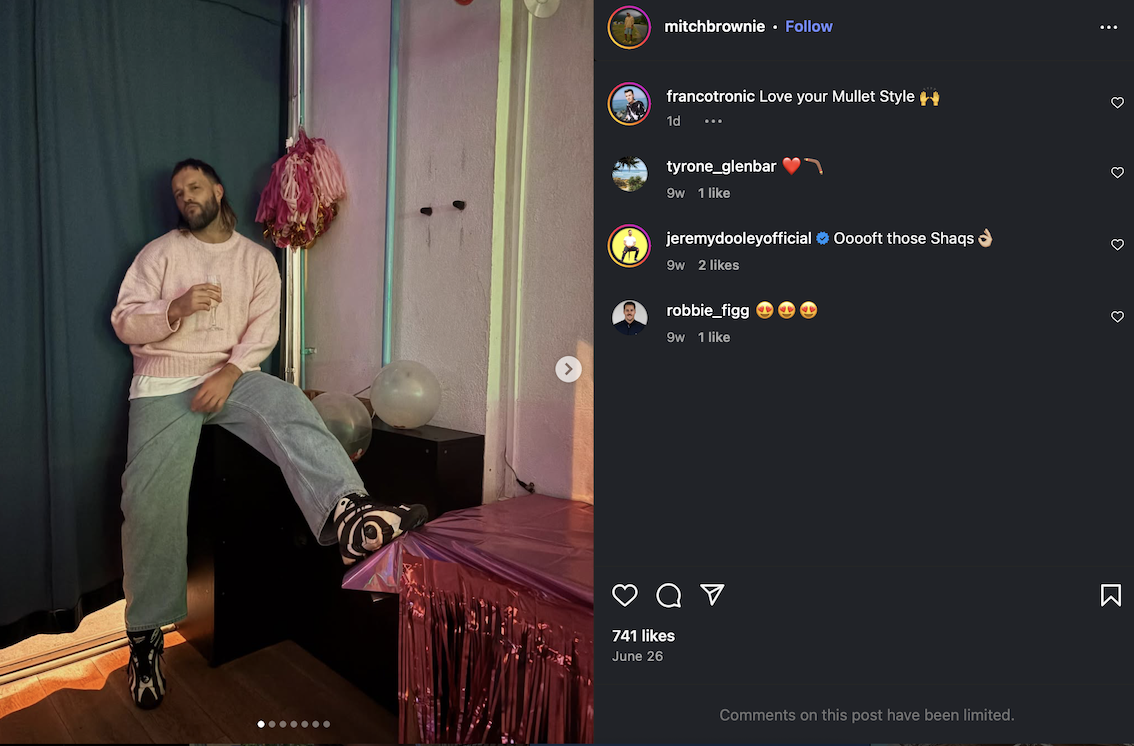
His words cut to the heart of why representation matters: because silence, born from fear, can weigh heavier than any physical training session.
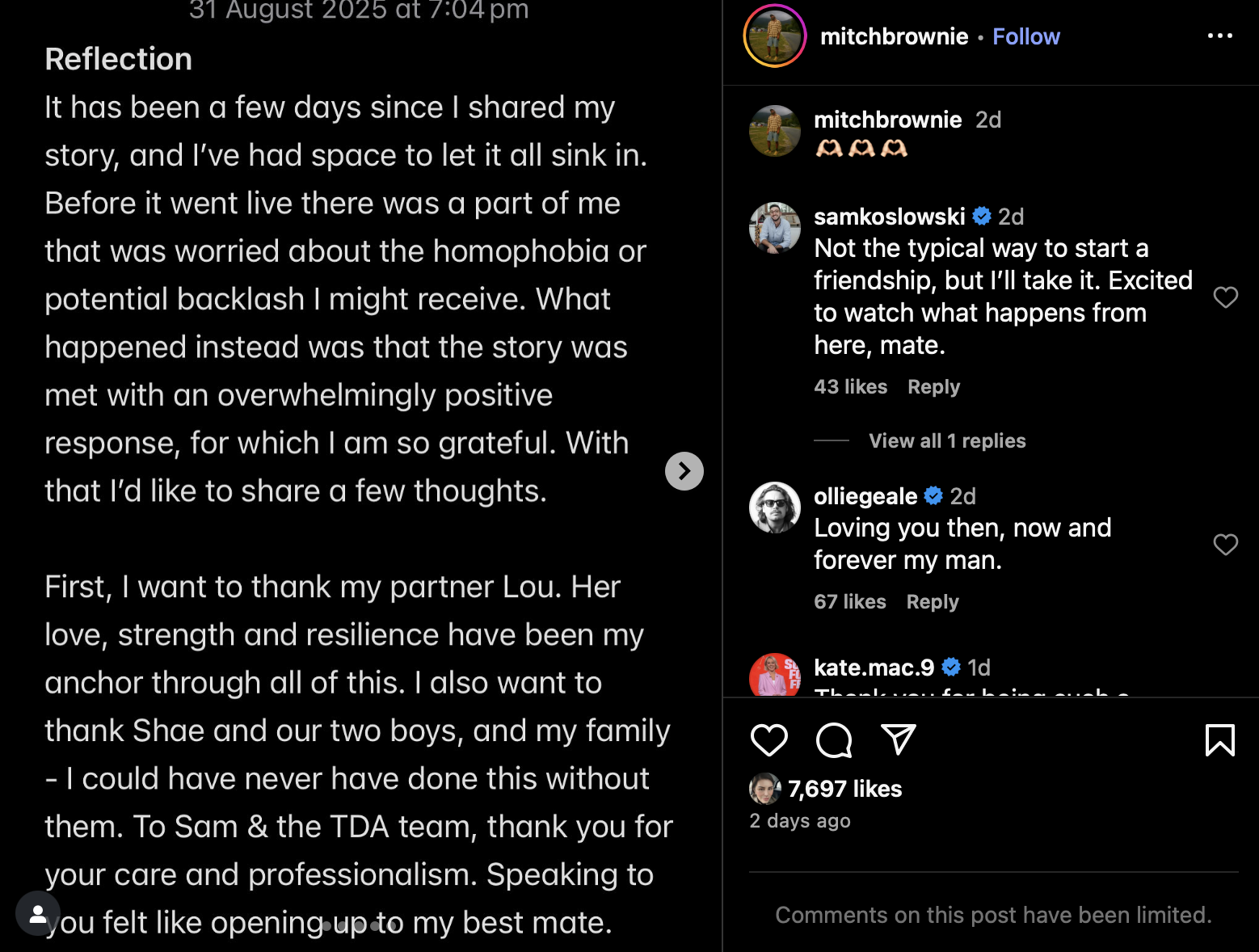
On Instagram, Brown shared a deeply personal thank-you to fans and supporters after his announcement.
“It has been a few days since I shared my story, and l’ve had space to let it all sink in,” he wrote. “Before it went live, there was a part of me that was worried about the homophobia or potential backlash I might receive. What happened instead was that the story was met with an overwhelmingly positive response, for which I am so grateful.”
@thedailyauspodcast Part 1: The AFL’s first openly bisexual player | Watch on YouTube or listen wherever you get your podcasts ▶️🎧 #podcast #mitchbrown #afl #exclusive #youtube
In his post, titled ‘Reflection,’ Brown expressed heartfelt gratitude to the people closest to him. He thanked his partner, Lou, for her “love, strength and resilience,” calling her his “anchor.” He also acknowledged his ex-wife, Shae Bolton Brown, and their two boys, saying he could never have done this without them. It’s a reminder that coming out is rarely a solo act—it’s built on love, support, and shared courage.
Brown also took a moment to honor those who paved the way, recognizing sports stars like Jason Ball, Ian Roberts, Isaac Humphries, Josh Cavallo, and Danielle Laidley.
“Their courage is the reason doors are opening now,” he wrote. He also praised the AFLW community for modeling what inclusivity should look like, saying its players, staff, and fans have become role models “not only for young women, but for every young Australian who is searching for a place where they can belong.”
Perhaps most inspiring was Brown’s reflection on what his story might mean for the next generation. “If even one of them feels less alone, less afraid, or more confident to be themselves, then it has been worth it,” he wrote. In those words, Brown shifted the conversation from personal bravery to collective hope, showing that visibility in sports isn’t just about one player—it’s about making space for many.
@thedailyaus Watch Part 1 of our interview with Mitch Brown on YouTube or listen wherever you get your podcasts ▶️🎧 #thedailyaus #australianews #mitchbrown #afl #pride
He ended his message with a clear call to action for the AFL, which has recently faced backlash after multiple incidents of homophobic slurs in matches.
“It’s time for the AFL and the clubs to commit to genuine change, embedding inclusion not just in words, but in culture, policies and everyday actions,” Brown urged.
For a sport that has long struggled with issues of inclusivity, Mitch Brown’s courage is a turning point. His story is not just about a former player—it’s about every queer athlete, young or old, who has ever wondered if there’s space for them in the locker room, on the field, or in the game. And thanks to Brown, that space feels just a little bigger, brighter, and more hopeful today.
REFERENCE: The Guardian