

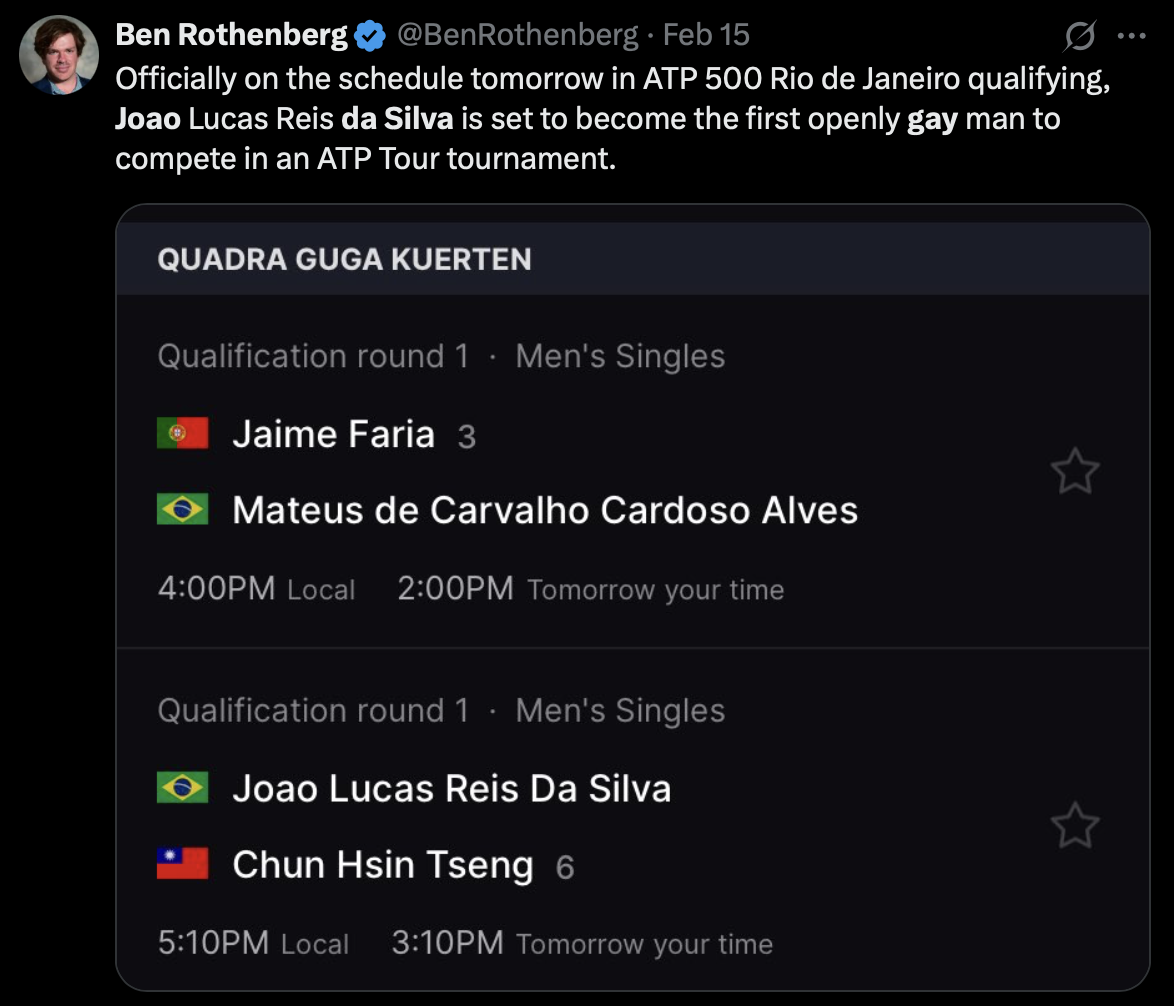
João Lucas Reis da Silva isn’t setting out to be a trailblazer — but somehow, he already is. The 25-year-old Brazilian tennis player made headlines after becoming the only active male professional player who is openly gay. Yet for Reis da Silva, it wasn’t a calculated move to make history. It was simply an honest moment shared with the world — one that happened to make a big impact.
🏳️🌈Seeing the first openly out pro male tennis player signing autographs had us in our feels 🎾
We chat with @DKTNNS about Joao Lucas Reis and what his story means for tennis: https://t.co/WN7Nq1yTVi
📸: Joao’s IG pic.twitter.com/Pnx66QXzg2
— The Gay Tennis Pod (@thegaytennispod) December 21, 2024
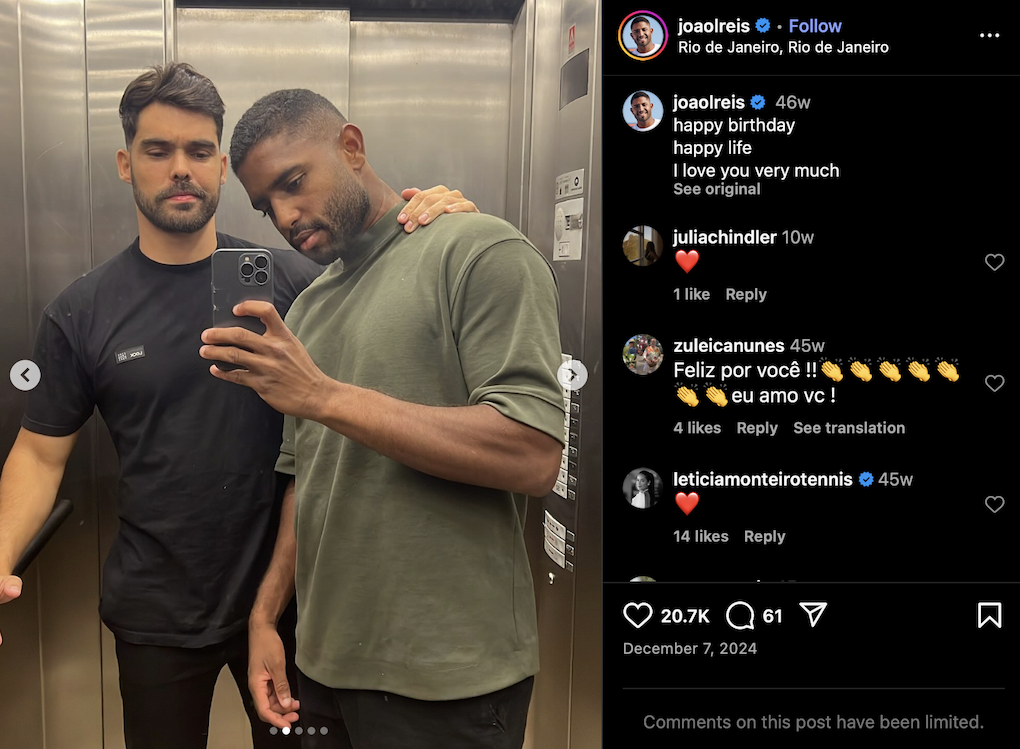
In December, Reis da Silvas posted a few photos on Instagram celebrating his boyfriend, actor and model Gui Sampaio Ricardo. “Happy birthday, happy life, I love you so much,” he captioned the post. What might have seemed like a simple romantic gesture ended up going viral — turning Reis into an unexpected symbol of visibility in a sport long known for its silence around LGBTQ+ identities.
RELATED: We Finally Have an Out Pro Tennis Player!
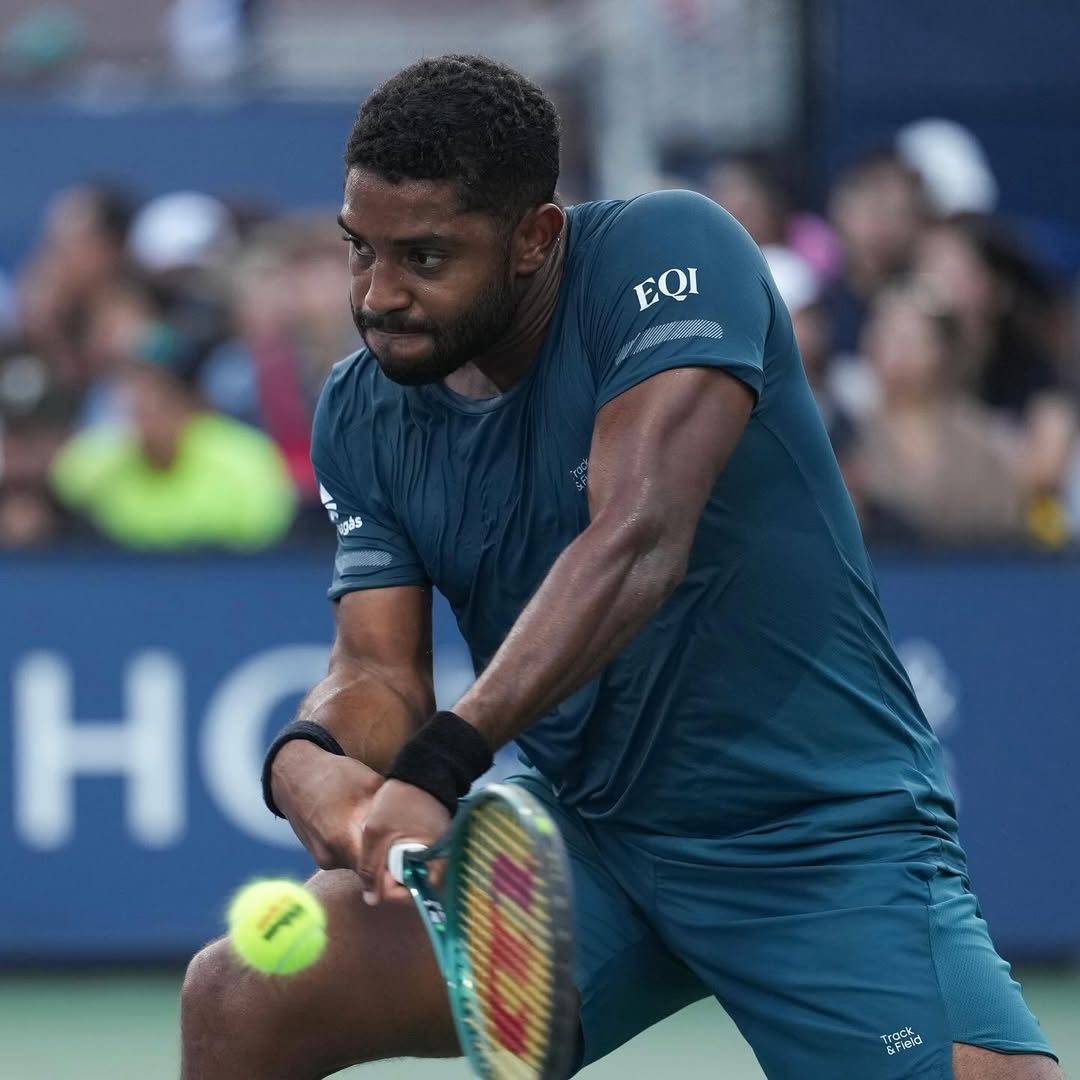
Since then, his world ranking has continued to climb, now sitting at No. 208 — his best yet. The athlete seems to be hitting both personal and professional strides at once, all while staying grounded in what he loves most: the game itself.
@eretzsport022 POSSIBLE MATCH POINT OF THE YEAR FROM JOAO LUCAS REIS DA SILVA?! 🙃🤯 (Their laughs at the net tho, how crazy was this point 😂) #tennis #atpchallenger #atpchallengertour #santafe #brasil #hotshots #matchpoint
Speaking to La Nación, Reis da Silva reflected on how isolating it once felt to grow up in a sport with no openly gay role models.
“Not having examples of gay men in tennis made me feel different,” he said. “I never had a reference point in my sport; I only had friends outside the court who made me see that what I was feeling wasn’t wrong.”
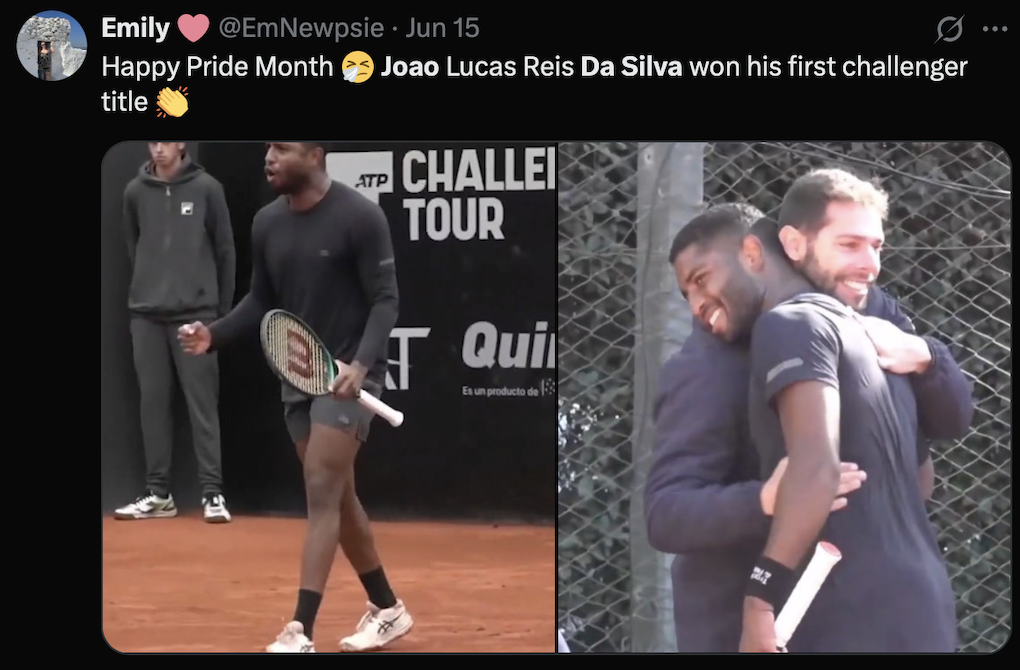
Support from Tennis Fans
At first, the flood of online reactions was overwhelming. But once Reis da Silva saw that most messages were kind and supportive, his anxiety melted into calm — and eventually, joy.
“It’s really tough that in men’s tennis, homosexuality just isn’t talked about,” he continued. “There’s a lot of machismo. And those stereotypes that men must always appear strong and masculine — it’s a bit sad. I remember when I wasn’t open yet and tried to act like something I wasn’t. When I started meeting friends in Rio de Janeiro who were like me, I realized they had no problem being themselves. They didn’t hide. I felt good when I started seeing people who were like me.”

Coming out publicly was one thing, but opening up to his parents was another story. It happened during the pandemic — a time when he, like many, was forced to slow down and spend more time at home.
“I was training in São Paulo, but then everything was about to close, so I went back home,” he recalled. “It had been a long time since I’d spent two or three weeks with my family under the same roof. One day my mom told me she felt I was different, more serious. I’ve always been a cheerful guy, joking around. She said, ‘You’re very sad, you’re different. Is something going on?’”
Reis da Silva eventually decided to open up.
“At first, I didn’t say anything, but after a few days, I told them. It was a shock for them — it took time to process — but then they told me they love me and support me. That was the hardest part for me, even more than posting the photo. Telling my parents and close friends… I was scared,” he said with a smile. “But I didn’t have a single person reject me for who I am. That’s why I’m proud of my family circle.”
 Source: @joaolreis
Tennis First, LGBTQ+ Icon Second
Still, Reis da Silva insists he didn’t come out to become a spokesperson for anyone but himself. l he told La Nación.
“I’m at my highest ranking because I’m focused one hundred percent on tennis, and I don’t want that to change. I want to keep improving.”
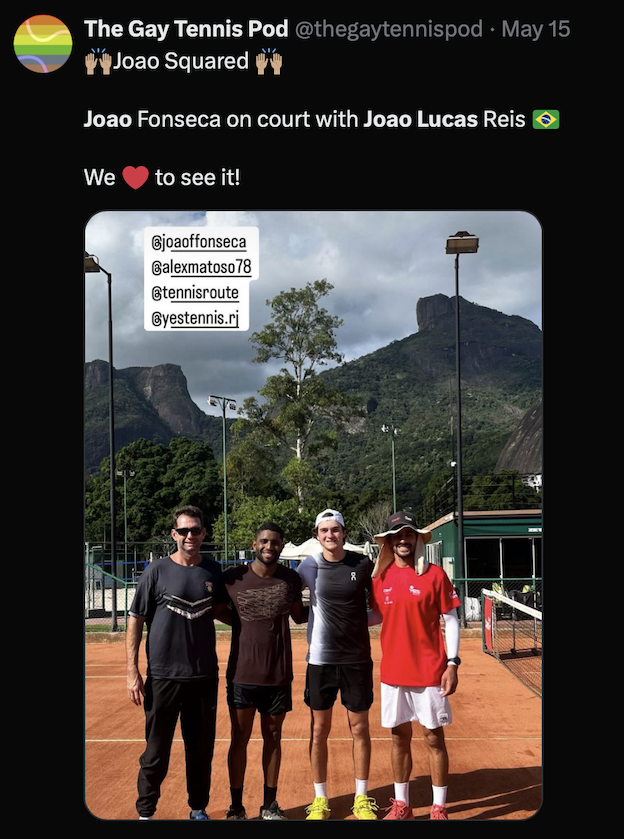
After coming out, opportunities rolled in — ads, campaigns, speaking offers — but Reis da Silva turned them down.
“A tennis player already deals with so much pressure and so many thoughts,” he explained. “The simpler your day-to-day life, the better you can perform on court.”
And for João Lucas Reis da Silva, that’s what it all comes down to — not being a headline or a hero, but being the best tennis player he can be. Whether or not he chooses to be an advocate, his quiet authenticity is already rewriting what representation can look like in sports. BRAVO!
Reference: La Nacion