

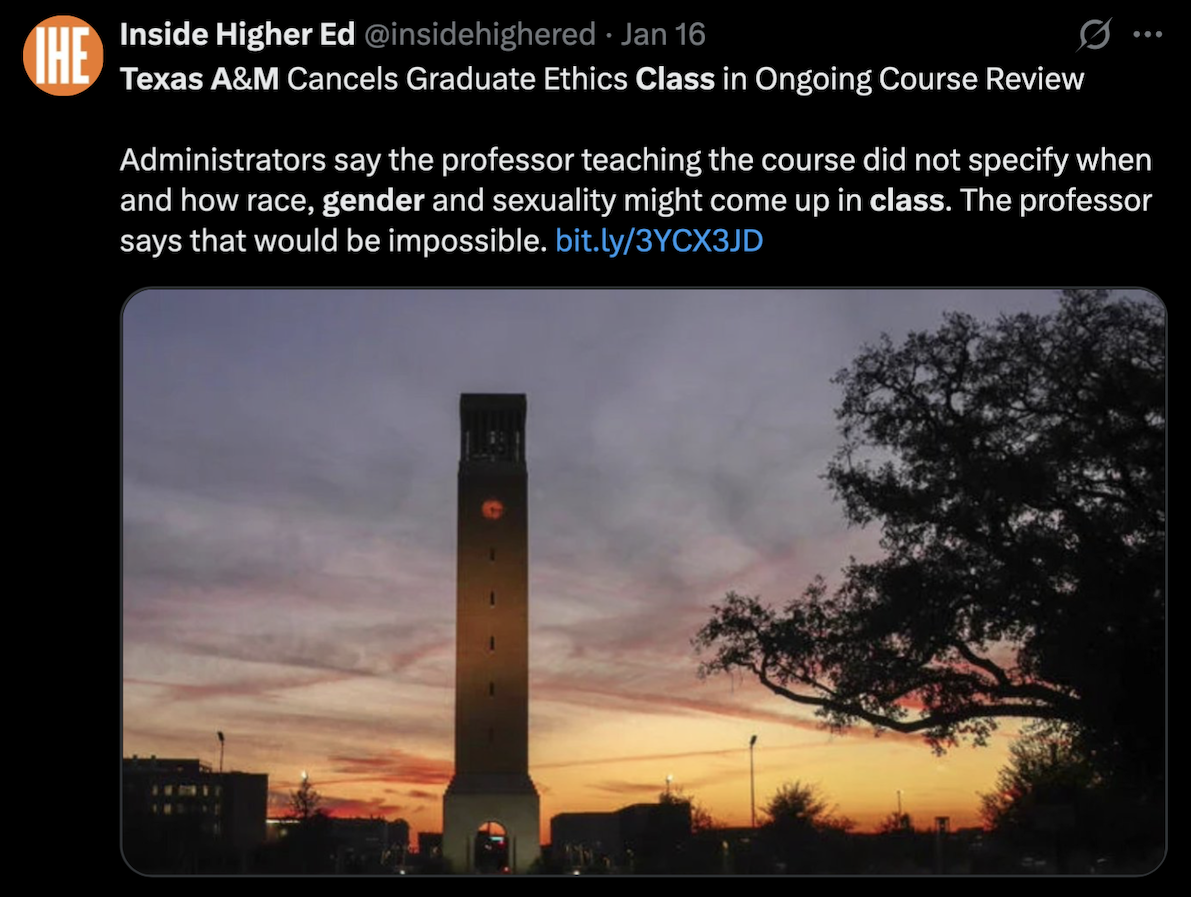
Texas A&M University has ignited fierce debate after abruptly canceling a graduate-level ethics course just days into the semester—raising serious concerns for LGBTQ students, students in general, educators, and academic freedom advocates across Texas and beyond.
A Course Canceled After It Already Began
The class, Ethics in Public Policy, was taught by Professor Leonard Bright at Texas A&M’s Bush School of Government and Public Service. It wasn’t a new or experimental offering—Bright has taught the course since 2018. Yet this semester, just three days after classes began and after students had already met once, administrators pulled the plug.
https://www.tiktok.com/@couriertexas/video/7598200739927788813?is_from_webapp=1&sender_device=pc
University officials said the cancellation stemmed from newly enforced system policies restricting how race, gender, sexual orientation, and so-called “gender ideology” can be discussed in classrooms. Because the university said it could not determine whether Bright’s course complied with those standards, the class was canceled outright.
Bright, however, strongly disputes that explanation.
RELATED: The Worst Colleges For LGBTQ Students In The Country Are…
“That’s How This Class Works”
In an interview with Texas Tribune, Bright said he was transparent that issues of race, gender, and sexuality would arise organically throughout the course—not on isolated, pre-approved days.
“I told them it was going to come up every day,” Bright said. “During discussions, book reviews, case studies, throughout the course. There is no one day. That’s how this class works.”
According to the syllabus, the course examined how race, gender, religion, sexual orientation, and social identity shape public policy and the ethical responsibilities of public servants. One week of instruction focused on equity and social justice, with readings that included discussions of diversity, equity, inclusion, critical race theory, and John Rawls’ A Theory of Justice.
Bright emphasized that differing viewpoints were always welcome.
“I might share my perspectives on related issues and matters of public concern, but students were not expected to agree with me.”
A Policy With LGBTQ Implications
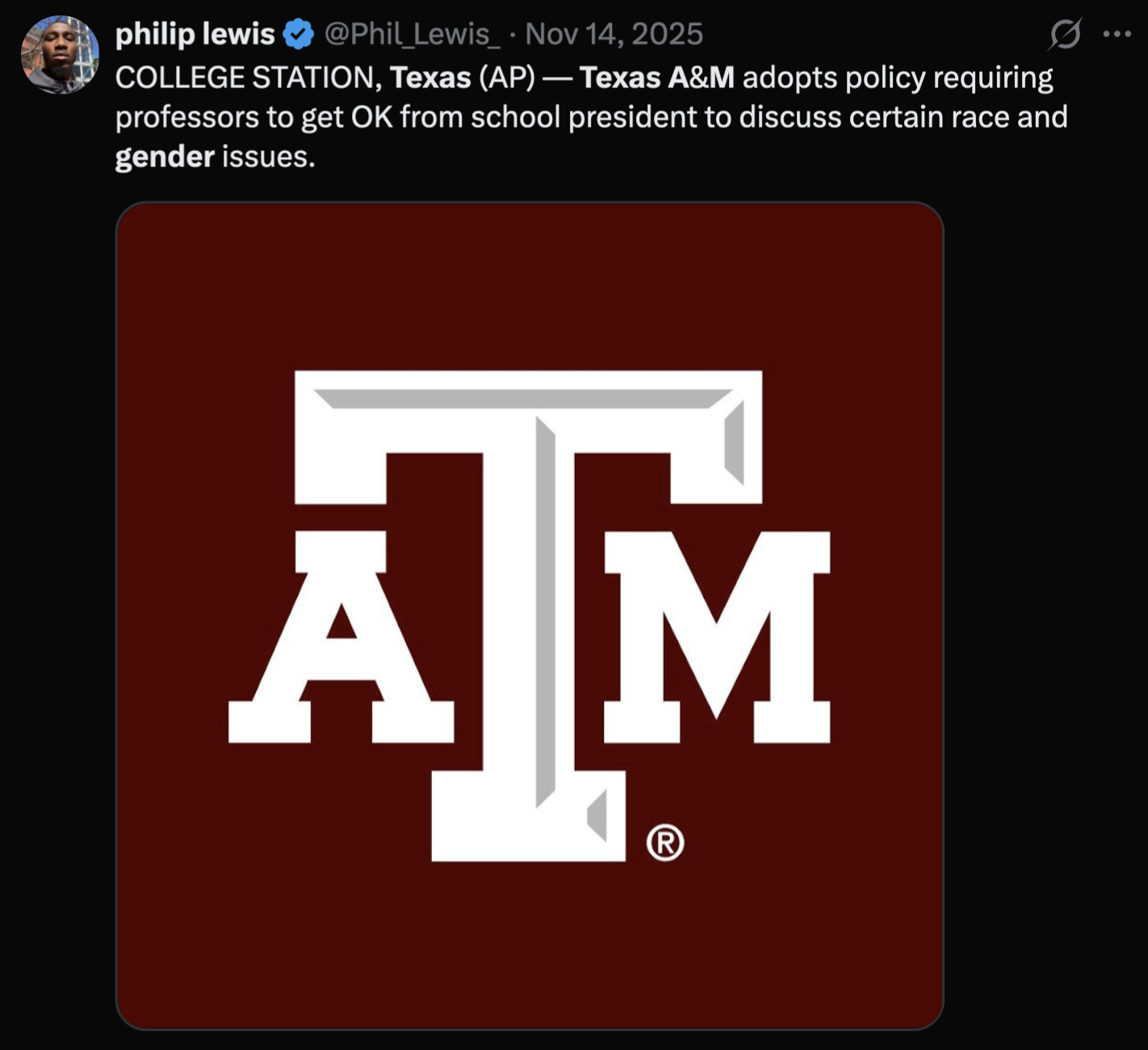
While Texas A&M insists the decision was procedural—not ideological—the impact lands squarely on LGBTQ students and educators. Under the policy, any course that touches on race, gender identity, or sexual orientation may require exemptions from senior university officials before it can proceed.
For LGBTQ students, that sends a chilling message: discussions about their lives, identities, and rights may now be treated as liabilities rather than legitimate academic inquiry.
Bright’s course was reportedly the only ethics class offered at the Bush School this semester. Ten students initially enrolled. After Bright warned them the class might be canceled due to administrative review, two dropped preemptively.
The university says it is helping students find alternative courses.
“Transparency Does Not Equal Censorship”—Or Does It?
In a schoolwide email, Bush School Dean John Sherman said the cancellation was unavoidable under system rules.
“I want us to continue to teach hard topics and to engage with controversial issues,” Sherman wrote. “But I also expect us to follow the process laid out for the approval of syllabi and to ensure alignment between our syllabi and our course descriptions.”
Sherman added a line that has already sparked debate:
“Put simply, transparency does not equal censorship.”
Yet critics argue that when transparency becomes a gatekeeping tool—especially for LGBTQ-related content—it can function exactly like censorship, regardless of intent.
Emails obtained by journalists show Bright was never asked to revise or remove content before the class was canceled.
The Political Context in Texas
The policy was passed last year after a classroom discussion involving gender identity was secretly recorded and circulated online, triggering backlash from conservative activists and lawmakers. That controversy has since reverberated across Texas higher education, with other public university systems adopting similar restrictions.
BREAKING: Texas A&M student kicked out of class for objecting a lesson about transgenderism.
Texas State Rep. Brian Harrison is now referring Texas A&M to the Trump administration for investigation and is calling on Gov. Greg Abbott to fire the officials involved.
A&M… pic.twitter.com/d3bjnQyY0z
— Leading Report (@LeadingReport) September 8, 2025
Importantly, no state or federal law bans discussions of race, gender, or sexuality in college classrooms. Texas law does require public universities to post syllabi online, but the current review process goes well beyond public disclosure.
Michael Johnson, associate provost for academic enhancement and interim vice provost for academic affairs, defended the system.
“Instead of prescriptive, one-size-fits-all directives for individual courses, the policy is interpreted and applied by faculty, department heads and deans within their academic fields.”
He added:
“When additional clarification has been needed, we have continued to refine our guidance and respond to questions.”
Why LGBTQ Communities Are Paying Attention
For LGBTQ students—especially those in Texas—the cancellation feels personal. Ethics courses are precisely where conversations about identity, justice, power, and public responsibility belong. Removing them doesn’t eliminate those issues from society; it only pushes them out of classrooms where they can be examined critically and safely.
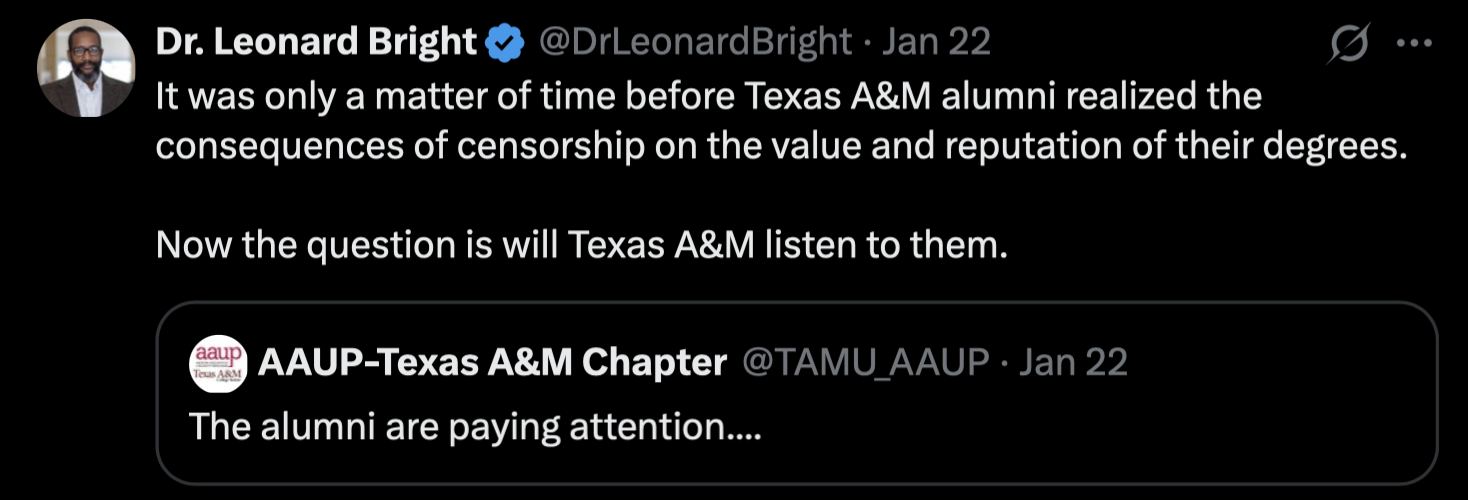
Bright, who is also president of Texas A&M’s chapter of the American Association of University Professors, has been vocal in opposing the policy, warning that it undermines academic freedom and harms marginalized students the most.
As Texas universities continue navigating politically charged terrain, one question lingers: If ethics classes can’t discuss race, gender, and sexuality—what exactly are they allowed to teach?
For LGBTQ communities watching from inside and outside academia, the answer matters more than ever.
REFERENCE: Texas Tribune