


Steve Lacy, the Grammy-winning sensation behind Gemini Rights, is no stranger to blending complex emotions with infectious beats. The 27-year-old singer, guitarist, and producer knows that life isn’t about fitting neatly into a box—it’s about embracing the beautiful mess that makes us human. In a recent Rolling Stone interview, Lacy opened up about a concept that’s been central to his artistry—and his personal evolution—his fluidity.
RELATED: Hunter Doohan Opens Up About Hollywood’s Closet

For Lacy, labels are for soup cans, not souls. “I’m not g-word. It’s fluid, and queer is a lot harder to explain than just being a gay dude,” he said, further dismantling the rigid expectations society often places on identity. He’s not just breaking hearts with his melodies; he’s shattering preconceptions with his unapologetic authenticity.
In a world where coming out can feel like an Olympic sport, Lacy views the concept itself as, well, kind of silly. As he continues to carve his own lane, his words reflect a growing trend in the LGBTQ+ community to embrace fluidity not as an anomaly but as an integral part of life. His relationship with sexuality is not an announcement but a nuanced, ongoing journey of self-exploration. “I kind of waited to come out,” he confessed, recalling how he spent years hiding parts of himself—his love for dance, for example—just to avoid labels being slapped on him before he had the chance to define himself.
RELATED: Billy Bush Outed Ricky Martin and It Blew Up in Real Time
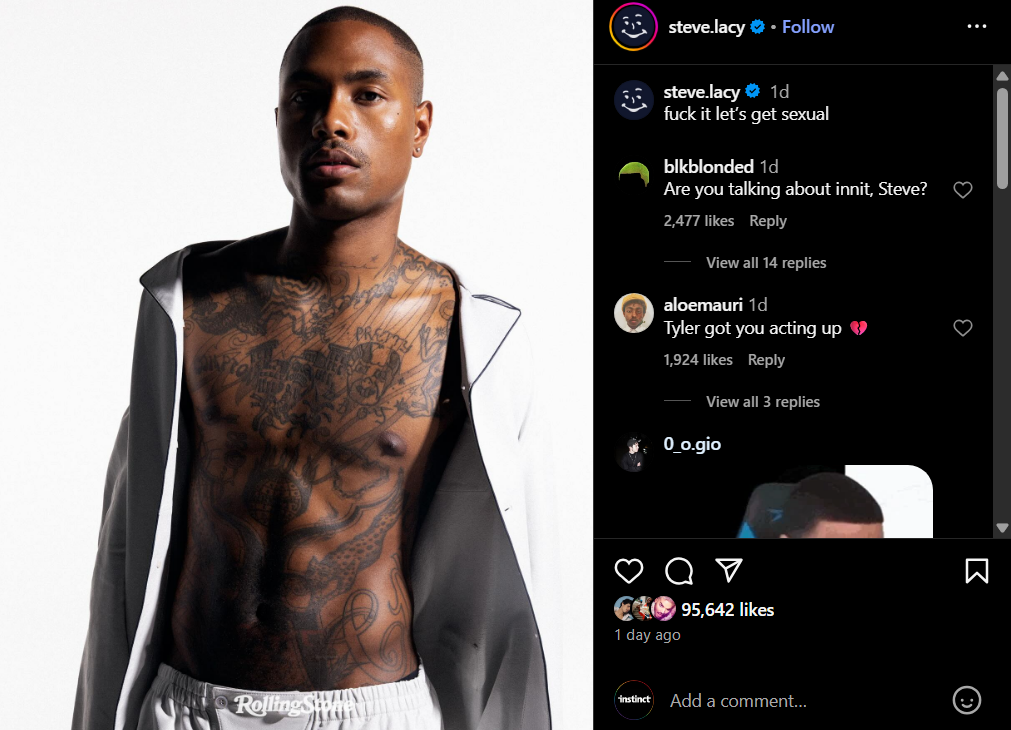
As the man behind the 2022 hit “Bad Habits,” Lacy’s evolution as an artist mirrors his evolution as a person. His Gemini Rights album, deeply shaped by a breakup with a boyfriend, takes us through a range of emotional territories—ranging from romantic frustration to existential reflection. The music isn’t just catchy; it’s a soundtrack for those who are navigating their own intersections of love, race, identity, and all things human.

Lacy’s growth in his craft is evident in the way he approaches songwriting now. He no longer treats lyrics as an afterthought to a sick bass line or a catchy hook. “Now I’m like, ‘OK, I want to say shit how I would say shit,'” he says. This raw honesty bleeds into his work, making each song feel like an intimate confessional. His favorite song from Gemini Rights, “Static,” showcases this unfiltered emotional vulnerability, where he’s “lookin’ for a bitch ‘cause I’m over boys.” It’s a track that feels like both a breakup anthem and a celebration of self-acceptance.
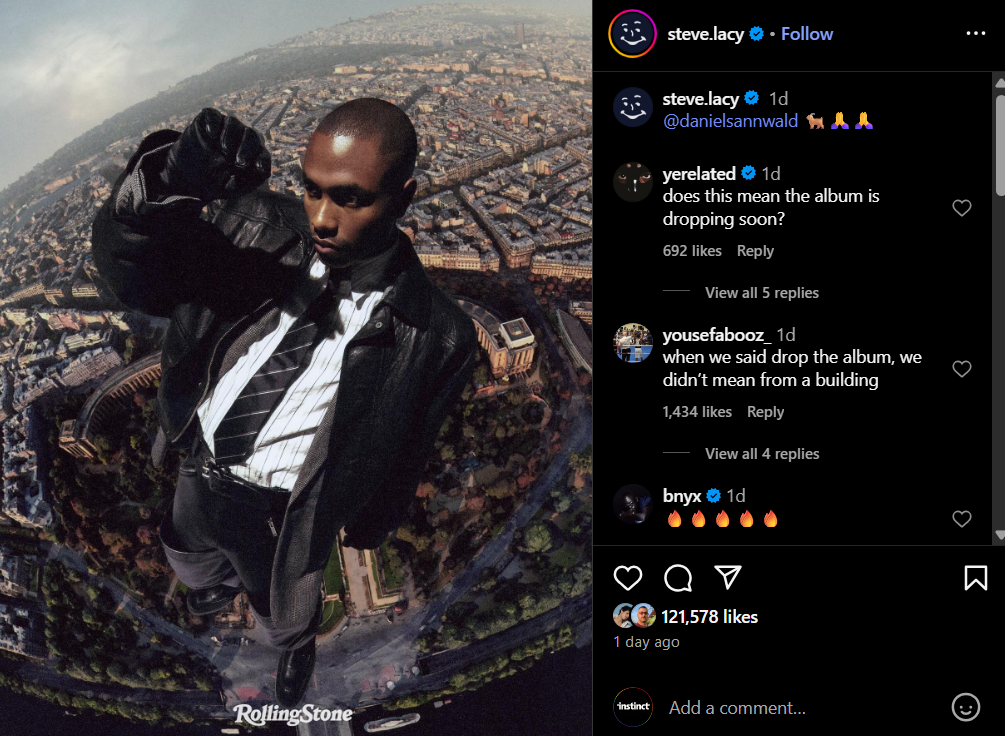
Yet Lacy’s music isn’t just about making sense of his own journey. It’s about giving his listeners a mirror, a space where they too can explore the complicated, messy beauty of their own fluid identities. His unapologetic, multifaceted existence pushes back against the mainstream market’s tendency to use labels like “gay” to sell products, rather than to define human experience.
Lacy’s thoughts on being fluid extend beyond just sexuality—they bleed into his views on his artistry and his relationship to the world around him. Growing up, he felt restricted by the need to conform, particularly when it came to his love for dance. “I really love dance, all styles, contemporary, tap, hip-hop. I love modern dance,” he shared, explaining how he was hesitant to explore those passions because he feared being pigeonholed. But now, he’s free to express himself however he chooses, on his own terms.
When it comes to identity, Lacy’s mantra is simple: just let things be. The whole concept of “coming out” feels so far removed from his current truth that it might as well be a relic of a bygone era. For Lacy, it’s not about claiming any fixed identity, but rather embracing what feels right in the moment. His fluidity isn’t something to be marketed or commodified; it’s an integral part of who he is as an artist and as a person.
And perhaps, in a world that is constantly trying to define and label people, that’s what makes Lacy so magnetic: he’s not just another celebrity selling a persona. He’s a reminder that we’re all allowed to change, to evolve, and to embrace the complexity of being human without having to apologize for it.

So here’s to Steve Lacy, the artist who doesn’t just sing about love—he lives it, fluidly, unapologetically, and entirely on his own terms. After all, what could be more punk rock than embracing your most authentic self, without needing anyone’s approval?
Source: RollingStone