


It was supposed to be a moment of celebration. Pride Month had arrived in full force, but instead of marching parades and rainbow flags, something much darker was happening in New York City. A crackdown on gay cruising at Penn Station, of all places, has sparked controversy—and for good reason. While Amtrak calls it an effort to curb “disruptive activity,” some are questioning whether it’s not so much about public safety as it is about public humiliation. After all, when nearly 200 men are arrested since June 1 for using a public restroom, you’ve got to ask: who exactly is this crackdown really for?
RELATED: Austin Wolf Sentenced to 19 Years for Child Sexual Abuse Crimes
Let’s break it down: Amtrak’s increased patrols at the men’s public toilets near the Eighth Avenue and 31st Street entrance have led to a wave of arrests. Around 200 men have been detained, including a shocking number of immigrants—about 20 of those arrested have been handed over to ICE, even though they haven’t been charged with any serious crimes. The charges? Public lewdness and indecent exposure. In other words, men are being arrested for using public restrooms. Sounds more like a cruel game of cops and queers than anything resembling actual crime prevention.
RELATED: South Carolina Lawmaker RJ May Pleads Guilty to Child Abuse Charges
Now, the question we need to ask is: Is this about safety, or is it about policing pleasure? Let’s be real here: Amtrak police are coming down on men who are using public bathrooms, which have been hotspots for hookup apps like Sniffies. While some will argue that public restrooms should be “safe spaces” for all travelers, many LGBTQ+ individuals see these very spaces as their last resort for privacy and connection, especially in a world that still often feels hostile to their existence. Not to mention, the very idea of patrolling restrooms with undercover officers hiding in stalls and standing at urinals doesn’t exactly scream “security.” It says something else entirely.
“It Was Traumatizing”: One Man’s Story of Being Caught in the Net
For David, a 31-year-old healthcare worker, his experience was nothing short of traumatic. Wearing a rainbow wristband, he says he was simply trying to use the restroom when he was wrongly arrested. “I was never arrested in my life. It was traumatizing,” he told The City. While David was eventually released, his story raises a chilling question: How many more people have been wrongly caught up in this dragnet? And why does using a bathroom now come with the risk of being criminalized?
A Crackdown with a Side of ICE, Hold the Humanity
It’s not just the arrests that are causing alarm. The added twist here is that because Amtrak police are a federal agency, they have no obligation to follow New York State’s sanctuary laws, which prohibit local police from cooperating with ICE. As a result, ICE is stepping in to detain immigrants arrested under this crackdown. Talk about a slippery slope from public safety to public shaming. If we’re really about upholding the “highest standards of security,” perhaps targeting a vulnerable community during Pride Month isn’t the best way to go about it.
Lawmakers Sound Off: This Is Not the ‘80s
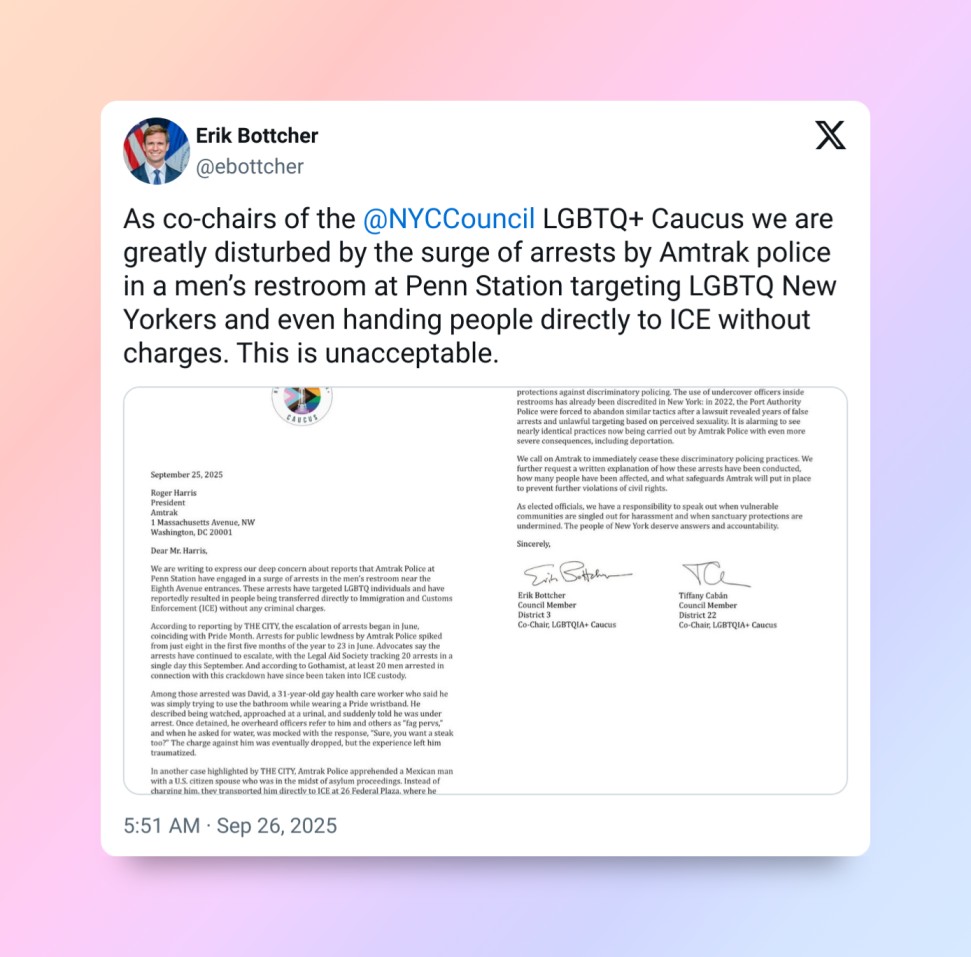
Naturally, this heavy-handed approach hasn’t gone unnoticed by those in power. On September 26, four New York lawmakers issued a joint statement condemning Amtrak’s actions, calling the arrests “hostile” and comparing them to the anti-LGBTQ+ policing of the Stonewall era. They wrote, “We do not believe Amtrak should be doing so with a hostile arrest campaign reminiscent of anti-LGBTQ policing from the Stonewall era.” The comparisons to Stonewall aren’t just dramatic rhetoric—they’re spot-on. After all, the 1969 riots at the Stonewall Inn were sparked by police raids against LGBTQ+ people in a bar that was seen as a safe haven. Are we really revisiting this?
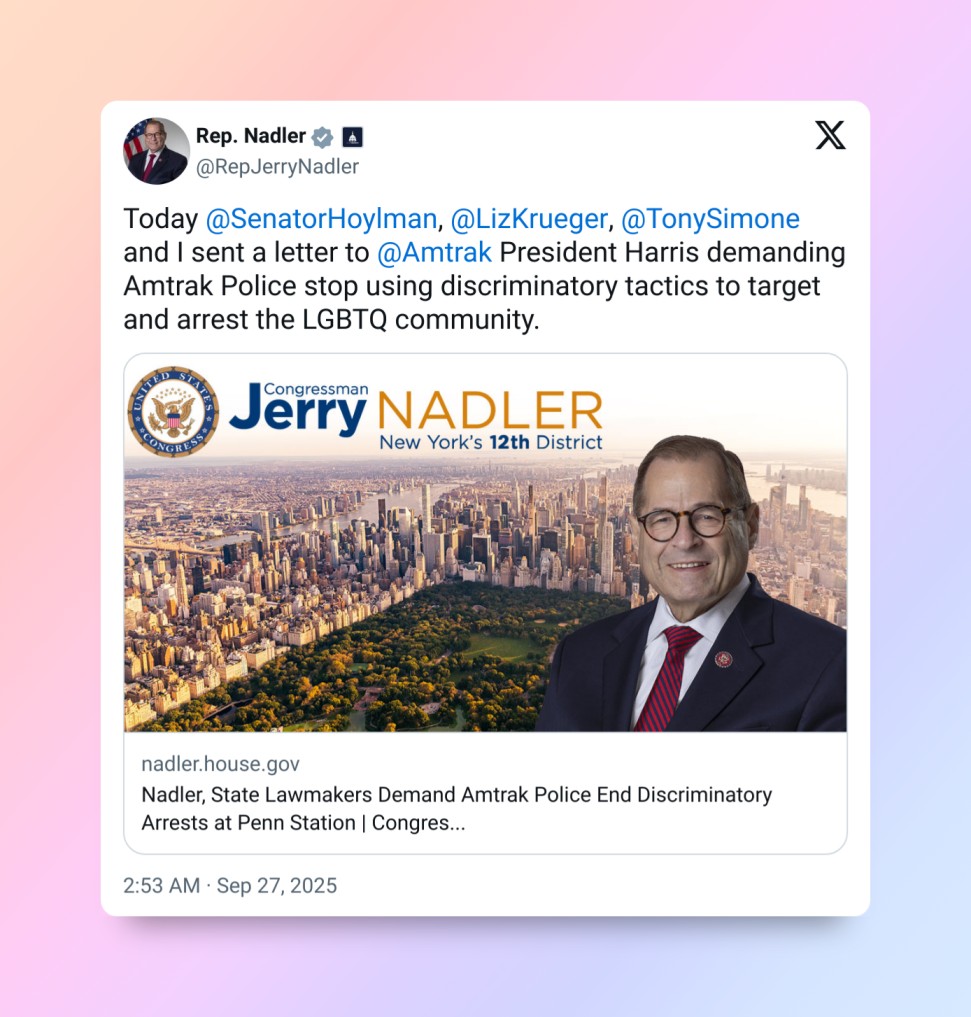
The lawmakers’ statement underscores what’s at stake here: police targeting of LGBTQ+ people for simply existing in public spaces. This isn’t just about enforcing public safety—it’s about policing identities and curbing freedoms. And while some will claim that these restroom incidents are “disruptive,” it’s clear that the disruptions come from the enforcement itself, not the acts it’s trying to stamp out.
Amtrak Defends Its Actions, but Is It Listening?
In a statement to Attitude, Amtrak defended the crackdown as necessary to improve safety and reduce “disruptive activity.” According to Amtrak, since the increased patrols began, incidents have “declined significantly.” They added, “Amtrak remains committed to maintaining a safe and welcoming environment for all travelers and will continue to monitor conditions closely.”
But here’s the thing: the vast majority of these “incidents” weren’t exactly dangerous. Many were consensual and private—things happening between consenting adults in a public space designed for privacy. For Amtrak to claim that this is all about safety while simultaneously targeting a marginalized group feels less like concern for public order and more like an easy, oppressive solution to a problem that doesn’t need to exist.
The Bigger Picture: Public Restrooms Are Not a Battlefield
What’s happening at Penn Station is a microcosm of the larger societal issue of how queer people are policed in public spaces—especially when it comes to the most basic of human needs: going to the bathroom. For many LGBTQ+ people, public restrooms are already fraught spaces, where fear of harassment or violence looms large. Now, with undercover police hiding in stalls, public restrooms are no longer just spaces of necessity, but of potential risk.
So, where does this leave us? In the middle of Pride Month, no less, the message sent is loud and clear: being visible in public, even in a place as mundane as a restroom, is a criminal act if you’re queer. It’s a blow to LGBTQ+ rights, safety, and dignity—and frankly, it’s a step backward for a city that likes to pride itself on being a sanctuary for all.
As lawmakers push back and advocates call for a halt to these raids, one thing is certain: the fight for freedom—real freedom, not just the illusion of safety—will continue. And until that happens, let’s hope that the next time someone just needs to pee, they don’t have to worry about getting arrested for it.
Because let’s be clear: bathrooms are for peeing, not for policing.
Source: The City and Nadler House
Wearing a wrist band is not a reason to be arrested! He should sue!