

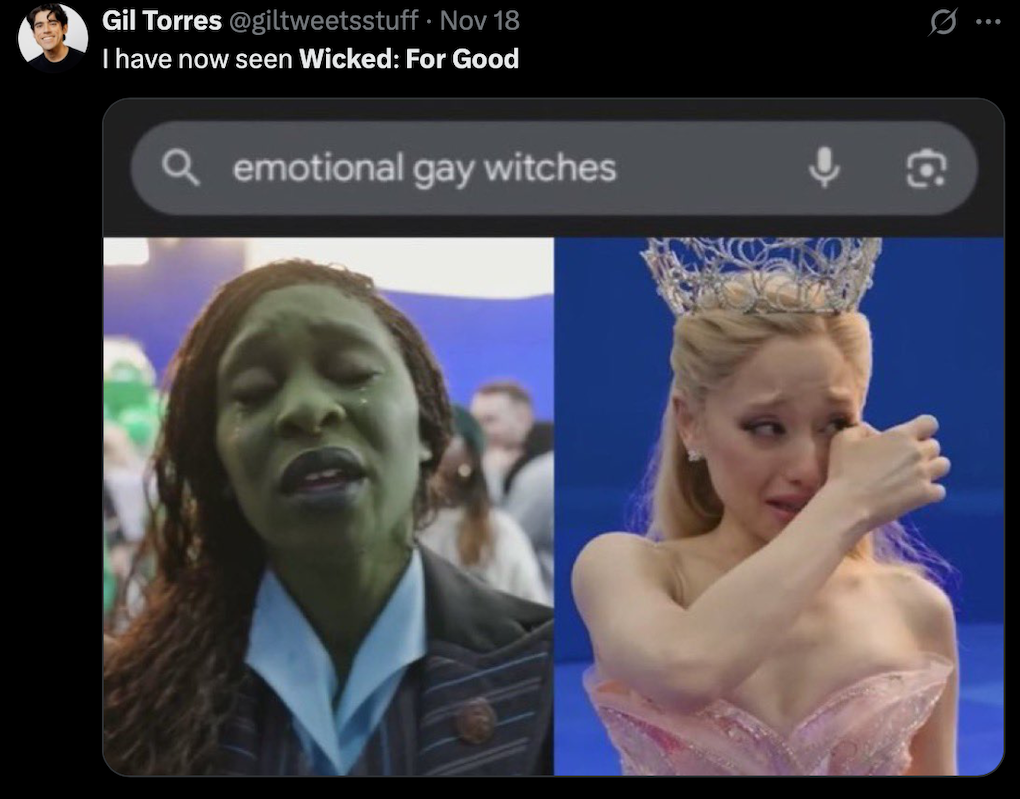
Wicked: For Good doesn’t officially premiere until November 21, but the rest of the world has already gotten a taste of Oz 2.0—and the early buzz ranges from “I’m sobbing into my popcorn” to “Jon M. Chu, we need to talk.” Thankfully for us drama-hungry gays, the sequel is fuller, darker, and messier in all the delicious ways that keep Twitter (sorry, X) in flames for at least 48 hours.
RELATED: Wicked Creator Talks Faith and the Power of Storytelling
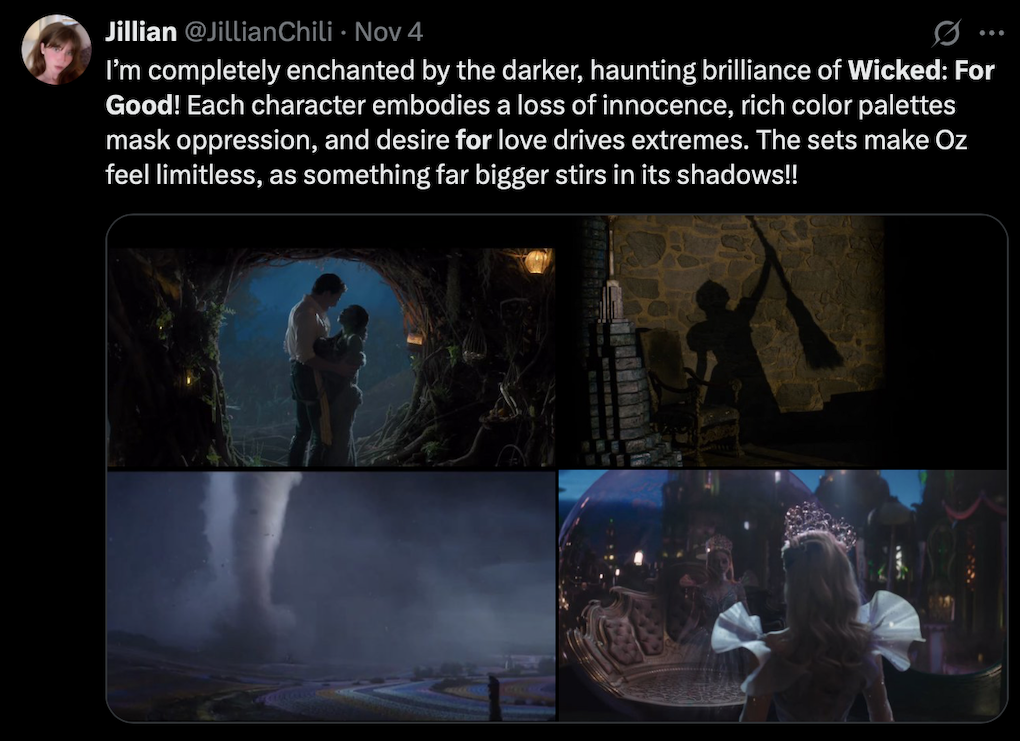
If the first movie was about discovering power, Wicked: For Good is about paying the price for it. Elphaba (Cynthia Erivo), now branded as the Wicked Witch of the West, spends the sequel in the Ozian Forest, exiled, hunted, and—honestly?—serving more emotional depth than most prestige dramas. Meanwhile, Glinda (Ariana Grande) rises as the glowing, glitter-dipped symbol of hope. The kingdom loves her. The politics adore her. The posters are basically perfume ads. But behind the scenes? She’s breaking apart in slow, sparkly motion.
And this is exactly where the sequel gets juicy.
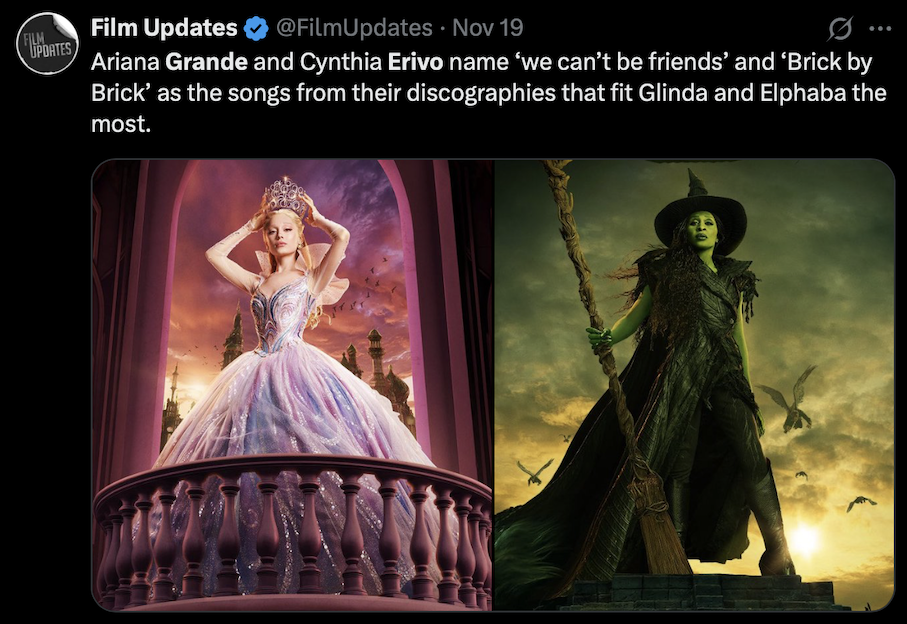
Ariana Grande and Cynthia Erivo: The Vocal Avengers Re-Assemble
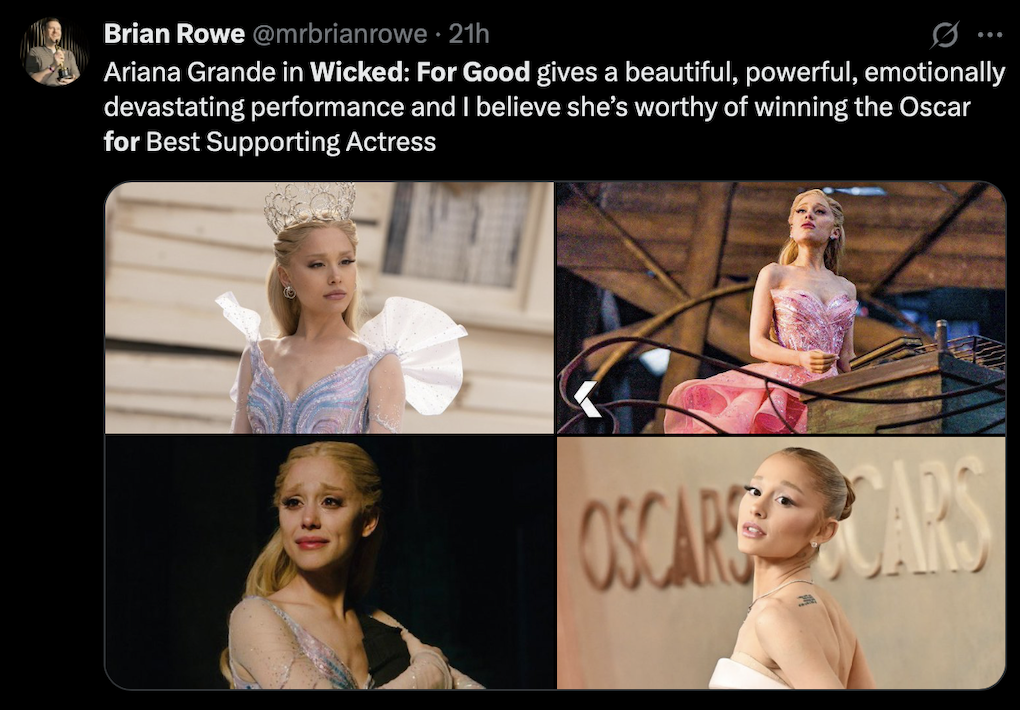
Let’s start with the obvious: the vocals. The girls delivered. And then delivered some more. Then delivered again in live-recorded takes so clean they could sweep the Oscars stage themselves. Erivo’s voice could melt steel beams and rebuild them into a Broadway marquee. Grande, meanwhile, floats, riffs, and emotionally detonates in ways even longtime fans weren’t prepared for.
Their duets feel like spiritual experiences. Like gay church. Like the universe aligning. Like you suddenly understand all your traumas, your breakups, and your last three Grindr messages.
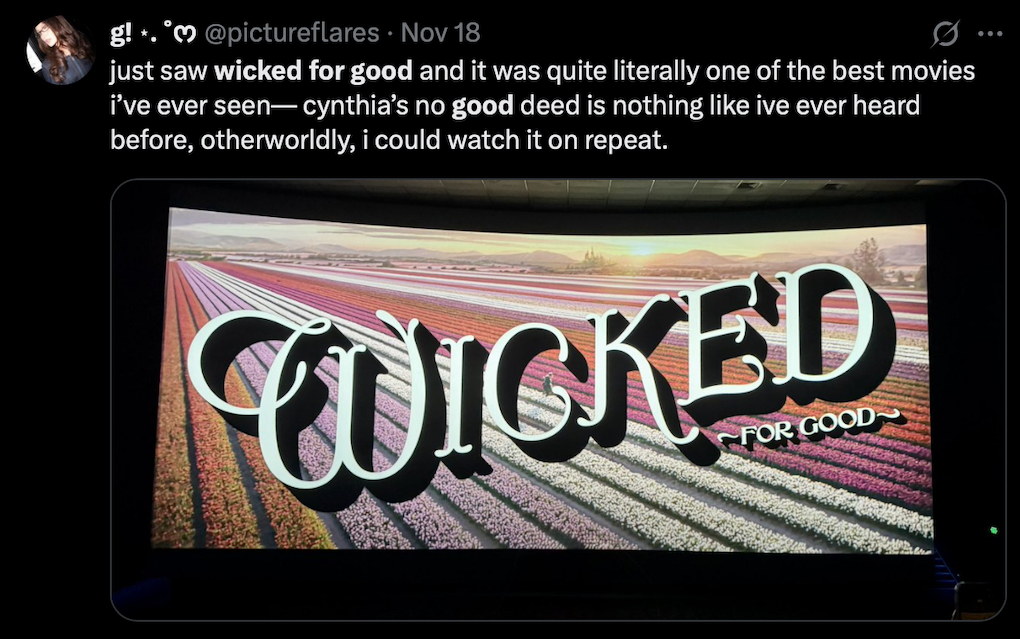
And yes, For Good will absolutely have you ugly-crying in public. Especially when you realize the song isn’t just about friendship—it’s about two women trying to hold onto each other while standing on opposite ends of a political war. The pauses? The eye contact? The heartbreak? Devastating.
The Story: Darker, Sadder, and Surprisingly Moral
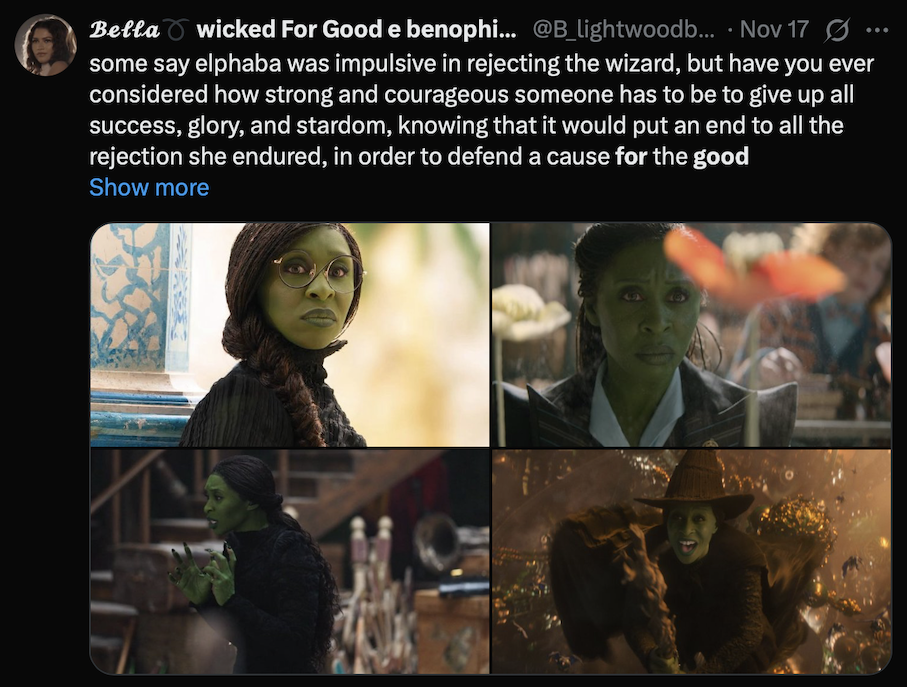
Critics note that the film leans heavier into the moral gray areas than the first. Elphaba isn’t just misunderstood—she’s scapegoated. Gaslit. Flattened by a government that needs a villain. And yet, as The Hollywood Reporter points out, her resistance to injustice becomes her salvation. She stays kind in the face of cruelty, which makes her fate sting even more.
Glinda, meanwhile, gets her first real emotional breakdown as she ascends to Good Witch status. The bubblegum veneer cracks. Ariana plays her heartbreak with this perfect balance of poise and fragility, making Glinda more than a sparkly icon—she becomes a woman carrying the weight of a kingdom on her perfectly curled shoulders.
The Dorothy Debate—and Why You Don’t See Her Face
Now, let’s talk about Dorothy. Yes, she’s in the film. No, you don’t see her face. And no, it’s not because the CGI budget collapsed.
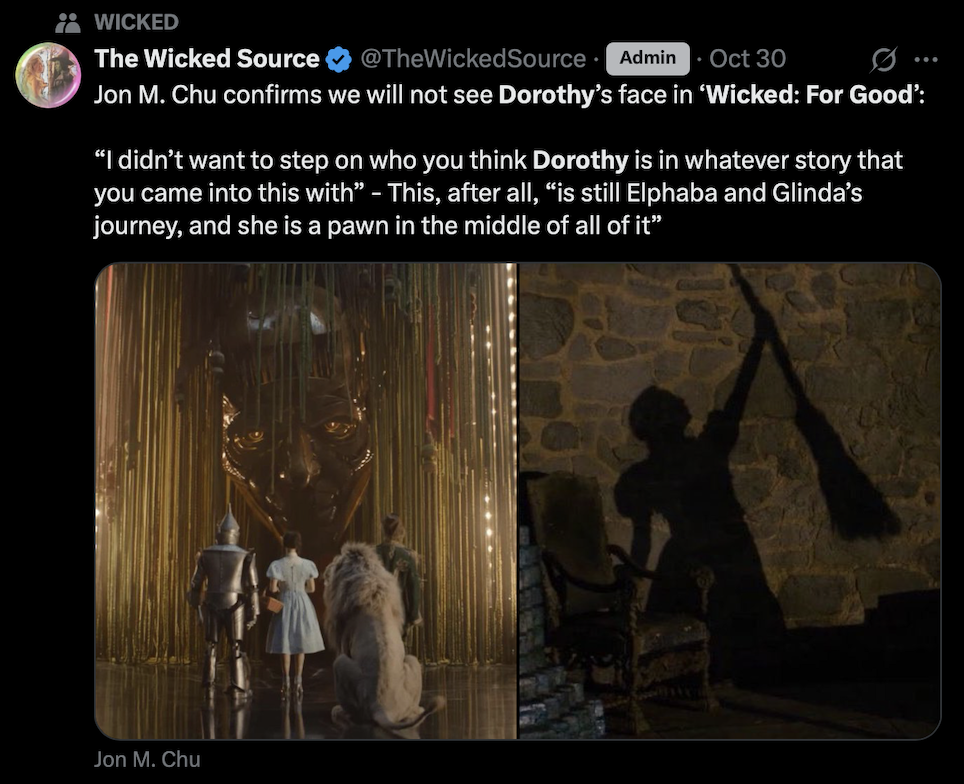
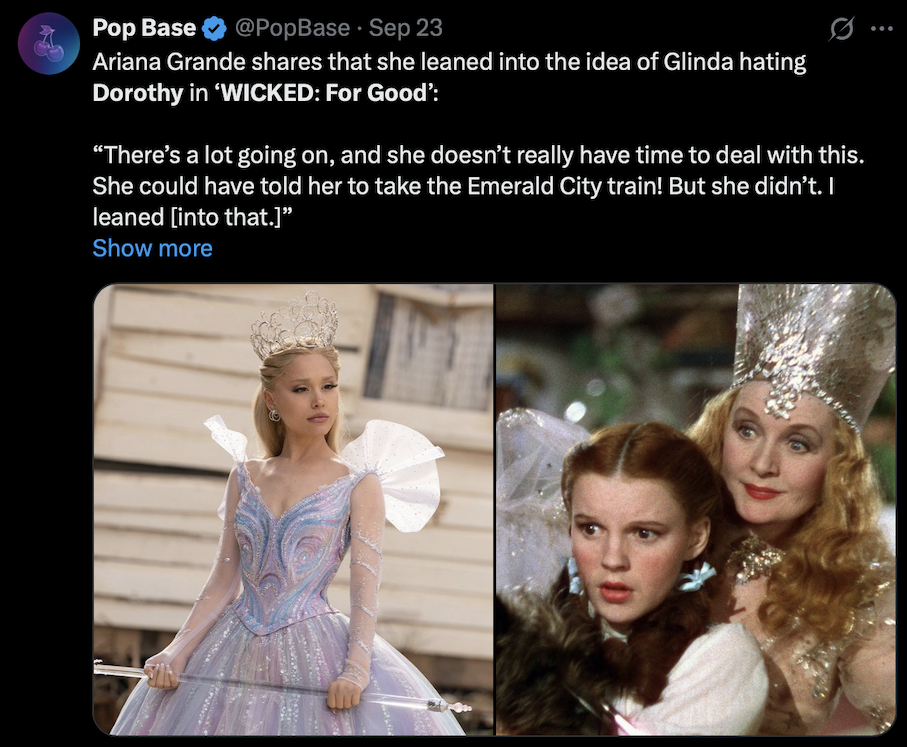
Turns out, Chu did this on purpose. He explained to People that Dorothy belongs to the audience’s imagination—and to the legacy of Judy Garland. The musical also never shows her face, and Chu wanted to keep the story squarely focused on Elphaba and Glinda.
And honestly? It works. The Dorothy you loved as a kid stays untouched, unchanged, and iconic. The film honors her without turning her into a cameo stunt.
The Misses: Story Gaps and Lore Choices
Some critics feel like the plot stumbles in parts—particularly with how the Scarecrow (Fiyero) and the Cowardly Lion connect to Dorothy’s adventure. Was it a pacing issue? A lore issue? Or just Chu staying religiously faithful to the musical?
Either way, the emotional beats hit harder than the narrative hiccups.
Final Verdict: Wicked: For Good Holds Its Own
Even if most people’s favorite numbers are still in the first film, Wicked: For Good stands tall on its own emerald-green heels. The performances are electric. The world is richer. The emotions are heavier. And the gay tears? Plentiful.
It’s darker. It’s bolder. It’s imperfect—but beautifully so.
Just like Elphaba. Just like Glinda. Just like us.