


If there’s one thing Stranger Things has proven over the years, it’s that the stranger the world gets, the more honest its queer stories become. What began as a nostalgic sci-fi love letter to the ’80s has quietly evolved into one of mainstream television’s most affirming LGBTQ narratives — and it did so without losing its sense of fun, friendship, or monster-slaying chaos.
Rather than announcing its queerness with a megaphone, the Netflix hit let it unfold naturally. Crushes lingered a little too long. Looks said more than dialogue. And eventually, love — queer love — stepped fully into the light.
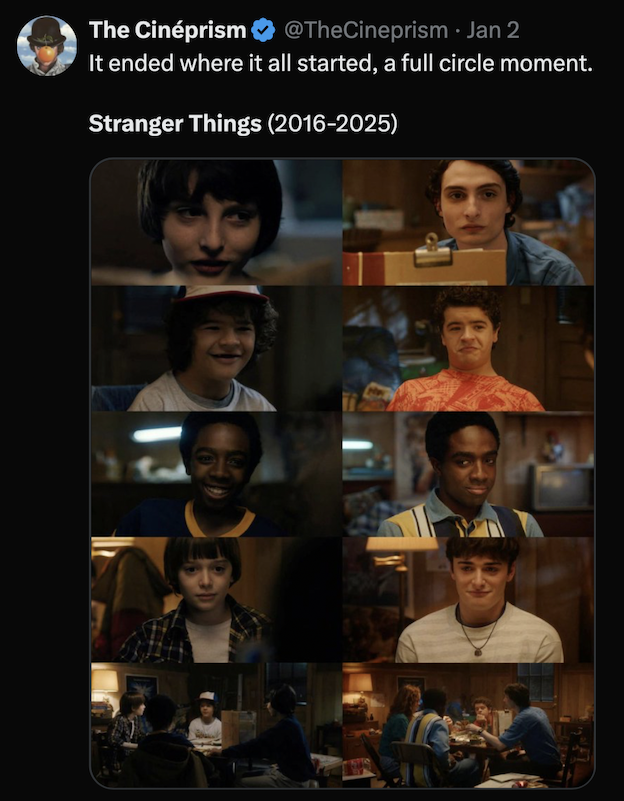
RELATED: Get to Know More About Out Actor Noah Schnapp
Robin Buckley: An Icon Was Born (With an Ice Cream Scoop)
When Robin Buckley (played by Maya Hawke) burst onto screens in season three, she immediately stood out: fast-talking, sarcastic, and allergic to nonsense. Initially introduced as Steve Harrington’s co-worker at Scoops Ahoy, she seemed primed for a classic boy-meets-girl arc. But something better happened.
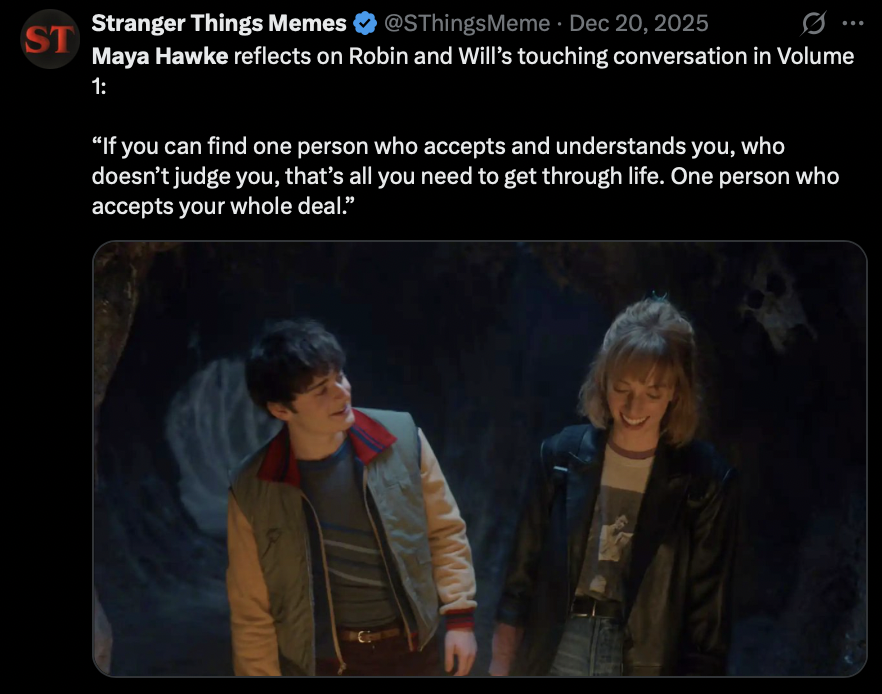
As later discussed by Maya Hawke in an interview with The Wall Street Journal Magazine, Robin wasn’t originally written as gay. Over time, however, it became increasingly clear — to Hawke and the creative team alike — that pairing her romantically with Steve just didn’t fit. The chemistry worked, but not in the way expected. It was platonic, and that was that.
“Throughout filming, we started to feel like she and [Steve] shouldn’t get together, and that she’s gay.” Adding, “When I go back and watch earlier episodes, it just seems like the most obvious decision ever.”
Instead of forcing a love story that felt wrong, the writers listened to the character. Robin came out as gay in season three, flipping expectations and instantly becoming the show’s first openly LGBTQ character. The result? A coming-out moment that felt tender, honest, and refreshingly drama-free.
Steve and Robin almost ‘got together’ in Stranger Things 3, according to Maya Hawke
“Throughout filming, we started to feel like they shouldn’t get together, and that she’s gay. Even when I go back and watch earlier episodes, it seems obvious decision.”pic.twitter.com/xojdEZqDTt
— Emir Han (@RealEmirHan) January 4, 2026
Robin didn’t exist to teach a lesson. She existed to be herself — brilliant, awkward, gay, and deeply lovable.

Steve Harrington: Ally of the Year, Every Year
Let’s take a moment to appreciate Steve Harrington, who went from high school menace to single mom of six — and then topped it off by becoming one of TV’s most beloved straight allies.
baseball coach/sex ed teacher steve harrington saving up to buy a house and start a family NEED HIM CARNALLY #StrangerThings5 pic.twitter.com/urcCyROl4b
— Sofía (@starkcanarie) January 1, 2026
Robin’s coming-out scene worked because it wasn’t about rejection; it was about trust. Steve’s response — confusion, understanding, acceptance — reflected what many queer viewers longed to see growing up. No anger. No shock horror. Just, “Okay. I’ve got you.”
In a show filled with supernatural villains, that quiet acceptance felt revolutionary.
Will Byers and the Power of Finally Saying It
While Robin’s queerness arrived with witty confidence, Will Byers’ journey unfolded slowly — and painfully — across multiple seasons. Long before words were spoken, viewers sensed Will’s difference. The longing. The isolation. The fear of being left behind.
@nescerrye the scene will byers coming out as gay😭🥀 #willbyers #noahschnapp #strangerthings #lgbtq #strangerthings5
As discussed by Matt and Ross Duffer in an interview with Variety, Will’s coming out in the final season wasn’t a sudden twist. It was something they had been building toward for nearly a decade. His queerness wasn’t a side plot — it was central to his emotional arc.
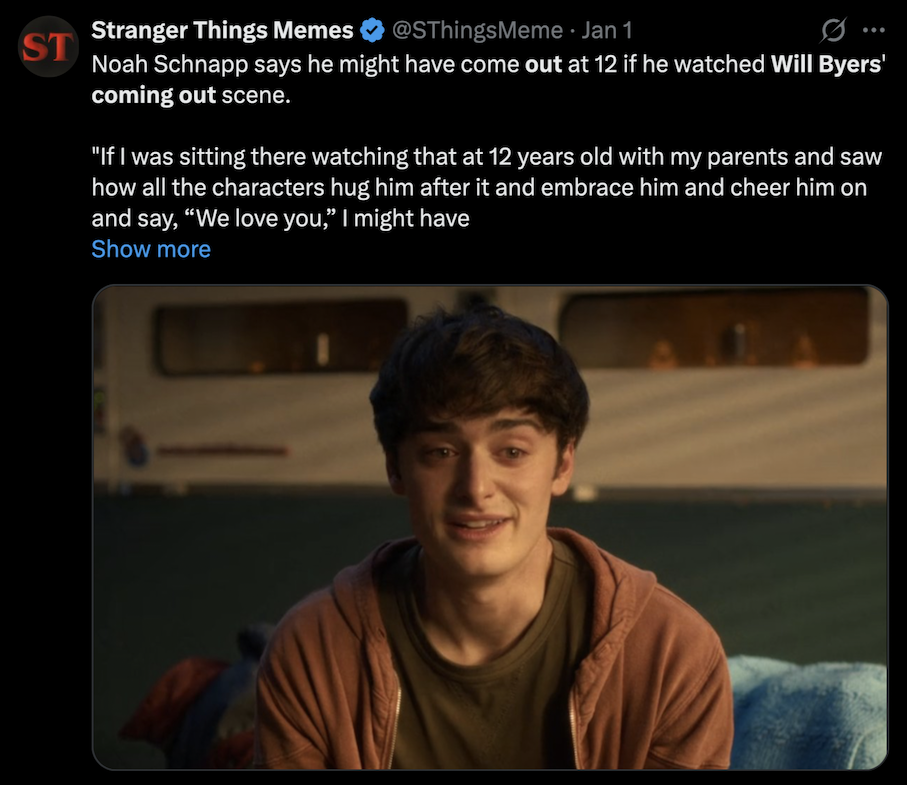
For Will, self-acceptance wasn’t just personal growth. It was survival. The Duffers framed his coming out as an act of courage and defiance — a refusal to let shame or fear win. And in classic Stranger Things fashion, that emotional breakthrough was tied directly to saving the world.
Gay feelings, but make it apocalyptic.
Why the Queerness Works So Well
What makes Stranger Things stand out in LGBTQ representation isn’t just that queer characters exist — it’s how they’re allowed to exist. Robin’s sexuality is an aspect of her life, not the sum of it. Will’s queerness is tender and vulnerable, never sensationalized.
The show trusts its audience. It lets scenes breathe. It allows silence, subtext, and softness. And when the words finally come, they matter.
It also helps that the cast and creators clearly care. The Duffers have spoken openly about wanting to get these moments right, while Noah Schnapp himself has shared how emotionally accurate Will’s storyline felt to him.
🚨Spoiler alert for ‘Stranger Things’ season 5 volume 2!🚨
Noah Schnapp reveals he was very nervous about how Will Byers’ coming out scene in the penultimate episode would turn out, but ultimately feels it was “perfect.” pic.twitter.com/v4EM7e7dpA
— Entertainment Tonight (@etnow) December 27, 2025
Hawkins, But Make It Gay
In the end, Stranger Things reminds us that queer stories don’t need to shout to be powerful. Sometimes they live in a glance across an ice cream counter. Sometimes they sit quietly in the backseat of a van. Sometimes they take years to say out loud.
And sometimes, they save the world.
As the Upside Down closes its doors, one thing is clear: Stranger Things didn’t just give us monsters, mixtapes, and mall battles. It gave us queer characters who felt real, loved, and finally seen — proving that even in the strangest of worlds, LGBTQ joy finds a way.
REFERENCE: Wall Street Journal Magazine,Variety