


Sexual orientation and gender identity (SOGI) have long been critical to understanding the lives of LGBTQ+ individuals, but in 2025, the government has taken a giant step backward. While the world marches forward, the nation has chosen to erase these identities from federal data collections. Picture this: a government that once acknowledged the diversity of its people now chooses to erase a part of their very existence, a choice that impacts us all, especially the LGBTQ+ community.
RELATED: Philadelphia: Some Untold Stories of LGBTQ+ History
The Erasure of SOGI Data: When Government Stops Seeing Us
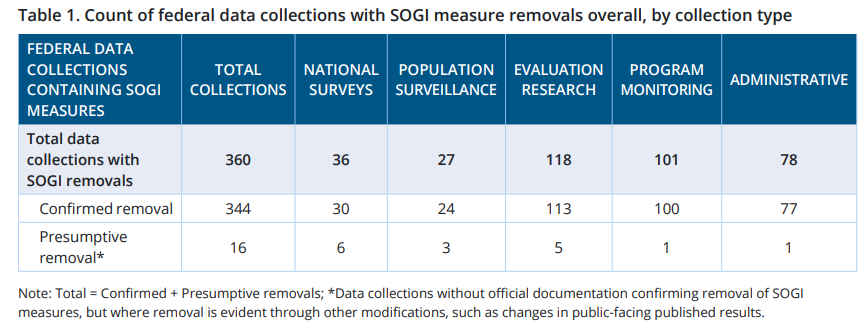
In January 2025, the UCLA School of Law’s Williams Institute dropped a bombshell report that could’ve easily been the plot of some dystopian political thriller. But no, this is real life. Under the second Trump administration, SOGI measures were purged from federal data collections. Yes, that includes everything from national surveys and surveillance systems to program evaluations. The rationale? President Donald Trump’s executive order, issued on his first day of the second term, made it official policy: transgender, nonbinary, and intersex identities would no longer be recognized by the federal government. And, in turn, federal agencies started removing the questions that once measured SOGI characteristics across approximately 360 data collections.
While this may sound like a bad dream, let’s break down what this erasure actually looks like and what it means for the LGBTQ+ community:
A Majority of Removals: Gender Identity Questions
Out of the 360 data collections examined, a whopping 94% (338 collections) scrubbed any mention of gender identity. The culprit here? Executive Order 14,168, which led the charge in getting rid of measures that once reflected the diversity of gender identities. But what does it mean when gender identity data vanishes? It’s as if the 1.4 million transgender Americans, and the countless others who identify as nonbinary or gender non-conforming, never existed at all in the eyes of the government. So much for progress, right?
The Unspoken Erasure: Sexual Orientation Data
But the gender identity wipeout wasn’t the only casualty. No, at least 60 federal collections also removed data on sexual orientation. These deletions weren’t even required by the executive order, which suggests that some people in power were all too eager to make LGBT+ lives invisible in government data. While it’s impossible to say for certain why these decisions were made, it’s easy to imagine that removing these questions makes it harder to track discrimination, healthcare disparities, and social inequalities that LGBTQ+ people face every day.

Bias Motivation Questions: A Step Further into Invisibility
Another troubling removal? Twenty-three collections erased sexual orientation and gender identity data from bias motivation questions. Translation: it just got harder to prove that discrimination based on being gay, lesbian, bisexual, or transgender exists—because the government no longer keeps track of it. This is more than just an inconvenience. It’s an open invitation for discrimination to continue unchecked.
A Sea of Red Tape: The Process of Removal
How did these deletions happen, you ask? While some were made through formal channels (like the public notice-and-comment process), a staggering 83% of the removals happened through what’s called “non-substantive change requests.” That’s bureaucracy-speak for behind-the-scenes actions that don’t require public input. This sneaky method essentially allowed federal agencies to slip the deletions in under the radar, making the data of millions of LGBT+ people just… disappear.
What Does This Mean for the LGBTQ+ Community?
The bigger question here is: What are we supposed to do when the government no longer keeps track of who we are? The removal of SOGI data creates a significant gap in understanding the challenges we face. Without these data points, policies that are meant to address issues like healthcare disparities, mental health crises, and employment discrimination may be based on incomplete or skewed data. This doesn’t just affect LGBTQ+ individuals; it affects everyone who depends on accurate data to advocate for change.
The deletions are part of a larger pattern of erasure and invisibility. When the government decides not to recognize a group, it is much easier for others to dismiss their needs, concerns, and rights. It’s a dangerous precedent, one that suggests the government doesn’t care to know what life is really like for marginalized groups.
We can only hope that this current administration, and future ones, take note of the power of data in shaping social change. After all, without data, how can we show the world that LGBTQ+ people matter, that we exist, and that we deserve the same rights as anyone else?
RELATED: Best Gay Chat & Video Chat Sites to Connect
For now, we’re left to pick up the pieces—fighting for visibility in a society that seems to be systematically erasing us from the national conversation.