


Patrick Muldoon was one of those actors you didn’t track deliberately, but who simply accumulated in your memory through reruns, channel flips, and late-night TV you didn’t mean to watch but somehow did anyway.
RELATED: Ty Roderick: Porn Star Stabbed in Brutal Attack
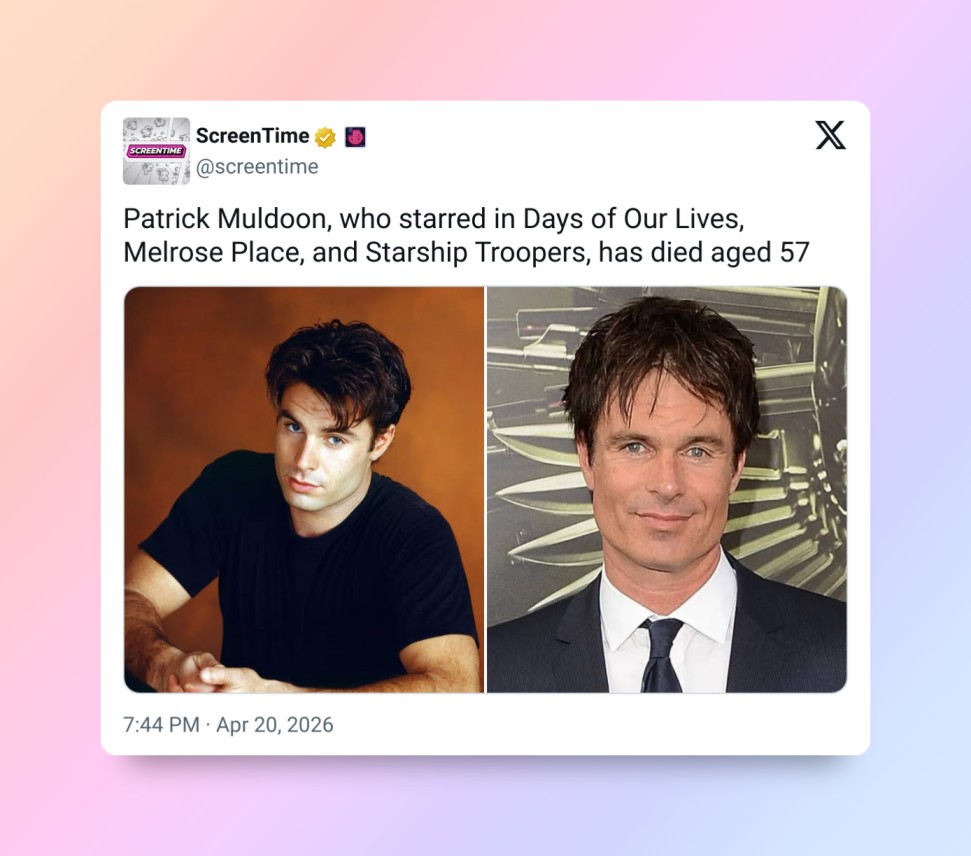
He’s gone at 57, after a heart attack. The news first circulated through industry reporting from Deadline, while his manager confirmed the death to Variety.
And that’s part of what makes this one feel oddly disorienting: not just the loss, but how familiar he was without ever needing to be center stage in your life.
Patrick Muldoon: The Face That Kept Rotating Through TV Eras
Muldoon’s career didn’t belong to a single lane—it belonged to television’s most persistent formats: soaps, teen sitcoms, and the kind of primetime drama that lived somewhere between glamour and chaos. He stepped into early TV roles with appearances on Who’s the Boss? and later turned up in the orbit of Saved by the Bell—two shows that basically define “accidental childhood exposure to television.”
But it was daytime TV where he became a recurring presence in a more structural way, originating Austin Reed on Days of Our Lives, a role he would return to years later. That kind of soap longevity has its own strange permanence: characters leave, return, get rewritten, reappear like they never fully exited in the first place.
Then came Melrose Place, where he played Richard Hart—a role that fit neatly into the show’s ecosystem of glossy dysfunction and escalating melodrama. It was peak 90s primetime excess, and Muldoon fit into it without needing to force anything.
The Sci-Fi Detour That Turned Into Cult Memory
On film, he showed up in the kind of project that doesn’t fully reveal its afterlife immediately.
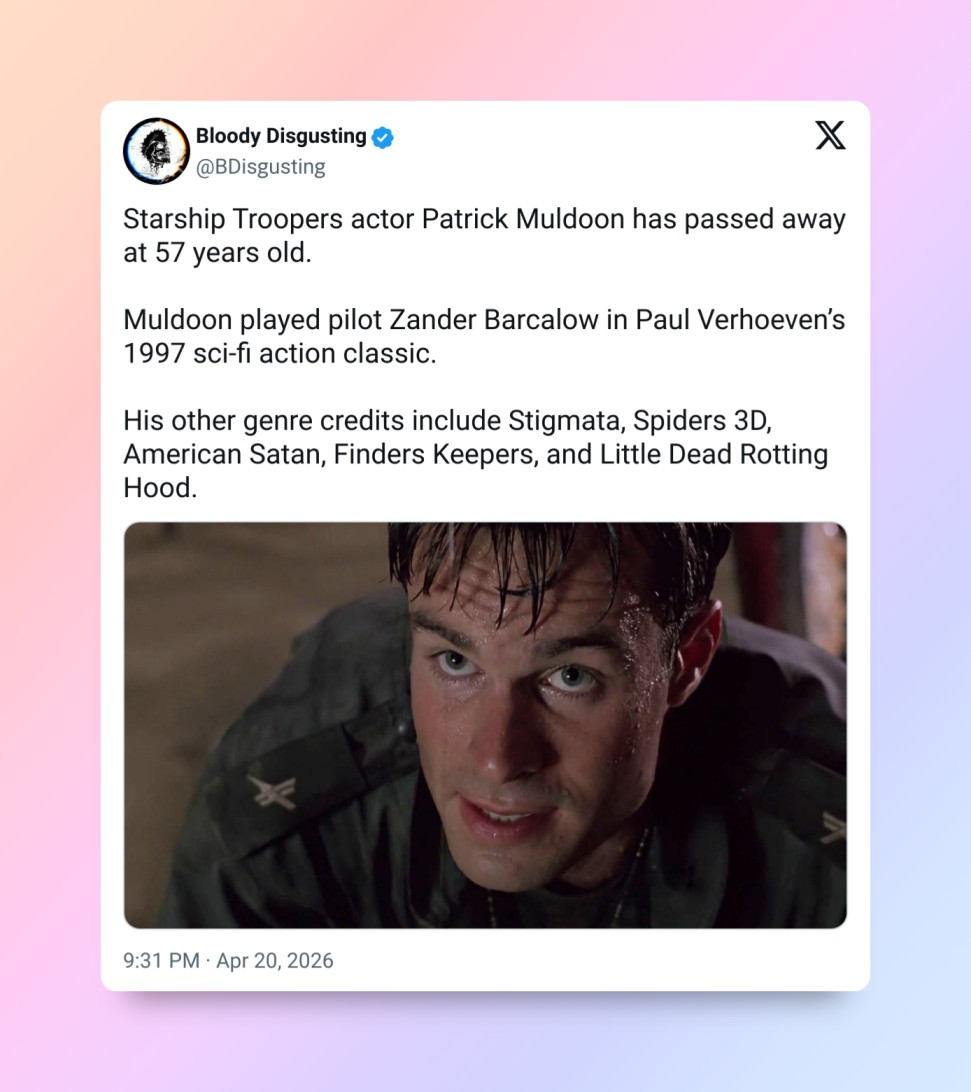
In Starship Troopers, directed by Paul Verhoeven, Muldoon played Zander Barcalow—part of a glossy, militarized sci-fi world that later got reassessed by audiences who realized it was doing far more satire than it initially let on.
It’s one of those roles that quietly ages into a different kind of relevance, the way certain 90s films do when pop culture catches up to them later.
The Other Version of Him: Producer, Musician, Presence
Beyond acting, Muldoon also moved into producing, with credits spanning films like The Card Counter, Marlowe, and Arkansas, along with projects such as Kockroach, which remains in production and features Chris Hemsworth, Taron Egerton, and Zazie Beetz.
There was also music—less industry bullet point, more personal rhythm. He performed with The Sleeping Masses and was often described by those close to him as someone who moved through rooms with an easy, unforced energy.
Not curated. Not overly polished. Just present.
The Suddenness, As It Was Described
Reporting from TMZ relayed that Muldoon had been at home in Beverly Hills on Sunday morning after coffee with his girlfriend when he went to shower. He was later found unresponsive, and paramedics were unable to revive him.
It’s the kind of detail that feels almost too ordinary for something final—morning routine, delayed return, a door checked too late. Nothing cinematic about it, which somehow makes it harder to frame cleanly in words.
What He Leaves Behind in Pop Memory
Muldoon wasn’t a single defining role type of actor. He was more like a recurring signal across different TV frequencies—soap arcs, guest appearances, film turns, producer credits in the background of bigger names.
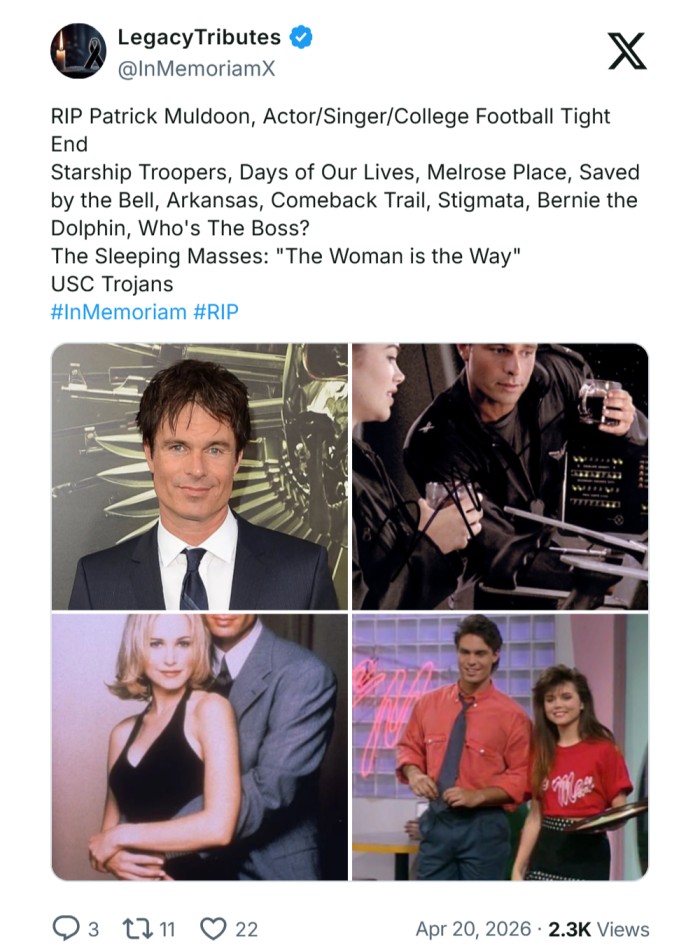
And that’s probably why his absence doesn’t land like a headline character exit. It lands more like noticing a familiar rerun won’t cycle back again. Not a center-of-the-universe figure. Just someone who kept showing up long enough that the absence feels strangely specific.
And now, quietly, he doesn’t.
I am so sorry for your loss of Patrick he was a great actor and very versatile and he was a great guy may he rest in peace may God Bless you all and his Family and keep you all Safe Healthy and Strong he definitely will be missed Amen
He was one of those actors that actually worked for a living. The kind of actor who just did his job, didn’t really care about the fame, just wanted to do his thing to put food on the table. Everybody knows his name for all the RIGHT reasons.
I’m gonna watch ‘Starship Troopers’ again to honour him.