


Barney Frank has always been one of those politicians whose legacy refuses to sit still. Long before his policy fights defined him, he was already reshaping what American political visibility could look like—becoming the first member of Congress to voluntarily come out as gay and later the first to enter a same-sex marriage while still in office. That shift didn’t just mark personal history; it helped redraw the boundaries of who could exist openly in national politics.
RELATED: Florida’s New Anti-DEI Law Has Pride Season on Edge
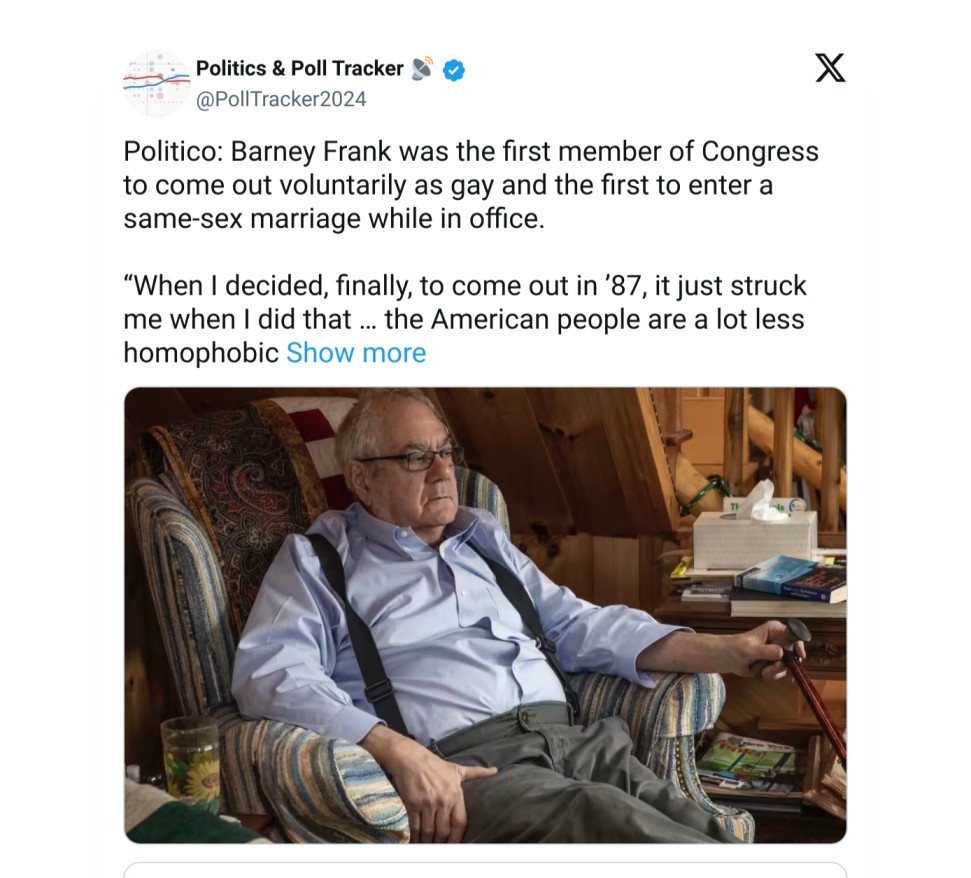
Now 86 and in hospice care at his home in Maine, Frank is still speaking with the same blunt clarity that defined his decades on Capitol Hill. Even as his health declines, he’s preparing one final book—this time aimed less at political opponents and more at the ideological direction of his own party’s left flank.
RELATED: Trans Behind Bars: The Court’s Fine Print vs. Actual Danger
Barney Frank’s legacy already locked into political history
At 86, Frank is not framing this moment as withdrawal. If anything, it feels like an extension of a long habit of staying inside the argument long after most people would have left the room.
“I’ve made it longer than I thought,” he said. “At some point, my heart’s just going to give out, and it’s reaching that stage. So I’m taking it easy at home and dealing with it by relaxing.”
“Relaxing,” in Frank terms, still includes drafting a book that challenges progressive Democrats for what he describes as going beyond “what’s politically acceptable.”
Still writing the final argument
“Until we separate ourselves from that agenda, we don’t win,” he said.
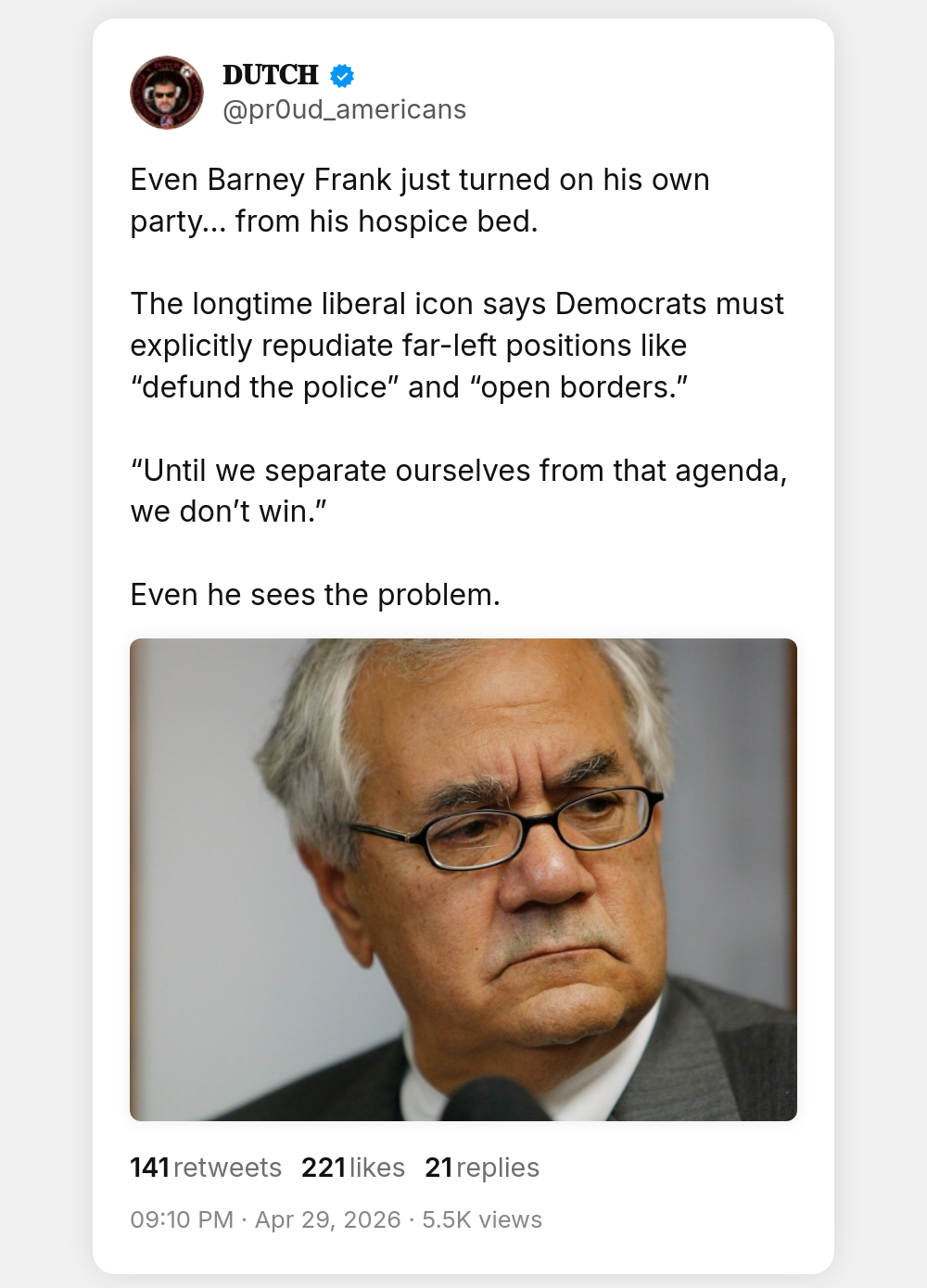
For Frank, the concern is not about shutting down advocacy, but about where advocacy turns into political rigidity. He says he’s “not arguing that anybody should stop his or her advocacy.”
“But it’s one thing to advocate something knowing that you’re going beyond the current viewpoints, and another to make it a litmus test,” he said.
He frames it less as a rejection of ideas and more as a warning about strategy—what translates beyond activist circles, and what doesn’t.
Reading the present, even at the end
In the current progressive-moderate tensions within his party, Frank has also made his own preference clear, backing Gov. Janet Mills over Graham Platner in Maine’s Senate race. “I worry a little bit about the tendency on the Democratic side to fall for the flavor of the month,” he said, pointing to candidates who can articulate anger well but, in his view, don’t always follow through on governance.
Still, he sees the broader political landscape as unstable for the opposing party.
“One of my regrets,” he said, “is that I won’t see the continued implosion of [President] Donald Trump.”
An argument that doesn’t quite end
Frank’s political life has always been defined by the same pattern: enter the debate early, stay longer than expected, and leave behind arguments people are still having after he’s done speaking.
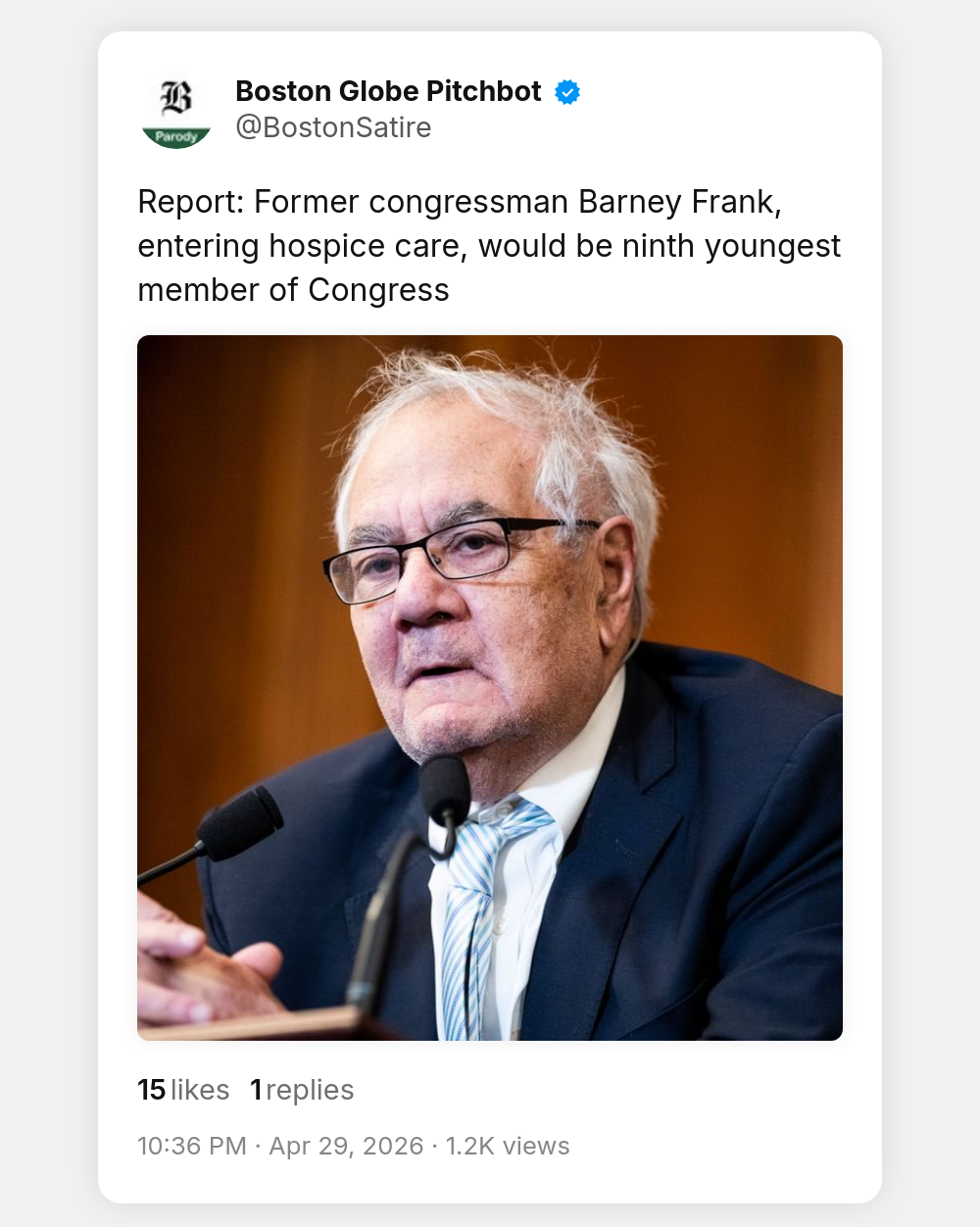
Even now, in hospice care, that pattern hasn’t changed—only the setting has. The House chamber is gone, the committees are gone, but the instinct to challenge his own side’s assumptions remains intact.
If anything, his final chapter isn’t about agreement or closure. It’s about insistence—that politics is still shaped by what people are willing to say out loud, even when it’s inconvenient, even when it splits the room.
And for Frank, that seems to be the point right to the end: not to resolve the argument, but to make sure it actually gets heard, always pushing every possible limit.
Source: Politico