


Two decades after the original favorite The Devil Wears Prada quietly cemented itself as a gay cultural mainstay—somewhere between fashion fantasy, workplace horror story, and “why do I feel personally attacked by a cerulean sweater?”—the impossible has apparently happened. The sequel has arrived, and people are not being subtle about it.
RELATED:‘The Devil Wears Prada’ Returns–And Miranda Needs Help
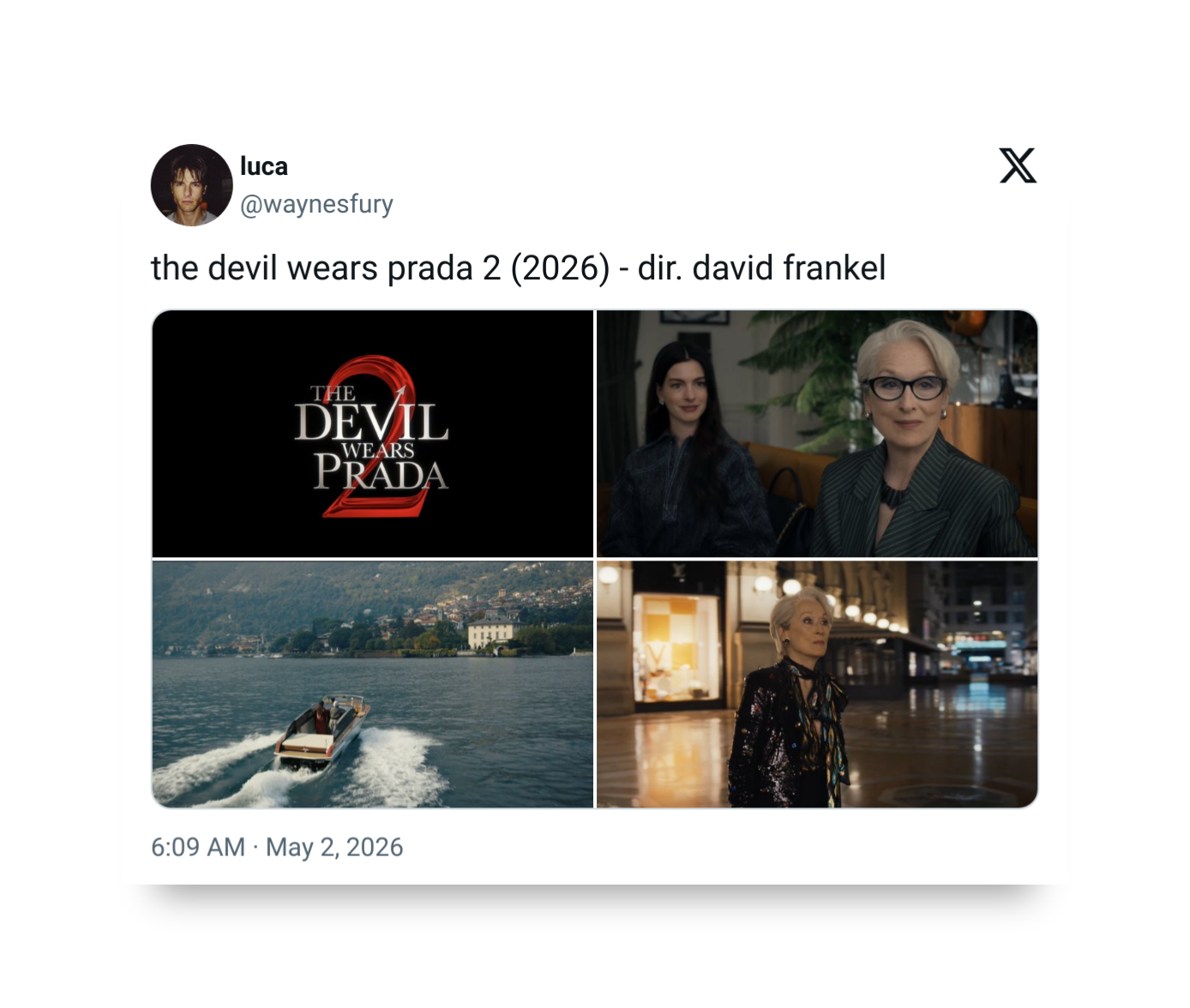
Runway is back, and so is the chaos
The Devil Wears Prada 2 has been rolling out in theaters recently, and within hours of its release, social media did what it always does when something remotely iconic resurfaces: it lost its composure. Fans immediately flooded X (formerly Twitter) with reactions ranging from emotional spirals to full-on admiration for the return of fashion-world savagery.
RELATED: ‘Boots’ Is Dead, But Their Abs Aren’t
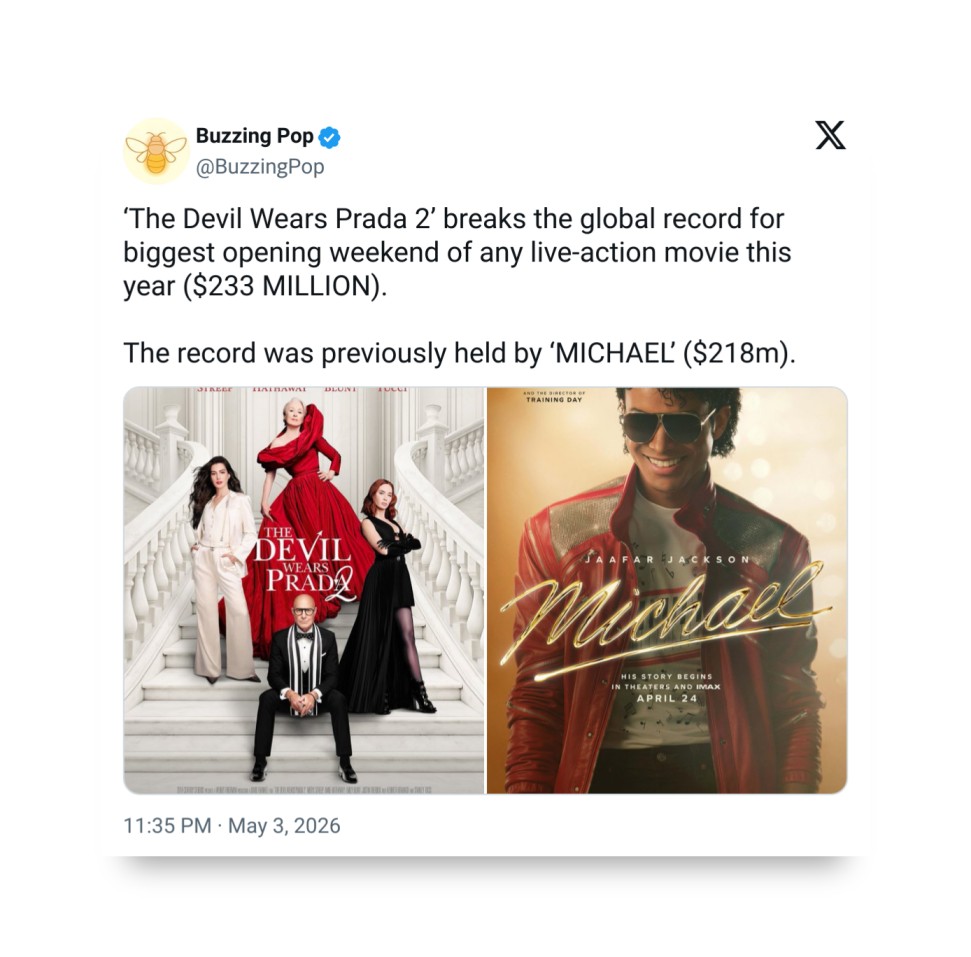
It would’ve been easy for this to feel like another unnecessary revival in an era already saturated with IP nostalgia. Sequels these days don’t always land—sometimes they just politely exist. But early reactions suggest this one didn’t just survive the pressure. It thrived under it.
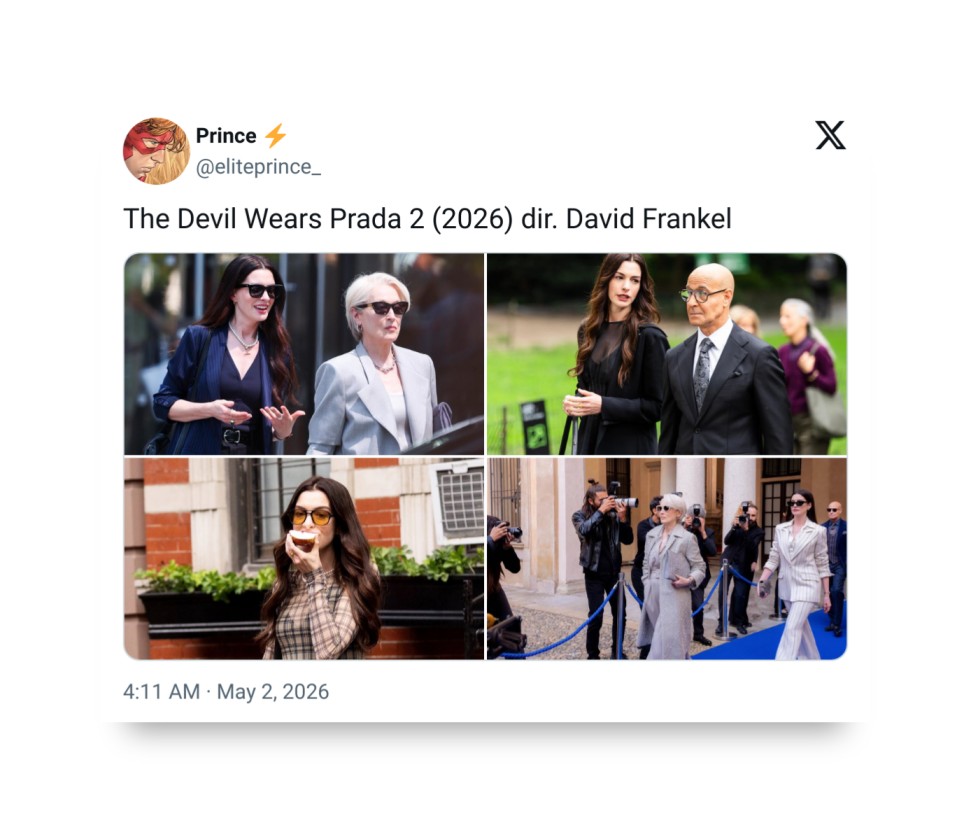
People are especially fixated on how the film manages to recreate the original’s sharp energy while updating its tone for a different moment in pop culture. The result, according to early audiences and Rotten Tomatoes chatter, is something that feels unexpectedly confident—like it knew exactly what it was walking into.
THE DEVIL WEARS PRADA 2 is currently rated more than its original. pic.twitter.com/S1gFMvzRcB
— The Cinéprism (@TheCineprism) April 30, 2026
“Better than the original” is not being said quietly
The boldest claim circulating online is also the simplest: some fans are calling it better than the original. That’s the kind of statement usually whispered only after multiple rewatches and a glass of something strong, not typed publicly within hours of release.
#TheDevilWearsPrada2 is the perfect summer movie. Where the original seduced us with wide-eyed ambition, this sequel arrives fully self-possessed — sharper, wiser, and draped in the kind of confidence that cannot be bought, only earned. Meryl, Anne, and Emily are a phenomenal,… pic.twitter.com/RR5Ey7DN6O
— Patrick Ferguson 🍉 🇵🇸 (@Yo_Soy_Patricio) April 27, 2026
Some more thoughts on The Devil Wears Prada 2 (SPOILERS) 👠
– I thought the writing was really cool and the story felt like it made sense and wasn’t too forced like other sequels can tend to be
– The pacing was great, it felt very reminiscent of the first film
– It was nice… pic.twitter.com/aeIPWJttlM— Anthony 👹 Lady Gaga News (@antpats2) May 2, 2026
I seriously love everything about miranda and andy! The Devil Wears Prada 2 was filmed so perfectly. honestly, it was worth waiting 20 years for this. I’m forever obsessed with how miranda is mean yet stays so idealistic and realistic at the same time! she is the literal… pic.twitter.com/4dV0cgcUfI
— 𖤐 (@cewegaIak) April 29, 2026
Part of the excitement clearly comes from seeing familiar forces back in motion—Miranda Priestly’s controlled precision, the return of that unmistakable fashion-world pressure cooker, and the lingering fascination with characters who treat emotional availability like a design flaw.
how the fuck did they manage to pull off a perfect sequel to a 20 year old movie pic.twitter.com/NUitF7M0Yu
— vishnu (@maheshscofieldd) April 30, 2026
the devil wears prada 2 actually getting good reviews…… this is LITERALLY what the fans want to see pic.twitter.com/lq3Ci57jNf
— wiLL (@willfulchaos) April 30, 2026
The Devil Wears Prada 2 will heal you 100 times over.
— Carlots (@flexofblue) May 1, 2026
Literally me at the and of The Devil Wears Prada 2 pic.twitter.com/n7rnPhwXJD
— Mar (@_martremblay) May 1, 2026
And of course, there’s still the enduring appeal of Meryl Streep and Anne Hathaway facing off across a world where clothes are never just clothes, and silence often says more than dialogue ever could. Add Stanley Tucci into the mix and you’ve basically reassembled a cinematic ecosystem that refuses to age normally.
The internet reacts: emotional damage, but make it couture
What’s striking isn’t just the praise—it’s the tone. Fans aren’t only impressed by the styling or performances; they’re genuinely moved. A recurring sentiment online is that the film feels oddly comforting in a year that hasn’t exactly been gentle.
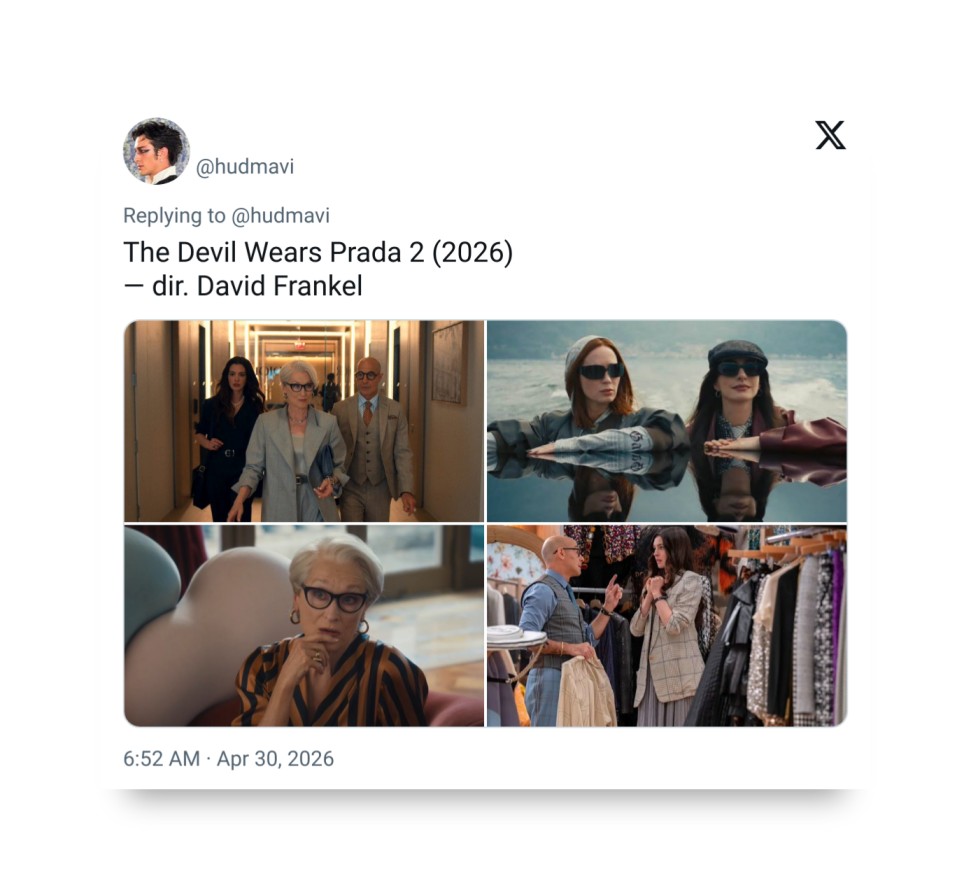
That’s not usually the emotional endpoint of a high-fashion workplace satire, but here we are. In a landscape where audiences are increasingly skeptical of sequels and franchise expansions, this one seems to have done something rare: justify its own existence without asking for forgiveness.
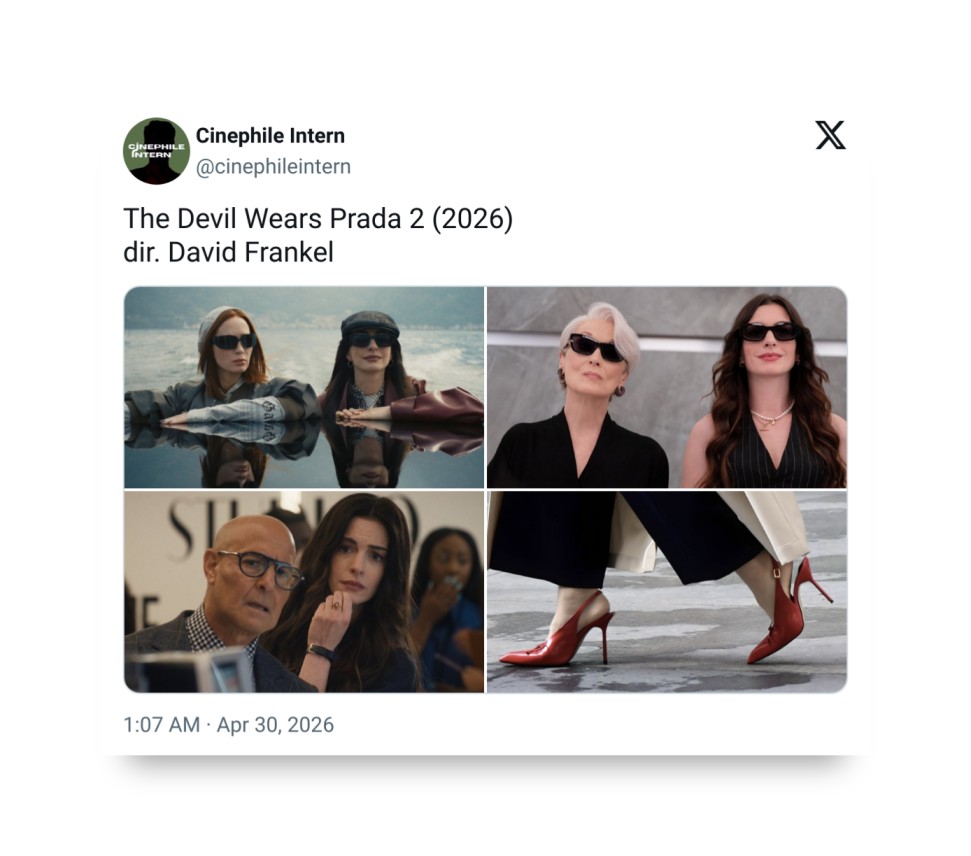
So the question now isn’t whether it worked for fans. It’s how long it’ll take before someone starts quoting it in group chats like it’s always been part of the cultural vocabulary.
And more importantly—did it actually surpass the original for you, or is that just post-premiere adrenaline talking?