


Guys and Balls may not be the first football movie that comes to mind every World Cup, but it probably should be. Every four years, everyone suddenly turns into a football analyst. Your coworker has opinions on formations, your uncle becomes a referee expert, and gay Twitter is busy ranking players by jawlines instead of goal totals. Priorities.
RELATED: Football’s Hottest Players Put Their Soaked Jerseys to the Test
But while the internet is thirsting over today’s football stars, we’re here to remind you of a movie that was waving the rainbow flag on the pitch long before queer sports stories became fashionable.
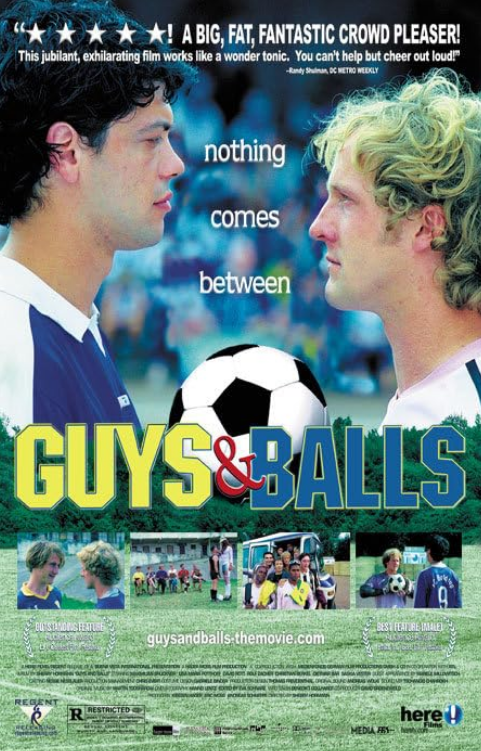
Meet Guys and Balls.
Yes, that’s the real title. Yes, someone approved it. And honestly? We love that for them. Once you get past the cheeky name, Guys and Balls is surprisingly earnest about what it means to be yourself in a sport that hasn’t always made room for queer players.
RELATED: Erling Haaland’s Bulge Has Everyone Suddenly Interested in Football
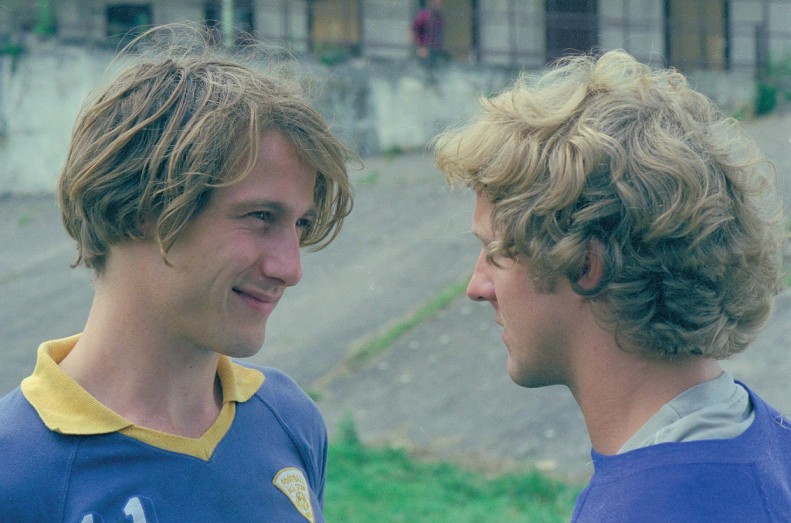
Released in 2004 (under the German title Men Like Us), this overlooked comedy imagined something football still struggles with today: an openly gay men’s football team taking on the sport’s biggest stereotypes one match at a time.
The plot is basically revenge… but make it gay
Poor Ecki can’t catch a break. First, he lets in the penalty that costs his hometown club a promotion. Then he mistakes a teammate’s friendliness for flirting and goes in for a kiss—only to realize the entire team is watching.
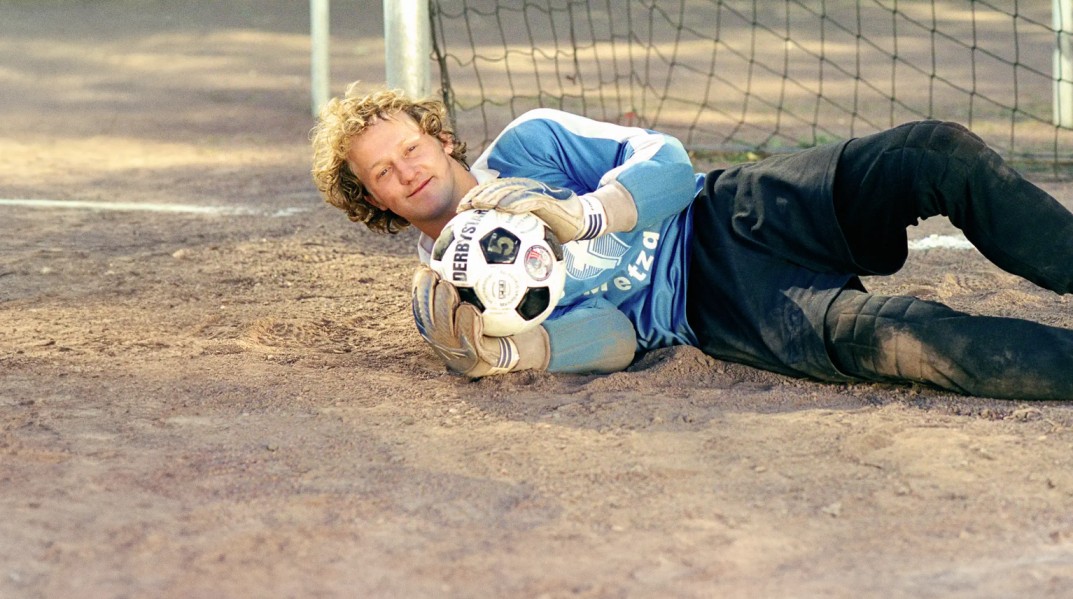
Losing the game? Apparently forgivable. Being gay? Absolutely not.
He’s kicked off the squad, rejected by his father, and left with one obvious solution: build an entirely new football team made up of queer players and come back to embarrass everyone who doubted him.
Petty? Maybe. Iconic? Also yes.
This squad is gloriously chaotic
Recruiting players proves easier said than done. Ecki starts passing out flyers around Dortmund’s gay bars looking for footballers, accidentally wanders into a regular sports pub, gets chased out by homophobes, and somehow still manages to assemble one wonderfully unhinged lineup.
His new teammates include a David Beckham superfan selling kebabs, leather-clad bikers, two Brazilian football talents, a trans man, a trans woman, and one bookseller whose biggest secret isn’t that he’s gay—it’s that he’s straight.
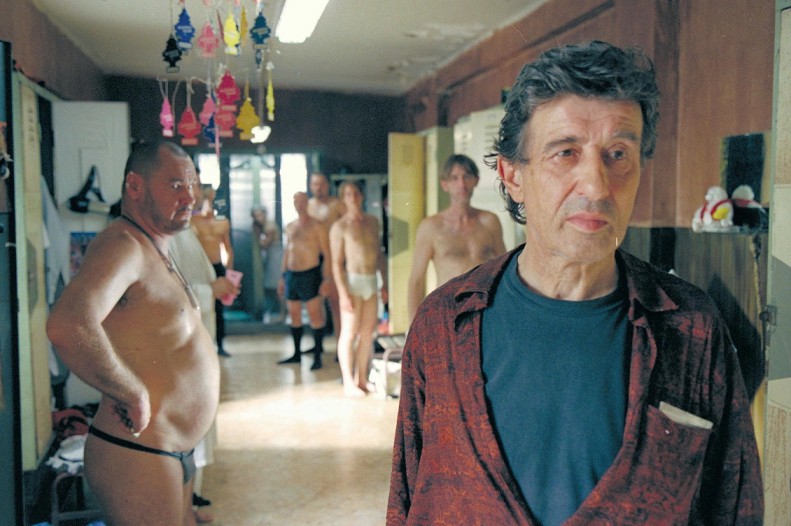
Add in a grumpy former football legend who reluctantly becomes coach and a sweet workplace romance with a nurse, and you’ve got every ingredient for an underdog sports comedy with extra rainbow seasoning.
Camp? Absolutely. Heart? Surprisingly, yes.
Let’s be honest. Some of the humor definitely shows its age. A few characters lean into stereotypes that modern audiences may cringe at, and not every joke lands the way it probably did in 2004. But what keeps Guys and Balls surprisingly lovable is that it never tries to make its queer characters “less gay” to win over straight audiences.
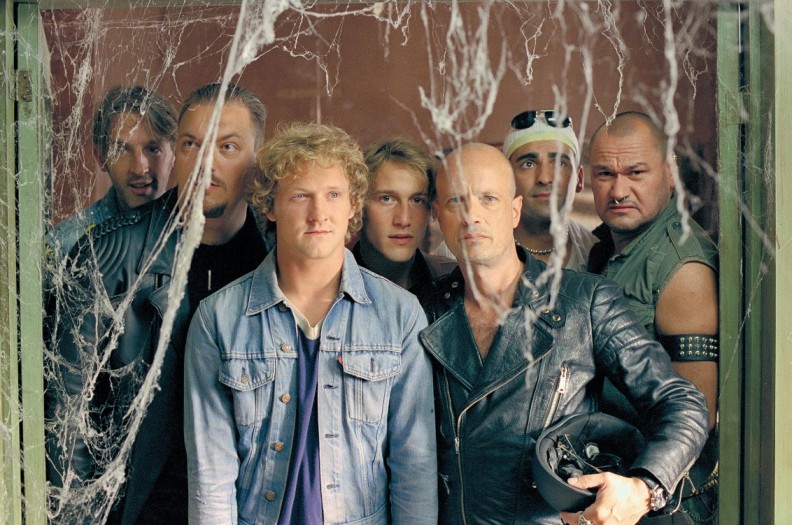
They’re flamboyant. They’re awkward. They’re emotional. They’re messy. They’re also allowed to be heroes. That’s something even newer LGBTQ+ stories occasionally forget.
The emotional beats still land, too. There’s family rejection, second chances, friendships that grow stronger under pressure, and one particularly satisfying moment when former bullies end up cheering for someone they once mocked. Sports movies live for a good redemption arc. This one just happens to come with better outfits.
Football still has its own closet problem
Here’s the uncomfortable part. More than 20 years after Guys and Balls premiered, men’s football still hasn’t produced an openly gay player in the Premier League. That feels especially glaring when you consider that 4% of men in the UK identified as gay or bisexual in the 2024 census—a figure widely believed to underestimate reality because many people still don’t feel comfortable coming out publicly.
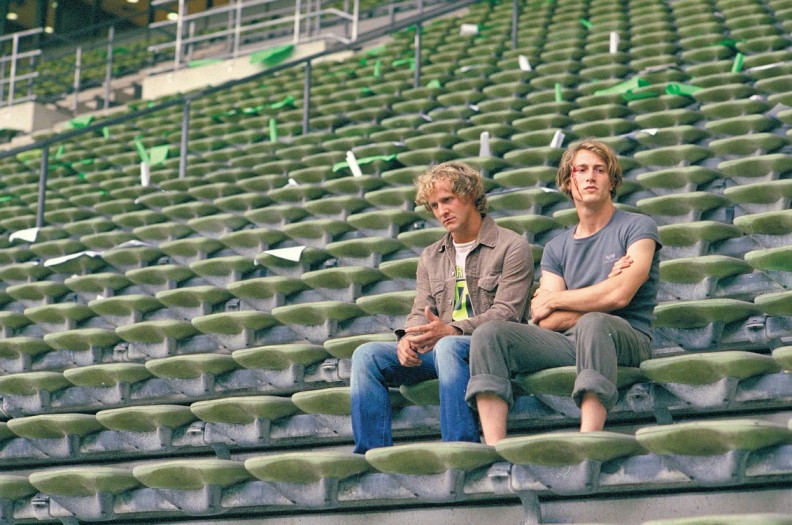
If those numbers roughly reflect football itself, statistically there should already be multiple queer players competing at the highest level. The World Cup tells a similar story. With 1,248 players competing this year, odds alone suggest plenty of LGBTQ+ athletes are likely still playing behind closed closet doors. The atmosphere doesn’t exactly help.
A 2022 report found that 40% of online abuse directed at high-profile men’s footballers was homophobic, targeting either perceived sexuality or support for LGBTQ+ causes. Meanwhile, women’s football has become home to numerous openly queer stars, proving visibility isn’t impossible—it just hasn’t reached the men’s game.
Maybe it’s time to give Guys and Balls another kick
These days we’ve got queer sports stories like Heated Rivalry making fans swoon, proving audiences are more than ready for LGBTQ+ athletes to take center stage. But when it comes to football? The bench is still looking pretty empty.
That’s why Guys and Balls feels oddly refreshing in 2026. It may be cheesy. It may be dated in places. It may occasionally sprint straight into early-2000s humor. But it also dared to imagine a football world where gay players weren’t side characters, tragic figures, or punchlines. They were simply the team everyone underestimated.
And if this World Cup has you craving something that’s equal parts football, found family, and unapologetic queer chaos, Guys and Balls might just be the forgotten underdog worth putting back into your watchlist.
More than two decades later, Guys and Balls still feels like a reminder that football stories are even better when everyone gets to play.
Source: Far Out