


Cases of cyclosporiasis and explosive diarrhea are making headlines across the United States after a growing outbreak of a foodborne illness linked to the microscopic parasite Cyclospora cayetanensis. While many people assume a bad case of diarrhea is simply a stomach bug, health experts say this infection can be far more persistent and, in some cases, quite miserable.
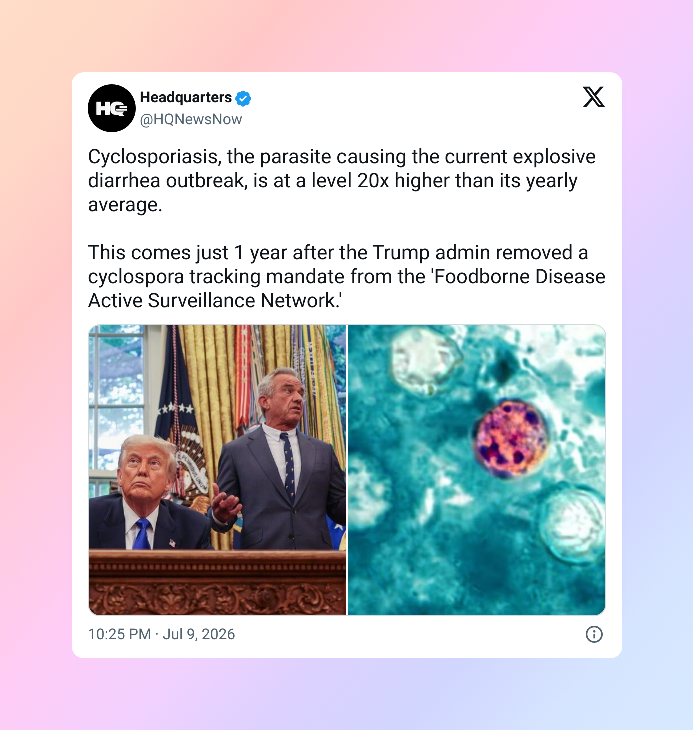
According to Newsweek, the outbreak comes after the Trump administration’s Centers for Disease Control and Prevention (CDC) scaled back part of a long-running federal and state partnership that monitored foodborne illnesses.
In July 2025, the Foodborne Diseases Active Surveillance Network, better known as FoodNet, reduced a surveillance program that had tracked multiple foodborne pathogens for roughly 30 years. Monitoring was narrowed to just two pathogens, meaning several infections, including Cyclospora, were no longer routinely tracked through that program.
@nowthisimpact Can’t believe we have to say this, but please wash your hands.
RELATED: Your Hookup Has a New Red Flag—and It’s Called ‘Shigella’
Cases are climbing across the country
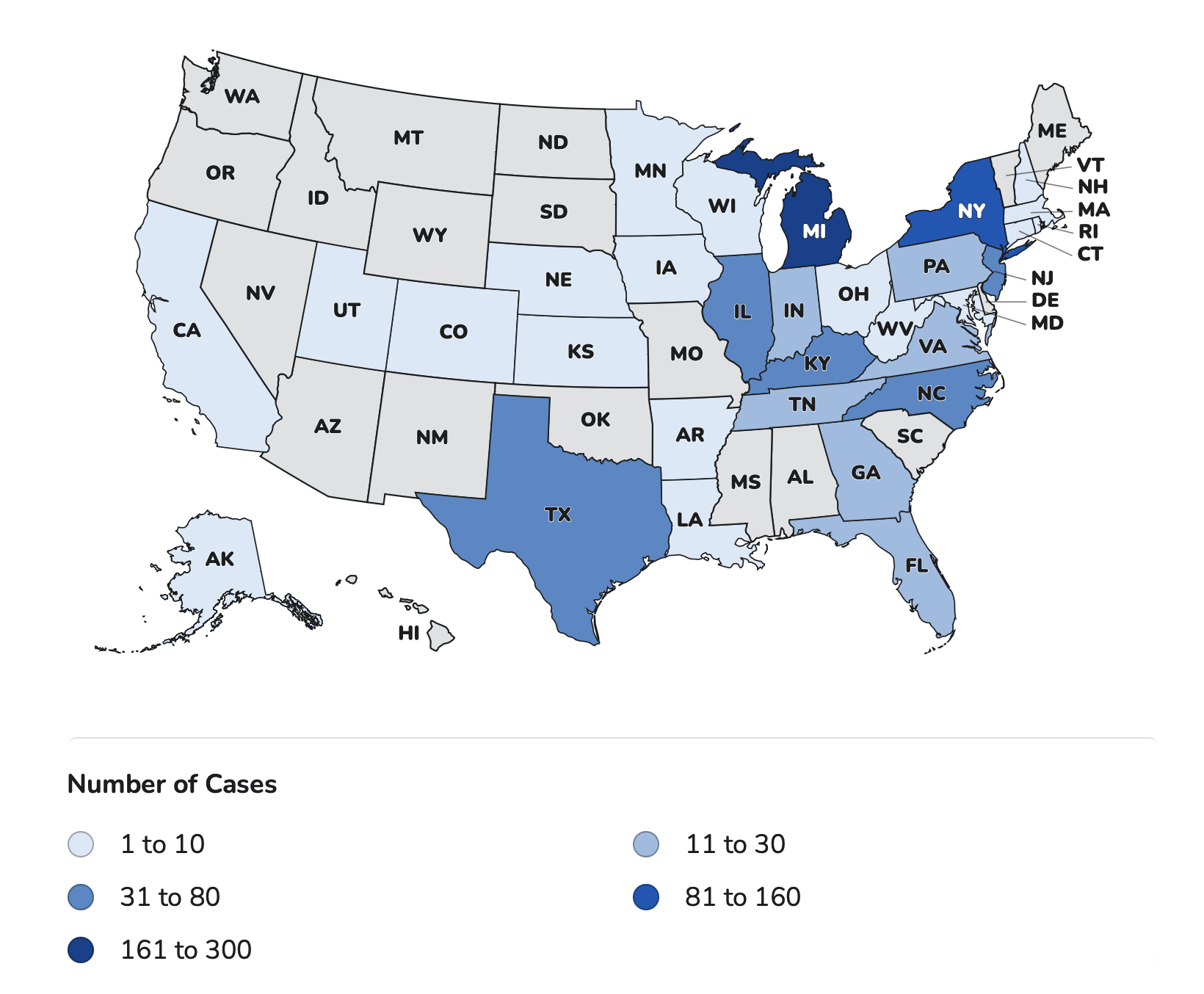
According to the CDC surveillance page, as of July 10, 2026, cyclosporiasis cases had increased across multiple states, identified in at least 31 states, with 843 cases so far, including 86 hospitalizations, and 0 deaths. Patients who were interviewed noted that no travel was made in the 14 days before they presented with symptoms.
Meanwhile, PBS reports that the situation has continued to grow. As of July 10, Michigan had recorded more than 1,500 cases, with neighboring Ohio reporting hundreds more. More than two dozen additional states are also investigating illnesses that may be connected to the outbreak. Health officials have not yet identified the exact food source responsible.
RELATED: Rising Drug-Resistant Shigella in GBMSM: How It Spreads and How to Stay Safe
What exactly is cyclosporiasis?

According to the CDC, cyclosporiasis is caused by the microscopic parasite Cyclospora cayetanensis. In the United States, previous outbreaks have often been linked to contaminated fresh produce.
The illness most commonly causes watery diarrhea with frequent, and sometimes explosive, bowel movements. Other symptoms may include loss of appetite, stomach cramps, bloating, nausea, fatigue, and weight loss. Some people may experience vomiting or a low grade fever, while others may have few or no symptoms at all. It’s not just diarrhea.
One frustrating aspect of the infection is that symptoms can come and go. Without treatment, the illness may last from several days to more than a month, and some people experience relapses even after feeling better so it is possible to become infected with Cyclospora more than once.
How can you protect yourself?
Because the parasite spreads through food or water contaminated with human feces, good food safety practices remain one of the best defenses.
The CDC recommends avoiding food or drinking water that may be contaminated, particularly when traveling in tropical or subtropical regions where the parasite is more common. Washing your hands thoroughly with soap and water before and after preparing fresh fruits and vegetables is also recommended, along with following proper food handling and storage practices.
Unfortunately, because investigators have not yet identified the source of the current outbreak, there is no specific product that consumers have been advised to avoid at this time.
Don’t ignore persistent symptoms
Most cases of diarrhea improve on their own, but persistent watery diarrhea, especially if it becomes severe or explosive, should not be ignored. If you think you may have cyclosporiasis or your symptoms last longer than expected, seek medical attention promptly. A healthcare professional can determine whether testing or treatment is needed.
While investigators continue searching for the source of the outbreak, staying informed and practicing good food hygiene remain the best ways to reduce your risk and chances of explosive diarrhea.