


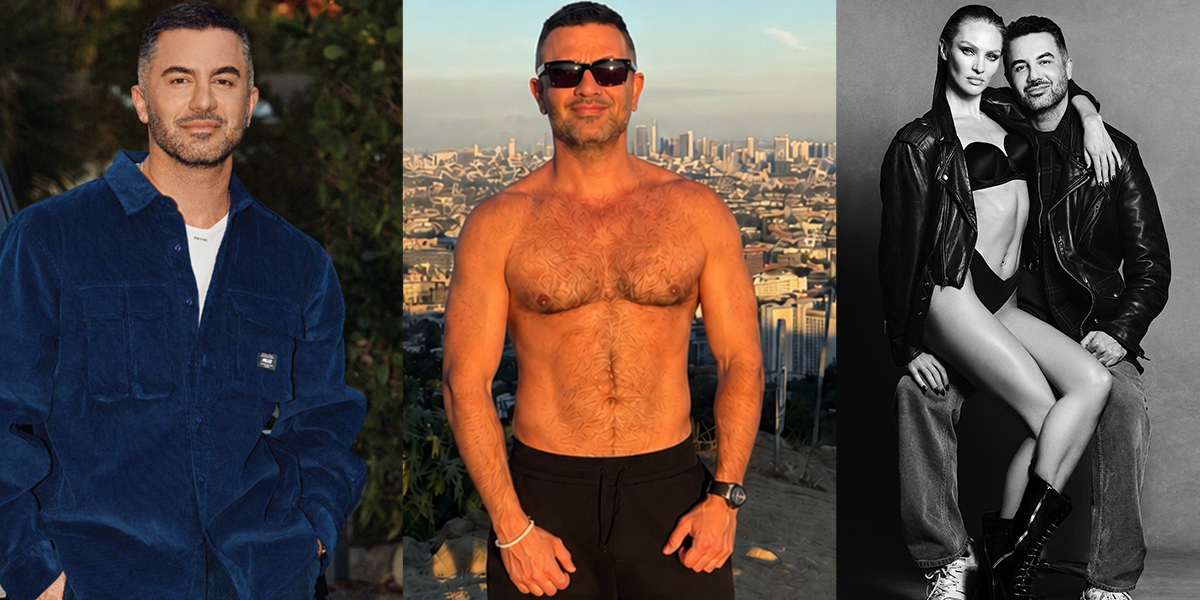
Ali Kavoussi has built his reputation in the gap between what fashion says it is and what it actually takes to transform careers. Fashion loves to talk about transformation. Far fewer parts of the industry actually deliver it.
As founder and managing partner of The Lions Management, Kavoussi has helped shape a quieter shift in modeling: away from disposable visibility and toward longer, more intentional careers. In an ecosystem still built on seasons, churn, and novelty, The Lions has positioned itself around something almost countercultural—staying power.
That philosophy shows up in how the agency operates. Smaller roster. Closer management. More emphasis on building models as cultural figures, not just booking machines. In practice, that means talent development that stretches beyond runway and campaign work into branding, media presence, and digital identity—whether the industry is ready for it or not.
Because it isn’t just modeling that changed. It’s what models are expected to be.
From Tehran to Miami to the Fashion System
Kavoussi was born in Iran and moved to the United States as a child, eventually growing up in Miami—a place he describes less as a backdrop and more as a sensory education. Heat, nightlife, bodies in motion, aesthetics that felt less curated than lived-in.
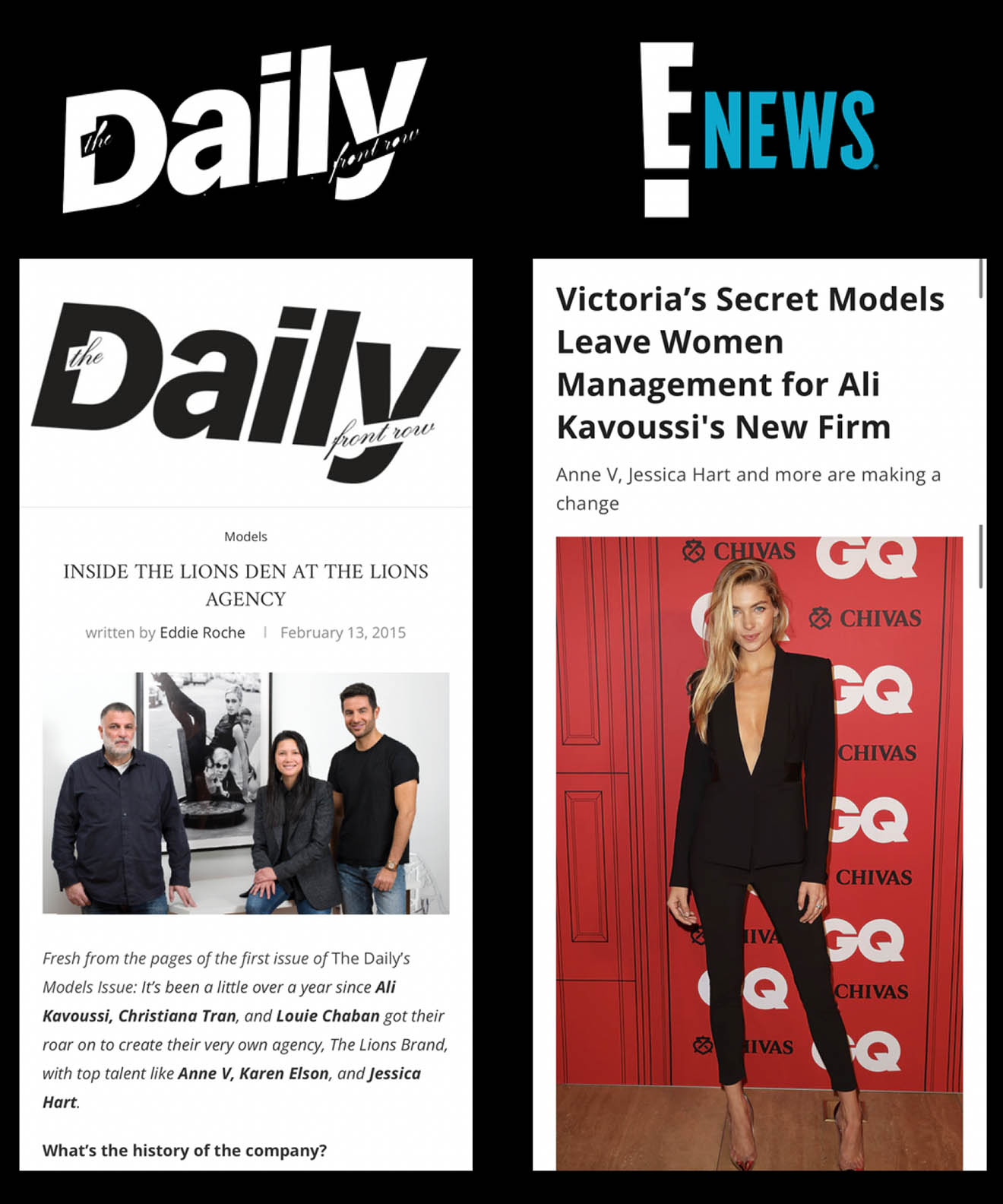
That early visual language followed him into fashion, first through casting and management, and eventually into New York, where he co-founded The Lions in 2014.
According to Kavoussi, at the time, the agency model was still dominated by scale: more faces, more bookings, more volume. The Lions moved in the opposite direction. Fewer models. More depth. Less factory, more authorship.
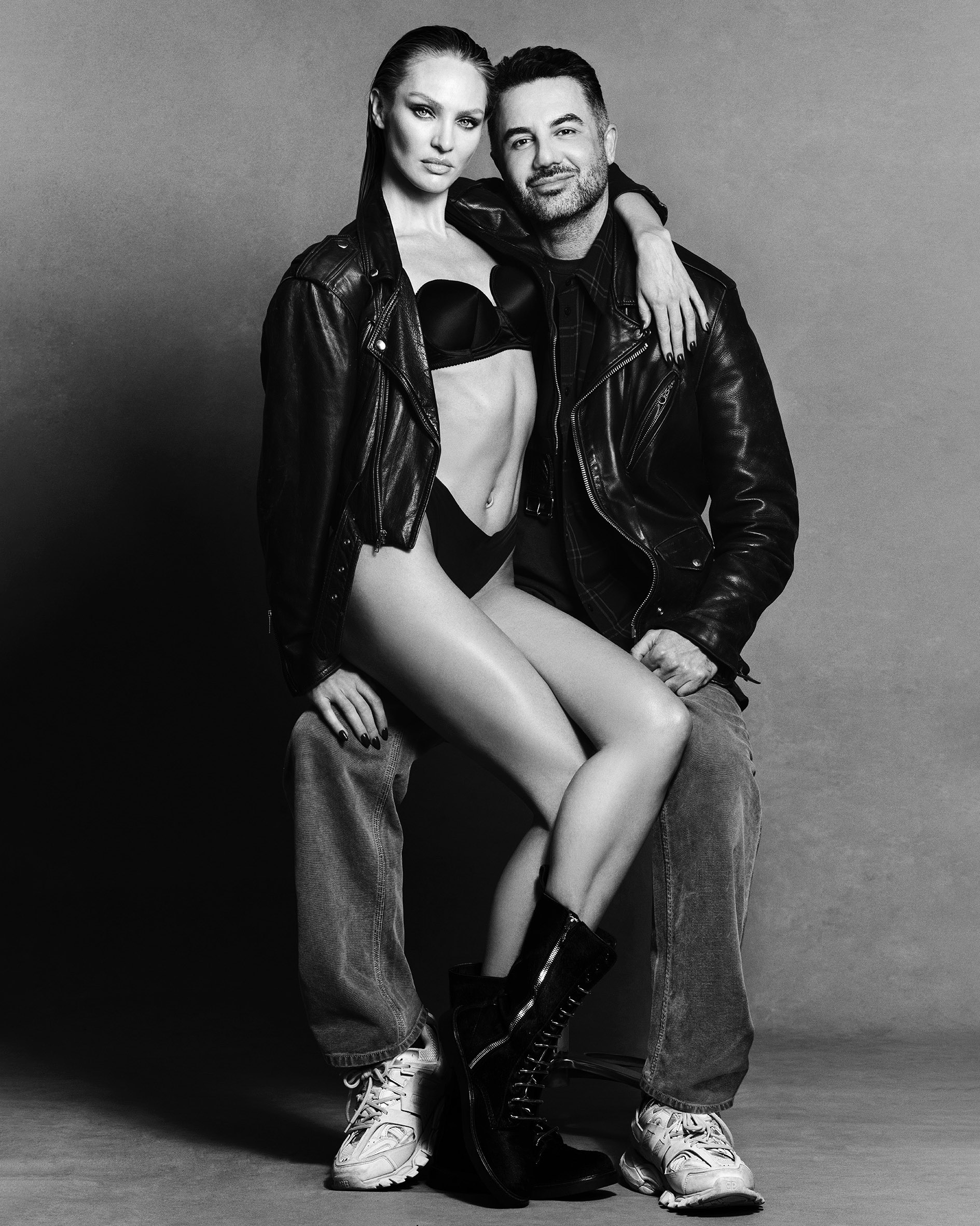
It worked. Over time, the agency became associated with a generation of talent that blurred the line between model and cultural figure—Amelia Gray, Stella Maxwell, Candice Swanepoel—names that now exist as much in digital culture as in fashion history.
Queerness, Identity, and the Business of Being Seen
Kavoussi is openly gay and Iranian-born—an intersection that sits inside fashion’s most complicated contradiction: an industry that markets inclusion while still concentrating power in familiar places.
He doesn’t frame identity as branding. But it is present in how he talks about structure—who gets access, who gets sustained, and who gets dropped once visibility fades.
The fashion world has no shortage of queer imagery. What it still lacks, in many spaces, is queer leadership with long-term leverage on the business side. Kavoussi’s presence sits in that tension: visible, but not performative; embedded, but not softened for comfort.
His involvement in moments like Valentina Sampaio’s breakthrough into mainstream fashion media, including Sports Illustrated’s Swimsuit Issue, reflects that same orientation—less about symbolic milestones, more about who actually gets to remain in the system after the headline passes.
He’s also been involved with LGBTQ+ advocacy spaces like Pride LIVE, though again, the framing is less campaign-driven than structural: visibility matters, but durability matters more.
The Model as a Platform, Not solely a Person
The last decade broke the old definition of what a model is supposed to be.
They are no longer just subjects in editorial spreads or runway moments. They are also media channels, brands, entrepreneurs, and sometimes full-time content ecosystems. Instagram didn’t just change exposure—it rewired expectations.
Agencies like The Lions now operate inside that reality. Management is no longer just about casting. It’s about narrative control, career pacing, and protecting talent from the volatility of constant visibility.
Kavoussi’s approach leans into that shift without romanticizing it. The goal isn’t to resist the digital layer of fashion—it’s to make sure it doesn’t consume the person inside it.
At its core, The Lions is built around a simple idea: models are not moments. They are careers. And careers, if handled correctly, can outlast the system that tries to define them. Kavoussi joined us for an insightful conversation about his path to success and what it takes to sustain it.
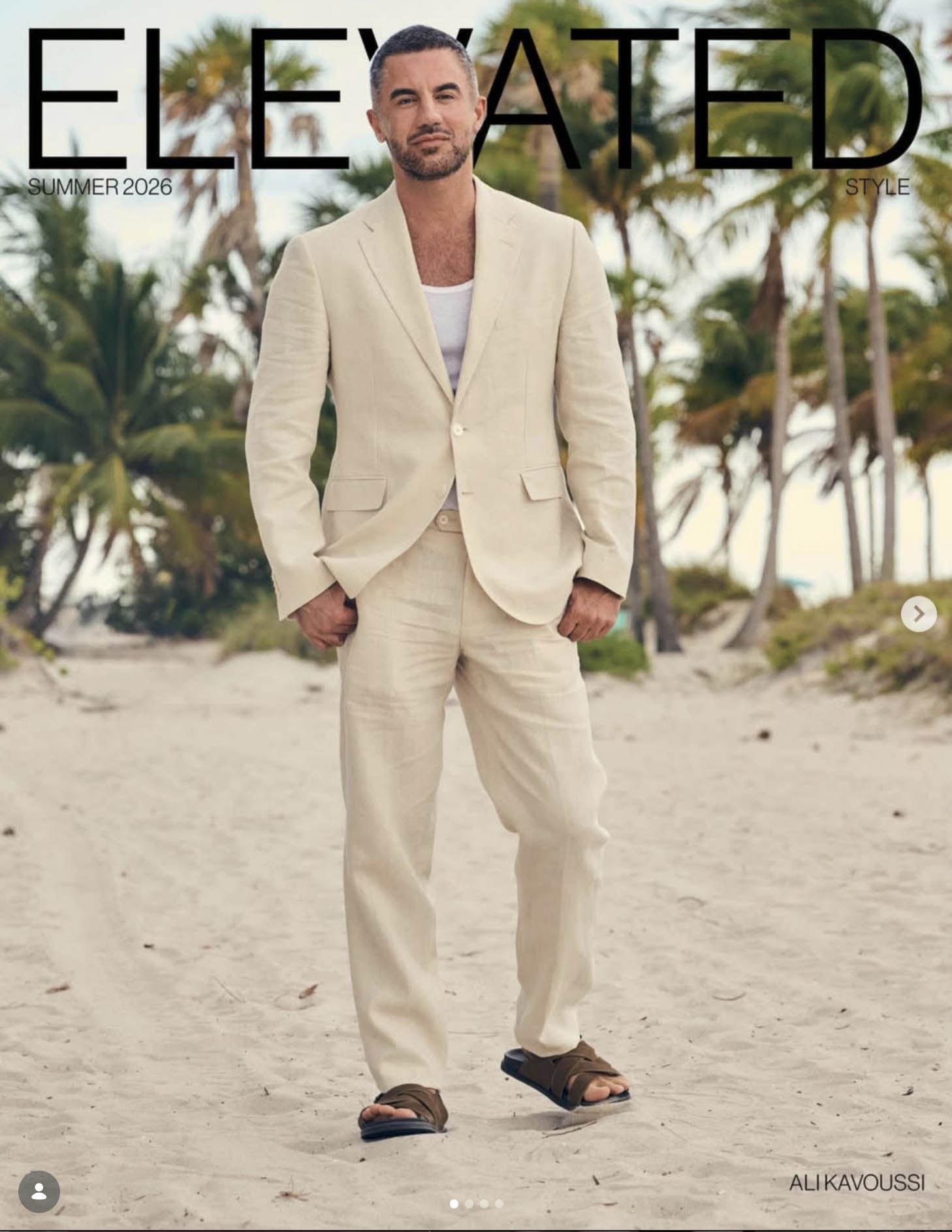
Q&A with Ali Kavoussi
Miami is often described as an aesthetic city, but you’ve called it formative—what did it actually teach you about image and identity?
“Miami taught me that style isn’t about perfection—it’s about personality. When I was growing up, Miami had this incredible contradiction. It could be glamorous and tacky at exactly the same time, and somehow that was its magic. Think Scarface meets a Latin skating rink. There was Cuban culture, hip-hop, drag queens, South Beach, beach kids, old money, new money. It was beautifully chaotic.
By the ’90s it had become one of the coolest places in America. I remember running into Madonna at Warsaw, one of the great gay clubs of that era. Gianni Versace was transforming Ocean Drive. The modeling industry was exploding in its own uniquely Miami way.
It wasn’t New York, and it wasn’t trying to be.
Miami taught me that being memorable beats being perfect every single time. Whatever “extra” means for you, be that. Not loud for the sake of being loud, but unapologetically yourself. That’s the most Miami lesson I ever learned.”
How does being Iranian-born shape the way you read people inside an industry built on surface judgment?
“Being Iranian has always made me feel a little different, and I think that’s become one of my greatest strengths. I came to America young enough to adapt, but old enough to always know I wasn’t exactly like everyone else. That builds resilience. It teaches you not to depend on other people’s opinions for your identity.
Fashion absolutely judges the surface, that’s part of the business. But after thirty years, I can tell you the surface only gets someone in the room. Personality, resilience, curiosity, kindness, that’s what keeps them there.
The most beautiful people I’ve represented have almost never been the most interesting because of their faces. They’re memorable because of who they are.”
What has being openly gay inside fashion’s business side meant for how you move through power structures?
“Honestly, it has never felt like an obstacle. Fashion has always been one of the rare industries where LGBTQ+ people weren’t just welcomed. We helped build the culture. Some of the greatest photographers, designers, stylists, editors and image-makers in history have been gay. What matters isn’t your sexuality. It’s your ability to create trust.
People don’t hire me because I’m gay. They hire me because I solve problems, protect talent, build relationships and hopefully leave every room a little better than I found it.”
The Lions was built against the traditional agency model—what felt broken to you when you started?
“I had worked inside enough agencies to know exactly what I didn’t want to become. There were incredible people, but there was also too much ego, too much fear and, frankly, behavior that should never have existed.
When I started The Lions, I made one promise to myself: if I ever built a company, I’d build it with a woman. A strong woman who wasn’t intimidated by the loudest voice in the room and who believed leadership didn’t require bullying. We never wanted to become another corporate machine.
I wanted the opposite, an agency with soul. Boutique instead of bureaucratic. Service over politics. Integrity over intimidation. Quality over quantity. Luxury isn’t having the biggest roster. Luxury is making every client and every artist feel like they’re the only one that matters.”
What signals tell you someone has long-term potential in a system obsessed with immediacy?
“Personality. Perseverance. Patience. Everyone wants success overnight. Almost nobody wants to become the person who can actually sustain it. The people who last understand that careers are marathons, not viral moments. They stay coachable. They survive rejection without becoming bitter. They keep showing up long after everyone else has quit. Talent opens the door. Character keeps it open.”
At what point does a model stop being a model and become a cultural figure in your eyes?
“There’s no formula. I’ve watched it happen overnight, and I’ve watched it take fifteen years. Sometimes it’s one campaign. Sometimes it’s one interview. Sometimes the world simply catches up to who someone already was. I actually believe destiny has surprisingly good timing. You can prepare for the opportunity, but you can’t force cultural relevance. The right people meet the right moment, and suddenly everyone thinks it happened overnight. Usually it didn’t.”
Fashion celebrates visibility, but not always longevity—why is staying power harder to build than fame?
“I actually disagree with that. Fashion has some of the longest careers in entertainment if you know how to evolve. Look at Naomi Campbell. Christy Turlington. Kristen McMenamy. Kate Moss. Gigi and Bella have already been defining culture for over a decade. Today we’re seeing women in their fifties, sixties and seventies returning to major campaigns because experience has become aspirational.
Fame is easy. Relevance is earned over decades. The people who last never spend their careers chasing youth. They spend them becoming more interesting.”
What does queer leadership in fashion actually look like when it’s not being packaged for optics?
“Good leadership is good leadership. I don’t wake up trying to lead as a gay man. I wake up trying to lead well. That means listening more than talking. Protecting people. Being honest when it’s uncomfortable. Giving credit away. Making difficult decisions without losing your humanity.
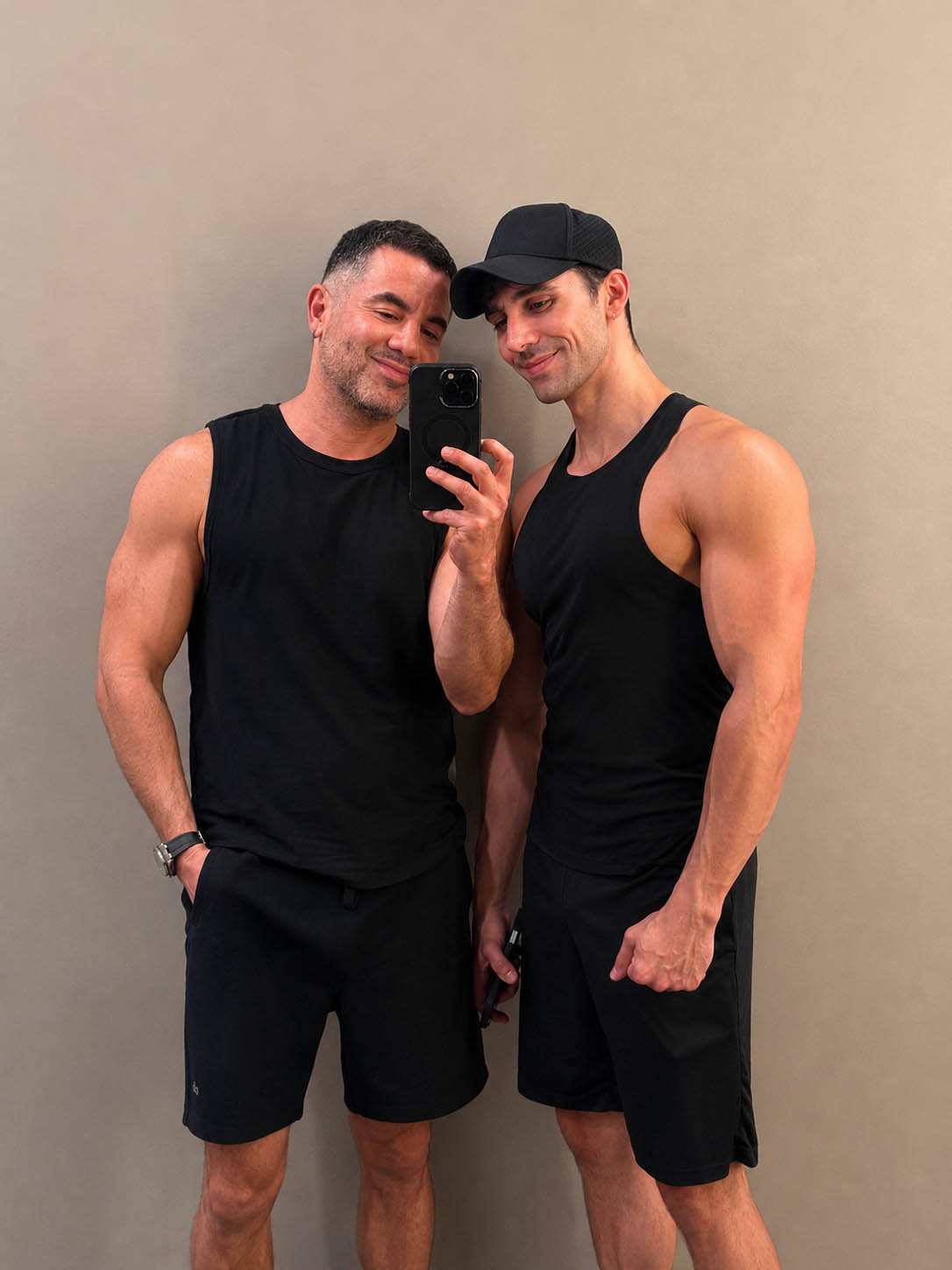
I’m proud to be gay. It’s an important part of who I am. But I also believe there’s a time, a place and an audience for everything. I’ve never wanted my identity to be my résumé. I’d rather people remember the culture we built, the people we believed in, and the way we treated others while we were building it.
At the end of the day, that’s leadership. Everything else is just marketing.”
Great interview! Really inspiring perspective on building long-term careers with integrity. Wishing Ali and The Lions continued success! ♥️