


For years, Charlie Kirk made a name for himself campaigning against marriage equality, transgender rights, and just about every other issue guaranteed to make LGBTQ+ people roll their eyes. Now, Utah prosecutors say that record may help explain why he was allegedly targeted in last year’s fatal shooting.
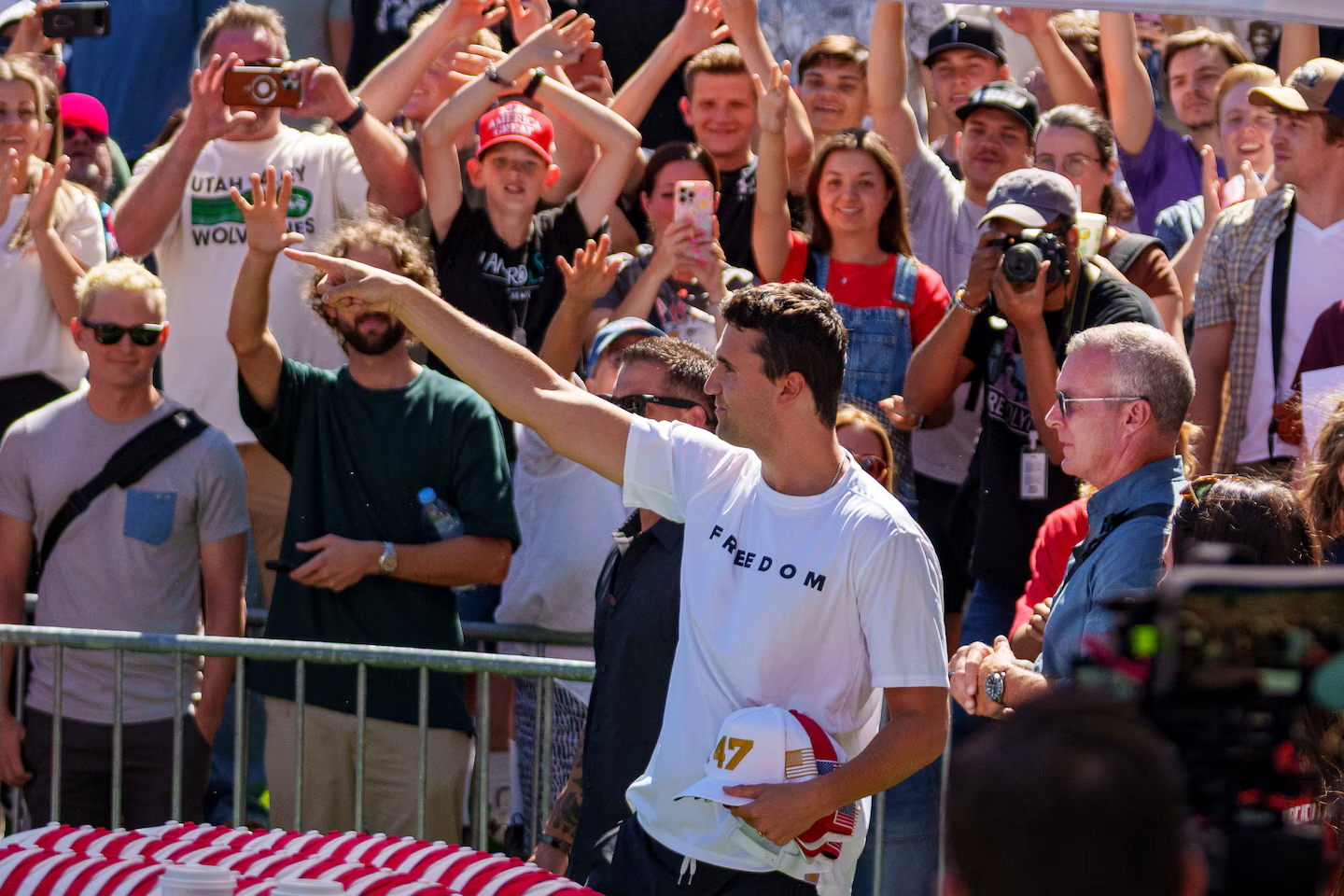
It’s the kind of twist no one expects to find in a court filing. Prosecutors argue this wasn’t simply an attack on a high-profile political figure. Instead, they say Charlie Kirk represented a political movement that stood in direct conflict with the suspect’s personal life—a clash they believe became the motive behind the killing.
RELATED: Anti-Marriage Equality Campaign Returns to Virginia
Charlie Kirk’s politics become part of the prosecution’s case
Utah County prosecutors aren’t putting Charlie Kirk’s politics on trial. They are, however, arguing those politics are central to understanding why he was allegedly targeted.
According to a new court filing, 23-year-old Tyler Robinson was in a romantic relationship with a man who was exploring whether to transition genders. Prosecutors say Robinson “loved and cared deeply” for his partner, making Kirk’s years of anti-LGBTQ+ rhetoric far more than another headline or viral debate.
RELATED: Ohio Anti-LGBTQ+ Billboards Sparked an Unexpected Pride Movement
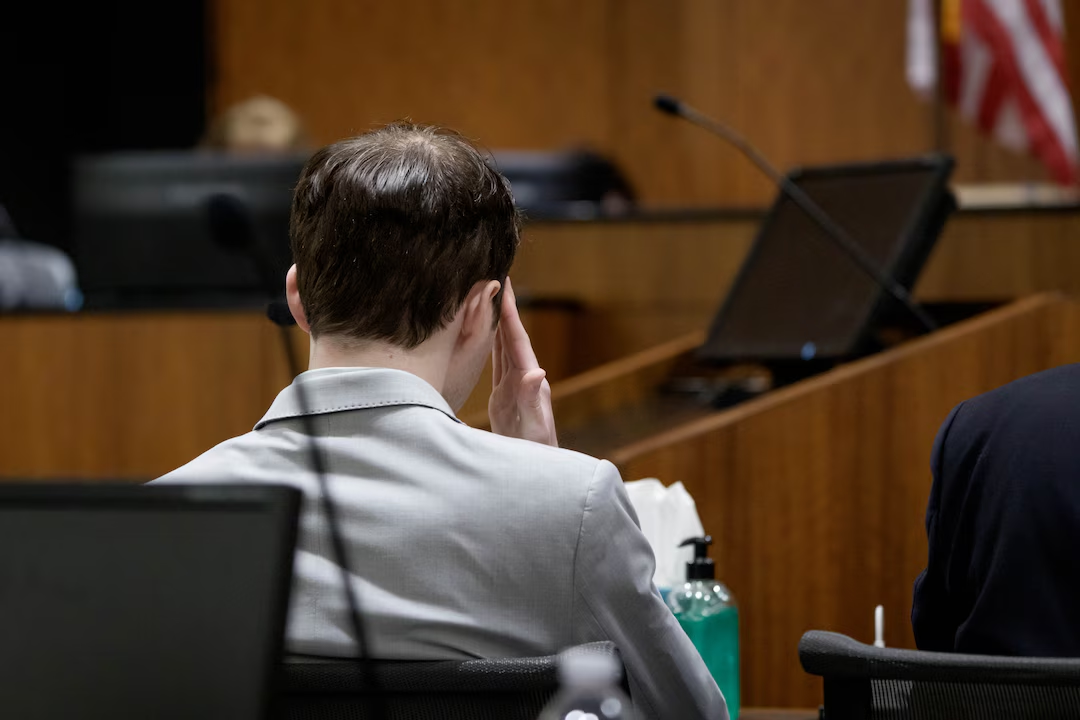
The filing also points to an alleged text Robinson sent to his partner in which he wrote he’d “had enough of [Kirk’s] hatred.”
Whether you agreed with Charlie Kirk or spent years muting his name on social media, prosecutors now argue his public record wasn’t just background noise—it was central to the alleged motive.
Rather than describing Charlie Kirk as simply a public figure, prosecutors argue he symbolized a broader political movement that Robinson allegedly blamed for hostility toward LGBTQ+ people.
Prosecutors believe the evidence speaks for itself
The latest filing leaves little doubt about how strongly prosecutors believe their case.
According to the brief, Robinson confessed to several friends—including his partner—that he assassinated Charlie Kirk before eventually turning himself in to authorities. Prosecutors also cite DNA evidence, surveillance footage, eyewitness testimony, and other forensic evidence they say links Robinson to the shooting.
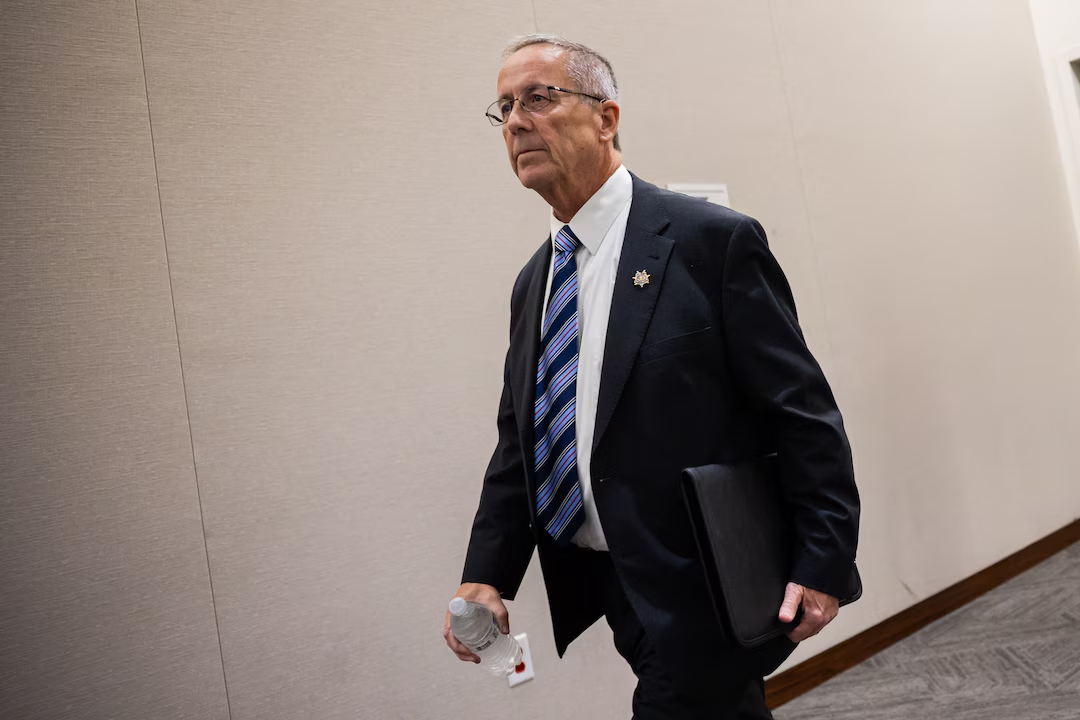
Utah County Attorney Jeff Gray summed up his office’s position with a striking statement:
“This is likely as straight-forward a bindover decision as this Court will ever see.”
Whether the judge agrees remains to be seen. Robinson’s attorneys are expected to file their response in the coming weeks before the court hears arguments from both sides.
Why the death penalty is still on the table
Not every homicide in Utah qualifies for the death penalty, but prosecutors argue this case crosses that threshold.
According to the filing, Charlie Kirk was addressing thousands of people during a Turning Point USA event at Utah Valley University when Robinson allegedly fired a single shot from atop a campus building.
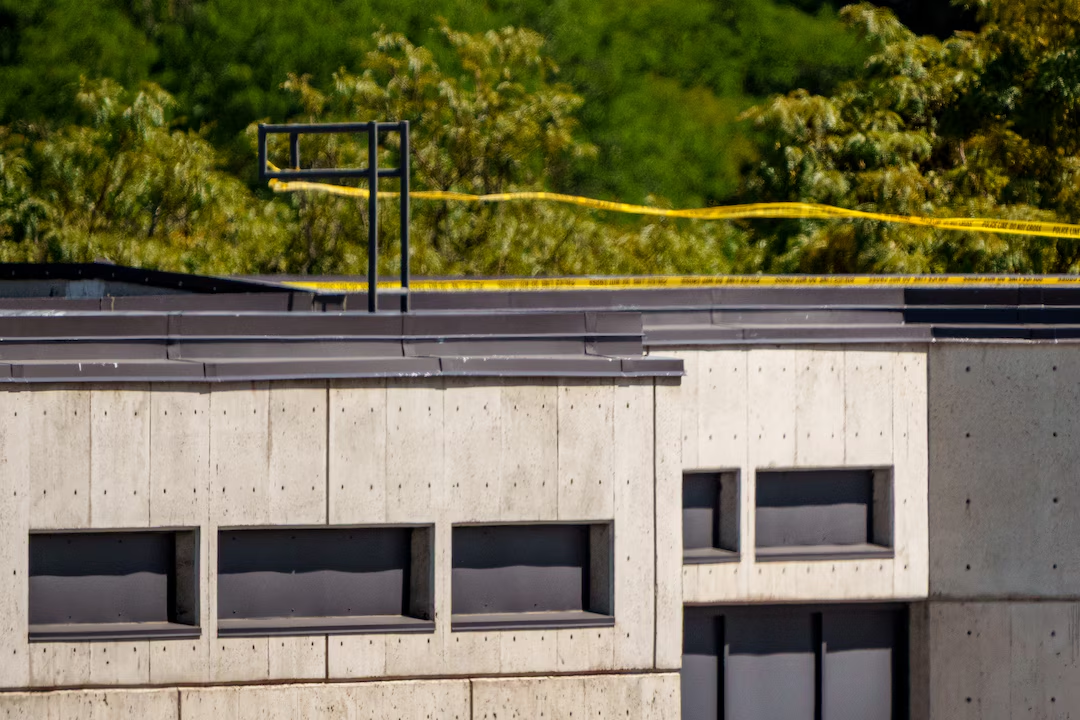
Prosecutors say Robinson still had three additional rounds loaded into the rifle, which they argue suggests he was prepared to continue firing.
They also allege Robinson disassembled the rifle so he could conceal it in his pants while walking across campus before reassembling it shortly before the shooting. Prosecutors argue that decision could have affected the weapon’s accuracy, increasing the risk to the thousands of people gathered below.
Those circumstances, prosecutors say, support both the aggravated murder charge and a victim-targeting enhancement that could increase Robinson’s punishment if he’s convicted.
When culture wars end up in a courtroom
Most political battles play out on television, social media, or at campaign rallies. Courtrooms are rarely where the arguments continue. Yet Charlie Kirk’s long record of opposing marriage equality and transgender rights has now become part of the motive prosecutors say they’ll present in court—not to debate his politics, but to explain why they believe he was allegedly chosen as a target.
Whether that argument ultimately persuades a judge or jury is still an open question. Robinson returns to court on Sept. 1, where the next chapter of the case will play out.
For years, Charlie Kirk made headlines by campaigning against LGBTQ+ rights. Now, those same campaigns have become part of the prosecution’s explanation for why he was allegedly targeted—a twist that few could have predicted, but one the courts will ultimately have to weigh.
Source: The Salt Lake Tribune
I think we’ll come to find out it wasn’t Charlie Kirk’s hateful bigoted rhetoric about the LBGTQ+ community that got him killed. Dollars to doughnuts it was his anti-Zionist views that played a part in his death.