

In the world of politics, cabinet reshuffles can be a snooze-worthy affair—unless, of course, the country in question is Colombia, and the person in question is a non-binary former gay porn star. Enter Juan Carlos Florián, an activist, a provocateur, and now once again, Colombia’s Ministra (yes, you read that correctly) of Equality.
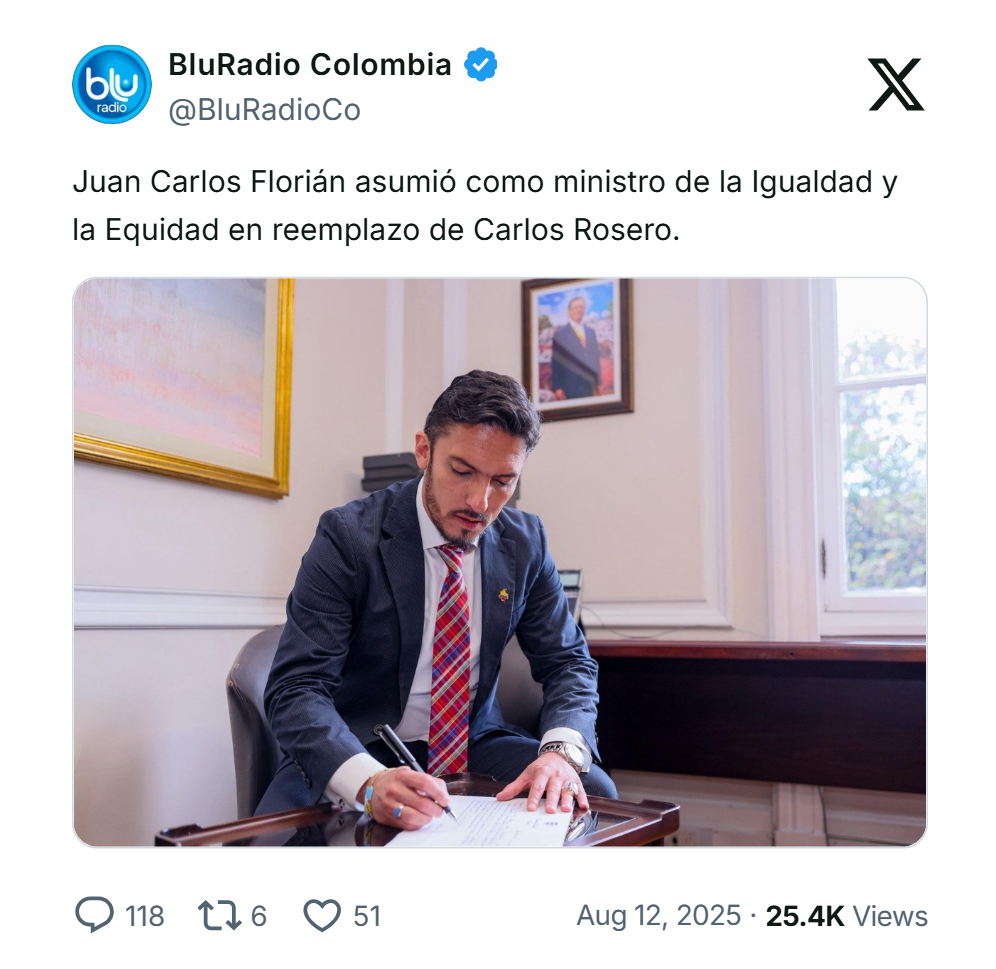
Florián, a figure with as much social clout as controversy, has been reinstated by Colombia’s far-left president, Gustavo Petro, in an unusual twist that highlights just how far the fight for gender identity and LGBTQIA2+ visibility has come—and how far it still has to go.
RELATED: Kamala Says Pete Would’ve Been Her Ideal Running Mate—If He Wasn’t Gay
In a bold move this Sunday, Petro “readjusted” his cabinet’s gender parity quotas, bringing Florián back into the fold as the nation’s Equality Minister after a legal challenge left the position in limbo. Florián, who refers to himself as a “person and a f*ggot” (but “not gay”), was originally appointed to the post in August, sparking a mix of support and backlash. Shortly after, Florián made waves by requesting to be formally addressed as “ministra,” the feminine form of “minister” in Spanish, arguing that his identity defied traditional gender norms.
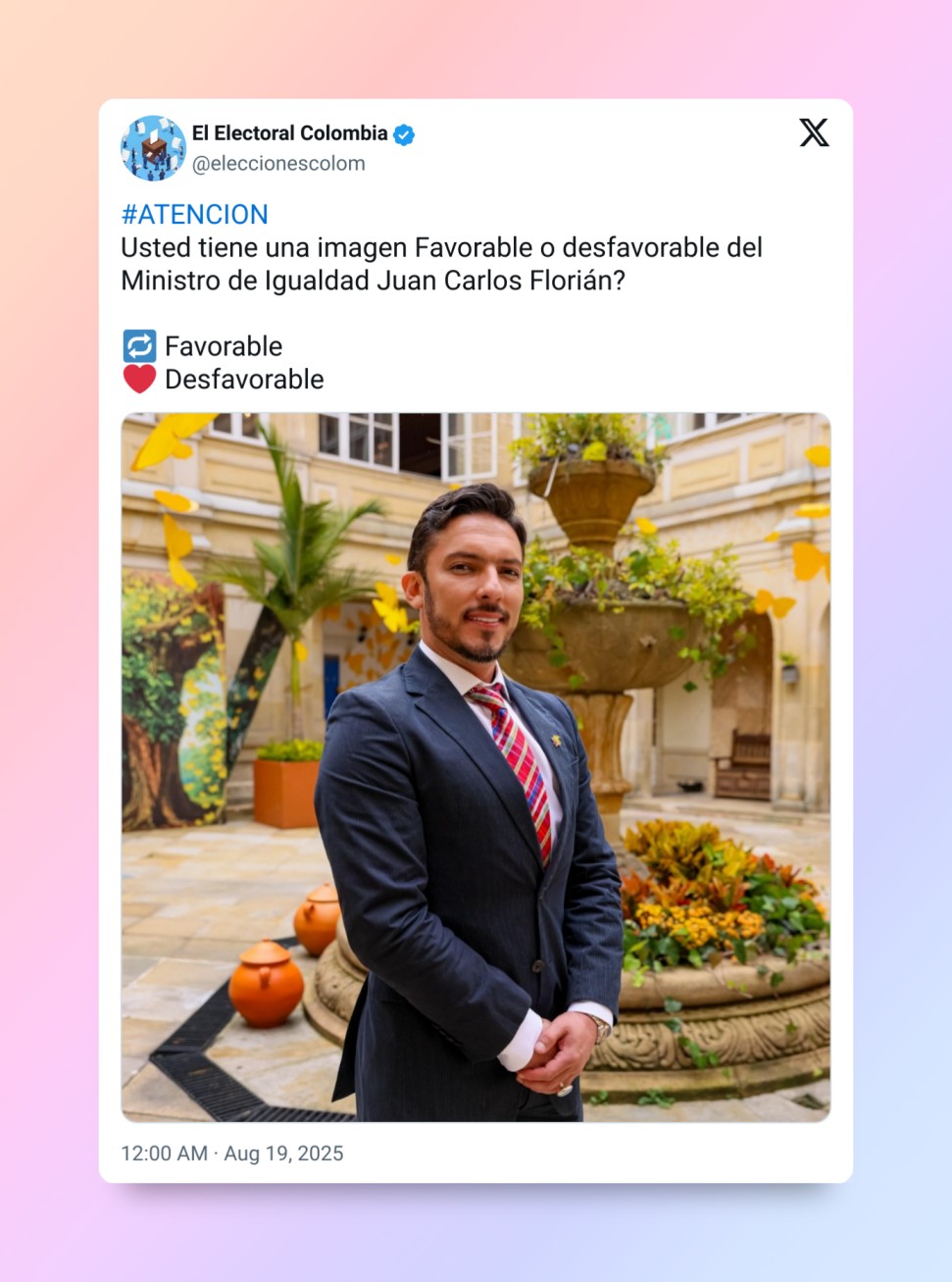
This was more than just a semantic squabble—Florián’s request played into larger issues of gender identity, governmental representation, and the very essence of equality in modern society. Yet, not everyone was on board with this shift. The Administrative Court of Cundinamarca temporarily suspended Florián’s ministerial duties, with a lawsuit claiming that his appointment violated Colombia’s 2024 Gender Parity Law, which mandates equal gender representation in high-ranking positions.
RELATED: Cyrus Javadi Ditches GOP: A Father’s Fight for His Gay Son’s Rights
The Intersection of Law, Identity, and Equality
To no one’s surprise, President Petro did not take this lawsuit lightly. He lashed out at the court’s decision, calling it “unnecessary” and “homophobic.” Petro’s defense was simple but striking: “There is parity in my cabinet whether Juan is a man, a woman, or both.” It’s a statement that encapsulates the ideological clash between legal formalities and the growing acknowledgment of non-binary identities in spaces where traditionally, only “man” or “woman” were acceptable choices.
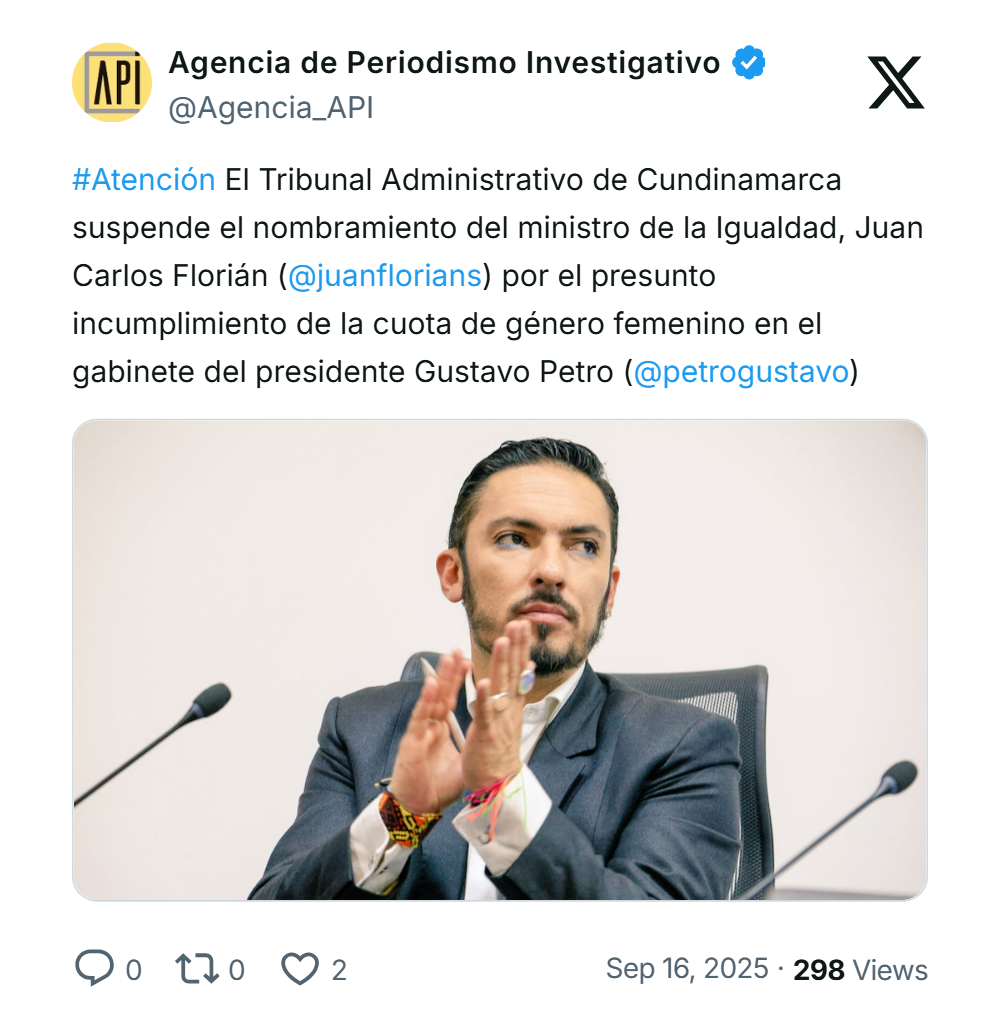
In what could only be described as an act of strategic politicking (and perhaps a little bit of theatrical timing), Petro signed a new decree reinstating Florián mere hours after he had resigned. This decree was conveniently timed just before the president’s upcoming trip to the United States, where Florián would join Petro’s delegation. The optics of this fast-paced political maneuver weren’t lost on anyone, especially not on the Colombian press.
Interior Minister Armando Benedetti weighed in on the issue, declaring that appointing Carina Murcia as the new technology minister had solved the gender parity issue. Benedetti reassured the public that the “gender quota law” had been fully complied with, essentially clearing the way for Florián to return to his post without further legal complications.
A Politicized Equality Ministry
This isn’t Florián’s first encounter with controversy. As a vocal LGBTQIA2+ advocate, his public journey has often intersected with Colombia’s political terrain, sparking fierce debates about what constitutes true equality in a nation grappling with both social progress and political strife.

In fact, the Equality Ministry itself has had a rocky history. Originally founded in 2023 by President Petro, the ministry was established with the promise of addressing issues like gender discrimination and LGBTQIA2+ rights. But the path hasn’t exactly been smooth. Vice President Francia Márquez, the first minister of equality, famously resigned from the post after a highly publicized clash with Petro, following his comments about legalizing cocaine and his apparent fetishization of Greek eroticism. Márquez distanced herself from the administration, and her departure marked a significant fracture in Petro’s attempts at rallying the LGBTQIA2+ community under his political banner.
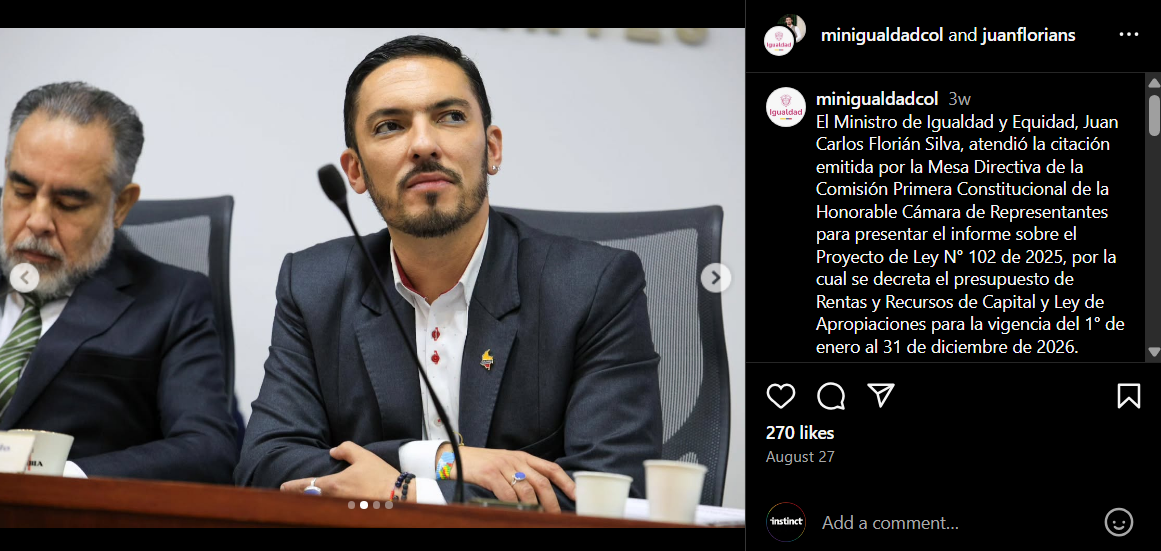
As for Florián, his political career has been a masterclass in shaking things up. His team has argued that the legal challenges to his appointment are a form of discrimination, aimed at forcing him into a binary identity that he doesn’t embrace. They’ve pointed out that Florián doesn’t identify as male, and thus, shouldn’t be counted in traditional gender-based quotas. Instead, they argue, his identity should add a new dimension to the cabinet—a “gender-fluid” slot that further complicates the neat, black-and-white categories of gender.
A Symbol of a Changing Colombia
Florián’s reappointment is a fascinating symbol of the ways in which Colombia is grappling with its future. His career reflects the friction between old laws and evolving identities, between political agendas and personal freedoms. The fact that a non-binary, former gay porn star is holding such a high-profile governmental position speaks volumes about the shifts in cultural and political landscapes. Is it progress? A political stunt? Or perhaps both?
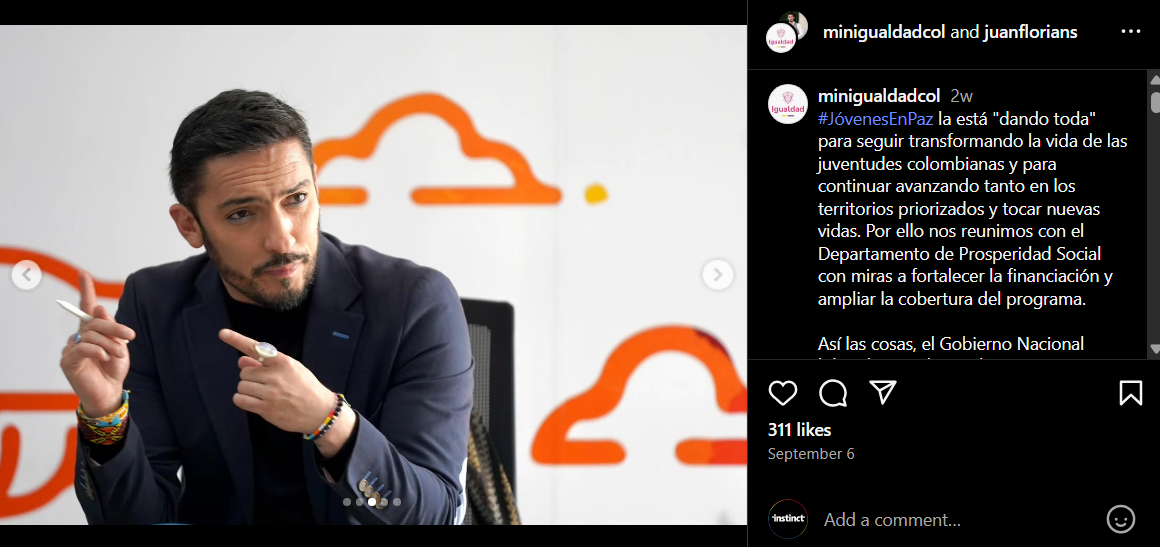
Whatever it is, it’s clear that Florián is more than just a figurehead—he’s a walking, talking reminder that in the modern world of politics, identity is not only about fitting into the boxes but about challenging the very concept of the box itself.
For many in Colombia’s LGBTQIA2+ community, Florián is both a hero and a lightning rod. For others, he is a symbol of a government that is far more progressive than the world it’s trying to change. Whether you love him or loathe him, his presence in the ministry is one more reminder that Colombia is a country that, despite its many contradictions, continues to push boundaries—both in politics and in the fight for equality.
So, what’s next for Juan Carlos Florián?
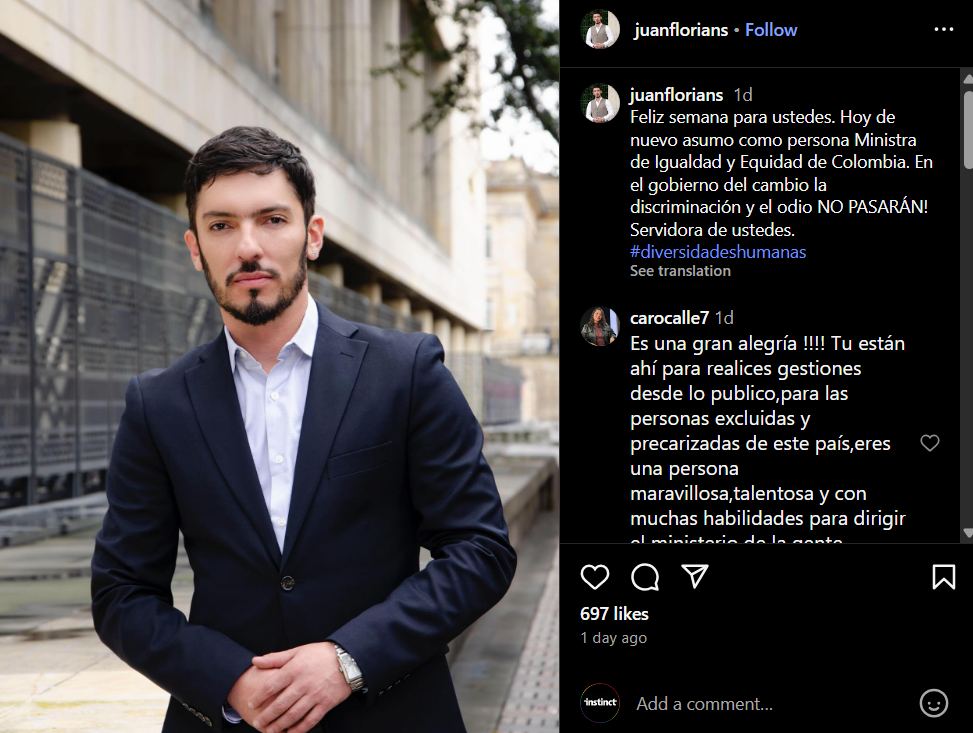
A lot depends on how long this political circus lasts. Whether his tenure will bring real change or simply more spectacle remains to be seen, but one thing’s for sure: Colombia’s Equality Ministry just got a little bit more… interesting.
Source: Breitbart, El Colombiano, El Tiempo