

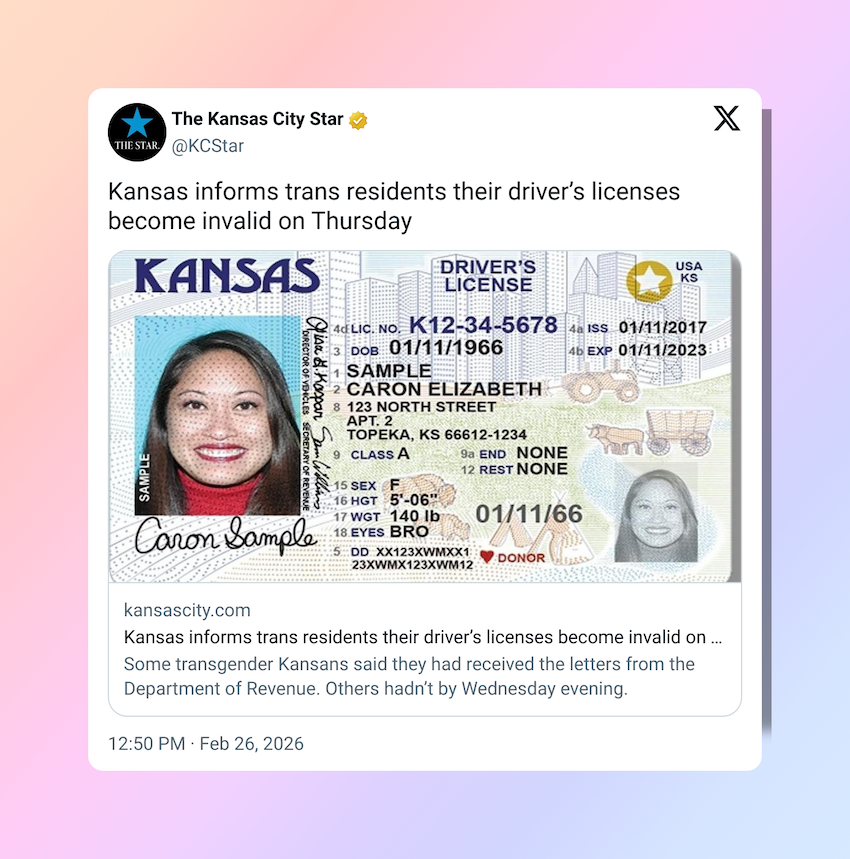
A new law in Kansas is forcing some transgender residents to give up their current driver’s license and obtain new identification that reflects their sex assigned at birth.

According to letters sent by the Kansas Department of Revenue’s Division of Vehicles, individuals whose gender marker on their license does not match their sex assigned at birth must surrender their current credential once the law officially takes effect.
The change stems from House Substitute for Senate Bill 244, which the Kansas Legislature passed earlier this year.
Letters Sent to Affected Residents
Transgender residents across Kansas have reported receiving official notices explaining the new requirements. The letter states that once the law is published in the Kansas Register, current identification documents that do not match a person’s sex assigned at birth will become invalid.
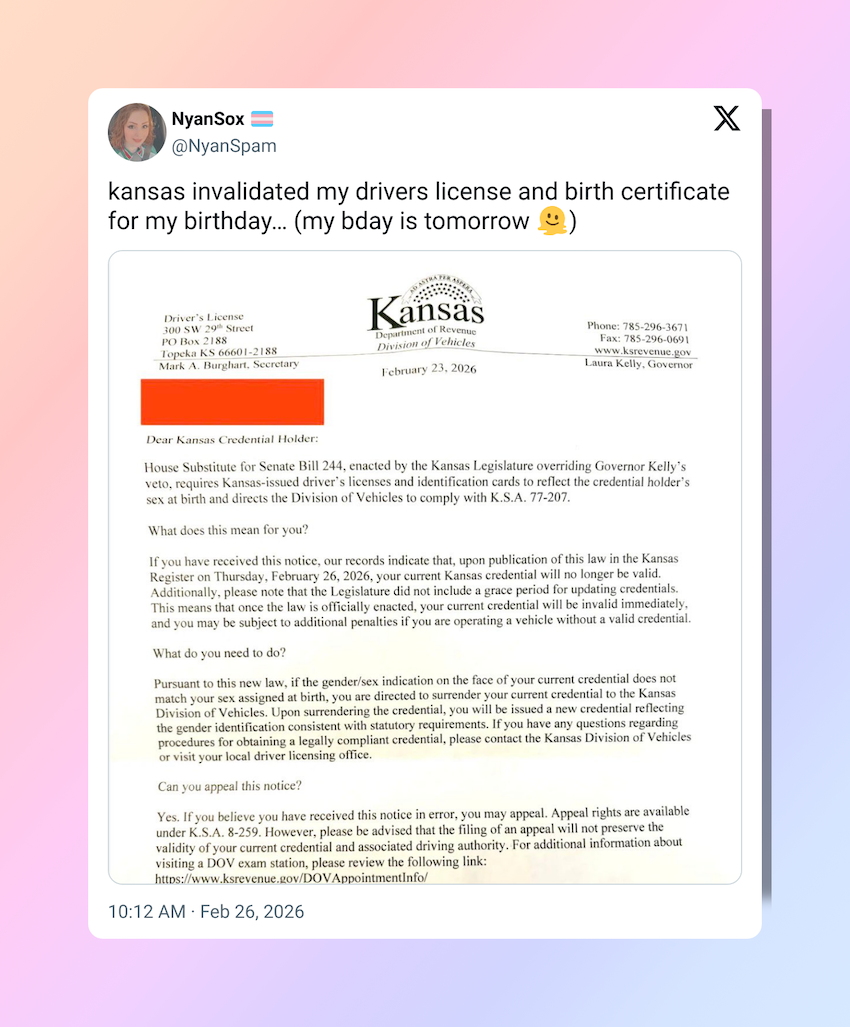
Recipients are instructed to surrender their existing driver’s license to the Division of Vehicles. After doing so, they can be issued a new credential that complies with the updated law.
The letter also warns that the legislature did not create a grace period for people to update their documents. That means the current license could become invalid immediately once the law takes effect.
Individuals who believe the notice was sent to them by mistake may file an appeal. However, the state notes that submitting an appeal does not keep the current document valid while the appeal is being reviewed.
RELATED: State of the Union: Trump Calls for Ban on Trans Youth Care
Potential Legal Consequences
Kansas law treats driving without a valid license as a Class B misdemeanor. Penalties can include up to six months in jail and a fine of up to $1,000.
First-time offenders are more likely to receive a citation and fine, but a conviction can still trigger an automatic 90-day suspension of driving privileges. Driving during that suspension may lead to an additional charge, which carries a mandatory minimum jail sentence of five days.
Kansas also requires county jails to house inmates according to their sex assigned at birth.
How the Law Was Passed
The rule requiring identification documents to reflect sex assigned at birth comes from Senate Bill 244. The legislation was advanced through the Kansas Legislature in January using a legislative procedure that allowed it to move quickly.
Governor Laura Kelly vetoed the bill on February 13, describing it as poorly written. However, the Kansas Legislature voted days later to override her veto, allowing the measure to become law.
Unlike many state laws that begin on July 1, this law takes effect as soon as it is published in the Kansas Register.
Additional Provisions in SB 244
Beyond the driver’s license changes, SB 244 includes other provisions affecting transgender residents.
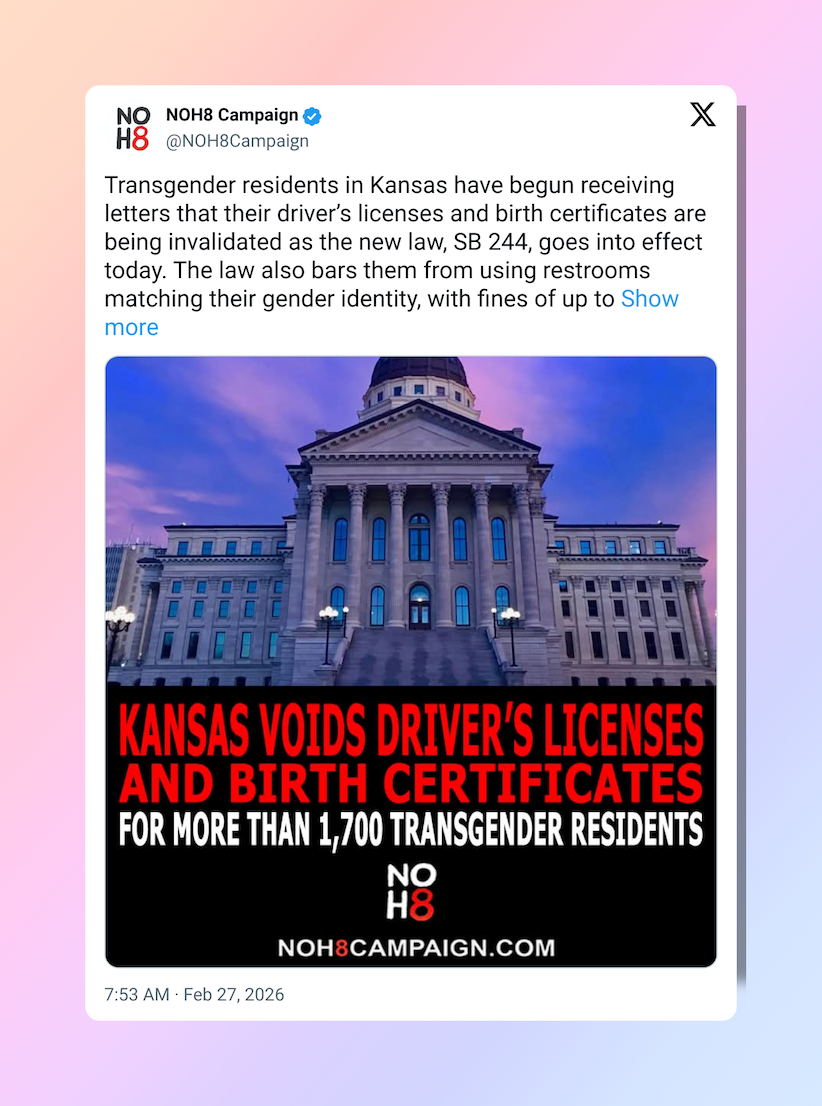
The law restricts transgender people from using bathrooms in public buildings that match their gender identity. It also allows individuals to file lawsuits against transgender people they encounter in restrooms, with potential damages of at least $1,000.
Because the law took effect quickly after the veto override, affected residents had only a short period of time between the passage of the law and the invalidation of certain identification documents.
Part of a Larger National Debate
The Kansas measure comes as several states and federal agencies have debated policies related to gender markers on identification documents.
In recent years, some states—including Florida, Texas, and Indiana—have moved to limit or stop changes to gender markers on official documents such as driver’s licenses or birth certificates.
Kansas appears to be going a step further by requiring some residents to surrender identification that had previously been issued with a gender marker matching their identity.
For transgender residents in Kansas, the immediate concern is ensuring their driver’s license remains valid so they can legally drive and avoid potential penalties under state law.