

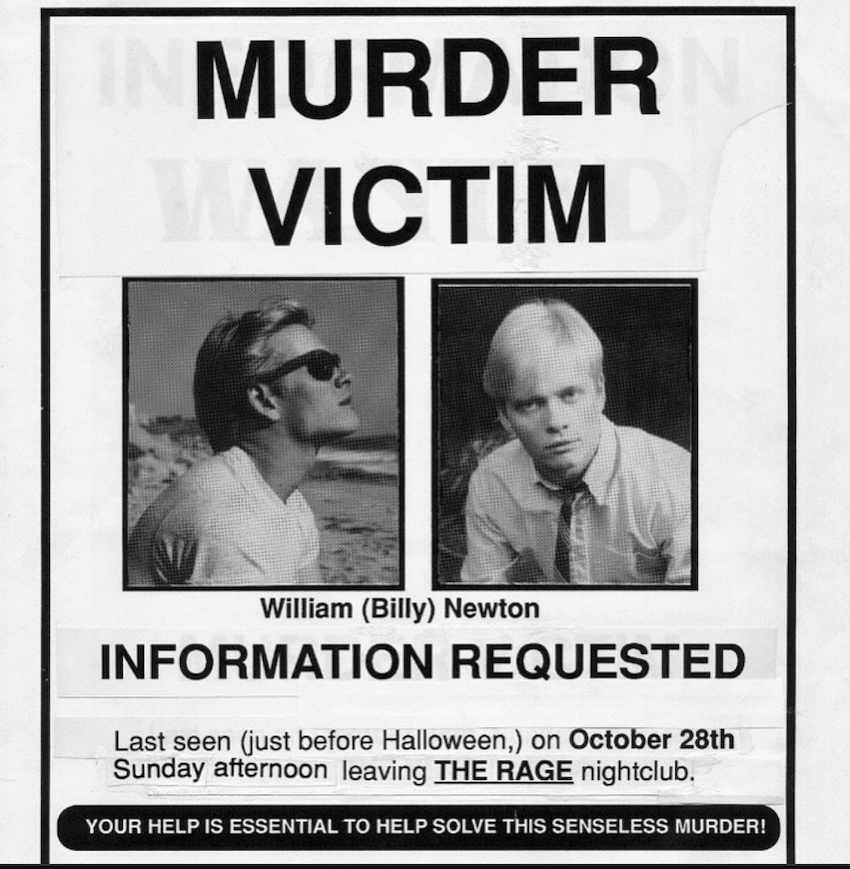
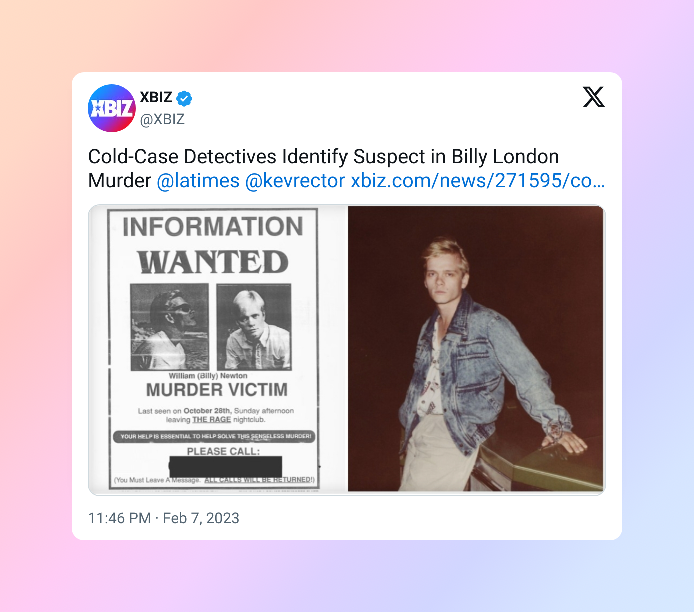
For anyone who remembers the ’90s gay adult entertainment scene, the name Billy London resonates—and not in a good way. Known off-screen as William Arnold Newton, he was found dismembered in a West Hollywood dumpster over three decades ago. Only his arm, although some reports indicate his feet or leg, and head were recovered, and for years, the case baffled investigators. The chilling crime earned the nickname the “gay Black Dahlia,” referencing one of America’s most infamous cold cases.
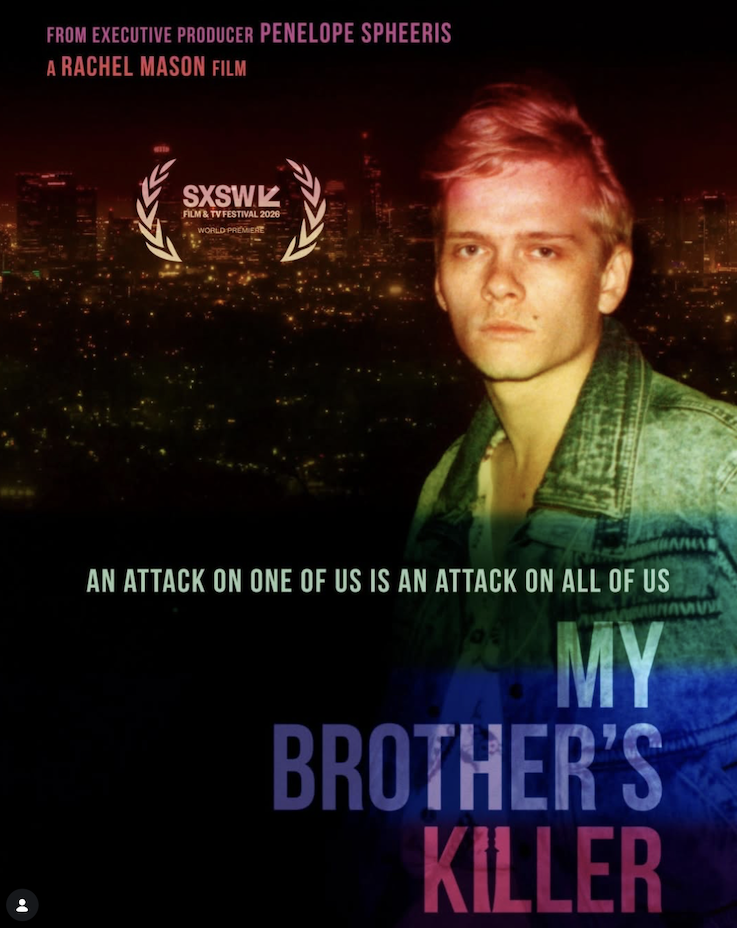
Now, thanks to the new documentary My Brother’s Killer, audiences are finally getting answers to the mystery that haunted Hollywood and the LGBTQ+ community for more than 32 years. Directed by Rachel Mason and edited and produced by Dion Labriola, the film combines archival footage, careful investigation, and podcast tips to shed light on Newton’s life and death.
RELATED: Writers Revisit Info and Theories From “The Murder of William Arnold Newton”
The Podcast That Reopened the Case
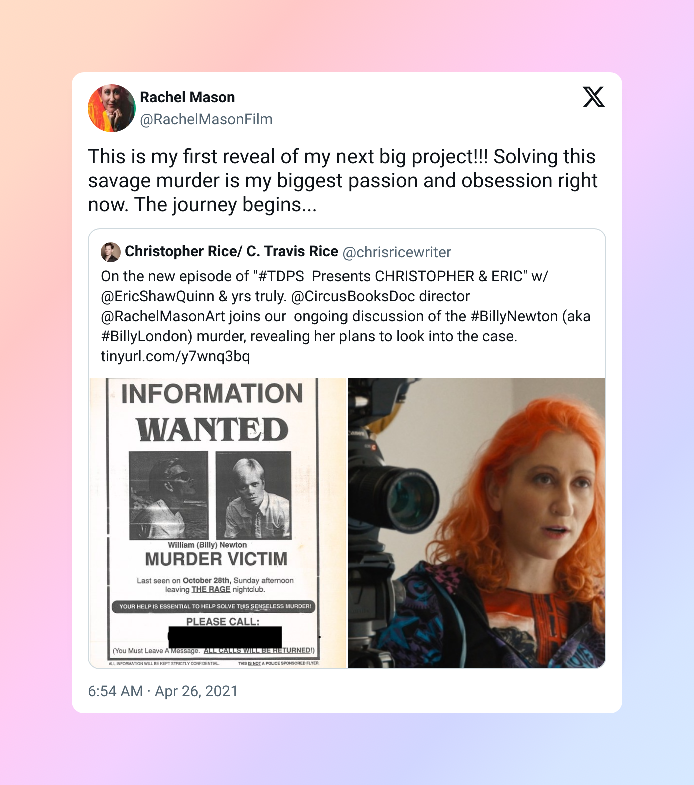
The resurgence of interest in Billy’s murder began when The Dinner Party Show revisited Newton’s murder. In a key episode, the podcast shared an eyewitness account of Newton leaving the West Hollywood nightclub Rage in the company of a man who resembled serial killer Jeffrey Dahmer, who would be arrested the following year for crimes against gay men in Milwaukee.
Speaking with The Hollywood Reporter, director Rachel Mason said, “My goal was simply to humanize Billy and tell the story of a victim whose murder had never been solved. But while researching, I discovered that a podcast called The Dinner Party Show had reopened interest in the case. Cold cases often get solved because someone looks at the evidence from a different angle.”
Chilling Archival Footage of Billy
The documentary on Billy London’s murder doesn’t shy away from the unsettling details. Mason recalled,
“At one point archival porn footage even becomes evidence. There’s a videotape of a memorial award show from the gay adult industry in the early ’90s.” Adding, “In that footage, you see someone who later became the suspected killer actually walk on stage. It’s chilling.”
The Killer Revealed
After months of sleuthing, the case was traced to DarraLynn Madden, a white supremacist who later transitioned. Madden, already serving two life sentences for other murders, confessed to Billy’s killing.
Late on October 29, 1990, Daralyn Madden (formerly Darrell L. Madden) approached William Newton with the plan to rob him, according to the LA Times. She later admitted that she told him she intended to “rob, kidnap, and probably beat the crap out of him,” assuring him he’d make it through the ordeal as long as he stayed quiet. Tragically, that promise was a lie—Newton was strangled to death, and the coroner confirmed his body was later dismembered.
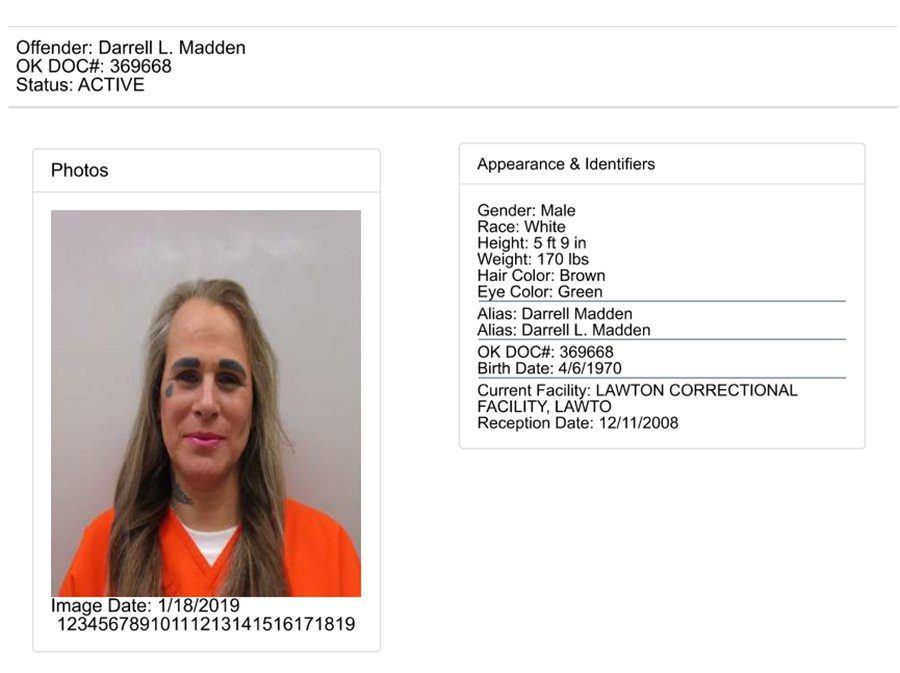
Despite this chilling confession, county officials have opted not to press charges, citing a lack of sufficient evidence for a conviction. Madden has also remained tight-lipped when questioned about possible accomplices, refusing to point fingers and leaving parts of the case unresolved.
Mason reflected on the emotional complexity of the revelation:
“My partner is trans, so hearing that information was like a knife to the heart. The last thing you want is a case like this being used to reinforce harmful stereotypes about trans people. None of that excuses the crimes.”
She also interviewed Madden in prison, describing the encounter as “intense” and unsettling because of Madden’s charm:
“What struck me most was how charismatic she was. The detective who interviewed her said the same thing—she’s very charming, very funny. Someone you could easily imagine having a conversation with over a beer. That makes it even more disturbing.”
Remembering Billy London
For Mason, the documentary is as much about closure as it is about justice.
“Billy was a human being. He wasn’t just some lurid crime story. He was a young guy who came to Los Angeles with dreams and a creative life ahead of him. If the film helps people remember him as a person—and maybe helps prevent something like this from happening again—then it’s worth it.”
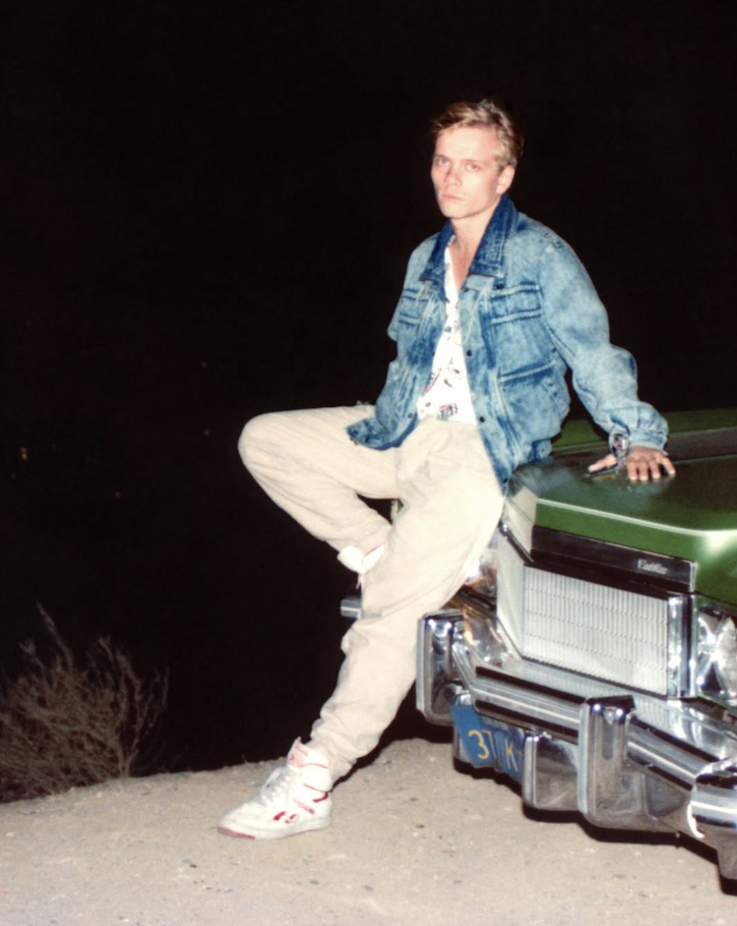
The film also connects Newton’s murder to extremist violence and Los Angeles skinhead culture in the early 90s, highlighting a history of targeted attacks against gay men that resonates even today.
Legacy and Impact
My Brother’s Killer premieres at SXSW, offering a sobering but necessary reflection on a life lost too soon. More than just a murder mystery, the film restores Billy London’s story to history and gives his family long-awaited answers—reminding audiences that every victim is a person, not just a headline.
REFERENCE: The Hollywood Reporter, LA Times