

If there’s one thing the fight against HIV doesn’t need, it’s another reminder that access to healthcare can depend on how much money you have. Fortunately, a major development could make one of the most promising prevention options considerably less expensive.
RELATED: Psoriasis in the Bedroom: What It Means for Your Sex Life
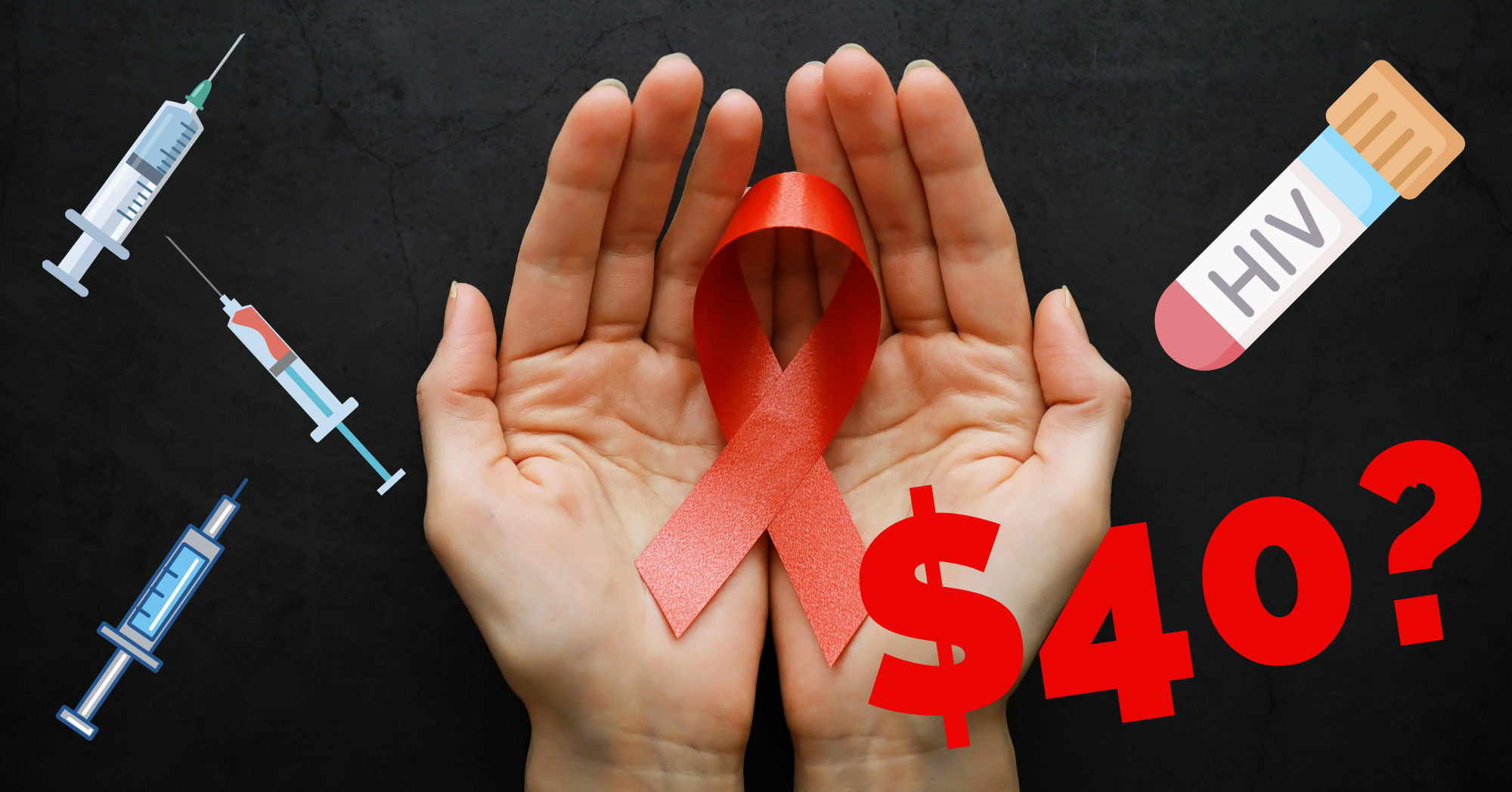
The US Food and Drug Administration (FDA) has granted tentative approval to a generic version of lenacapavir, a twice-yearly injection that helps prevent HIV. The projected annual price? Just $40 in low- and middle-income countries.
For perspective, the branded version costs more than $28,000 in the United States. That’s quite a difference for a medication designed to help people stay HIV-negative. And while the price comparison is eye-catching, the real story is what happens when an effective prevention option becomes financially accessible to more people.
RELATED: Shigella Infection Can Ruin Your Gut and Your Grindr Plans
The Biggest HIV Prevention Breakthrough Might Be Its Price Tag
Medical innovation gets plenty of attention, and rightly so. But developing a promising medication is only half the battle. Getting it into the hands of people who need it is another matter entirely.
That’s where this generic approval could make a difference.
Developed by Dr. Reddy’s Laboratories, the generic version could reach 120 low- and middle-income countries covered by voluntary licensing agreements with Gilead Sciences, the company behind the original drug. National regulatory approvals will still be required before it can be rolled out in individual countries.
Gilead first introduced lenacapavir as an HIV treatment in 2022 before securing FDA approval for its branded prevention injection, Yeztugo, in June 2025.
The generic development follows a September 2025 pricing agreement involving Unitaid, Wits RHI, the Clinton Health Access Initiative (CHAI) and Dr. Reddy’s Laboratories.
Dr Philippe Duneton, Executive Director at Unitaid, highlighted how quickly the process had progressed, particularly for young women in Africa.
“With lenacapavir, we have helped shorten that timeline to just over a year. For young women in Africa, this translates into faster access to a groundbreaking HIV prevention option, with the potential to avert countless infections and drive meaningful change in the HIV response,” he said in a news release.
In other words, scientific progress is even more meaningful when it doesn’t take a decade for affordable versions to reach the people who need them.
Two Injections a Year Instead of a Daily Reminder
There’s another reason lenacapavir has attracted so much attention: convenience.
Taking a daily medication sounds straightforward until real life gets involved. Busy schedules, privacy concerns, stigma and the challenge of maintaining a routine can all affect someone’s ability to stay on daily oral PrEP.
Lenacapavir offers a different approach, requiring just two injections annually. It gives people another way to protect themselves without having to remember a pill every single day.
Dr Neil Buddy Shah, CEO of CHAI, put the appeal into perspective:
“For someone at risk of HIV, taking a pill every day to prevent a disease they don’t have is a hard thing to ask. Two injections a year, of a product that is almost 100 per cent effective at preventing HIV, changes that entirely,” he said.
Shah also revealed that more than 125,000 people in Africa have already started using lenacapavir, adding that the generic approval brings wider access closer.
“Getting a generic approved just 16 months after the originator, rather than a decade later, shows what’s possible when we prioritise access from the start. This should be the new standard for global health.”
Of course, lenacapavir isn’t a vaccine or an HIV cure. It is a prevention option for people who are HIV-negative. People must test negative before starting and undergo repeat testing before subsequent injections. It also doesn’t prevent other sexually transmitted infections, so other safer-sex measures still have their place.
The UK Has Approved Lenacapavir, but NHS Access Is Another Story
The UK is also moving forward with lenacapavir. Its Medicines and Healthcare products Regulatory Agency (MHRA) approved the branded medication, Yeytuo, for HIV prevention in December 2025.
However, getting regulatory approval and securing NHS coverage are two very different things. In September 2026, the National Institute for Health and Care Excellence (NICE) issued draft guidance recommending against routine NHS use, citing concerns about cost-effectiveness and uncertainties in the available evidence.
The decision was due for reconsideration on November 3, 2026, following consultation. This means the question of wider NHS access remains important, even though the medication has already received regulatory approval.
Still, the generic approval represents something bigger than a cheaper alternative to an expensive drug. It challenges the idea that groundbreaking HIV prevention should remain out of reach simply because of where someone lives or what they earn.
For a medication that only needs to be administered twice a year, getting the price down to $40 annually could be just as significant as the science behind it.
Because staying HIV-negative shouldn’t come with a luxury price tag.
Source: Unitaid, Reuters, Clinton Health Access Initiative, and MHRA