


O’Shae Sibley was doing something many queer people know and do well: turning an ordinary and plain public space into a dance floor. A parking lot became a stage. A gas station became a runway. A Beyoncé track was an invitation to praise and show pride.
RELATED: Abuse at 5: How One Child Survived a Brutal Hate Crime
For Sibley and his friends, a late-night stop at a Brooklyn gas station in July 2023 was exactly that: a moment of joy. Fresh off a beach day, they were voguing, laughing, and living in the kind of carefree freedom LGBTQ+ people have fought generations to enjoy. Nearly two years later, a jury has determined that the violence that ended O’Shae Sibley’s life was driven by hate.
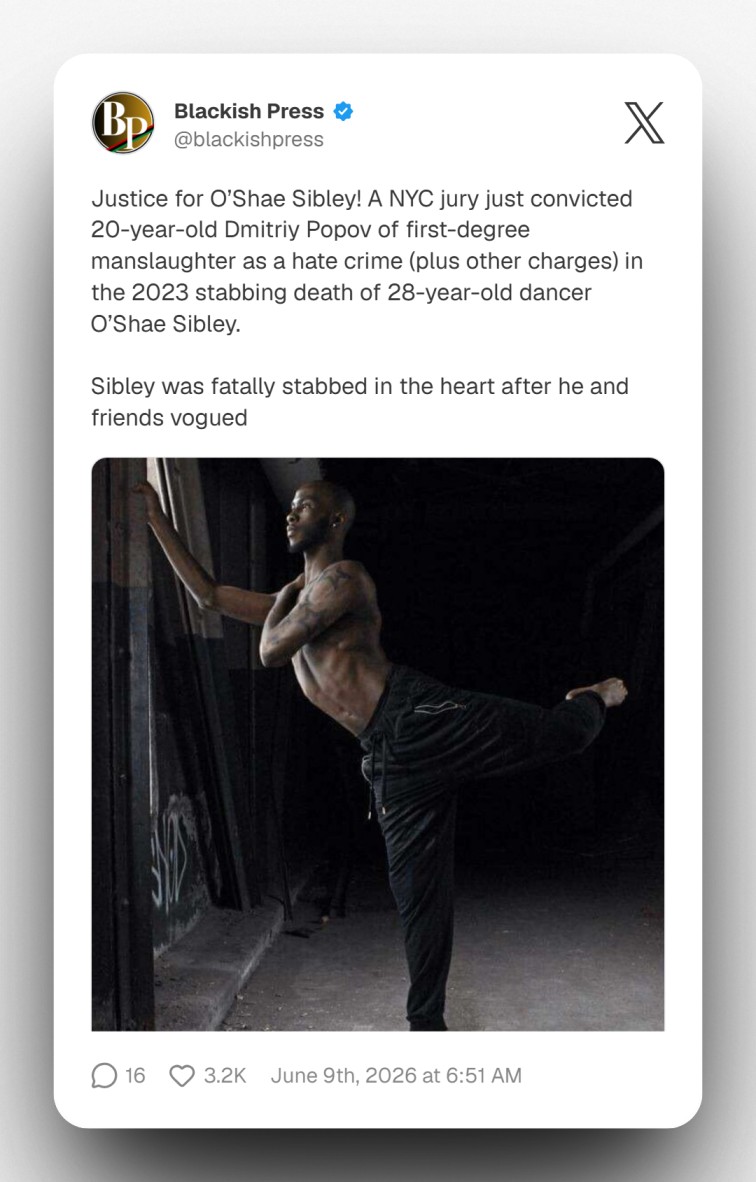
On June 8, Dmitriy Popov, 20, was convicted in Brooklyn Supreme Court of first-degree manslaughter as a hate crime, along with second-degree menacing, second-degree aggravated harassment, and fourth-degree criminal possession of a weapon, according to the Brooklyn District Attorney’s Office.
The conviction marks a significant moment for a case that shook queer communities across New York and beyond—not only because of its tragic outcome, but because of how familiar the circumstances felt.
A Night of Dancing Turns Dark for O’Shae Sibley
Sibley, 28, and four friends had stopped at a Mobil gas station in Midwood shortly after 11 p.m. on July 29, 2023. Beyoncé was playing. The group was voguing. In other words, they were minding their business while serving face. Then the mood shifted.

According to prosecutors, Popov and two friends exiting the station began directing homophobic and racist slurs toward the group, “saying, in sum and substance, ‘Get that gay s— out of here.'” Instead of matching hostility with hostility, Sibley reportedly attempted to calm things down.
RELATED: Gay Tenant Murdered by Blood-Thirsty Roommate
“Sibley attempted to diffuse the situation and he and his friends responded, in substance, “You don’t know us, we’re just having a good time and enjoying our lives,” per the release. “’It’s all respect, we’re allowed to be here just like you.’”
It’s a response many queer people recognize instantly: the exhausting effort to reassure strangers that your existence isn’t a threat. Prosecutors said Popov’s friends eventually left, but he remained outside, recording the group on his cellphone and continuing to antagonize them. What began as an ugly confrontation escalated into violence.
According to prosecutors, Popov pulled a knife, threatened one of Sibley’s friends, and ultimately stabbed Sibley in the heart. Sibley was transported to Maimonides Medical Center, where he later died.
More Than Just a Dance
His death sparked national outrage. The circumstances felt especially painful for LGBTQ+ communities because the incident wasn’t tied to a protest, a political event, or a public demonstration. It started with dancing. And not just any dancing.

Voguing—a dance form born from Black and Latino LGBTQ+ ballroom culture—has long been a symbol of resilience, creativity, and chosen family. For many queer people, seeing Sibley attacked while participating in that tradition transformed the story from a local tragedy into something deeply personal.
The case became a painful reminder that for many LGBTQ+ people, even moments of joy can become flashpoints for discrimination.
The Jury Delivers Its Answer
Brooklyn District Attorney Eric Gonzalez underscored that reality after the verdict.
“O’Shae Sibley moved to New York to pursue his dream of being a dancer and choreographer, and his life was cut short when he was killed by this defendant, who couldn’t stand the sight of O’Shae and his friends just being themselves and living their lives openly as black gay men,” Gonzalez said.
“By the jury’s verdict, this defendant will now be held accountable, and it is my hope that as the LGBTQ+ community celebrates the beginning of Pride Month, this verdict will bring O’Shae’s family, his friends, and the larger community some measure of solace.”
Popov’s attorney argued that his client acted in self-defense.
“In a self-defense case, obviously nobody wants anyone to die, but at that moment, as a 17-year-old boy, thinking like a 17-year-old boy, he did what he thought was reasonable, necessary, and I’m talking about in seconds,” defense attorney Mark Pollard said. “He thought about this in seconds, and that’s how we ended up here.”
The jury disagreed. Popov now faces sentencing on June 30 and could receive up to 25 years in prison.
Why This Verdict Matters
For many LGBTQ+ people, the verdict represents more than a legal outcome. It is a recognition of something queer communities have long understood: hatred often reveals itself in response to joy. The freedom to dance. To laugh loudly. To take up space. To exist visibly. Those acts may seem ordinary. For many LGBTQ+ people, they have never been guaranteed.
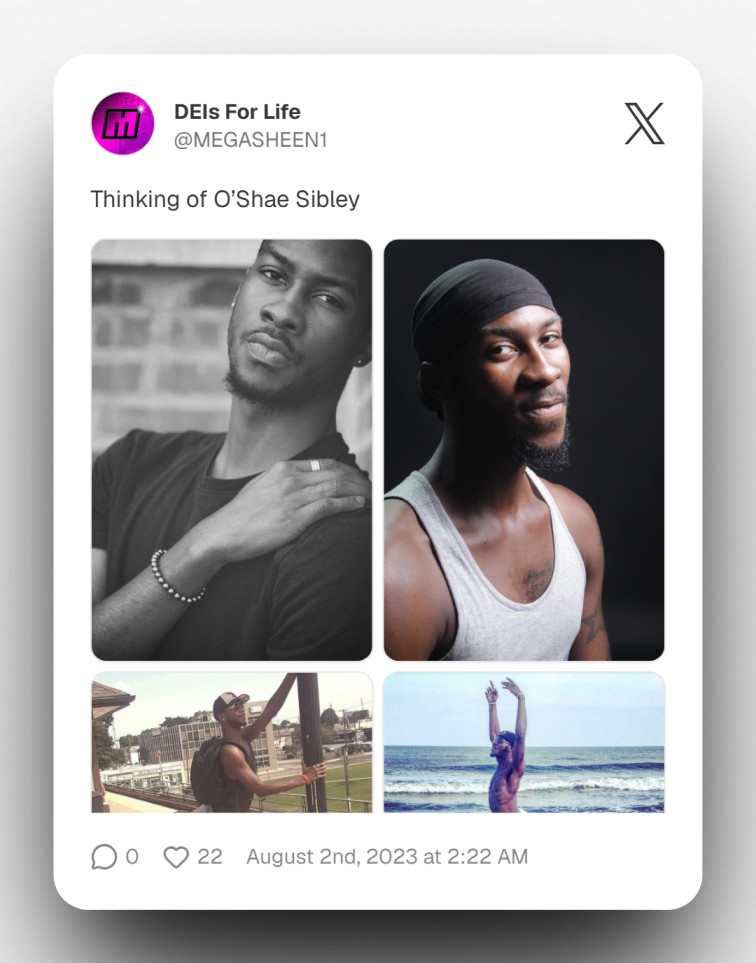
O’Shae Sibley never set out to become a symbol. He was a dancer, a friend, and by all accounts someone who brought energy into every room he entered. Yet his story has become a reminder that authenticity can still carry risk—and that protecting the right to live openly remains as important as ever.
A Pride Month Reminder
A jury has now spoken. Justice, while imperfect and undeniably late, has arrived. As Pride Month celebrations continue across the country, Sibley’s story stands as both a call for accountability and a celebration of resilience. His legacy lives on in the communities that continue to dance, create, and show up authentically despite the challenges they face.

And somewhere in that truth is a sentiment every Beyoncé fan can appreciate: nobody should lose their life for dancing like nobody’s watching.
Source: People