


Hayden Panettiere spent much of her life being very good at looking fearless. She was a superhero cheerleader on Heroes, a country-music disaster magnet on Nashville, a child star who grew up in front of millions—and, just months ago, a 36-year-old woman finally telling the world she was bisexual.
RELATED: Tyler Duckworth, MTV Legend, Dead at Age 44
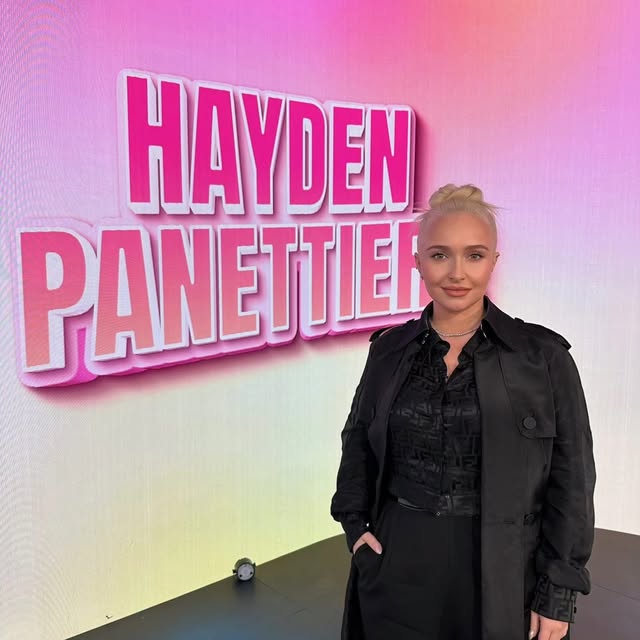
Now, Panettiere is gone.
Her family confirmed her death on Sunday, August 16, with her father, Skip Panettiere, describing her as “an incredible light and a force of nature” who brought “immeasurable love and joy” to the people around her and the millions who watched her onscreen.
Details surrounding Panettiere’s death have since emerged. Dispatch audio obtained by PEOPLE reportedly captured officials discussing an “overdose” and “cardiac arrest” as emergency responders rushed to the scene. Panettiere was pronounced dead at 2:32 p.m., despite paramedics’ efforts to revive her with chest compressions.
The Greenville Police Department and Greenville County Coroner’s Office are handling the investigation. Police said an acquaintance of Panettiere’s made the 911 call, while a preliminary investigation has found no indication of foul play or suspicious circumstances.
Her official cause of death remains pending until an autopsy is completed. Police have also declined to confirm reports that “advanced cardiac life support” was used during efforts to revive her.
That means there is plenty we still don’t know. What we do know is that Panettiere leaves behind a career that started before she could probably say “action,” a surprisingly formidable collection of performances and, perhaps most importantly, a story she had only just begun telling on her own terms.
Claire Bennet could save the world. Hayden was just trying to live in it.
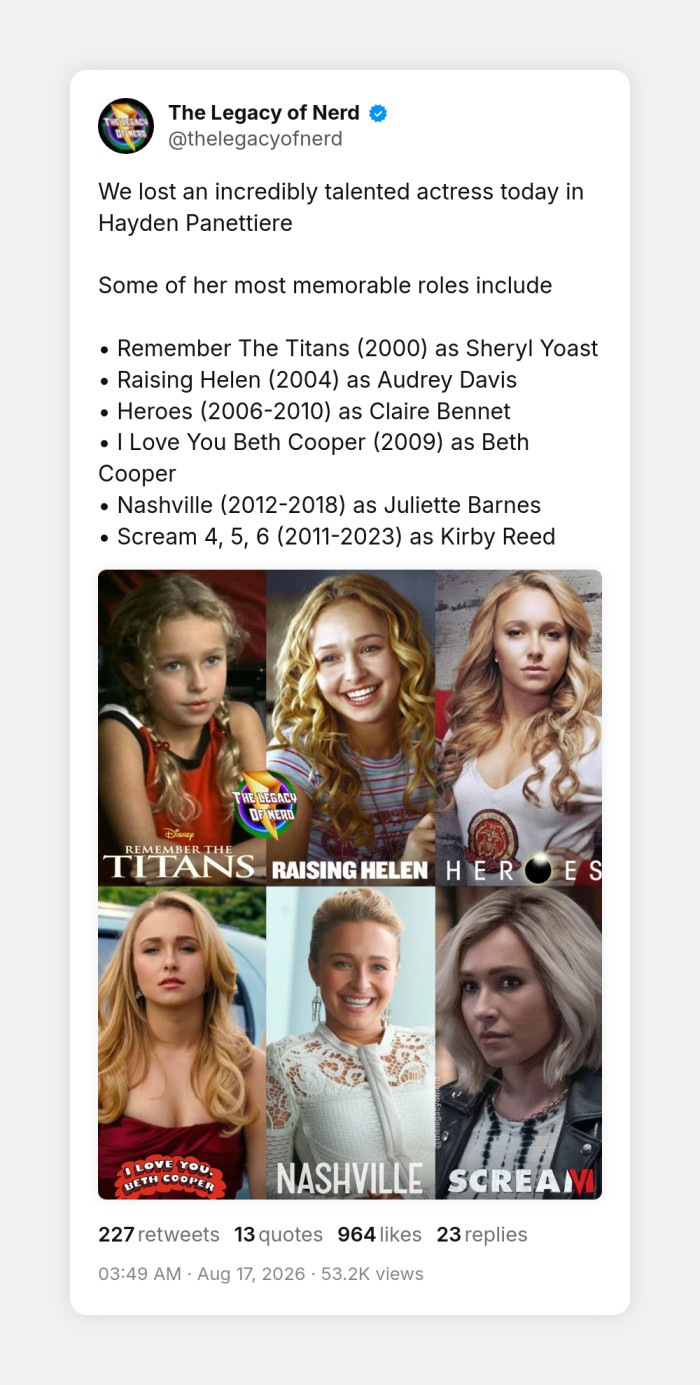
For anyone who watched Heroes in the late 2000s, Panettiere will forever have a special place in television history as Claire Bennet.
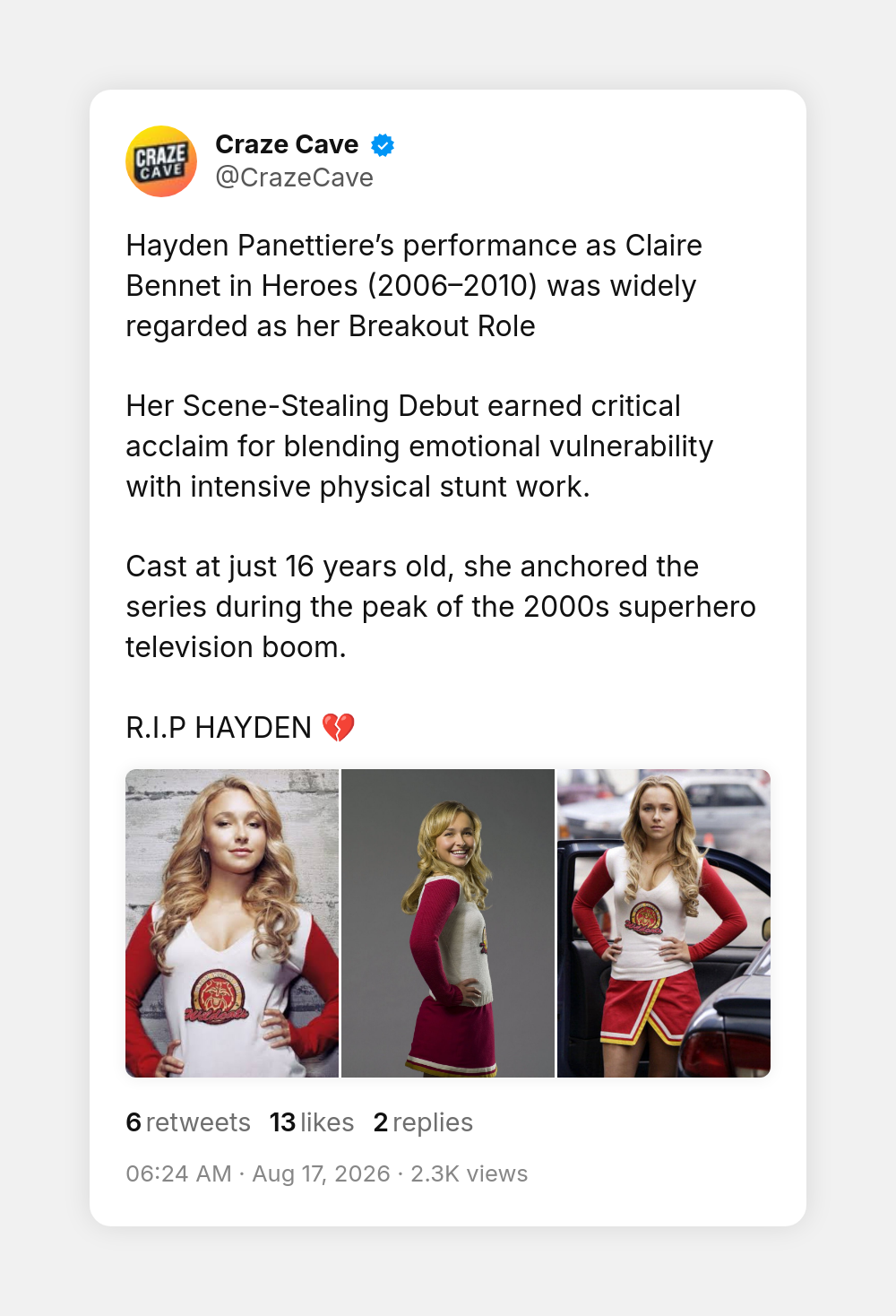
She was the cheerleader who could regenerate from injuries, which was convenient because the show seemed determined to put her through approximately every horrible thing imaginable.
“Save the cheerleader, save the world” became the show’s rallying cry, with Panettiere at its center.
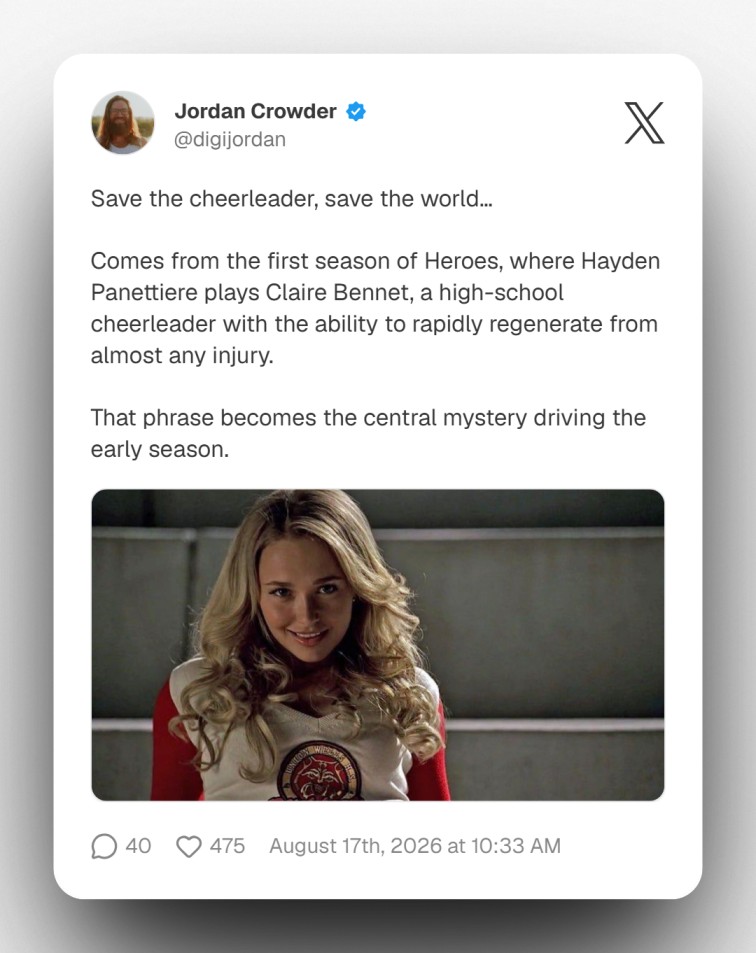
But Claire wasn’t simply a pretty girl with a superpower. Panettiere gave her vulnerability, stubbornness and plenty of teenage fury. It was the kind of role that made an entire generation of viewers realize the actress playing her was going to be around for a very long time. And she was.
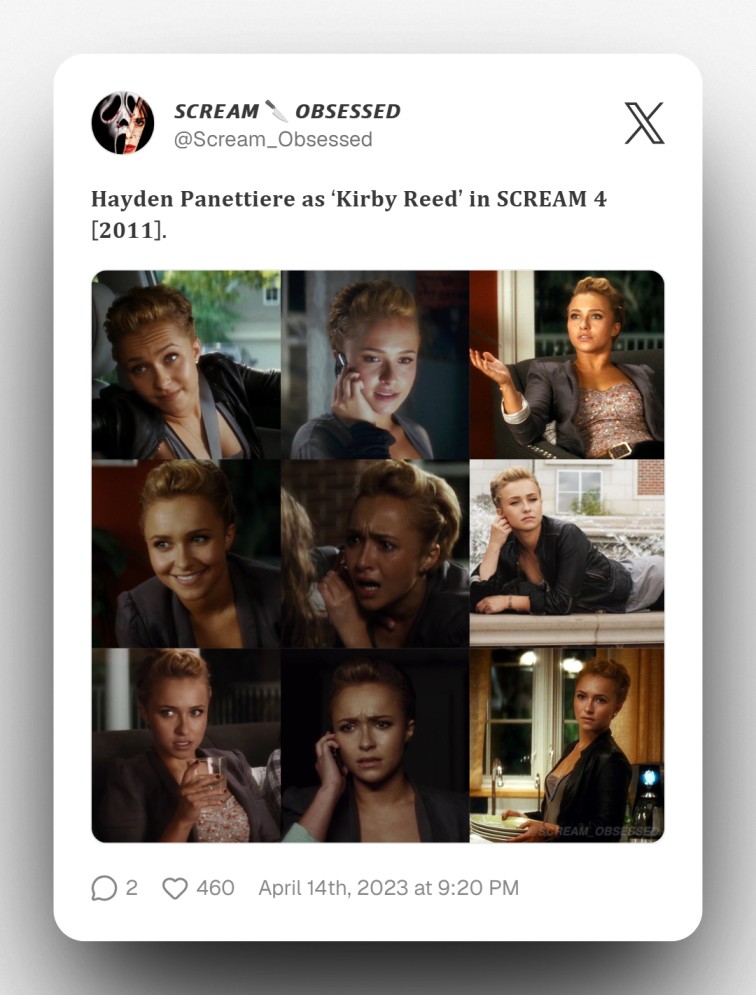
Panettiere had actually been working since she was an infant, beginning with commercials before moving into television and film. At nine, she voiced Dot in A Bug’s Life, eventually building a résumé that included Remember the Titans, Scream 4, Nashville and, of course, Heroes. Then she picked up a microphone and gave us Juliette Barnes.
Then Nashville gave her a microphone and a whole new kind of chaos
If Claire Bennet was supernatural chaos, Juliette Barnes was Hollywood chaos with better hair.
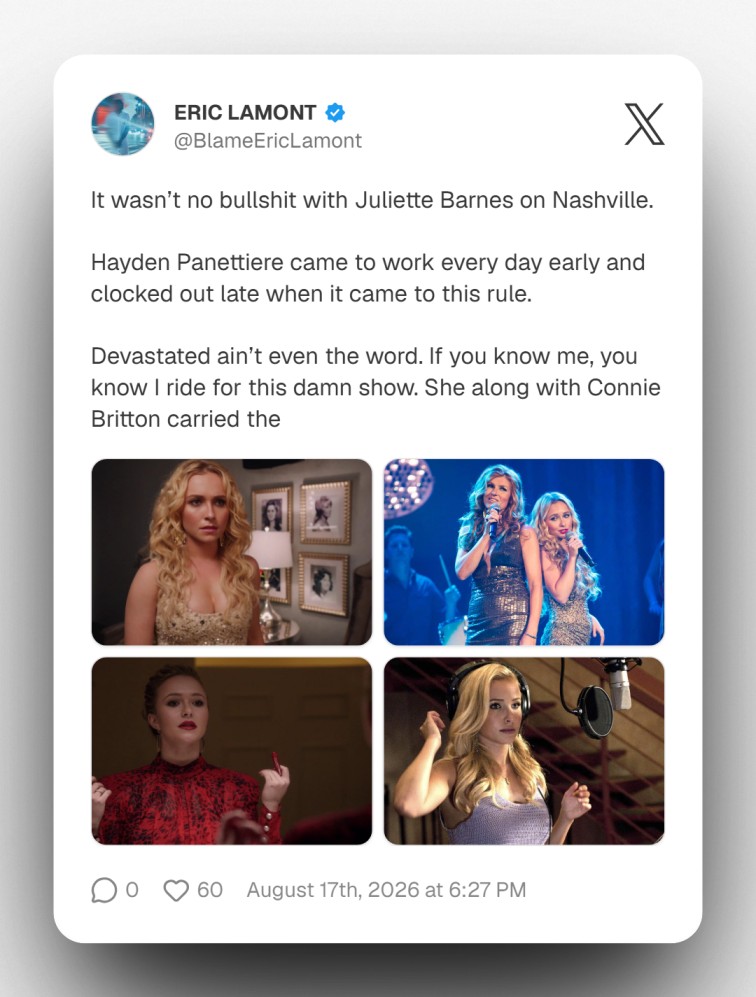
On Nashville, Panettiere played a country superstar whose life was a spectacular cocktail of ambition, romance, addiction, family drama and enough emotional turmoil to make a country song write itself. The role earned her two Golden Globe nominations.
She also proved she wasn’t merely pretending to be a singer for television. Eleven of her songs landed on Billboard’s Hot Country Songs chart. Not bad for someone whose most famous earlier character spent her time discovering new ways to survive being kidnapped. Panettiere had range. She just happened to spend much of her career playing women who needed an emergency exit.
And then she started telling the story behind the celebrity
The glossy Hollywood version of Panettiere’s life was only ever part of it. Following the birth of her daughter in 2014, she publicly discussed anxiety, depression, alcoholism and substance use. She later spoke openly about her recovery and the difficult decision to focus on getting herself well.
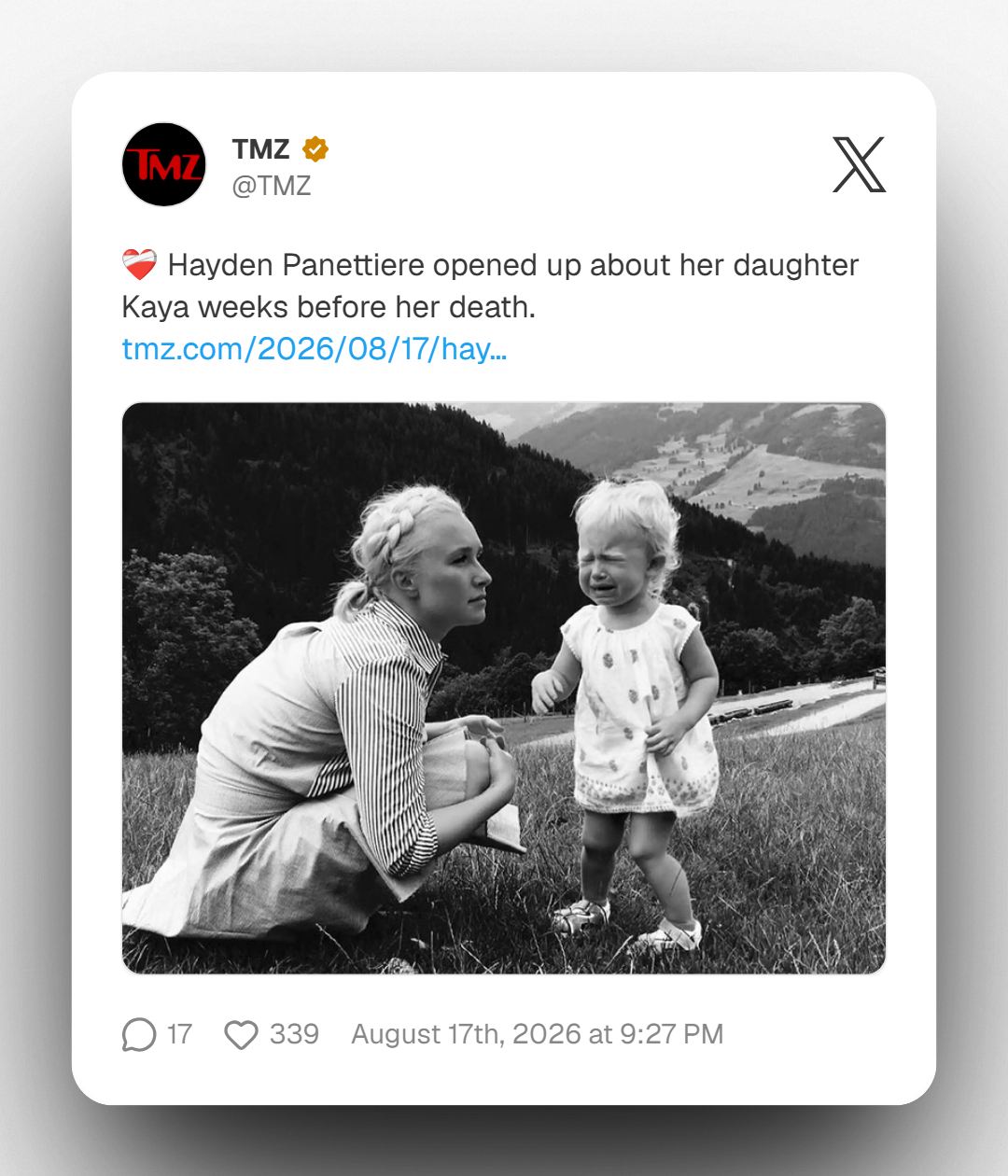
In a 2022 interview with People, she put it bluntly:
“This hasn’t been easy and there were a lot of ups and downs. But I don’t regret even the ugliest things that have happened to me. I feel incredibly accomplished. And I feel like I have a second chance.”
That sentence says a lot about where Panettiere seemed to be in her life. She wasn’t pretending everything had been fabulous. She wasn’t airbrushing the difficult years into some inspirational Instagram caption with a sunset behind it. She was acknowledging the mess and saying she was still here.
Her bisexuality was never a footnote to her story
Then came This Is Me: A Reckoning, the memoir Panettiere published earlier this year. And for LGBTQ+ fans, there was a particularly personal revelation: Panettiere came out as bisexual at 36.

“I had to wait until I was 36 years old to share that part of me, but better late than never.”
There is something beautifully uncomplicated about “better late than never.” Because honestly, queer people know this one.
There is no correct age for coming out. There is no prize for doing it at 16, 21 or 29. Some people know early. Some people spend years figuring themselves out. Some people have careers, relationships, children and entire lives before they finally have the words for something they’ve been carrying around inside them.
Panettiere got there when she was ready. And she got to say it herself.
The Hollywood encounter she finally felt ready to discuss
Her memoir also contained a disturbing account of an incident she said happened when she was 18. Speaking on Jay Shetty’s On Purpose podcast, Panettiere recalled being taken onto a boat by someone she trusted and led downstairs to a “very small room,” where she was placed beside an “undressed” and “very famous” man.
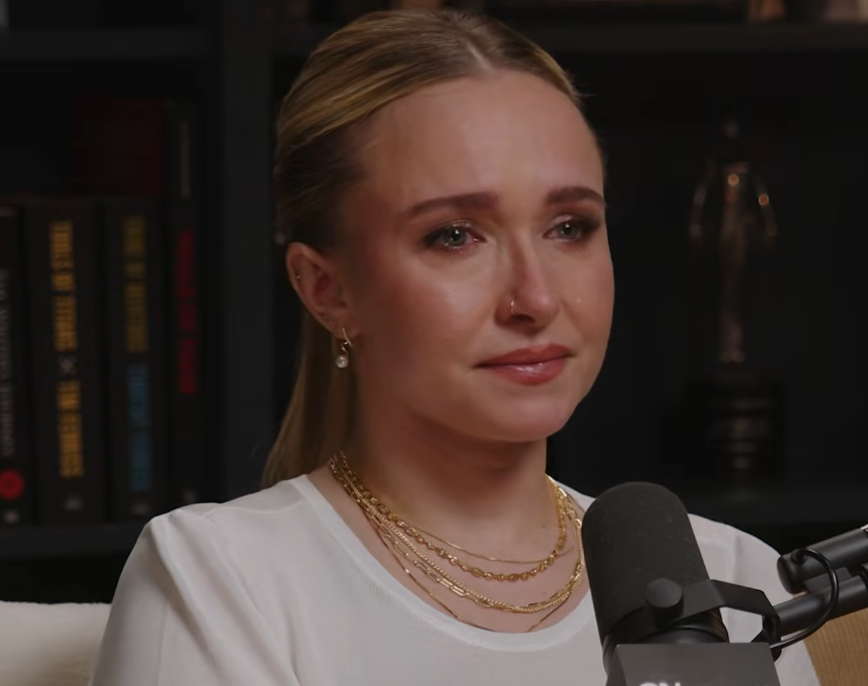
“You’re led to a room which has an older man in it and then basically told to perform sexual acts,” Shetty said while discussing the chapter.
Panettiere explained that being 18 did not mean she understood the situation as clearly as she believed she did at the time.
“The fact that I was 18, even though I’d lived such a huge life and I thought I was oh so mature at 18 … scientifically, your frontal lobes don’t develop until we’re what, 25, 26?”
She said her understanding of the situation changed when she realized she was in danger.
“I was quite literally out to sea.”
And when the danger finally registered, Panettiere said something inside her snapped into survival mode.
“That lion in me, that fire in me … my hair stood on end and I became ferocious.”
She escaped the room and hid elsewhere on the boat.
“There was no jumping off and swimming away,” she said. “And there was nobody who was going to be empathetic to my situation. I realized that this was nothing new to them.”
It was a deeply unsettling story, made even more painful by the fact that the person who brought her there was someone she believed she could trust.
“When you really find somebody that you trust, you hold on to them for dear life and you feel so lucky,” she said. “So to be betrayed like that is just an awful feeling.”
She was finally getting to write the version of herself that belonged to her
That may be what makes Panettiere’s death feel particularly cruel. She had spent decades being interpreted by other people. Hollywood interpreted her. The tabloids interpreted her. Audiences interpreted her. The internet interpreted her. And then, finally, Panettiere was doing some interpreting of her own.
She was talking about addiction without pretending it hadn’t happened. She was talking about trauma without dressing it up. She was talking about the things that had happened to her when she was young. And she was talking about being bisexual.

She was, essentially, introducing herself again. Not as Claire Bennet. Not as Juliette Barnes. Not as the former child star. Just Hayden.
And for LGBTQ+ fans, that part of her story deserves to be remembered alongside everything else. Panettiere once played a character whose entire superpower was getting back up. Real life was obviously much more complicated than Heroes.
But Panettiere spent years doing something arguably harder: getting back up without the benefit of a healing factor, a television script or a guaranteed happy ending. She should have had more time. But the woman who spent so much of her life being watched did eventually get to speak for herself. And we’re grateful she got the chance to tell it in her own words.
Remembering Hayden Panettiere
Hayden Panettiere gave us unforgettable characters, a powerful voice and, in her final chapter, the courage to tell more of her own story. For LGBTQ+ fans, we’ll remember the woman who came out as bisexual, spoke openly about her struggles and showed that it’s never too late to embrace another part of yourself.
Rest in peace, Hayden. You were more than the roles you played—you were a force of nature, and you will be missed.
Source: PEOPLE