

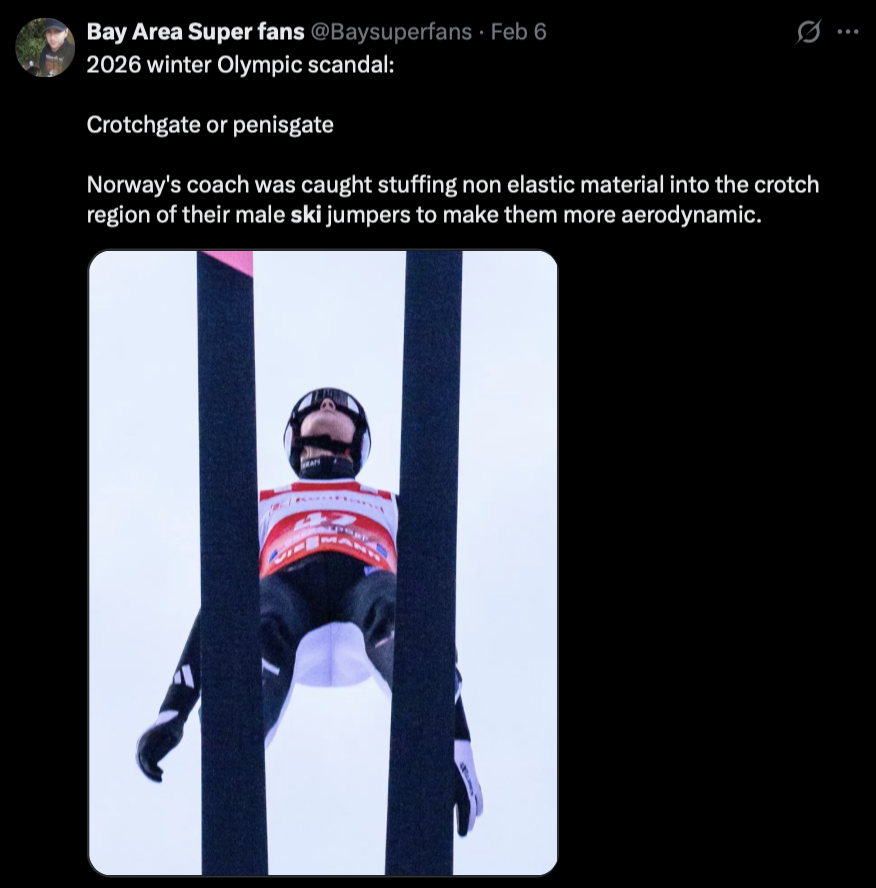
Penis-gate has officially entered the Olympic chat, and no, it’s not the kind of scandal anyone had on their Winter Games bingo card.
As athletes gather for the 2026 Winter Olympics in Milan–Cortina, a strange rumor has taken flight—one involving ski jumping, ultra-tight suits, and alleged cosmetic tweaks meant to gain an edge in the air. It sounds ridiculous at first (because it kind of is), but once you understand how ski jumping works, penis-gate starts to make… unsettlingly logical sense.
Not the juicy scandal you were hoping for? Maybe not. But it is one of the most bizarre intersections of sports science, body measurements, and competitive desperation we’ve seen in a while.
Let’s break it down—gently.
RELATED: The Olympics Are Getting Queerer—and Gus Kenworthy Is Leading the Pack
How Ski Jumping Actually Works
Ski jumping is less about brute strength and more about physics. Athletes launch themselves off towering ramps at high speed, and the distance they fly depends on aerodynamics, posture, and one surprisingly important factor: their suit.
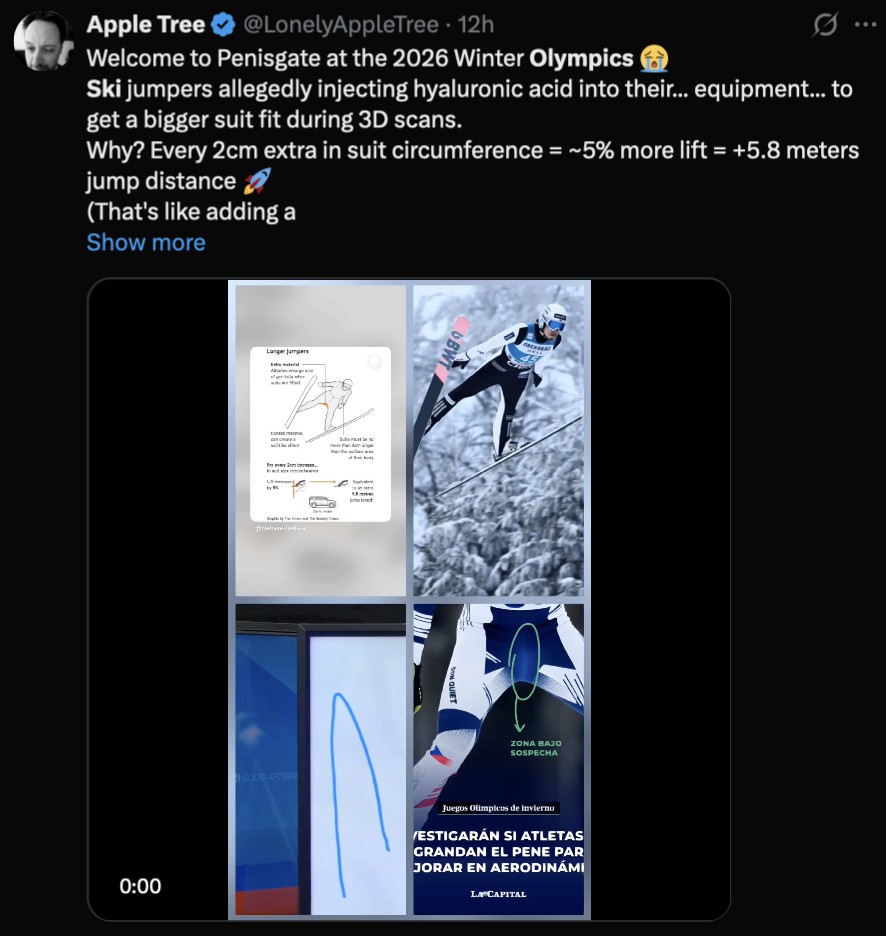
Those skin-tight suits aren’t just for looks. Their size and surface area directly affect how much lift an athlete can generate in the air. More surface area means more lift. More lift means longer jumps.
‘Injecting their nether regions with hyaluronic acid, they can have a larger appendage, and therefore a larger suit to generate more lift!’
GB News’ @Tomhfh is back on the whiteboard to explain the scandal that is being dubbed ‘penisgate’ at the 2026 Winter Olympics. pic.twitter.com/24bfy0ignv
— GB News (@GBNEWS) February 6, 2026
Because of that, the International Ski and Snowboard Federation (FIS) strictly regulates suit measurements. There’s only a small allowance—about 2 to 4 centimeters—between an athlete’s body size and the suit they’re permitted to wear.
And yes, those measurements include crotch height.
Where Penis-Gate Comes In
According to a report that kicked off the controversy, some ski jumpers were accused of using hyaluronic acid, a common cosmetic filler, ahead of official measurements. The idea wasn’t cosmetic—it was strategic.
Hyaluronic acid can temporarily increase girth. If body measurements are taken while that area appears slightly larger, the athlete could legally qualify for a marginally bigger suit. That suit, in turn, would have more surface area and generate more lift.
In elite competition, even tiny differences matter.
As one FIS official explained, a suit with just 5% more surface area can noticeably affect flight distance. In a sport where medals are decided by fractions of a second and centimeters in the air, that’s a big deal.
Is This Even Allowed?
Here’s where things get murky.
Hyaluronic acid isn’t banned by anti-doping rules. It’s widely used in cosmetic and medical settings. That means, technically, it wouldn’t trigger a positive drug test.
When asked about the reports, the World Anti-Doping Agency (WADA) said it wasn’t aware of any confirmed cases and would only intervene if something clearly violated doping regulations. One WADA official even joked that he’d “look into it,” clearly amused by the question.

The FIS, for its part, has said there’s no evidence that any athlete has actually done this.
“Penisgate” has the ski world buzzing: WADA and FIS are investigating claims that some male ski jumpers injected hyaluronic acid into their penises, not for performance enhancement in the usual sense, but to alter body measurements so they could legally wear slightly larger suits… pic.twitter.com/AEr7UiCmWl
— Dr. CZ (@AngelMD1103) February 6, 2026
So for now, penis-gate remains a theory—not a proven scandal.
Ski Jumping Has Been Here Before
While this particular rumor is new, the sport has a long history of teams pushing the limits of suit rules.
Before modern 3D body scanners were introduced, athletes reportedly experimented with padding, inserts, and other tricks during manual measurements. More recently, several ski jumpers were suspended after their teams altered suits with reinforced stitching to improve performance.
In those cases, the athletes themselves weren’t always aware—but governing bodies ruled that the system had been manipulated.
In other words: if there’s a loophole, someone will try to squeeze through it.
Does It Actually Work?
Experts say that in theory, yes—it could.
Researchers have shown that even small increases in suit size can reduce drag and improve lift. And because hyaluronic acid can last anywhere from several months to over a year, the timing would line up with competition seasons.
That said, experts also note you’d need a significant amount of filler to make a meaningful difference—and that’s where practicality (and comfort) comes into question.
Just because something could work doesn’t mean it’s happening.
Why Penis-Gate Took Off Online
Let’s be real: the internet ran with this “penis-gate” story because it’s absurd, funny, and slightly scandalous. It taps into something we love—elite sports taking themselves very seriously, only to be undone by something unexpectedly human.
But underneath the jokes is a real conversation about fairness, regulation, and how far athletes and teams will go to win.
And maybe that’s why penis-gate has stuck. It’s not just about anatomy—it’s about the endless arms race between rules and loopholes.
RELATED: Best AI Boyfriend Apps for Connection and Roleplay
So… What Now?
As the men’s ski jumping competition begins, officials say they’ll continue enforcing strict measurement protocols. For now, penis-gate remains an eyebrow-raising footnote rather than a confirmed scandal.
Still, the Olympics have a way of delivering surprises.
And if nothing else, 2026 has already proven that when people say every centimeter counts, sometimes they mean it very literally.
Welcome to the Winter Games.
REFERENCES: Bild, BBC,The Guardian