


For years, rainbow crosswalks became a familiar sight in parts of Florida—a colorful reminder that LGBTQ+ people exist, belong, and have helped shape the communities they call home. Then came the orders to remove them. But as it turns out, taking away a rainbow crosswalk is a lot easier than taking away the people who put it there in the first place.
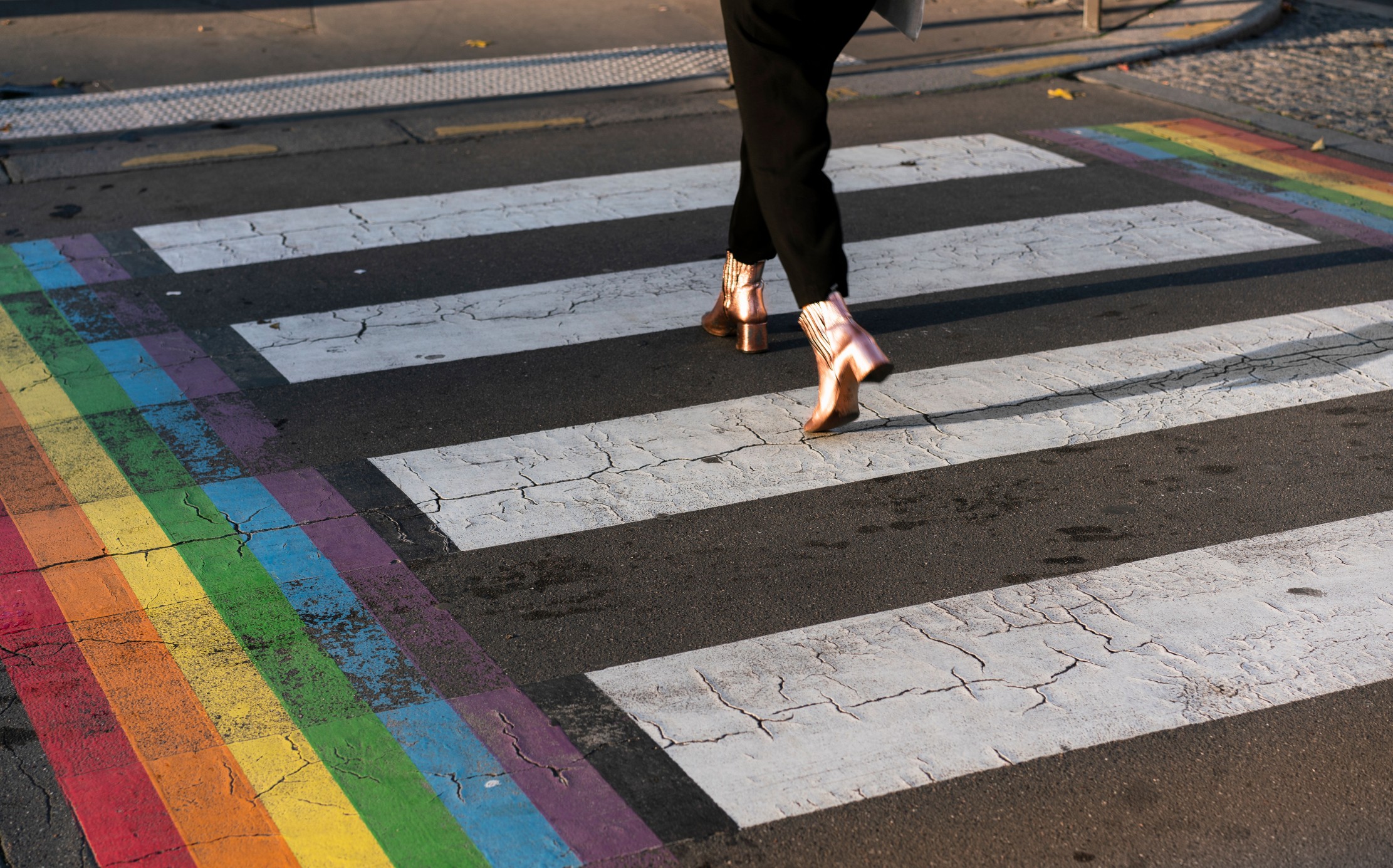
Across Florida, cities have been finding creative ways to keep visible signs of LGBTQ+ inclusion alive after Gov. Ron DeSantis and state officials moved to eliminate rainbow-themed street art. If the state didn’t want rainbows in crosswalks, local leaders decided they would simply put them somewhere else.
RELATED: Niger and Japan Take LGBTQ+ Rights in Opposite Directions
And in at least three cities—St. Petersburg, Fort Lauderdale, and Miami Beach—that is exactly what happened. At the start of Pride Month, St. Petersburg transformed the steps of City Hall into a giant Progress Pride flag. The move came after the city lost its beloved rainbow crosswalk.
“Losing the crosswalk was a huge hit to us, so making sure that we pop up more visual signs of inclusion was right in alignment,” said Dr. Byron Green-Calisch, president of the board of directors with St. Pete Pride. “So, the fact we got to see it at the beginning of Pride Month was chef’s kiss.”
Mayor Ken Welch emphasized the symbolism behind the installation.
“The Pride steps at City Hall are more than paint on concrete. They are a reflection of St. Petersburg’s values and a reminder that our city is strongest when everyone feels welcome, respected, and seen.”
It’s hard not to admire the efficiency of the response. Remove one rainbow, get an entire staircase.
RELATED: LGBTQ+ Workers Feel Pride Support Is Disappearing From the Workplace
The rainbow relocation program is thriving
The fight over rainbow crosswalks intensified after Transportation Secretary Sean Duffy directed governors to keep intersections and crosswalks “free from distractions.”
“Taxpayers expect their dollars to fund safe streets, not rainbow crosswalks,” Duffy later wrote on X.
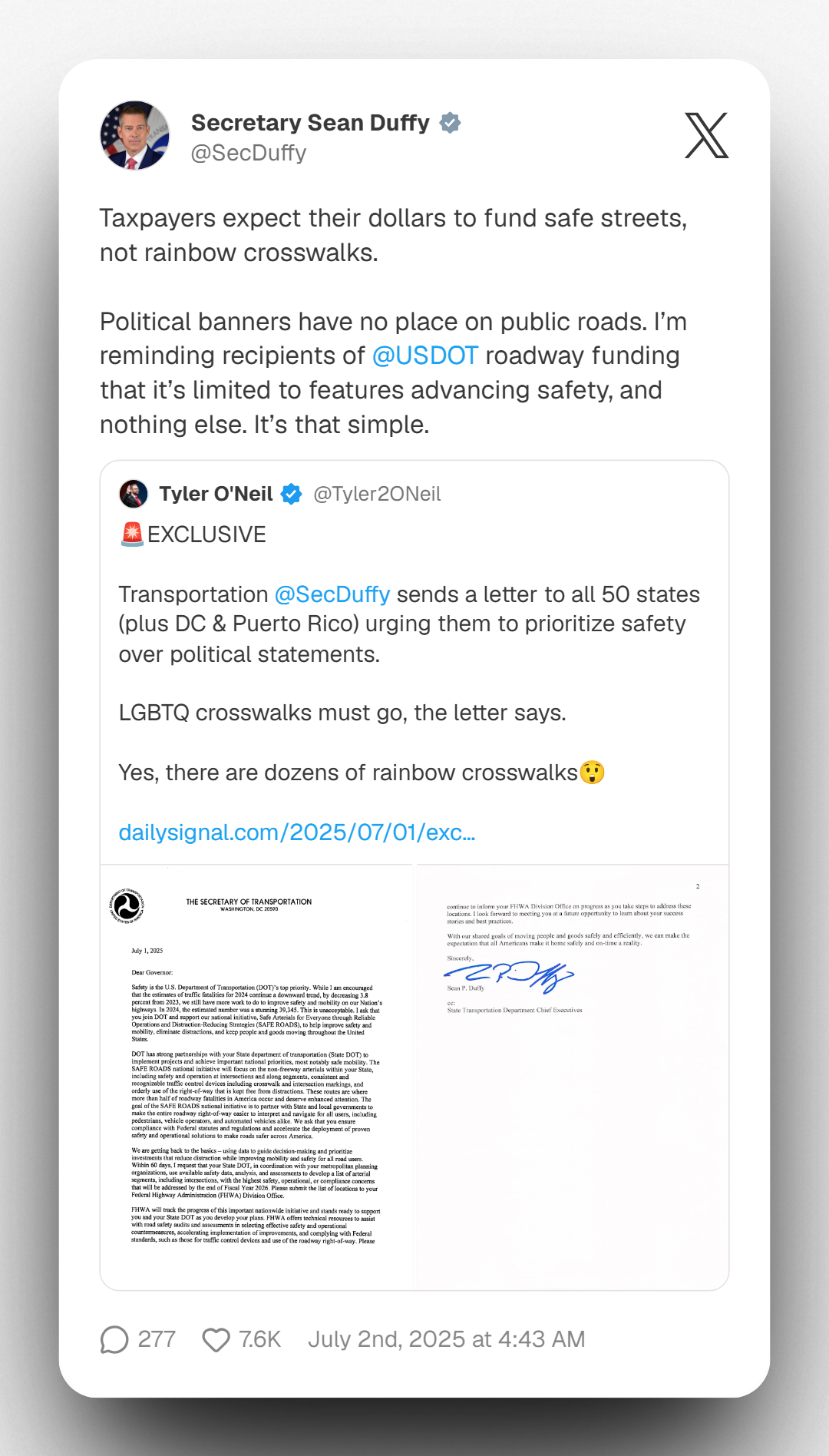
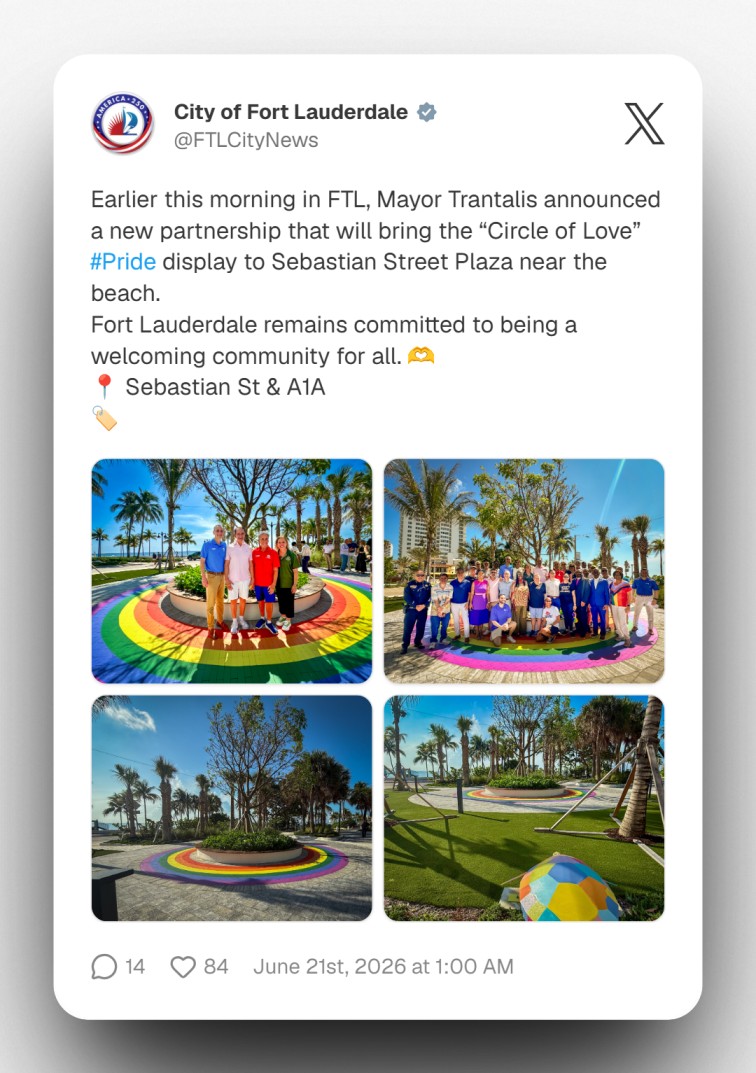
Florida followed with a law requiring compliance with the state’s uniform traffic control standards. While the language applies broadly to pavement art regardless of political message, the practical effect was the removal of rainbow crosswalks that had become highly visible symbols of LGBTQ+ inclusion. Fort Lauderdale responded with a workaround that would make any determined homeowner proud.
Instead of placing rainbow artwork on public roadways, the city helped unveil a rainbow-colored “circle of love” at the Selene condominiums near Sebastian Street Beach, one of South Florida’s best-known LGBTQ+ gathering spots. Because the installation sits on private property, it falls outside the reach of the state restrictions that targeted public street art.
“We are here today to not only say that we are going to never be erased, but we’re going to find a way to still be able to appreciate and embrace the diversity of our community,” Mayor Dean Trantalis said during the unveiling. “Because if there’s anything that Fort Lauderdale represents, it’s diversity. People from all walks of life should be able to come here.”
Rep. Debbie Wasserman Schultz echoed that sentiment.
“This expression in the circle of love, with the city working with a developer in the city to make sure that there continues to be a very public display of support for equality and the LGBTQ+ community, is remarkable and I’m so proud of them.”
Meanwhile, St. Petersburg wasn’t content to stop at City Hall steps. The city had already responded to earlier state pressure by installing rainbow-colored bike racks and projecting a 60-mile rainbow laser across the night sky. At this point, the city’s approach seems to be: if you remove one rainbow, another one appears somewhere else.
Miami Beach refused to let its LGBTQ+ crosswalk history be jackhammered away
Perhaps no story illustrates the fight better than Miami Beach. Last October, demolition crews arrived to remove a rainbow crosswalk that had stood since 2018 near Ocean Drive and 12th Street. The installation honored the LGBTQ+ community’s contributions to the city and served as a visible marker in one of America’s most historically significant gay neighborhoods. For many residents, watching the crosswalk disappear felt deeply personal.
“The night that they tore out the crosswalk, it was like witnessing carnage, an act of violence,” city commissioner Tanya Bhatt recalled. “There was the Miami breeze going off the ocean, and people were stopping and watching and filming and crying.”
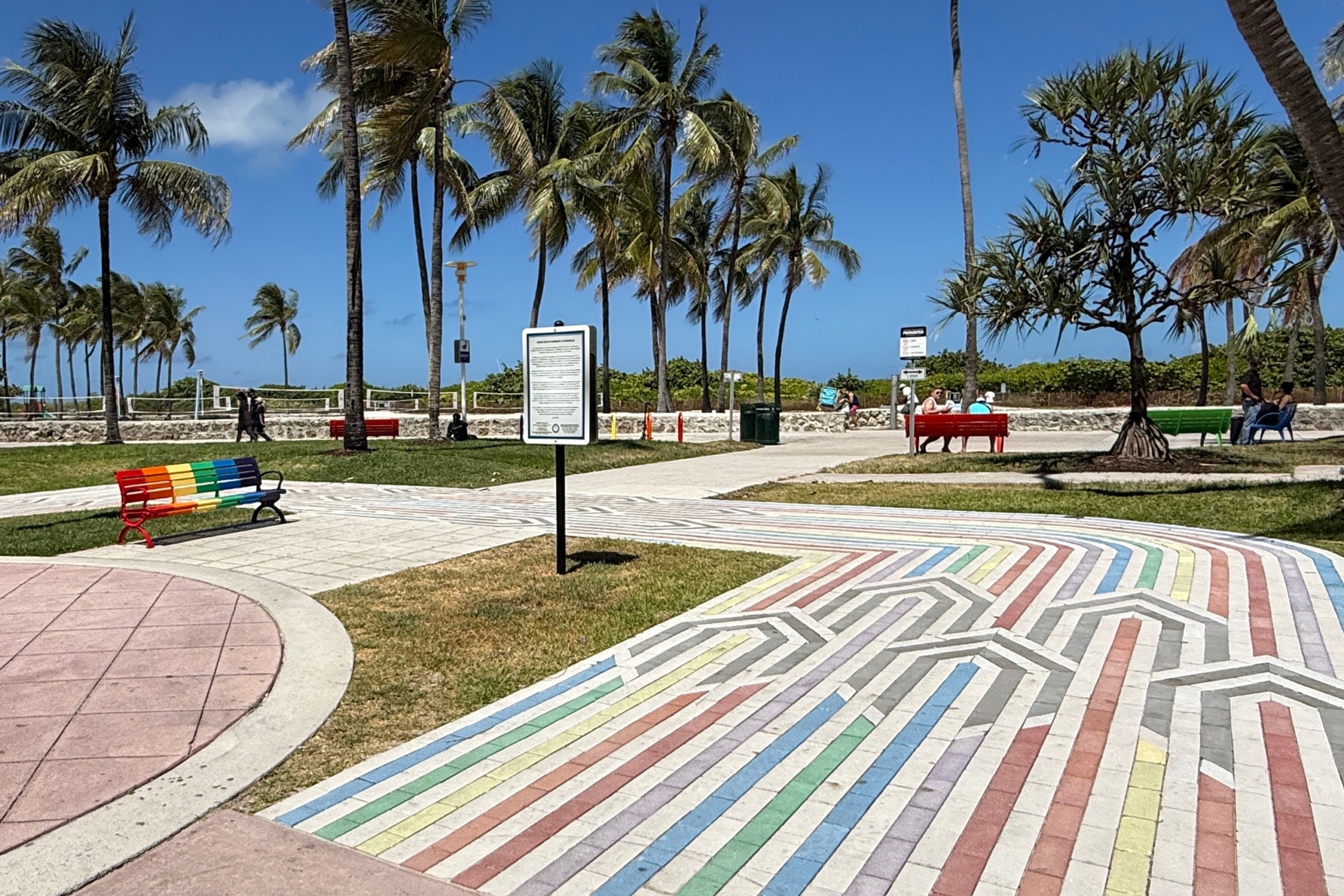
Rather than accepting the loss, city leaders immediately began discussing how to replace it. Their solution was brilliantly simple: move the tribute from the street to the sidewalk. Using many of the original colorful pavers, Miami Beach recreated the installation just steps away from its original location. Because it sits beyond the roadway, it also sits beyond the authority that ordered the original crosswalk removed.
“They can move the bricks,” Miami-Dade Mayor Daniella Levine Cava declared during the unveiling, “but they cannot erase us.”
The new installation carries even more weight than the original. Miami Beach’s connection to LGBTQ+ history stretches back decades. Long before acceptance was widespread, the city became known as a place where people could live a little more freely than elsewhere. Over time, LGBTQ+ residents, artists, entrepreneurs, and cultural figures helped transform Miami Beach into the destination millions know today.
Miami Beach unveiled their relocated rainbow crosswalk this morning.
It’s now in city-owned Lummus Park just feet from the original location (Ocean Drive & 12 St) where the state had it removed last year pic.twitter.com/hZ8kWhMp1I
— Joel Franco (@OfficialJoelF) April 10, 2026
As Bhatt put it, “The whole resurgence of Miami Beach was due to the artists and photographers coming here, staying, and then bringing the arts and culture community with them. The nightclubs and music, photography studios, model agencies, art installations—Miami Beach is built on the shoulders of the queer community.” That history is precisely why many local leaders saw the crosswalk fight as about more than colored bricks.
Crosswalks Are More Than Paint
For supporters, these installations have never been merely decorative. They function as public acknowledgments of communities that spent much of history being told to remain invisible. That is why the response to the removals has been so revealing.
Instead of retreating, cities found new canvases. A staircase became a Pride flag. Private property became a rainbow circle. A demolished crosswalk became a sidewalk monument. Bike racks became symbols. Lasers lit up the sky. The lesson from St. Petersburg, Fort Lauderdale, and Miami Beach is surprisingly straightforward: visibility doesn’t disappear just because someone orders it removed.
“The last one, I think a lot of people took it for granted,” Bhatt said of Miami Beach’s original crosswalk. “For this one, we fought back, we made it permanent. And we are very much aware now that we are all collectively fighting for our lives again.”
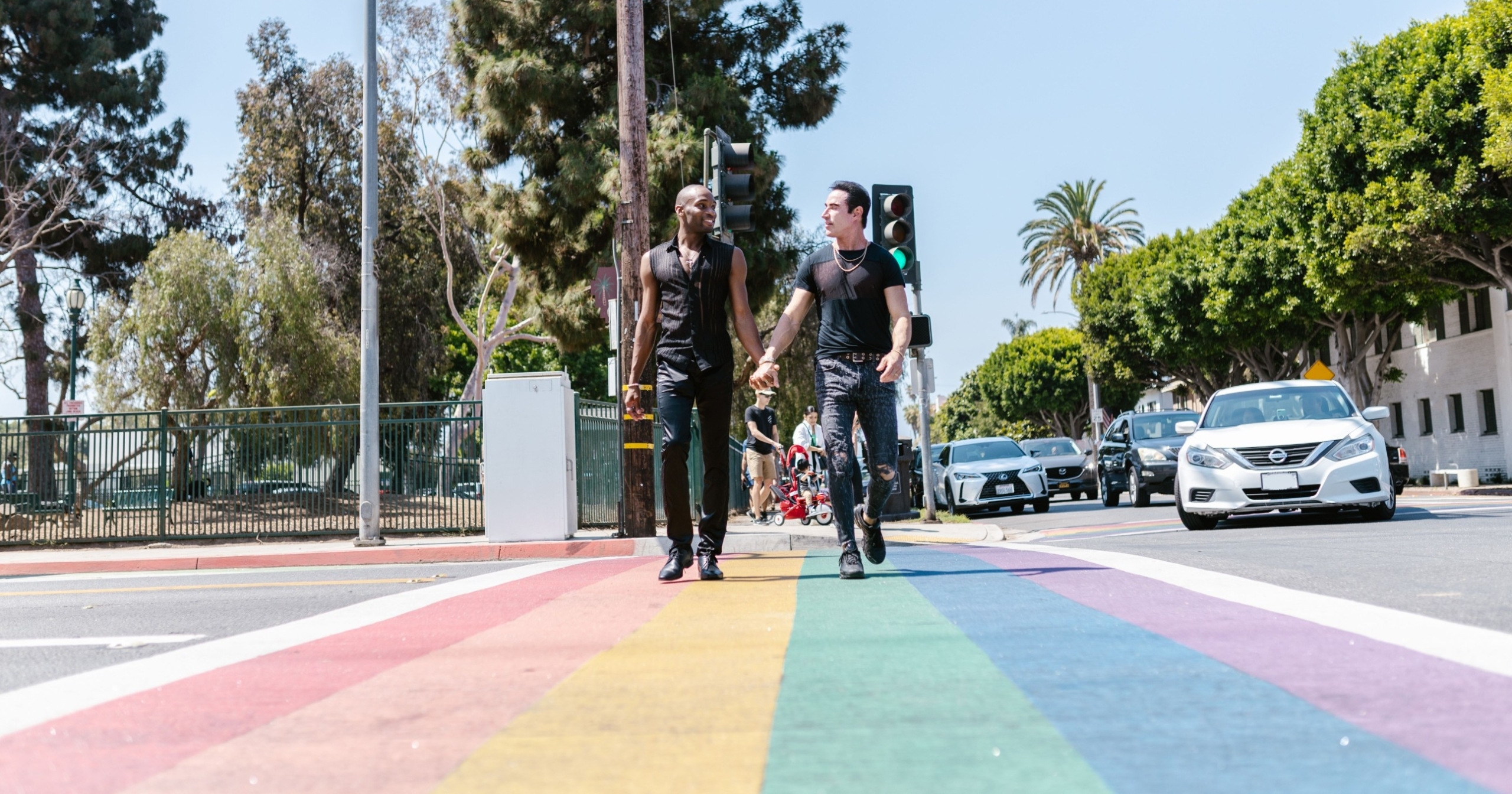
Florida’s rainbow crosswalks may be gone from the streets, but in these cities, the message remains very much in view.
Source: BayNews9, CBS12, and TheBulwark
I was at St Pete Pride. Desatin and his lot can’t even buy good paint. Just like their movement, the black paint is wearing off, exposing rainbow pride underneath. Light will always win over darkness.